Abbas Araghchi's seven-day Strait of Hormuz reopening plan, presented at the 2026 UN General Assembly, promises to end the West Asia conflict and resume Gulf shipping traffic. Its unspecified first five days and sweeping preconditions - sanctions relief, frozen assets, a regional ceasefire - amount to a comprehensive settlement dressed in a one-week calendar.
The Strait That Closed: Strikes, Deaths, and the IRGC's Toll Booth
In August 1990, the day Iraq occupied Kuwait, Lloyd's of London adjusted its war-risk premium for Gulf shipping before the ink on the cable was dry. The ledger moved faster than the diplomacy. On 28 February 2026, the ledger moved again - and this time the toll booth appeared before any negotiator reached the phone.
The sequence is not contested. In early 2026, US and Israeli strikes killed Supreme Leader Ali Khamenei and a cohort of senior officials whose names the wire services took three days to confirm. Iran's response was not a missile barrage or a proxy escalation.
It was a door, closed.
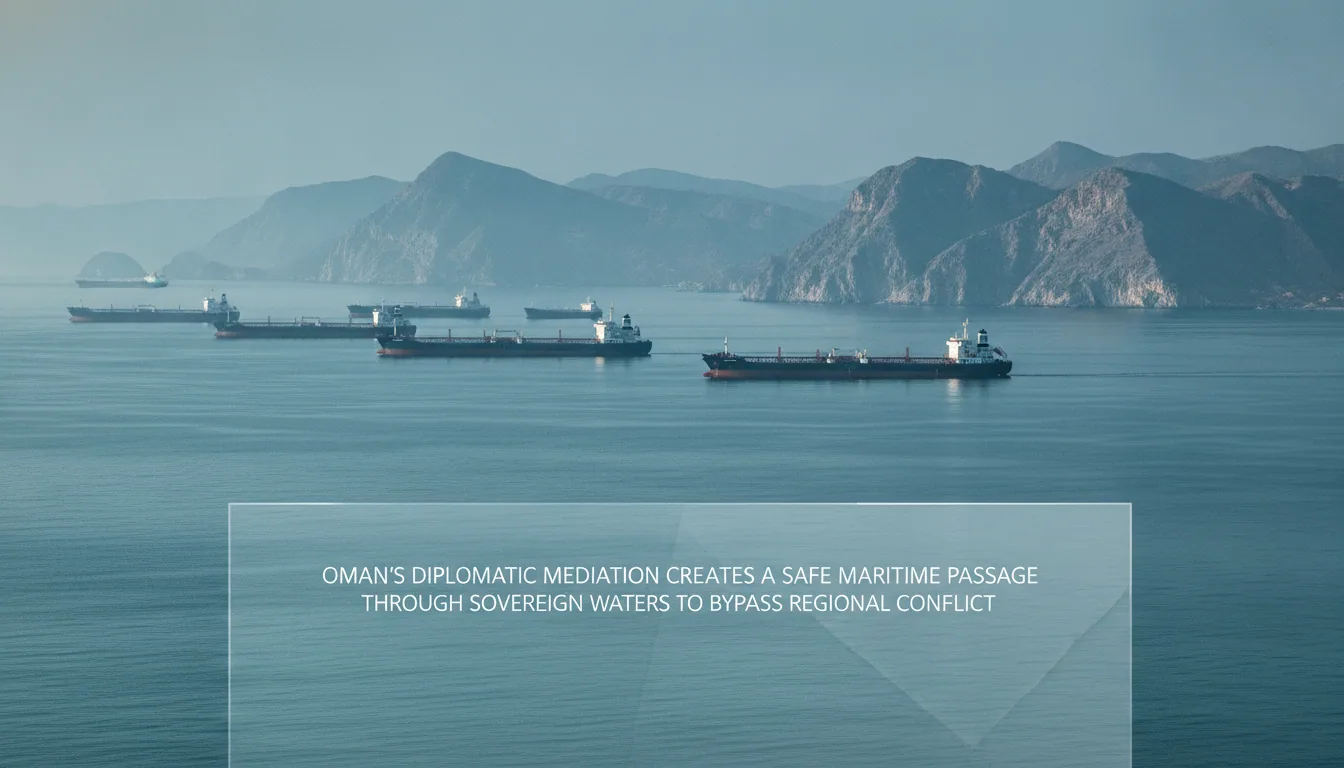
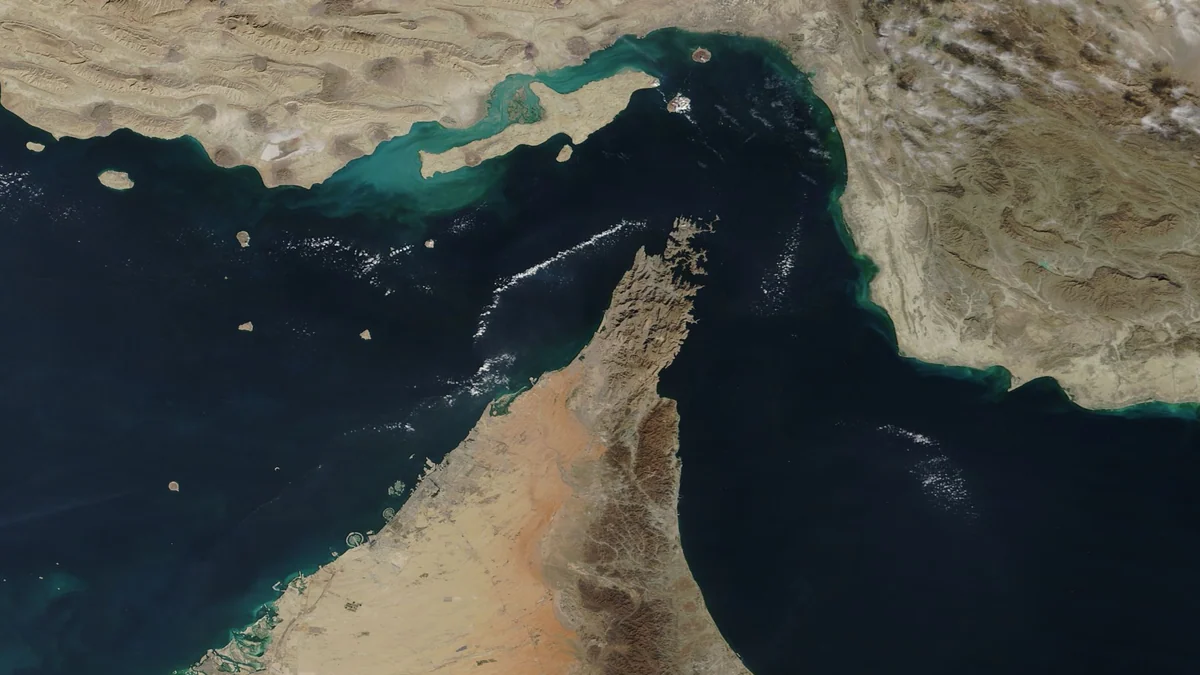
The Strait of Hormuz - the 33-kilometre neck through which twenty million barrels of oil passed every single day - was shut. The Islamic Revolutionary Guard Corps moved in administratively. Transit was not prohibited so much as monetised.
Vessels wishing to pass began receiving invoices for what the IRGC called security fees - a formulation that deserves the raised eyebrow it has not consistently received in Western copy. A toll booth is a political claim dressed as a service charge.
Mojtaba Khamenei, who succeeded his father, did not reverse the policy. That detail matters more than it has been reported. The blockade is not a grief reaction or an improvised act of rage - it is an institutional position, inherited and maintained, which means any negotiation that treats it as a personal grievance is already reading the wrong map.
The IRGC holds the corridor. The successor holds the mandate. The toll booth, for now, stays open for business and closed to ships.
What Iran's Strait of Hormuz Reopening Plan Actually Says
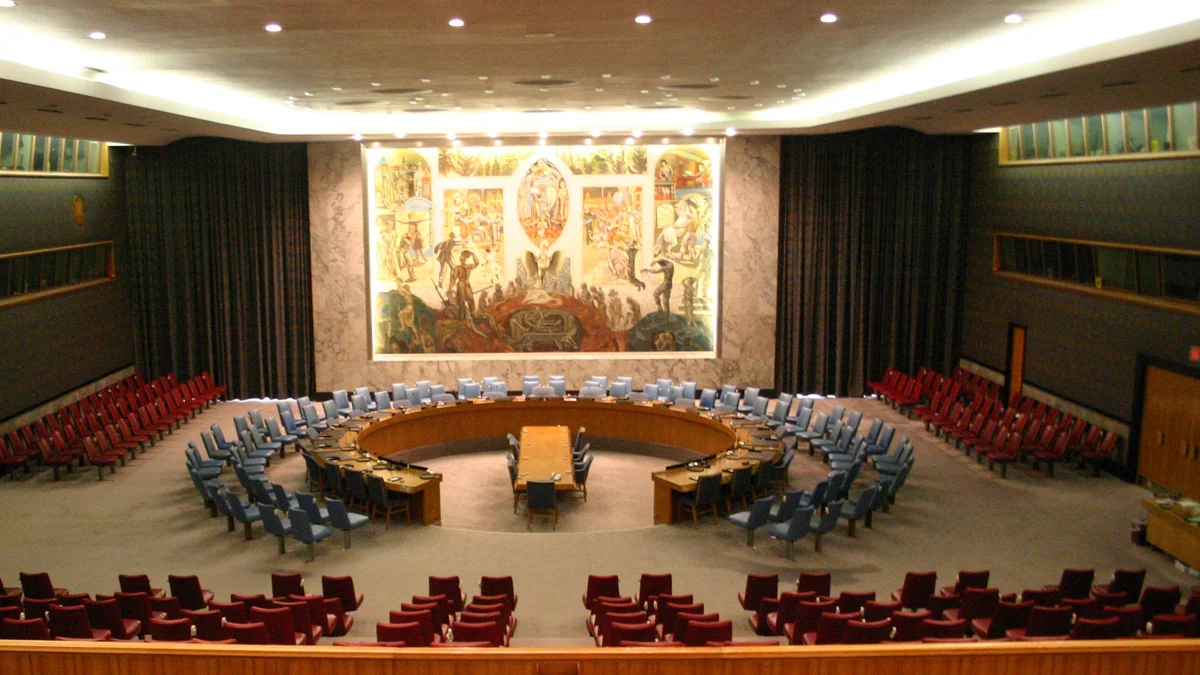
Abbas Araghchi presented the framework at the 2026 UN General Assembly in New York: a seven-day phased roadmap that would, in Tehran's account, end the West Asia conflict, reopen the strait, and open a lane toward comprehensive nuclear talks. The document has a clean numerical architecture. Whether the architecture has load-bearing walls is a different question.
Days one through five consist of what the public text calls preparatory steps. They are not specified. That deliberate opacity is not a drafting oversight - it is where the entire mechanism lives, and it is the part no outside party can verify in advance.
Day 6 designates the official reopening of the strait to shipping traffic. Day 7 initiates direct US-Iran nuclear negotiations and a framework for a final peace deal. The sequencing matters: sanctions relief comes before the nuclear file is opened, which inverts the order Washington has preferred in every negotiation since 2003.
Iran's stated preconditions reach well beyond the waterway itself. Tehran demands an end to the blockade of Iranian ports, release of frozen foreign assets, and sanctions waivers for oil exports. It also demands an end to hostilities on all fronts - specifically naming Lebanon.
That last clause is not decorative. It binds the strait's reopening to a regional ceasefire that involves parties the US does not fully control and commitments that extend far beyond any bilateral maritime agreement.
The price Tehran has listed is, in other words, a comprehensive settlement dressed in a seven-day calendar. Read point 12 of the demand set: the rest is furniture. Whether Washington reads it the same way is already answered - Trump declared the US "in no rush," and the first five days remain a blank page that neither side has agreed to fill.
Twenty Million Barrels and Three Hundred Thousand: The Blockade's Internal Logic
Before February 28, 2026, approximately 20 million barrels of oil moved through the Strait of Hormuz every day - roughly one barrel in every five traded by sea on the planet. That single figure is the architecture of the crisis. Everything else is commentary.
The closure did not exempt energy-importing economies from the arithmetic. Oil prices settled into a band between 100 and 150 euros per barrel during the blockade period, a range that fell heaviest on the countries least responsible for the conflict - the net importers of South and Southeast Asia, the smaller European economies running on Gulf crude. The burden, as it tends to, distributed itself downward.
Tehran understood this lever. What Tehran appears to have miscalculated is its own position inside the mechanism.
Iran's Goreh-Jask pipeline - 1,100 kilometres of infrastructure built precisely to route oil around the strait to the Gulf of Oman - handles 300,000 barrels per day at current capacity. Against 20 million, that is less than two percent.
The bypass was designed as a political insurance policy; it functions, in practice, as a footnote. The gap between those two numbers is the structural argument Iran cannot win.
A blockade that denies 20 million barrels to the world also denies Iran the export revenue it requires to survive sanctions, fund reconstruction, and present any successor leadership as viable. The IRGC controls the toll booth; the toll booth is also the only door out.
Closing it demonstrated reach. Keeping it closed demonstrates something closer to self-strangulation - and at a ratio no alternative infrastructure, now or in the near term, can bridge.
A blockade that denies 20 million barrels to the world also denies Iran the export revenue it requires to survive sanctions, fund reconstruction, and present any successor leadership as viable.
Trump's Refusal, Qatar's Relay, and the Baltic Mine-Clearers
When Trump posted a map of the Persian Gulf labelled "Trump Strait," he was not announcing a policy. He was announcing a posture. The label told you more than the press briefings: a strait does not get renamed by someone in a hurry to give it back.
His verbal rejection of Araghchi's framework, delivered in the flat idiom he reserves for leverage - "in no rush" - confirmed what the map implied, that Washington's working assumption is not a negotiated reopening but an indefinite condition to be managed on American terms.
The message, such as it is, travels through Doha. Qatar's Foreign Minister, Sheikh Mohammed bin Abdulrahman Al Thani, has been relaying communications between Tehran and Washington in the corridors of the UN General Assembly, a role Doha has filled before - most visibly in the Afghan and Hamas talks, where its value lay precisely in the formal distance it preserved. Both parties could engage without acknowledging engagement.
The arrangement suits a White House that will not be seen negotiating under pressure, and a Tehran that cannot afford to look as though it is begging. Whether the relay is moving anything real, or simply keeping the channel open long enough to call it diplomacy, is not yet visible from the outside.
Then there is Latvia. Riga offered a 20-person mine-clearing unit to begin removing Iranian sea mines from the Persian Gulf transit corridor, a process that technical assessments place somewhere around 2028 at the earliest. Twenty people, in the Persian Gulf, clearing mines laid by the IRGC.
The absurdity of the scale is, in fact, the story. A Baltic NATO member - a country whose own coastal mine threat from a different navy it monitors with anxious attention - has placed a material chip on Hormuz navigability. The strait is no longer a bilateral US-Iran problem.
It has become a collective security file, and small northern nations are beginning to write their names into it.
The Word to Watch in Any Final Text
Estonian Prime Minister Kristen Michal's April 2026 statement of support for freedom of navigation deserves a moment before the documents arrive. Estonia has no direct economic stake in Gulf oil transit. The statement was not made for the Gulf - it was made because the principle is the interest, which is exactly the logic that produced the Latvian mine-clearing offer.
Small states on the Baltic know what happens to freedom of navigation when the guaranteeing power decides it is not in a rush.
Now to the text itself, because that is where the deal either exists or does not.
The verb tense in any final communiqué is not a stylistic choice at this level. The distinction between "shall" and "should" is the entire architecture. Read "the parties shall withdraw IRGC security protocols from transit lanes" and someone has made a binding concession under pressure.
Read "should," and the document is a press release - well-formatted, signed by foreign ministers in good suits, and worth roughly what the June Memorandum was worth.
The historical comparison is instructive and ungenerous in equal measure. The 1994 Agreed Framework with North Korea said enough of the right things to generate a photograph and a decade of managed ambiguity. This is not a prediction that the Hormuz roadmap will follow the same path.
It is only a reminder that the photograph is not the deal.
Watch also whether "security fees" appear anywhere in the final language, or are absent from it. Their presence - however elegantly reformulated - means the IRGC toll booth survives the agreement in everything but name, and the strait reopens under Iranian administrative control rather than international transit law. Their absence means someone in Tehran conceded the structural point, not merely the headline.
Read one line of any Strait of Hormuz reopening agreement that emerges. If it says shall, and if fees are gone, something real happened. If it says should, this will be back on your screen before the year closes.