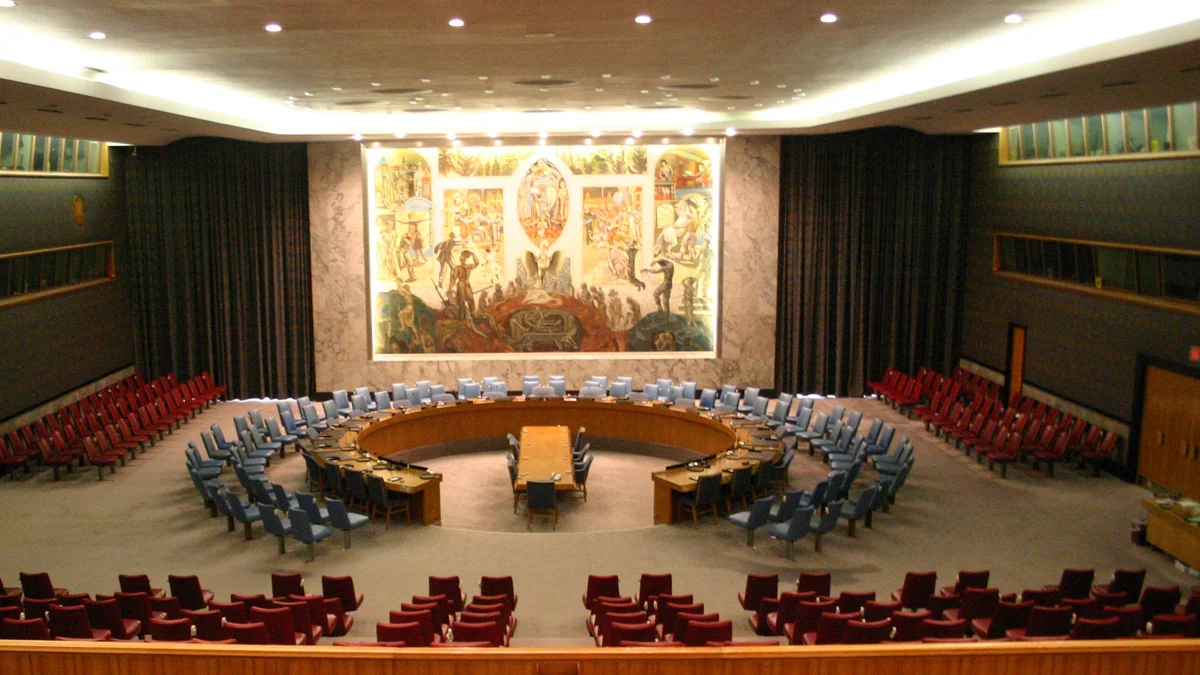
The UN Security Council crisis reached its formal diagnosis at the 81st General Assembly in September 2026 — the year António Guterres and the G4 nations stopped calling it a challenge and used the word "terminal."
The Architecture Has Not Changed Since 1945
The founding charter was signed in San Francisco in June 1945, three months before the second atomic bomb fell. The five permanent seats were carved from that specific moment — that specific roster of victors — and the carving has not been revisited since. Eighty-one years is a long time to go without a structural survey.
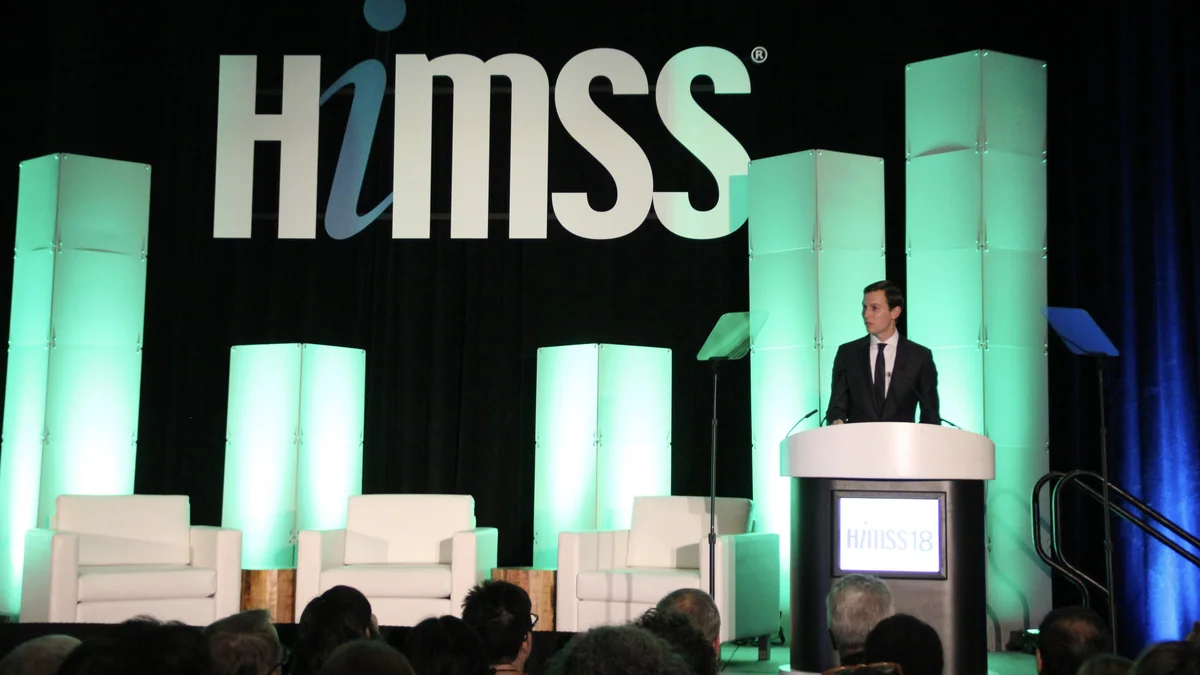
At the 81st General Assembly in September 2026, António Guterres and the G4 nations — Brazil, Germany, India, Japan — named the condition plainly: terminal crisis. The word "terminal" does work that "serious" or "deepening" would not. It implies a direction of travel, not merely a low point. The G4's joint statement demanded immediate reform to prevent total institutional irrelevance, which is the diplomatic phrasing for an institution that issues communiqués no one waits for.
The numbers behind the declaration are not rhetorical. The Council adopted 44 resolutions in 2025, the lowest annual output since 1991 — the year the Soviet Union dissolved and the institution briefly functioned as designed. Consensus was reached on only 61.4 per cent of decisions that same year, meaning that on more than a third of the questions put to it, the body charged with collective security could not produce a collective answer.
The 1945 roster reflected one world. India was a British colony, Brazil a peripheral republic, the African continent almost entirely under European administration. None of that is true today, and yet the architecture stands. Guterres called the permanent exclusion of Africa from the Council "unjust and indefensible." He is correct. That is the load-bearing wall. Everything else at this summit is moulding — pull it and nothing falls.
Eight Vetoes: The Instrument Driving the UN Security Council Crisis
Eight vetoes in a single calendar year. The 2024 figure is the highest since 1986, when the Cold War still had a reason to produce such numbers. The reason in 2024 was not a systemic standoff; it was a series of individual calculations by individual governments, each shielding a specific interest, each dressed in the language of principle.
Russia's veto use through 2025 to block Ukraine resolutions is by now a documented pattern, not a sequence of discrete decisions. The mechanism is consistent: a draft resolution naming Russian aggression arrives, the veto falls, and the Council records another entry in the column marked paralysis. Margus Tsahkna put the structure plainly — Russia violates UN Charter principles but uses the veto to prevent the Council from reacting. The instrument designed to require consensus has become the instrument that manufactures impunity.
The February 2025 vote complicated the ledger in a different direction. A US-drafted resolution passed — one that took what diplomats called a neutral stance on the Ukraine war. A Council resolution that declines to name the aggressor in a conflict the Charter was built to address is not neutrality; it is the architecture of evasion wearing the clothes of multilateralism.
Moscow's stated position on reform closes the logic. The Kremlin has endorsed reform in principle, provided the veto remains untouched. The Council can be expanded, democratised, diversified in every dimension the P5 find palatable, and none of it changes the one mechanism through which a single government can halt collective security action at will.
The American Withdrawal and the Arithmetic of Silence
Budget is policy. When the Trump administration froze or cut significant UN agency funding beginning in January 2025, it did not need to cast a single veto to reshape what the Council can do. The resolutions that pass now pass into a thinner operational world.
The arithmetic is not abstract. Peacekeeping mission personnel have been cut by up to one-fifth — a reduction that lands not in the corridors of New York but in the places where blue helmets were the last institutional presence between a ceasefire line and a massacre. One in five positions gone is not a rounding error. It is a policy choice expressed in empty billets.
Then there is the "Board of Peace," Trump's proposed alternative to multilateral diplomacy — a body whose architecture remains deliberately vague, which is itself informative. What the proposal does precisely is position the United States as a bilateral broker above the multilateral table, leaving the Council as the forum where outcomes are announced rather than decided.
The distinction matters. A Council that ratifies American deals is a different institution than one that constrains American power, and the current administration appears to understand this clearly even if its official language does not say so.
Reform votes will not repair a funding floor that has been pulled away. The Council can adopt resolutions; it cannot deploy what has not been paid for. For the small states that still treat Security Council resolutions as something other than decorative text, the financial attrition is the crisis within the crisis.
The instrument designed to require consensus has become the instrument that manufactures impunity.
The South Without a Seat at the Table It Helped Build
Tanzania announced its candidacy for a Security Council seat at the 81st General Assembly in September 2026. The announcement was greeted with the particular warmth reserved for gestures everyone applauds and no one intends to honour. Africa, a continent that contributes both troops and assessed dues to an institution whose permanent tier has excluded it entirely since 1945, was being asked, again, to wait.
Guterres named the condition plainly: the absence of a permanent African seat is "unjust and indefensible." The words are correct. They are also eighty years late, which the Secretary-General did not mention, presumably because the ledger of omissions would fill the hall. In early 2026, the General Assembly held informal plenary meetings on equitable representation — consultations whose informal designation is itself a small, precise signal of how far reform has not travelled.
The G4 nations — Brazil, Germany, India, Japan — issued a joint statement demanding immediate reform to protect international peace. The statement is the fourth such demand in as many iterations of this argument. Each one arrives, is noted, and is absorbed by the intergovernmental negotiation process, which has been running since 2009 and produces, with admirable consistency, further process.
The BRICS summit that same September revealed the other side of the ledger. A bloc representing roughly 40 per cent of global GDP could not agree to condemn the US-Israel conflict with Iran. The fracture was not accidental — it was structural, the visible seam between members who need Washington and members who need Moscow.
The Global South is not a unified creditor demanding its seat. It is a coalition of unequal debtors, each calculating separately, which is precisely why the architecture has held this long without their names on it.
The Borderland Problem: What Estonia's Emergency Request Reveals
On September 19, 2025, Estonia called an emergency Security Council meeting after Russian fighter jets violated Estonian airspace. The Council met. Nothing followed. The aggressor held the veto.
President Alar Karis named what the session demonstrated: the Council had become "indifferent and incapable of fulfilling its tasks." That is not frustration talking. It is a structural description. The architecture of 1945 did not anticipate a permanent member whose violations of the Charter would be shielded by that same membership.
Foreign Minister Margus Tsahkna put the mechanism plainly: Russia violates UN Charter principles, then uses the veto to prevent any Council response. Compare Estonia's position to Ukraine's, to Georgia's in 2008, to Hungary's in 1956 — in each case, the small state's formal recourse ran directly into the permanent membership of the party responsible.
The difference from 1956 is that no one today pretends otherwise. The emergency meeting was not called in hope; it was called to establish the record. Small states have learned to use the Council as a notary rather than a protector — a place to document what the institution cannot remedy. That shift in purpose, quiet and largely unremarked in New York, is its own verdict on eighty years of collective security.
Watch the Succession, Not the Summit Photograph
António Guterres' second term expires on December 31, 2026. His final high-level week address, delivered at the 81st General Assembly, was in every structural sense a farewell speech: a man cataloguing the failures of an institution he could not repair. The summit photograph will be duly released. It will tell you nothing.
The real indicator is the succession. Names in circulation include Rafael Grossi, the Argentine who runs the IAEA; Macky Sall, the former Senegalese president; and Olara Otunnu, the Ugandan diplomat who spent years working inside the machinery he would now inherit. Each candidacy is a position in a proxy contest: Western-led institutional continuity on one side, a multipolar redistribution of secretariat authority on the other. The intergovernmental negotiations on Council reform remain the formal arena, but the IGN process has been negotiating since 1993 and produced no amendment to the Charter.
Watch the P5 consultations on the successor, not the communiqués. If the shortlist collapses into a vetoed stalemate before October, the institution's ability to govern even its own succession is gone. That would be the checkable fact, arriving before year's end, and it would mean the UN Security Council crisis is no longer structural. It would mean the building has started to come down.