A Funeral Four Months Late
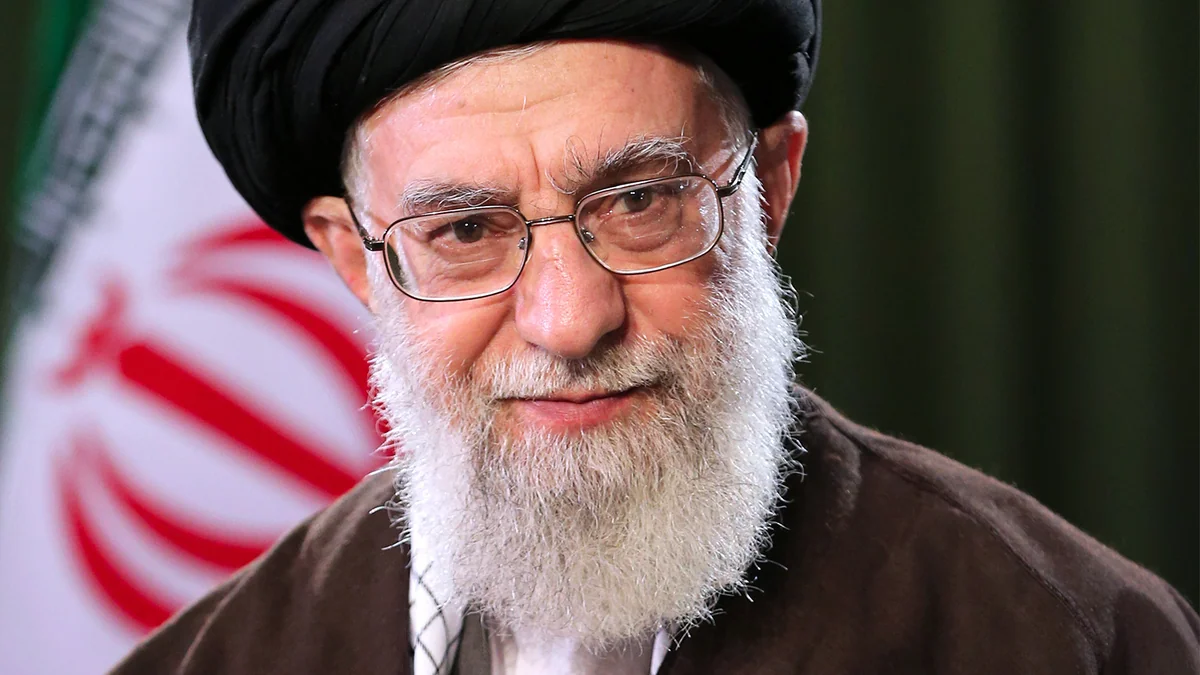
Khomeini's 1989 funeral — Iran's last uncomplicated power transition — drew a crowd so vast that mourners tore the shroud from his body. The comparison to what begins in Tehran on July 4, 2026 is obvious, and it is wrong in one precise way: nobody buried Khomeini four months after he died. Ali Khamenei was killed on February 28, 2026, in a US-Israeli strike on his Tehran residence, and his coffin has been on public display ever since - alongside four members of his family who died in the same strike.
The funeral was originally scheduled for March 4-6. The war made that impossible. So the Islamic Republic did something governments rarely have to do: it warehoused its supreme leader, and waited for conditions to permit the spectacle his death required.
That four-month gap is not a logistical footnote — it is the argument. A state that buries its dead promptly is a state in control of its circumstances. A state that keeps five coffins on display through an active military conflict, then mobilises twenty million mourners the moment a ceasefire allows it, is demonstrating something different - not grief on the natural schedule, but continuity manufactured under pressure and delivered on command. The delay itself tells you what the funeral is for.
The Referendum the Regime Is Ordering
Six days. Tehran on July 4, then Qom, then Mashhad, then Baghdad, Karbala, Najaf, and burial on July 9. The route covers the doctrinal geography of Shia Islam in one long arc, and every stop is a claim: the martyred leader belongs not only to Iran but to the whole of the faithful world.
Iranian authorities expected up to twenty million people across the six days. July 5 was declared a national holiday, justified by "numerous requests" from Iranian provinces - a formulation that tells you who requested what and why. Hotels offered mourners fifty percent discounts. Schools, mosques, and sports halls were converted to housing. Somewhere a logistics spreadsheet was quietly updated, and the number looked like legitimacy.
Ayatollah Mohammad Saidi, the Qom Friday prayer leader, made the subtext explicit. The turnout, he said, would be "another referendum for the Islamic Republic." The word choice is precise and the logic is circular: the regime mobilises the crowd, the crowd validates the regime. I have heard this promise before - Tehran, June 2009, when the streets filled for Neda Agha-Soltan and the state television called it a counter-rally. The referendum that a government administers for itself produces a known result.
At the Grand Mosalla, chants of "Death to America" and "revenge" rose from the crowd. That is the emotional register the regime needs on camera - grief converted into threat, mourning converted into deterrence. The same camera will be watched in Doha, where the actual negotiation is running. The funeral does not only bury a man. It sets a price.
The Man Who Has Not Been Seen Since February
The Assembly of Experts ratified Mojtaba Khamenei as Iran's third supreme leader. The constitution was followed. The procedure was correct. What it could not supply was the man.
Mojtaba was in the residence on February 28. He survived the strike that killed his father; his wife did not. He was injured - how badly, Iran has not said, and no independent source has been able to establish. There has been no confirmed public sighting of him since that night. Four months of silence from a man who now holds, on paper, supreme authority over the Islamic Republic.
This is a practical problem, not merely a symbolic one. Taghi Rahmani, an Iranian rights activist speaking to Radio Farda, described a requirement the regime cannot quietly set aside: the new leader must pray over the body of the predecessor, and this is how the succession takes on formal legitimacy. It is a theological requirement embedded in Shia practice and a political one embedded in the logic of velayat-e faqih. The funeral is precisely the moment when the ritual must be performed, and the ritual requires Mojtaba to be present, recognisable, and capable of leading prayer — on camera, before millions.
Dynastic succession was always ideologically awkward inside the Islamic Republic. The founding logic of the revolution was explicitly anti-monarchical; power flowing from father to son carries a charge the clerical establishment spent decades denouncing. The Assembly of Experts ratified the appointment anyway. That is the practical reality the regime is now managing. Ask the small question first: who legitimises the legitimiser, if the legitimiser cannot be seen?
Babak Dorbeiki, a UK-based Iranian political analyst, told Radio Farda he was not certain such a person still exists in good health. That is not a sentence a political analyst says lightly. Watch whether anyone leads the funeral prayers on July 5 - and if so, who.
A state that keeps five coffins on display through an active military conflict, then mobilises twenty million mourners the moment a ceasefire allows it, is demonstrating something different — not grief on the natural schedule, but continuity manufactured under pressure and delivered on command.
Two Sounds from the Same City
On the morning of February 28, before the state broadcasts had finished their first loop, residents of Tehran apartment blocks heard something the cameras did not catch. Cheering, behind closed windows. Not everywhere, not openly - but there, unmistakable, in the gaps between the official grief being assembled on the streets below.
The regime has always known this other Tehran exists. Analysts who tracked the December and January protests - suppressed by security forces firing into crowds - described public support for the Islamic Republic as paper thin before the first American aircraft crossed Iranian airspace. The war did not create the legitimacy deficit. It inherited one.
This is the domestic architecture the funeral must paper over. Ayatollah Mohammad Saidi, Qom's Friday prayer leader, called the expected turnout a referendum for the Islamic Republic. The word is useful precisely because it cannot be verified. Twenty million people moving through checkpoints, Basijis on every corner, a one-kilometre exclusion zone around the Grand Mosalla - these are not the conditions under which referendums mean what they say.
The choreography is not cynical in a simple way. Grief and relief can occupy the same city simultaneously, and probably do. A woman named Samira, a restaurant owner's wife in Tehran, told a reporter: it is like life has stopped and there are Basijis everywhere. She was describing the funeral. She was also describing something older than February 28.
The regime enters its succession crisis carrying this weight. The procession is real. So were the windows.
Iran's Hormuz Strategy: The Load-Bearing Wall
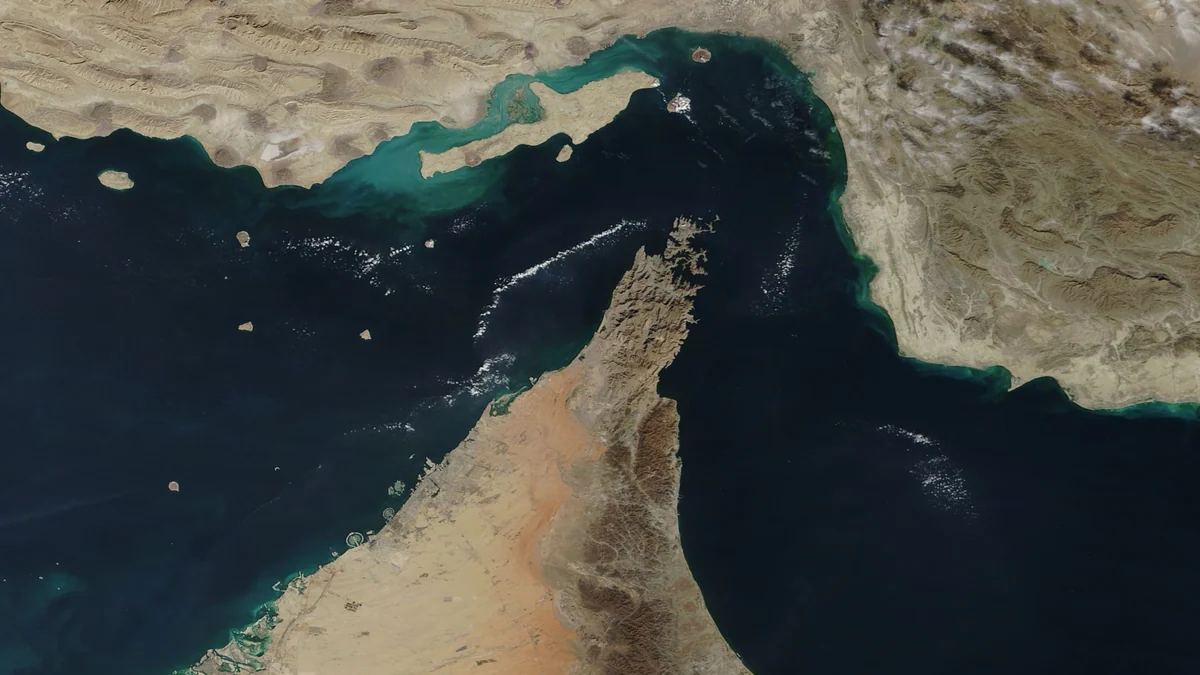
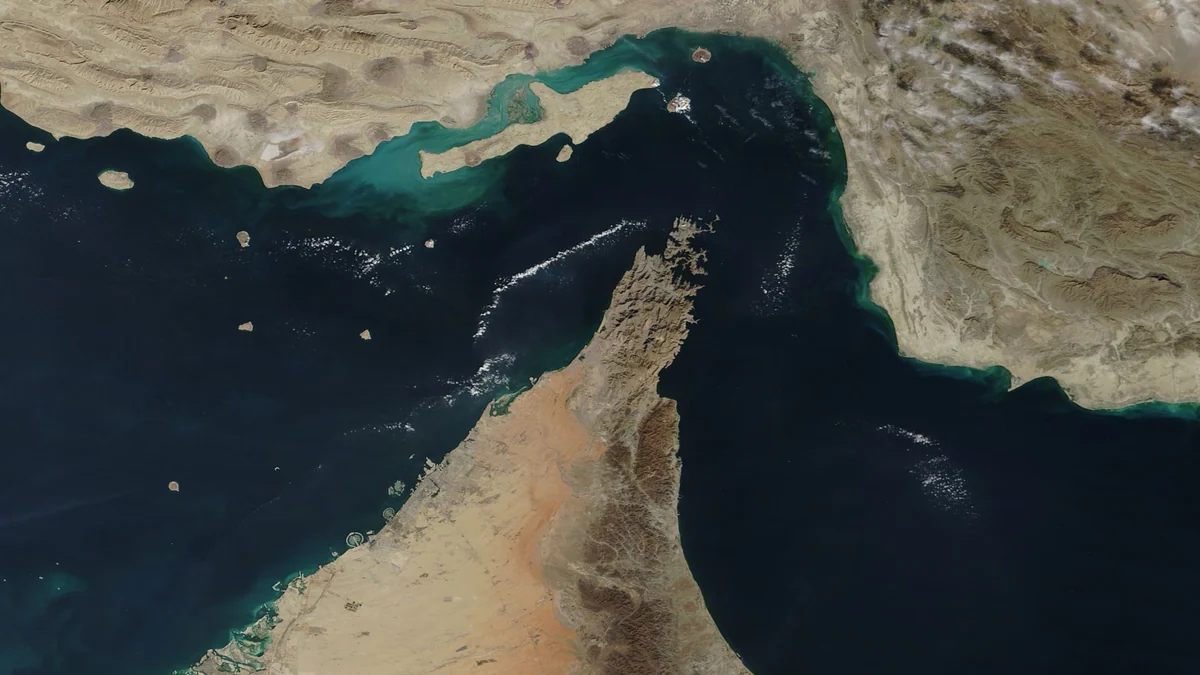
Pull everything else away - the funeral pageantry, the martyrdom iconography, the dynastic ratification - and what remains is a waterway twenty-one miles wide at its narrowest point. US-Iran delegations travelled to Doha to negotiate outstanding disputes, and the Strait of Hormuz sat at the centre of those talks. A 14-point agreement framework was reached, including a roadmap for the strait's legal and security status. That is the load-bearing wall. Everything else is moulding - pull it and nothing falls.
Iran's navy holds significant operational control over Hormuz, and the IRGC manages its naval assets directly. The legal architecture beneath that operational reality is older than any current crisis: Iran's 1993 maritime law conflicts with UNCLOS, requiring warships and nuclear-powered vessels to seek permission before transiting what Tehran considers its territorial waters. The gap between Iran's 1993 statute and the international consensus on innocent passage is not a technicality - it is the mechanism by which Iran converts geography into leverage, and any Doha framework that does not resolve that specific conflict has resolved nothing.
Ask the small question first: who is the borderland here, and who is the empire? For Gulf shipping states and oil importers, the answer has not changed in decades. On July 4, senior Russian and Chinese officials attended condolence events in Tehran. Their presence alongside a new supreme leader who has not been seen since February frames the alignment Iran is navigating at the precise moment its succession is unresolved. Moscow and Beijing have their own reasons to keep Hormuz open on Iranian terms - or closed on anyone else's. The Doha talks do not happen in a vacuum; they happen inside that geometry, and the 14-point framework will hold only as long as that geometry holds.
The One Thing Worth Watching
Ignore the crowd size. Twenty million mourners, or five, or fifty - none of it resolves the question that actually matters. Mojtaba Khamenei has not been seen in public since February 28. His father is dead. He is the ratified third supreme leader of the Islamic Republic, and nobody outside a closed circle of IRGC handlers can confirm he is alive and capable of governing.
Watch whether Mojtaba appears in person to lead or observe funeral prayers. Rights activist Taghi Rahmani has stated the requirement plainly: the new leader must pray over the body of the past leader for succession to acquire formal legitimacy. His absence would leave a constitutional vacuum dressed in mourning cloth, and Babak Dorbeiki, when asked directly, said he was not certain such a person still exists in good health. That sentence deserves to be read slowly.
Then read the Doha text when it is published. The 14-point framework reached between US and Iranian delegations addresses the Strait of Hormuz's legal and security status. If the final language says Iran's claims shall be addressed, someone traded something real. If it says should, this will be back on every screen before winter - and the funeral, for all its millions, will have changed nothing that matters about Iran's power transition.