A Ceasefire Is Not a Peace: What the Pretoria Agreement Left Unresolved
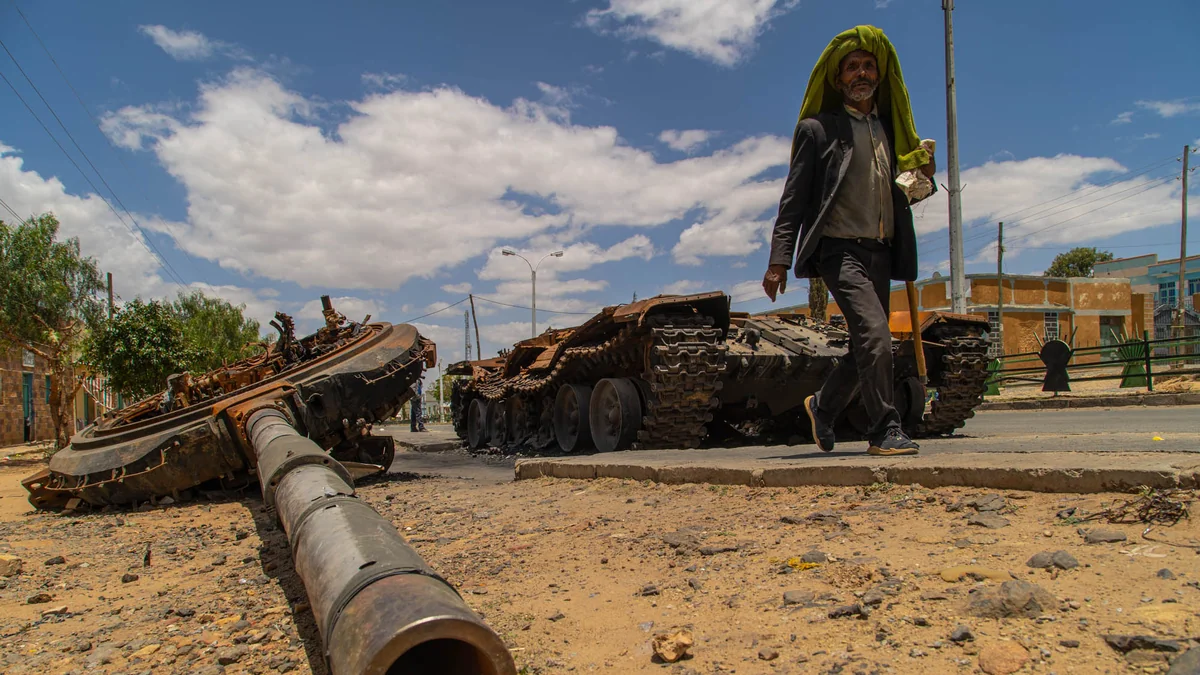
The 2022 Cessation of Hostilities Agreement ended the Tigray conflict's first phase without resolving its core territorial dispute. Western Tigray's status was left explicitly undecided — an armed grievance placed on ice and called peace. The previous war had cost an estimated 600,000 lives. A settlement following such arithmetic might have been expected to address what caused it.
The Pretoria Agreement ended combat. It declined the harder work.
What followed was a slow, structural hollowing-out. For eight months the federal government withheld Tigray's budget allocation. Banks in Mekelle ran short of physical currency. By the time the offensive broke on September 23, residents were already panic-buying food and supplies — which suggests the decision to return to arms was not taken in a week of political crisis but arrived after a long, grinding economic siege.
The internal fracture mattered equally. In 2025, Getachew Reda, who had led Tigray's interim administration under the agreement's terms, defected to the federal government. The faction that remained, under Debretsion Gebremichael, drew the obvious conclusion: dialogue had produced budget starvation and the loss of Western Tigray, and the moderates had now changed sides. The ceasefire's load-bearing wall was always the premise that Pretoria's silences would eventually be filled by negotiation. They were not, and the structure came down.
September 23: Three Airports Before Breakfast
Three days after the Ethiopian Peoples' Forces Alliance for Survival announced its existence — seven armed groups, including former blood enemies — the operational logic of that coalition became clear before noon on September 23. TPLF forces seized Alula Aba Nega airport in Mekelle, then Axum, then Shire. Three airports before breakfast is not a spontaneous act of desperation. It is a supply-line calculation, drawn from the last war's lesson: in 2020, Addis Ababa's aerial monopoly became the architecture of famine.
Ethiopian Airlines suspended all flights to Tigray within hours. The corridor closed. Whether that suspension was ordered or merely prudent is a distinction without much weight from Mekelle's side — the effect is the same, and the federal government now faces the same optics it spent years denying. The TPLF understood this. It moved first precisely to own the narrative of who imposed the blockade.
Fighting opened simultaneously on three fronts: Tigray-Amhara, Tigray-Afar, and Southern Tigray. The three-front opening matters structurally. A single-front offensive can be flanked and strangled; three fronts stretch federal logistics and force a prioritization the government would rather not make publicly. That the Amhara Fano is now on the same side as the TPLF — groups that were burning each other's villages four years ago — tells you something about what Abiy Ahmed's consolidation project has actually produced. Ask the small question first: who is the borderland here? The answer, on September 23, was everyone except Addis Ababa.
The Coalition Nobody Expected: TPLF and Fano Under One Flag
The Ethiopian Peoples' Forces Alliance for Survival, announced September 20, groups seven armed factions under a single anti-Abiy banner. That list includes the TPLF, the Amhara Fano militia (AFNM), and the Oromo Liberation Army — three organisations that spent the better part of a decade treating each other as existential threats. The practical implication is straightforward: the war has changed character.
This is no longer an ethnic-communal conflict with a single aggrieved region at its centre — it is a coalition of the anti-centrist, groups with incompatible territorial claims united by a shared conclusion that Abiy Ahmed's federal authority must be broken. Whether that unity holds past the first serious disagreement over postwar spoils is a different question, and not one anyone can yet answer.
TPLF representative Michael Asgedom's declaration that the Pretoria Agreement is "no longer valid" serves as the formal burial notice for the 2022 framework. It is worth reading against the timeline: Fano was not a signatory to Pretoria, and the OLA was not either. The coalition's composition makes the agreement structurally irrelevant before Asgedom opens his mouth.
The TPLF frames its offensive as a "defensive war" against federal aggression. That language choice deserves a second reading. The federal government had been withholding Tigray's budget for eight months and denying the region physical currency — conditions that, in 2020, preceded a blockade leading to famine. Ask the small question first: who is the borderland here, and who is the empire? The answer shapes how "defensive" lands, and it does not land cleanly on either side.
The ceasefire's load-bearing wall was always the premise that Pretoria's silences would eventually be filled by negotiation. They were not, and the structure came down.
Alamata: The Arithmetic of Twenty-One Air Strikes
The day before the airports fell, Alamata was still a town. By the end of September 22, federal drones and aircraft had struck it twenty-one times. Fourteen civilians were killed. Twenty-two more were injured. The strikes came the day before the TPLF seized Mekelle, Axum, and Shire — a sequence worth holding in the mind before reading any official communiqué about the order of events.
The Ethiopian army reported 272 rebels killed in recent clashes. No independent access was offered to verify the figure. A government that controls the count and controls the access is, in the strict sense, the only witness to its own arithmetic.
Getachew Reda, the former Tigray interim leader who crossed to Addis Ababa in 2025, called the TPLF offensive "pre-planned" and "all-out" — the words landing with a precision that went beyond grief. "Pre-planned" is not a description of military fact. It is a legal and political charge: it shifts the question of who started this, assigns intent, and frames any federal response as reactive. Reda knows how the language works. He has sat on both sides of the table where it is written.
The civilian dead in Alamata do not resolve that framing. They complicate it. Twenty-one strikes on a southern Tigray town the day before a coordinated offensive across three airports suggests a federal military that had its own timetable — or a coincidence of timing so precise it strains the word. The Pretoria Agreement, already anatomized in its failure, had no clause that covered this. It rarely does.
What Washington and Addis Ababa Are Not Saying
US Ambassador Ervin Massinga described the TPLF offensive as "an unwinnable fight." The phrase is a judgment, not a policy. It forecloses negotiation by declaring one party's position hopeless while offering no mechanism — no mediator, no timeline, no face-saving exit — through which that conclusion might become operational.
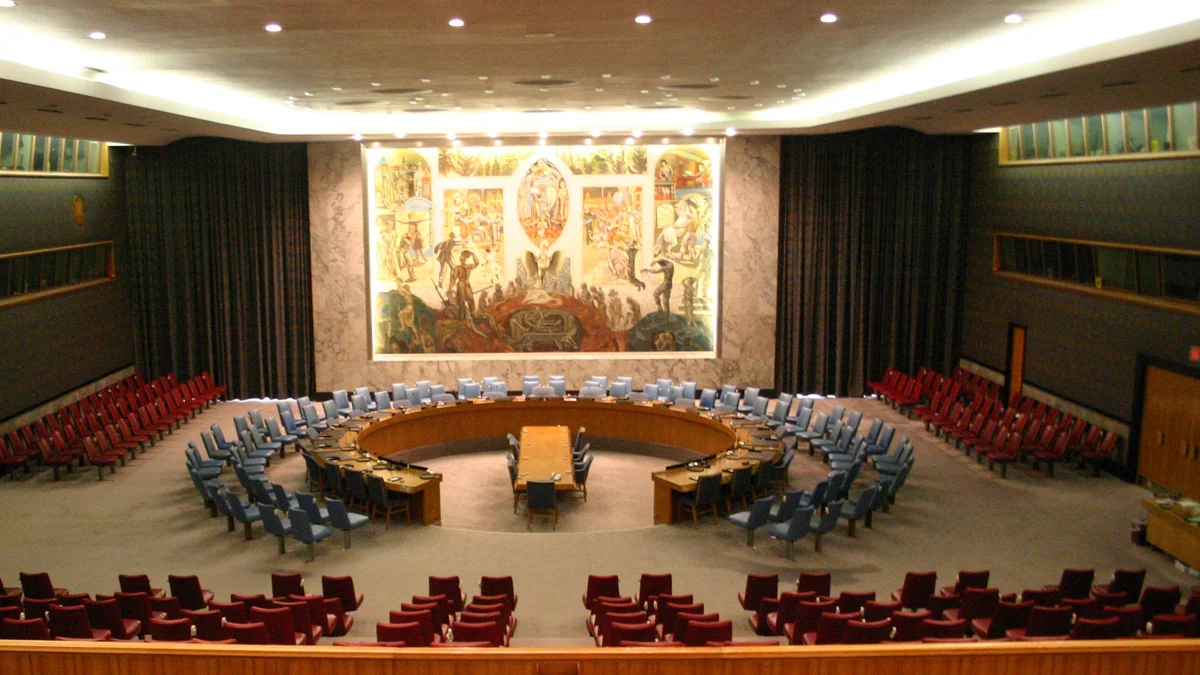
At the UN General Assembly, President Taye Astike Selassie warned that the message to "forces of destruction and mayhem" was "loud and clear." He named no one. In diplomatic grammar, the absence of a name is not an oversight; it is the message. Addis Ababa retains the option of de-escalation precisely by refusing to mark, on the record, who the adversary is.
The African Union's position is structurally the most constrained of the three. Mahmoud Ali Youssouf chairs a body whose central achievement in this conflict was the Pretoria Agreement, which one signatory has now publicly declared void. A mediator whose agreement has been repudiated must either renegotiate from scratch or become irrelevant — and the AU has not yet signaled which path it intends to take.
The gap between condemnation and leverage is not new. What is new is that every actor with a line to Addis Ababa watched the 2020-2022 Tigray war kill an estimated 600,000 people and still signed off on terms that left Western Tigray unresolved. The communiqué was the decorative moulding. The territorial dispute was the load-bearing wall.
Watch the Airports: What the Next Thirty Days Will Decide
Three facts are not yet established, and they matter more than the ones that are. Whether Eritrean forces have crossed the border to support Addis Ababa remains unconfirmed — in the previous war, Eritrea's intervention was the variable that tipped the military balance decisively against the TPLF, and its presence or absence now would rewrite the operational picture entirely. The degree of real coordination among the seven alliance groups is similarly unverified; a coalition announced three days before an offensive is a statement of intent, not a command structure. The Ethiopian army's claim of 272 rebel casualties is uncorroborated, and the current positions of federal troops previously stationed at the seized airports are not publicly known.
Set those uncertainties aside and one concrete marker remains. Alula Aba Nega Airport in Mekelle — seized on September 23 — is the single variable worth tracking over the next thirty days. If TPLF holds it, the aerial-blockade logic that starved Tigray between 2020 and 2022 does not automatically reassemble; supply lines stay theoretically open, and the humanitarian calculus is different. If federal forces retake it, the calculus reverts — not to war, but to the specific, documented arithmetic of 2021, when access was the weapon and the Tigray conflict's death toll eventually reached an estimated 600,000.
The airports are not symbolism. They are load-bearing. Watch the flight-status board for Mekelle. If Ethiopian Airlines announces a resumption of service, someone has made a deal. If the suspension holds into late October, the evidence forces a harder conclusion about what this offensive was always designed to become.