The Peace Agreement the Parties Had Already Buried
The Ethiopia conflict escalation now consuming the Horn of Africa was not ignited by a single act of war — it was deferred into existence by a peace agreement that left every structural grievance intact. The Lusaka Protocol of 1994 was signed, celebrated, and quietly violated within eighteen months — each side treating the text as a ceasefire in the narrow military sense while the underlying causes of the war went unaddressed. The 2022 Pretoria Agreement did not even last that long in spirit. By July 2026, the TPLF had formally declared it dead, and the declaration merely named what the facts on the ground had already decided.
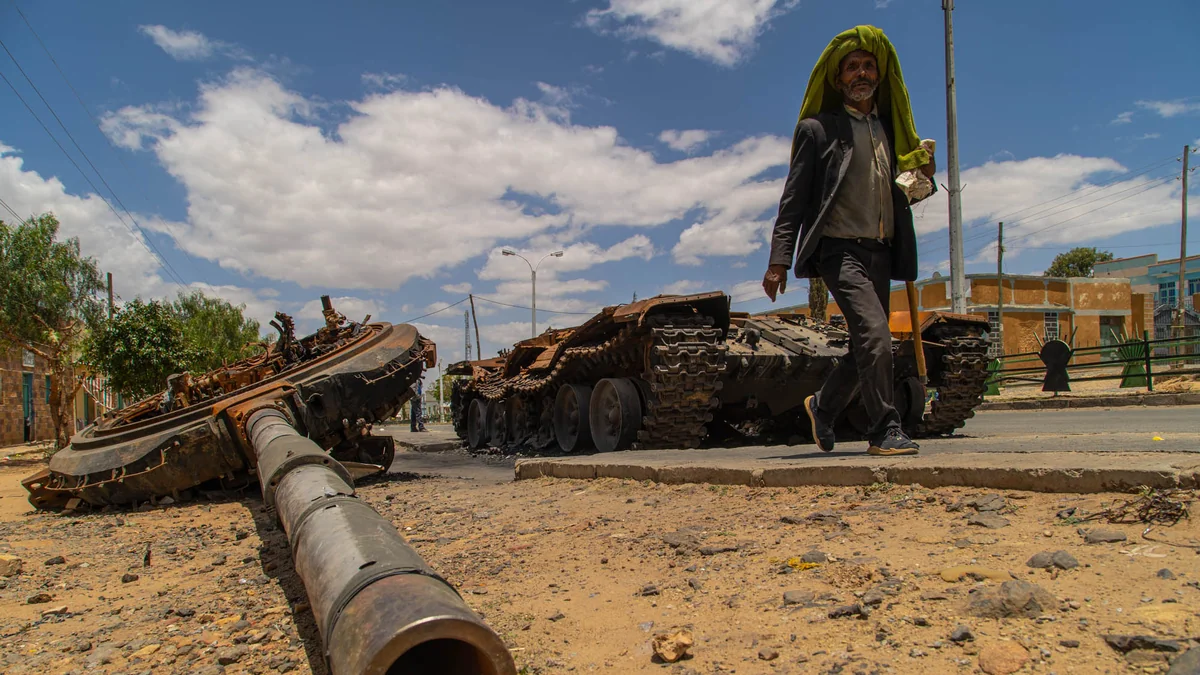
Fighting near the Sudan border resumed on August 1, 2026 — weeks before any formal political rupture, because in these conflicts the front line is usually the honest document. The Pretoria text had deferred the hardest questions: the status of Western Tigray, the sequencing of disarmament, the fate of Amhara militias who had operated in territory the agreement never cleanly assigned. Human Rights Watch documented ongoing ethnic cleansing in Western Tigray as late as April 2026. The agreement had not stopped it; it had simply declined to address it.
That is the load-bearing wall. The disarmament timelines and monitoring mechanisms were moulding — pull them and nothing structural falls, because nothing structural was ever holding. A peace text that defers the territorial question is not a settlement; it is a postponement dressed in the language of resolution. The Pretoria Agreement bought roughly three and a half years. Whether that was worth the price of the political legitimacy spent signing it is the question Addis Ababa and Mekelle are now answering by other means.
Seven Groups Under One Name
The Ethiopian Peoples' Forces Alliance for Survival, known by its Amharic designation Tsemdo, was formally constituted on September 20, 2026. Seven armed groups signed a unified command structure. The name the coalition chose — Survival — was not accidental; it signals that the member organisations read their situation as existential, not merely political.
The list of signatories is the analytical story. The Tigray People's Liberation Front, the Oromo Liberation Army, and the Amhara Fano National Movement are all present. During the 2020–2022 Tigray War, the Fano and federal forces fought alongside each other against the TPLF; the OLA ran a separate insurgency in Oromia while that war burned in the north. That three groups whose grievances were, at points, directed at each other are now coordinating against Addis Ababa is not a change in scale — it is a change in geometry.
The coalition's geographic reach extends further than its three headline members. The Afar Revolutionary Democratic Unity Front and the overseas faction of the Ogaden National Liberation Front both appear on the founding documents. Their inclusion pulls the Alliance's nominal footprint across Tigray, Oromia, Afar, and the Somali region simultaneously — a multi-regional claim that the federal government cannot quarantine to a single front or a single ethnic grievance.
Ask the small question first: who is the borderland here, and who is the empire? Seven groups found a common answer on the same day. Whether the command structure holds under operational pressure is the structural question that the coming weeks will begin to answer.
Three Airports and the Shape of the Ground War
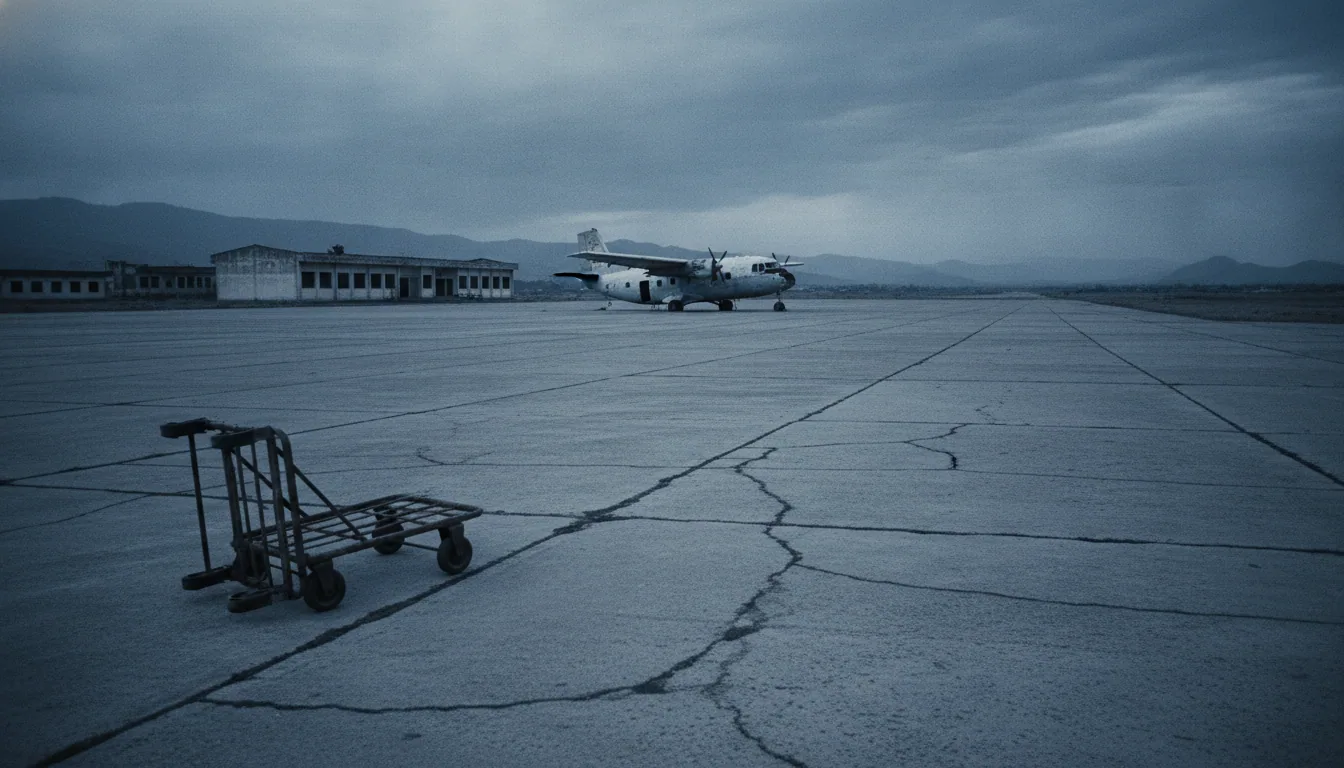
On September 23, 2026, TPLF forces seized Alula Aba Nega in Mekelle, Axum, and Shire. Three airports. The practical consequence was immediate and blunt: Ethiopian Airlines suspended all flights to Tigray, converting a military seizure into a logistical cordon. Air access to a region where 5.2 million people require humanitarian assistance is not a symbolic prize.
What the airport seizures mean on the ground is this: supply lines that ran through the air now do not run at all. Relief organisations, commercial cargo, and government reinforcements all depended on those corridors. Whoever controls the tarmac controls the clock, and right now the clock is running against Addis Ababa in the north.
The federal counter-move came five days later. Federal forces and the Tigray Peace Force retook Alamata on September 28, and the government announced 895 TPLF fighters killed in the final week of September. Read that figure alongside the 52 civilian deaths reported in Alamata over those three days, and you have the actual arithmetic of the advance. Both numbers matter; neither cancels the other.
One further data point sits at the edge of what can be confirmed. Opposition sources allege that five schools in Tigray were struck by drone attacks on September 22. The claim is unverified by independent observers, but it is consistent with the documented pattern of aerial escalation that preceded the airport seizures. A soft claim is not a confirmed fact. It is, however, a pattern worth noting before the pattern resolves into something harder.
The shape emerging is a multi-front attritional contest in which air access, ground corridors, and civilian infrastructure are simultaneously contested — and in which the distinction between military target and civilian site is becoming the central, unresolved question.
Addis Ababa Is No Longer the Rear
On September 30, 2026, the National Intelligence and Security Service banned all drone flights over Addis Ababa. No explanation accompanied the order. None was needed — a government that expected its capital to remain safe from the war in the north would not have issued it.
The following night, explosions struck the Ethiopian National Defense Force headquarters in Addis Ababa. Opposition sources attributed the strikes to drones; physical confirmation remains outstanding, and the exact mechanism is still contested. What is not contested is that something detonated beside the central command of the federal military, inside a city that Abiy Ahmed's government had treated, until very recently, as beyond the reach of the coalition ranged against it.
The drone-flight ban now reads as the negative space around the event. Prohibitions of that kind are not precautionary in the abstract — they are responses to specific, assessed threats that officials decline to name in public. The government knew what it feared before October 1 arrived.
The political weight of what followed is independent of whether the munition was a drone or something else. Addis Ababa has ceased to function as a safe administrative rear. A government that cannot guarantee the security of its own military headquarters operates under a different set of calculations than one that can — on the question of negotiation, on the question of how long international partners will treat it as a stable interlocutor, and on the more immediate question of where, precisely, the front line now runs.
The Ethiopia War's Regional Ledger: Eritrea, Egypt, Sudan
Field Marshal Birhanu Jula, Chief of Staff of the Ethiopian National Defense Force, publicly accused Eritrea, Sudan, and Egypt of providing logistical support to the Alliance for Survival. The accusation carries no independent verification as of this writing. It also follows a recognisable federal-government pattern: when the internal coalition against you grows embarrassing, name a foreign hand.
That pattern does not make the claim false. The geopolitical incentives are real and documentable on their own terms. Egypt has a structural downstream interest in any force that complicates Addis Ababa's Grand Ethiopian Renaissance Dam diplomacy — Cairo has spent years treating Ethiopian hydraulic ambition as an existential threat, and a government fighting on four fronts presses that case less effectively. Sudan's fractured authority since the 2021 coup and the subsequent Rapid Support Forces war has left its border regions effectively ungoverned, which is not the same as sponsorship but is rarely far from it. Eritrea's unresolved relationship with the TPLF — ally, then enemy, then unclassifiable — requires its own evidentiary line, separate from the other two.
The comparison to earlier proxy accusations in the 2020–2022 war is instructive precisely where it breaks. Then, Eritrean involvement became verifiable through satellite imagery and TPLF prisoner testimony. Here, the evidentiary chain is not yet visible. Each named state deserves a separate test, not a single verdict handed down from Addis Ababa's press room.
Twenty Million People and the One Marker Worth Watching
The numbers are not metaphors. More than 20 million Ethiopians currently require humanitarian assistance, according to the World Health Organization. At least 150,000 people have been displaced in the Afar region alone as a direct result of recent hostilities. MSF recorded 720 war-wounded patients by September 25 — a figure that is institution-sourced, auditable, and sits in direct contradiction to the government's claim of 895 enemy fighters killed in a single week of clean battlefield arithmetic.
The international floor of concern has been established. Volker Türk called for de-escalation. Civil society organisations issued a joint statement noting that communities "continue to endure the consequences of protracted conflicts without meaningful justice." Neither statement constitutes a mechanism. Both constitute a record.
A peace text that defers the territorial question is not a settlement; it is a postponement dressed in the language of resolution.
The one marker worth watching in this Ethiopian armed conflict is whether the Alliance for Survival agrees to or refuses a UN-facilitated humanitarian corridor to Tigray by end of October 2026. The answer will not be decorative. Acceptance signals a coalition that still calculates costs, still weighs the ledger of international legitimacy against military momentum. Refusal signals something else — a coalition that has concluded the window for negotiation has closed, and that the humanitarian count is someone else's problem to tally. The 720 patients MSF received in four days are the unit of measurement. Watch whether that number moves the corridor decision. If it does not, the evidence forces a sober conclusion about what kind of war this Ethiopia conflict escalation has become.