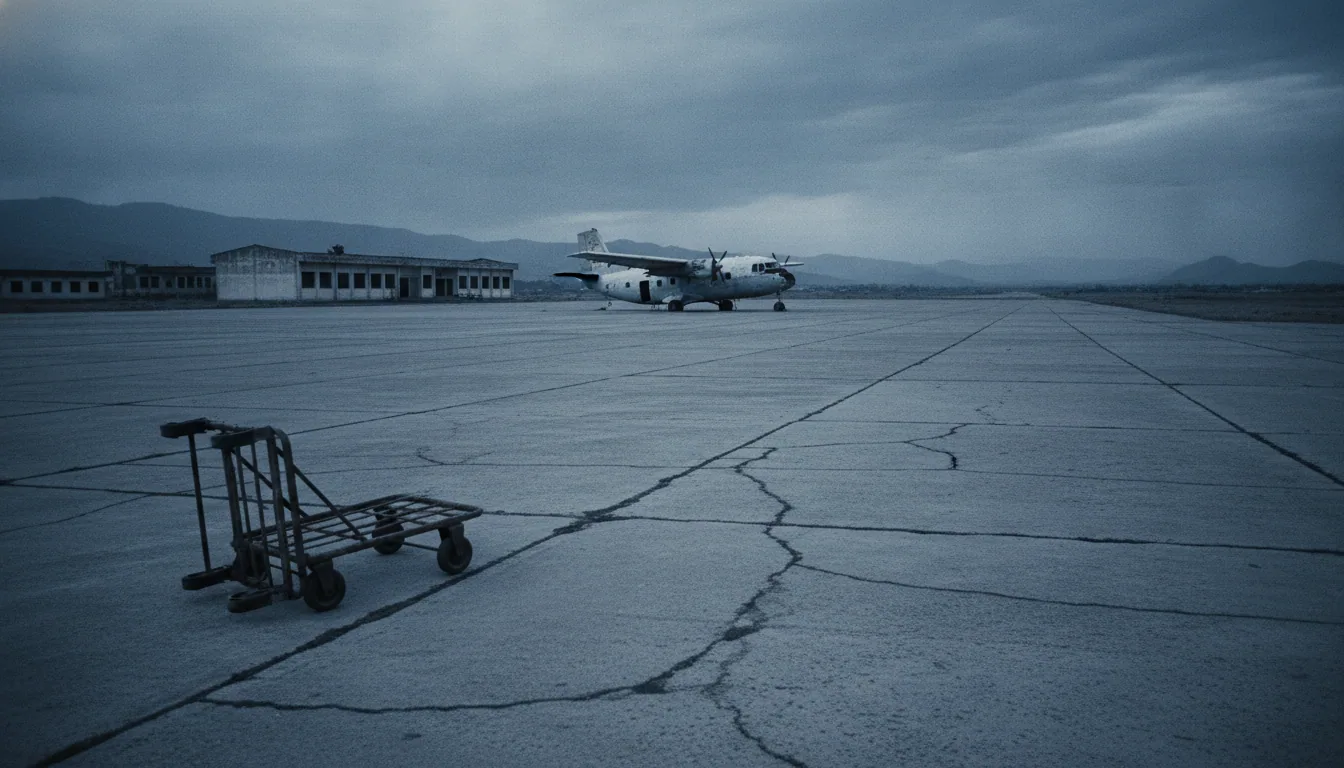
The recent Ethiopia-Eritrea drone strikes represent a strategic shift from internal policing to state-on-state interdiction near the Tigrayan border. On October 7 and 8, 2026, Ethiopian federal forces utilized Turkish and Iranian platforms to strike Eritrean military hardware near Adigrat, signaling a collapse of the 2018 peace alignment.
The Logic of the Adigrat Strike
In 1998, the opening salvos of the Ethiopia-Eritrea war were dismissed by foreign desks as a localized border dispute. History in the Horn of Africa usually announces its arrival through the sound of small things breaking on the borderland floor. On October 7, 2026, the signal was the high-altitude hum of Turkish and Iranian platforms over Tigray.
Ethiopian federal forces conducted targeted strikes against Eritrean military vehicles near Adigrat. This was not the familiar work of policing internal dissent in Amhara or targeting local ethnic militias. It was a deliberate act of state-on-state interdiction against the hardware of a former ally that had crossed a sovereign line.
The drones targeted troops and ammunition moving through territory just 25 km from the Eritrean border. The monitor ACLED confirmed multiple successful hits on these convoys. Witnesses in Adigrat reported charred military lorries left on the roads before the remaining units were seen retreating northward.
The wire says these are border clashes, but the original reports suggest something colder: interdiction. Ethiopia is now using its modernized arsenal of Turkish and Chinese hardware to enforce a strategic reality following the diplomatic severance on October 2. Addis Ababa is effectively mapping a new perimeter with remote-controlled ordnance.
The Paper Trail of a Severed Alliance
Diplomatic divorce in the Horn of Africa is rarely a matter of impulse. It serves instead as the terminal phase of military mobilization. On October 2, 2026, the formal severance of ties between Addis Ababa and Asmara ended a decade of tactical alignment.
The expulsion of 10 Eritrean diplomats from Ethiopia followed a familiar pattern of clearing the board before the move toward active hostilities. This was accompanied by the immediate closure of the Ethiopian embassy in Asmara. These are the load-bearing walls of the conflict, while the earlier rhetoric of regional peace was merely moulding.
Unconfirmed reports suggest a drone strike targeted the Ministry of Defense in Addis Ababa on the very day ties were cut. If verified, this indicates the kinetic phase began as the last diplomatic cables were being processed. It marks the moment when the state stops talking and begins calculating the weight of its ordnance against former allies.
A Geography of Ammunition: Analyzing Ethiopia-Eritrea Drone Strikes
Ethiopia has assembled a cabinet of curiosities from the world’s middle-tier arms dealers. The inventory includes the Turkish Bayraktar TB2, the Iranian Mohajer-6, and the Chinese Wing Loong I. The induction of the heavier Akinci drone in January 2024 shifted the strategic maths from hunting rebels to stopping armoured columns.
For a state overstretched by internal dissent, the drone is a structural necessity rather than a luxury. Prime Minister Abiy Ahmed has overseen a transition toward a drone-first military doctrine to compensate for a strained treasury. It is the most efficient way to project power across the Tigrayan highlands without risking the morale of a fragile infantry.
The technology allows Addis Ababa to ignore the friction of the ground until the moment of impact. We are witnessing a pivot from counter-insurgency to conventional inter-state warfare. The strikes near Adigrat targeted the identified logistics of a sovereign neighbour rather than hidden militia camps.
A landlocked power with a modern air force will eventually look toward the water.
When a platform tracks a military convoy 25 km from the border, the target is no longer a domestic insurgent but a foreign uniform. The diversification of suppliers means no single power can easily disable this machinery. If Ankara faces diplomatic pressure, Tehran or Beijing remains on the line.
That is the load-bearing wall. Everything else is moulding. The small-nation floor is now defined by a remote-controlled geometry that requires no local permission and offers no warning.
Ethiopia’s status as a landlocked power since 1993 makes this aerial reach an existential requirement. This arsenal ensures that the borderland remains a space where technology overrules sovereignty. The movement of these airframes is the only marker that matters now.
The Nobelist and the Port: The Long Durée of 1993
In 2018, the world watched a televised embrace in Asmara. Abiy Ahmed and Isaias Afwerki signed the deal that earned a Nobel Peace Prize and ended two decades of stalemate. A drone is a very precise way to announce a divorce.
Ethiopia’s history is a ledger of lost coastlines and bitter mountain passes. When Eritrea gained independence in 1993, Addis Ababa became the world’s most populous landlocked state. The 1998 border war followed, a meat-grinder that claimed 80,000 lives for a patch of dry earth near the town of Badme.
During the 2020-2022 Tigray war, Eritrean troops crossed the border as allies of the Ethiopian federal government. They fought together to dismantle the TPLF, which both leaders then viewed as a common threat to their respective palaces. That alliance did not survive the subsequent Pretoria Agreement.
Ethiopia’s drive for maritime access is the load-bearing wall of its foreign policy. Asmara now watches the drone-monitored horizon with a very familiar dread. The Eritrean government accuses Addis Ababa of seeking a pretext to invade their territory for a sovereign port.
They see the October strikes as the first movements of a campaign to reclaim the coast by force. Adigrat sits just 25 km from the border, a front line for old grievances. The ghosts of 1993 have returned to claim the present.
The Small-Nation Floor: Collateral in the Buffer State
The 2022 Pretoria Agreement was hailed as a finality. It has since revealed itself as decorative moulding, as the structural load was never shared with an excluded Asmara. Ethiopia's demand for Red Sea access has since dismantled the diplomatic facade.
The Tigray People’s Liberation Front has now formed a seven-group Alliance for Survival to oppose the federal government. Addis Ababa alleges that Eritrea is actively backing these rebels within the northern Tigray state. This marks a bitter contrast to 2020, when these two capitals were allies in blood.
Peace in this region is often merely the interval required to procure a better class of ammunition. Since 2023, the monitor ACLED has recorded a minimum of 669 drone fatalities in Amhara alone. The UN documented 248 civilian deaths in a single four-month window that same year.
The 1998 border war comparison is common, but it misses the technical shift from a tragedy of trenches to a tragedy of screens. Today, the ledger remains the same for the peasant in the buffer state. The people of the borderland are the currency used to pay for the strategic ambitions of the capital.
The Watch-Marker: Reading the Regional Ledger
The 2022 Pretoria Agreement was a document of exhaustion, not resolution. Its structural failure is now quantified by the emergence of the Alliance for Survival. This coalition marks the end of the federal government's monopoly on northern force.
The maths of the Horn of Africa has shifted from internal policing to state-on-state attrition. With 669 fatalities documented by monitors in Amhara, the federal inventory of Turkish, Iranian, and Chinese drones is being redirected. The strikes near Adigrat represent a pivot toward conventional war.
When Asmara speaks of territorial aggression, the language is a deliberate citation of the 1998 border war. We are seeing the load-bearing walls of regional diplomacy being stripped back to the raw concrete of the 1990s. The evidence forces us to conclude that the recent Ethiopia-Eritrea drone strikes indicate the Horn is no longer in a post-war era, but a pre-war one.