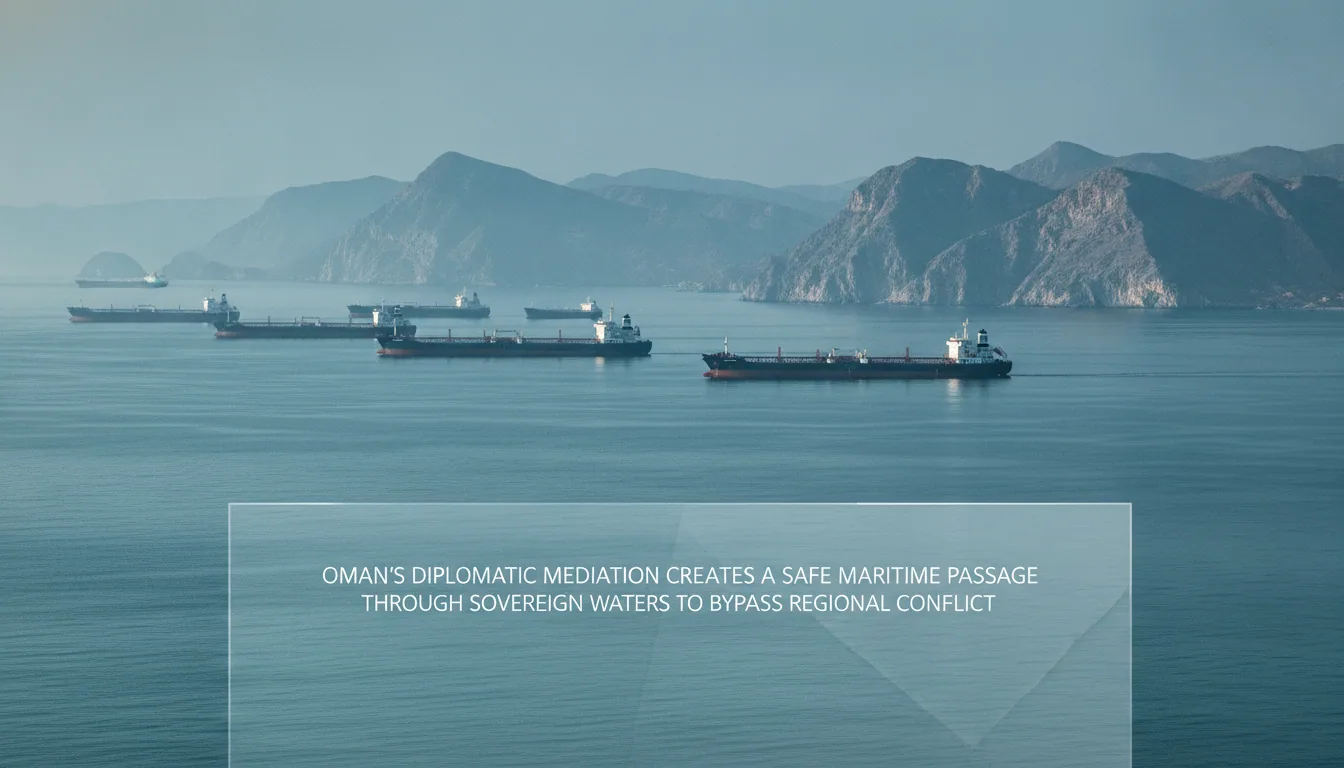
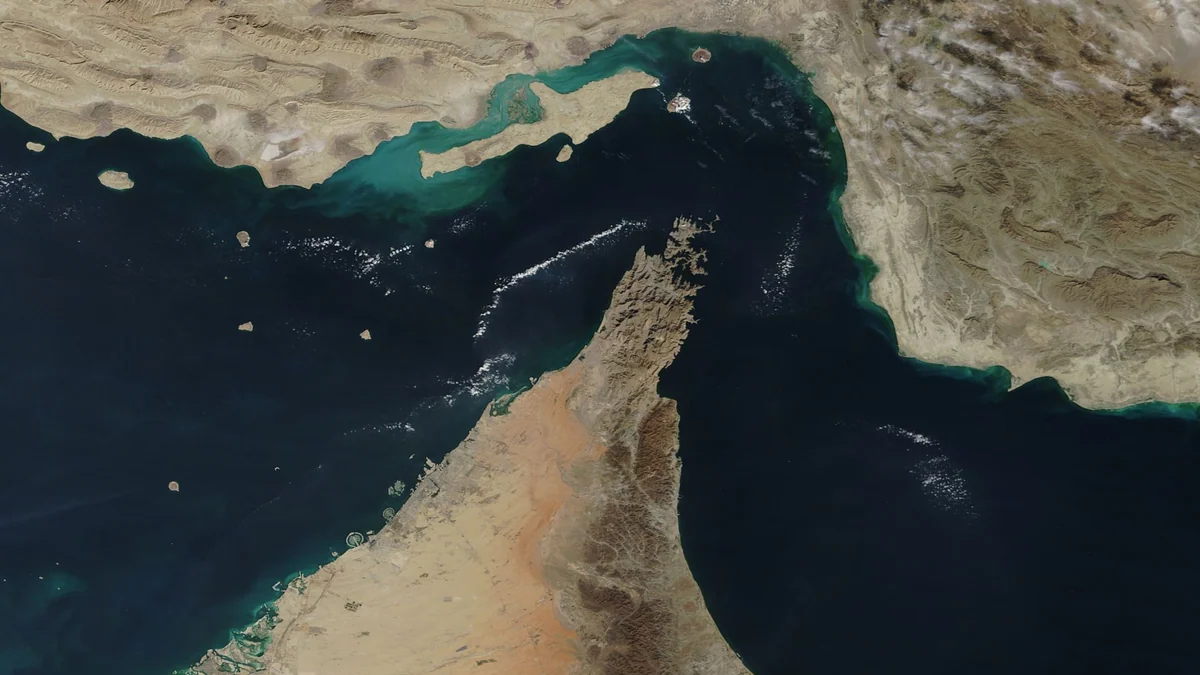
The Hormuz Agreement, finalized on August 5, 2026, establishes a joint maritime management framework between Tehran and Muscat. This bilateral arrangement replaces international transit passage norms with a gated system, mandating inbound traffic through Iranian waters and outbound through Omani seas, fundamentally altering global energy trade routes.
The Hormuz Agreement effectively ends sixty years of international free passage in the world's most vital maritime artery by replacing UNCLOS transit rules with regional sovereign control. I remember the wall maps in the Sarajevo bureau in 1994. They were covered in lines that everyone pretended were made of stone, until the next offensive moved them an inch to the left.
On August 5, 2026, the stone finally crumbled in the Strait of Hormuz. Tehran and Muscat have finalized what the official communiqués call a joint management framework. The wire says cooperation, but the original text says something colder: the end of sixty years of international free passage.
The 1982 UNCLOS rules on transit passage, once the bedrock of global energy trade, are being archived. The coordinates agreed upon by Esmaeil Baqaei and his Omani counterparts redraw the world's most vital maritime artery. The current northern route near Larak Island is now closed.
The southern corridor that commercial fleets once navigated with relative legal certainty has been deleted. This is the new load-bearing wall of regional power. Everything else is decorative molding.
Inbound commercial ships must now transit through Iranian territorial waters, while outbound traffic is steered through Omani seas. It is a bilateral gate on a global road. For six decades, the Strait was a common good, or at least a shared inconvenience.
Now it is a private ledger. Kazem Gharibabadi has outlined the technical shift that replaces international law with regional control. The coordinates are not just dots on a digital chart; they represent the formal death of the open sea in the Middle East.
The Architecture of the Hormuz Agreement and Inbound Sovereignty
The shipping coordinates finalized this August dismantle the sixty-year fiction of the strait as an international commons. The mechanism is as simple as it is absolute. Inbound commercial traffic is now mandated to transit through Iranian territorial waters, while outbound vessels are funneled through Omani seas.
This is not a temporary detour born of a skirmish. Since the conflict ignited on February 28, 2024, the waterway has shifted from a global utility to a bilateral gate. The 20% of the world's oil and LNG supply that transits this neck of water is now the collateral in a new regional ledger.
The strategic pivot of 20% of the world's energy supply is not just a statistic for a spreadsheet. It represents a fundamental transfer of oversight from the international community to a specific, named decider. When a single VLCC tanker carries cargo worth more than the GDP of a small state, its route becomes a matter of survival.
Access is no longer a right under international law, but a permission granted by a sovereign.
I have seen this transition before in the post-Soviet space. Borders that were once mere lines on a map suddenly became thick, heavy walls of bureaucracy and threat. The UNCLOS norms of transit passage have been replaced by a model of joint management that favors the gatekeeper over the merchant.
Every inbound ship must now physically enter the legal space of a power that the West spent decades trying to bypass. That is the load-bearing wall. By forcing tankers into Iranian waters, Tehran converts the tactical chaos of 2024 into a permanent structural reality.
The wire says this is about regional cooperation. The original text says something colder: the northern route near Larak Island is closed. Access is no longer a right under international law, but a permission granted by a sovereign.
The Arithmetic of the Toll: When Safety Becomes a Service Fee
The ledger is where the decoration of diplomacy meets the load-bearing wall of the bank account. Tehran describes these levies as "service fees" for security and environmental maintenance. The wire copy repeats the term without flinching.
The original Persian phrasing suggests something more permanent than a temporary maintenance cost. There is a visible gap in the arithmetic between the two capitals. Tehran has proposed a fee ranging from five to seven percent of the total cargo value.
Muscat, playing its historic role as the merchant-state, has countered with a three percent proposal. This is not a tax on the water, but a tax on the contents. Consider the Very Large Crude Carrier, the heavy lifting machine of the global energy trade.
A single VLCC carries roughly two million barrels of oil. Under the Iranian proposal, a single transit could face fees between eight million and eleven million dollars. Somewhere a spreadsheet was quietly updated.
This is the strategic victory Tehran has sought since the conflict began in February 2024. By formalizing these fees, Iran transforms its naval presence into a formal commercial gatekeeper. The "service" being provided is effectively the absence of a threat.
If the fee is paid, the sea remains calm. If it is not, the geography becomes difficult. The Western wire launders this as a joint management deal.
It is the replacement of international maritime law with a bilateral toll booth. In the language of the bazaar, safety is the commodity. In the language of power, it is tribute.
Small nations like Oman understand the price of being the buffer. Muscat attempts to lower the percentage to keep the trade routes breathing. But the decision rests with the empire that controls the shore.
The Deciders and the Blockade: Mojtaba Khamenei’s Ledger
The maps in Tehran are not drawn with ink but with conditions. While ministers in Muscat trade coordinates, the final signature remains at a single desk in the capital. This deal belongs to Mojtaba Khamenei.
His ratification is the load-bearing requirement for any tanker to move. Without his ink, the August agreement is just a stack of paper in a quiet office.
In Washington, Vice President JD Vance described the negotiation status as messy and time-consuming. It is a revealing choice of vocabulary. For a superpower, "messy" usually describes a reality that refuses to be tidied into a press briefing.
The mess is the physical friction of the US naval blockade against the Iranian coast. The wire says "cooperation," but the original intent is a siege. Iran has made the reopening of the strait conditional on one event: the United States must end its naval blockade of Iranian ports.
This is the ultimate point of friction. I have heard this type of ultimatum before: Moscow, 1991. It failed then because neither side wanted to be the first to move the ships.
The ledger in Tehran is now a tool of quiet pressure. Mojtaba Khamenei waits at the map room desk for the American fleet to blink. The blockade is the only thing standing between the global market and the new tolls.
If the ships remain, the strait stays closed. If they leave, the empire has been bought out of the water.
The Kumzar Warning: Security in a Fragile Corridor
On August 5, 2026, as diplomats in Tehran and Muscat finalized their coordinates, a tanker captain reported two explosions nine miles off Kumzar. This was not a technical failure of the new shipping lanes, but a reminder of their inherent fragility. The Strait remains a laboratory for kinetic diplomacy where the ledger and the limpet mine must coexist.
I have heard this promise of regional security before: 1987, the Gulf. It failed then for the reason it will fail now: the absence of a neutral arbiter. Yemen's Houthis recently proved that signatures in Muscat do not stop drones from the Yemeni coast.
The United Kingdom Maritime Trade Operations (UKMTO) remains the only metric of safety that carries weight. While Iranian spokesmen like Esmaeil Baqaei speak of "service fees," the UKMTO bulletins record the actual cost of transit in smoke and debris. The UKMTO records what the communiqué omits.
If the Wafa and the Daisy represent the new baseline, the proposed three to seven percent fees are not a premium for safety. They are a tax on the inevitable. One might call it a protection racket, though here the protection is notably absent.
The 1970s Red Sea precedents fail because the disruption is now baked into the trade model. The corridor is not being secured. It is being managed as a high-risk asset by those who hold the detonator.
The Trial Period: Reading the Two-Month Marker
The Hormuz Agreement is not a permanent treaty but a temporary security model. It is designed to be tested over a trial period of two to four months. Kazem Gharibabadi has been precise on this distinction.
This is a new arrangement and not the implementation of the Islamabad MoU. One is a dormant document, while the other is a live, high-stakes experiment. Esmaeil Baqaei confirms that coordinates are agreed upon, yet US factors making the strait insecure still exist.
Iran has made the reopening of the strait conditional on the United States ending its naval blockade. Without that concession, the new shipping lanes remain empty lines on a map. The arithmetic of this trial phase is brutal.
Under the Iranian proposal, a single VLCC faces a fee between $8 million and $11 million. This turns a maritime right into a commercial service. If the tankers start moving, the sixty-year era of free passage under UNCLOS is dead.
Watch one specific marker over the next eight weeks: the first confirmed VLCC payment. If the ledger shows an eight-figure transfer to Tehran and the US blockade quietly recedes, the deal is a structural shift. If the ships remain anchored by October, the Hormuz Agreement was never a wall, but merely decorative molding for a continuing war.