Three Centimetres: How Romania Kept Its Reactors Running — Until It Couldn't
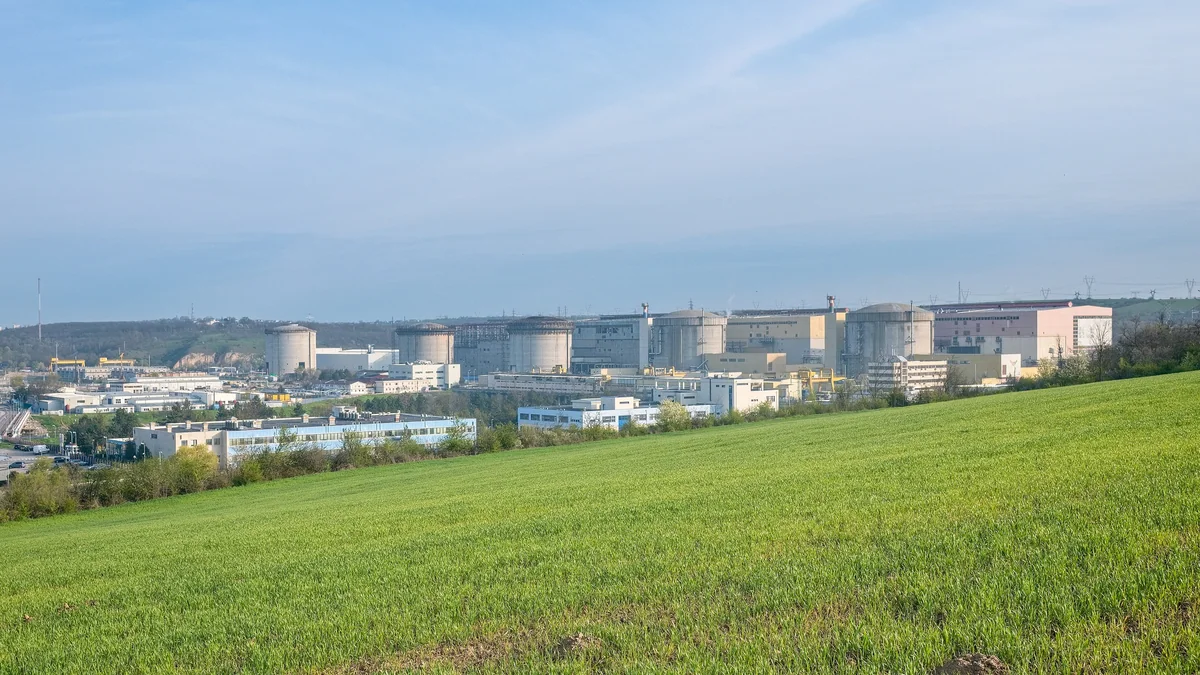
On August 10, 2026, Romanian engineers monitoring the Danube recorded a single number that exposed the physical limits of nuclear resilience: 3 cm. That was the margin between the river's surface and the minimum depth required to cool the reactors at Cernavoda safely. Three centimetres — roughly the width of two stacked coins — stood between 20% of Romania's national electricity supply and a forced shutdown.
The Romanian military had already been deployed. Soldiers blasted submerged rocks with explosives to clear channels and redirect river flow toward the plant. Authorities sank four barges loaded with rock near the Bala Canal, creating an underwater barrier designed to push more water where the reactors needed it.
These are not the emergency measures of a grid coping gracefully with disruption. They are the measures of one trying to hold the line.
They held it — briefly. Unit 1 at Cernavoda had already gone offline in late July. Then, on August 13, 2026, Nuclearelectrica initiated the controlled shutdown of Unit 2.
The statement was careful, as utility statements tend to be: "The decision was determined by the continued significant decrease in the level of the Danube River." Romania's Ministry of Energy said imports and alternative sources would cover the gap.
That claim is worth sitting with. Cernavoda, when it runs, supplies roughly 20% of Romanian electricity. Replacing 20% overnight through interconnectors and gas generation is possible — European grids are built for exactly this kind of mutual aid — but it is not free, and it is not a plan for a summer when this happens every year.
Here's what actually happened: one of Europe's most reliable low-carbon generators went dark because a river ran low. The military blew up rocks to stop it. That is not a freak event anymore. That is a pattern.
Romania Is Not the Exception. It Is the Preview.
Hungary watched Romania's crisis unfold and recognized it. Engineers at Paks, Hungary's sole nuclear facility, began sinking their own barges into the Danube to create underwater barriers and hold back dwindling flow. A first-ever drought shutdown at Paks, once a theoretical risk, became a live operational scenario in the same summer. Two countries, one river, one season, the same emergency playbook.
France did not even need a drought. During June and July 2026, river temperatures hit regulatory discharge limits, forcing curtailments that cut French nuclear generation by 9 percent. Reactors that were structurally sound and fully fuelled simply could not reject heat into water that was already too warm. That 9 percent is not a rounding error. For a country where nuclear supplies roughly 70 percent of electricity, it is a meaningful seasonal hole in baseload supply.
Then came Gravelines. In August 2026, five of the plant's six reactors went offline after jellyfish clogged cooling-water intake pumps. It feels like an absurd footnote. The data says it is part of a pattern. Jellyfish blooms intensify in warmer coastal waters, and warmer coastal waters are a documented climate trend, not a freak occurrence.
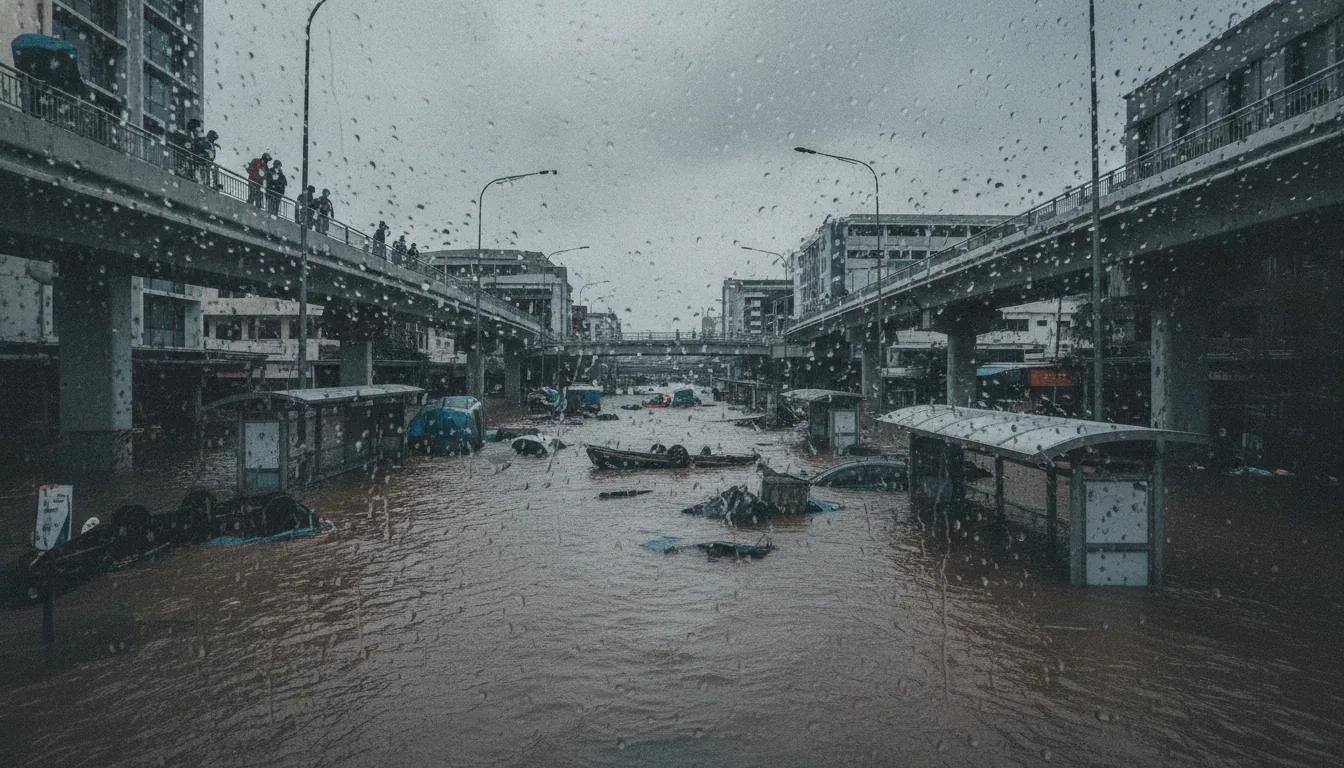
Three countries. Three different failure modes — drought, thermal regulation, biological clog. One summer. The honest read is not that Europe had a run of bad luck in 2026. The honest read is that the climate envelope nuclear infrastructure was designed for has shifted, and the plants are running against the edge of it. That is not a series of incidents. That is a systemic condition with a direction of travel.
The Reliability Paradox: Nuclear Resilience Requires a Stable Climate
Here is the structural problem nobody in the COP28 tripling pledge liked to say out loud. Nuclear is positioned as the essential baseload — the always-on backbone that lets variable wind and solar do their job. Twenty-five countries signed on to triple global capacity by 2050 for exactly that reason. Yet the cooling infrastructure inside every one of those plants was engineered for a climate that no longer reliably exists.
The numbers make this concrete. Research shows that every 1°C rise in ambient temperature cuts nuclear output by roughly 0.5%. That sounds modest. Across a warming decade, compounding against a grid that was supposed to grow its nuclear share, it is not modest at all. Romania lost 20% of its national generation in a single August. France saw a 9% drop in nuclear output during the 2026 summer heatwave because river temperatures pushed plants to their regulatory limits.
The paradox is precise: the energy source chosen to stabilize the climate is being destabilized by it.
This is not a reason to abandon nuclear. Despair is just procrastination with better PR. It is, however, a reason to redesign it — and to say so plainly rather than treating cooling vulnerability as an engineering footnote. Singapore's Deputy Prime Minister Gan Kim Yong framed the broader obligation correctly: climate resilience is not optional.
The honest scorecard is that the tripling consensus is correct in its destination and underspecified in its physics. The plants being built must assume a warmer world from the first pour of concrete, not retrofit for one after the damage is done.
The Money Is Moving. Is the Engineering?
In December 2023, twenty-five countries stood at COP28 and pledged to triple global nuclear capacity by 2050. The room felt historic. Nine months later, fourteen major financial institutions, including Bank of America and Goldman Sachs, put their names behind the same target. Then in March 2025, Google, Amazon, and Meta signed a separate pledge to source nuclear power for their data centres. The money, in other words, is real and it is moving.
Here is what the pledges do not say. None of the commitments specify how the new plants will be cooled. None set engineering standards for operation in a world where rivers run 3 cm above their minimum threshold in August. The financial architecture is being built faster than the physical one.
The scale check matters here. Tripling nuclear capacity is not a gesture. That is a lever, a genuine one, potentially removing gigatons of CO2 from a decarbonisation pathway that has no obvious substitute for firm, dispatchable baseload power. The problem is that a tripled fleet designed to the same thermal and hydrological assumptions as Cernavoda or Paks is still a fleet that shuts down in a drought.
It feels like momentum. The question is whether it is resilient momentum. The financial commitments are signed and banked. The engineering specifications for a hotter, drier world are largely still unwritten. Investors are pricing the capacity; they are not yet pricing the climate exposure that comes with it. That gap — between the capital flowing in and the design standards that do not yet exist — is where the real work is waiting.
Here's What Actually Works: Designs That Don't Depend on a River Staying Full
The Barakah plant in the UAE does not have this problem. Its cooling water comes from deep-sea intakes, below the surface layer where summer temperatures spike. When ambient air hits 45°C and river plants across Europe begin throttling output, Barakah keeps running. That is not luck. That is a design choice made before the first concrete was poured. That is what climate-resilient nuclear power looks like in practice.
The engineering for onshore plants is less elegant but it exists. Secondary cooling via closed-loop towers severs the direct dependency on river flow. Water circulates internally, loses heat to the atmosphere, and returns. The honest catch: retrofitting an existing plant like Cernavoda is expensive, disruptive, and complicated by site geometry. Building towers in from the start costs far less than bolting them on later.
The IAEA's Atoms4NetZero programme is doing the unglamorous work of modelling resilient siting criteria so the next generation of plants avoids the Cernavoda problem by design. Pick the location right, and you do not spend August 2026 blasting rocks with military explosives. The difference between a good site and a bad one is not always dramatic on a map, but it is decisive in a drought.
The atom is also working on a second front. IAEA nuclear science programmes are improving crop nutrition and agricultural climate resilience, applying isotope techniques to soil and plant research. The same institution managing reactor safety is helping farmers adapt to the same warming that is draining the Danube. That is not a gesture. That is a lever.
The Honest Scorecard: What Needs to Change Before the Next Drought
Nuclear remains one of the highest-density, lowest-carbon baseload options available. A 1°C rise in ambient temperature cuts output by 0.5% — a manageable drag, not a verdict. The case for nuclear in a net-zero grid is unaffected by one Romanian summer.
The catch is equally real and should not be buried. River-cooled plants built to 20th-century hydrology are operationally fragile in a 21st-century climate. When 9% of French nuclear output disappears during a heatwave and Romania's entire contribution to the national grid — 20% of the country's electricity — vanishes because the Danube fell 3 cm below tolerance, that is a systemic design flaw, not bad luck.
The proportionate response is not less nuclear but better-sited, better-cooled nuclear. Every new contract written under the 25-nation tripling pledge must include nuclear resilience specifications from the first page, not as a retrofit at twice the price. Policymakers who sign the capacity targets and skip the cooling specifications are handing the next drought a shutdown order.