In May 2026, Russia’s declining victory narrative is failing to mask stalled military momentum, with Russian forces gaining only 10.07 square kilometers per day. This strategic friction, highlighted by a temporary ceasefire and a massive prisoner exchange, suggests a shift toward attrition rather than decisive territorial conquest in Ukraine.
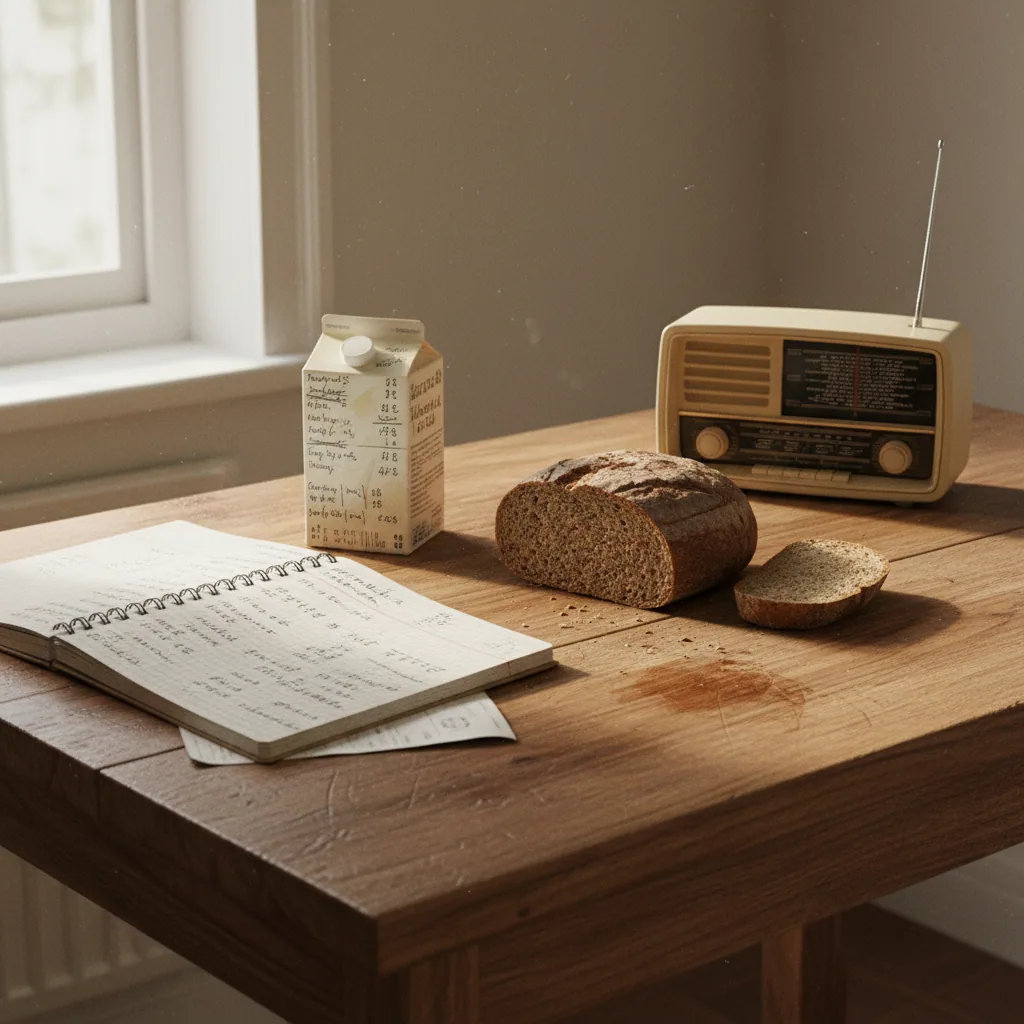
The arithmetic of the 2026 front line confirms that the Kremlin is liquidating its future for minimal gains in mud and ruins. A liter of milk in Riga costs 1.15 euros today. A kilo of rye bread is 1.60. My youngest daughter needs new shoes for the spring, which is another 45 euros I hadn’t planned to spend until the heating bill arrived. In May 2026, this is the arithmetic of a Tuesday morning.
I sit at my kitchen table with a calculator and a notebook. On the radio, they are talking about the ceasefire and the prisoner exchange. Things end with signatures in high policy, but in the world of kitchens, things only end when the prices stop climbing.
The Fiction of Inevitable Victory
In May 2026, the Russian government is attempting to sell a very expensive story to its people. President Vladimir Putin has used a series of telephone calls, including an exchange with U.S. President Donald Trump, to reaffirm his war aims. The narrative from the Kremlin is one of inevitable victory, but the math on the ground tells a much quieter, grimmer story.
Between October 1, 2025, and March 31, 2026, Russian forces seized 1,833.27 square kilometers of Ukrainian territory. According to the Institute for the Study of War (ISW), this represents an average rate of advance that has slowed to just 10.07 square kilometers per day.
Ten square kilometers is roughly the size of a few large agricultural fields. It is a rounding error on a map of the European continent. For these tiny patches of soil, the Russian military is sustaining losses that experts from the CSIS describe as massive.
The Math Behind Russia’s Declining Victory Narrative
There is a gap between what the Kremlin calls "momentum" and what researchers call "strategic fiction." Reuben F. Johnson of the Casimir Pulaski Foundation recently noted that these claims of battlefield success are designed to mask severe military and economic strain. When a state spends its future to buy ten kilometers of mud a day, it is not winning; it is liquidating itself.
In May 2026, the situation transitioned from a broad offensive to a grinding war of attrition. While Putin speaks of certain victory, the reality is stalled momentum. Ukrainian forces achieved their own advances in early May, specifically in the Slovyansk and Hulyaipole directions.
| Metric | Late 2025 Offensive | Spring 2026 Reality |
|---|---|---|
| Daily Territorial Gain | 10.07 sq km | Stalling / Localized losses |
| Primary Tactic | Broad Push | Attrition / Strategic Fiction |
| Ukrainian Response | Defensive Posture | Drone strikes / Counter-advances |
| Diplomatic Status | Escalation Threats | Ceasefire / Prisoner Swap |
"When a state spends its future to buy ten kilometers of mud a day, it is not winning; it is liquidating itself."
As an unnamed analyst from the Kyiv Post put it, "Russian forces are performing worse on the battlefield in Spring 2026 than when the Kremlin emphasized its demand for Donetsk Oblast in 2025." The military culmination point is no longer a theoretical concept; it is the daily reality of a force that has run out of breath.
The Permission to Parade
The most surreal moment of this month was the signing of Decree No. 374/2026 by Ukrainian President Volodymyr Zelensky. This decree essentially "permitted" the Moscow Victory Day parade to proceed on May 9, 2026, without the threat of Ukrainian drone strikes.
The decree was part of a larger calculation: a three-day ceasefire and a massive prisoner exchange brokered by Donald Trump. Zelensky was clear about his priorities, stating that Red Square is less important than the lives of Ukrainian prisoners. He chose the return of fathers, sons, and daughters over the symbolic satisfaction of a fire in Moscow.
The Arithmetic of Survival
In the days leading up to the parade, the Russian military moved air defense systems away from strategic infrastructure to protect the streets of Moscow. They stripped protection from the factories and fuel depots that keep their economy moving just to ensure a parade could march past a reviewing stand.
In Berlin, the government issued a formal response to Russia's politicization of World War II memory. They see, as we do in the Baltics, that the ghosts of 1945 are being summoned to hide the failures of 2026.
The Atlantic Council has documented a persistent Ukrainian strike campaign using drones behind Russian lines. Ukraine essentially told the Kremlin it could have its party because Kyiv decided to let it happen.
Why I Write About Kilometers and Kopeks
I write about these things because the people I know—the women I studied with at the University of Latvia—are tired of being treated like footnotes. We are told the economy is improving, but we are the ones who feel the friction of the system through the price of imported goods.
Poverty in a rich union like the EU is a choice. Similarly, the continuation of a war that has reached its culminating point is a choice. The war is a parasite that eats the future of the person who starts it.
My oldest daughter is eleven. She is old enough to understand that "attrition warfare" means people are dying for meters of ground that will be forgotten in a decade. I do the arithmetic for her.
The Logic of the Swap
The May 2026 ceasefire and prisoner swap was a moment of hard-headed reciprocity. For the Ukrainian administration, the priority was clear:
1. Secure the return of hundreds of POWs.
2. Utilize a three-day window to stabilize logistics in Slovyansk and Hulyaipole.
3. Demonstrate that Ukraine is the actor capable of de-escalation.
4. Expose the hollowness of the Russian Victory Day celebration.
The 2026 parade was described by observers as exposing Russian military failures rather than power. There were fewer tanks than in years past, and the ones present looked lonely on the stones of Red Square. The threats of escalation issued by Russia felt like the shouts of a man who knows he is losing the argument.
What Comes After the Parade
May is a month of waiting for the garden to grow and for the ceasefire to either hold or shatter. Pessimism is a luxury my daughters cannot afford, so I look for the practical path forward.
The "strategic fiction" of the Kremlin cannot last forever because reality eventually sends a bill that cannot be ignored. Whether it is the 10.07 kilometers of daily gain or the milk that costs 1.15 euros, the numbers always catch up to the rhetoric.
We need a policy that focuses on the kitchen table as much as the negotiating table. If the EU's eastern edge is to be more than a stress test, we must ensure that "convergence" includes the ability to heat a home without fear.
Tomorrow, I will go back to the supermarket. I will write another post for my 40,000 subscribers about why the municipal housing budget matters as much as the defense budget. While the ceasefire persists, Russia’s declining victory narrative remains at odds with the reality of the kitchen table and the empty tanks on Red Square.
Written by Inese Kalvane