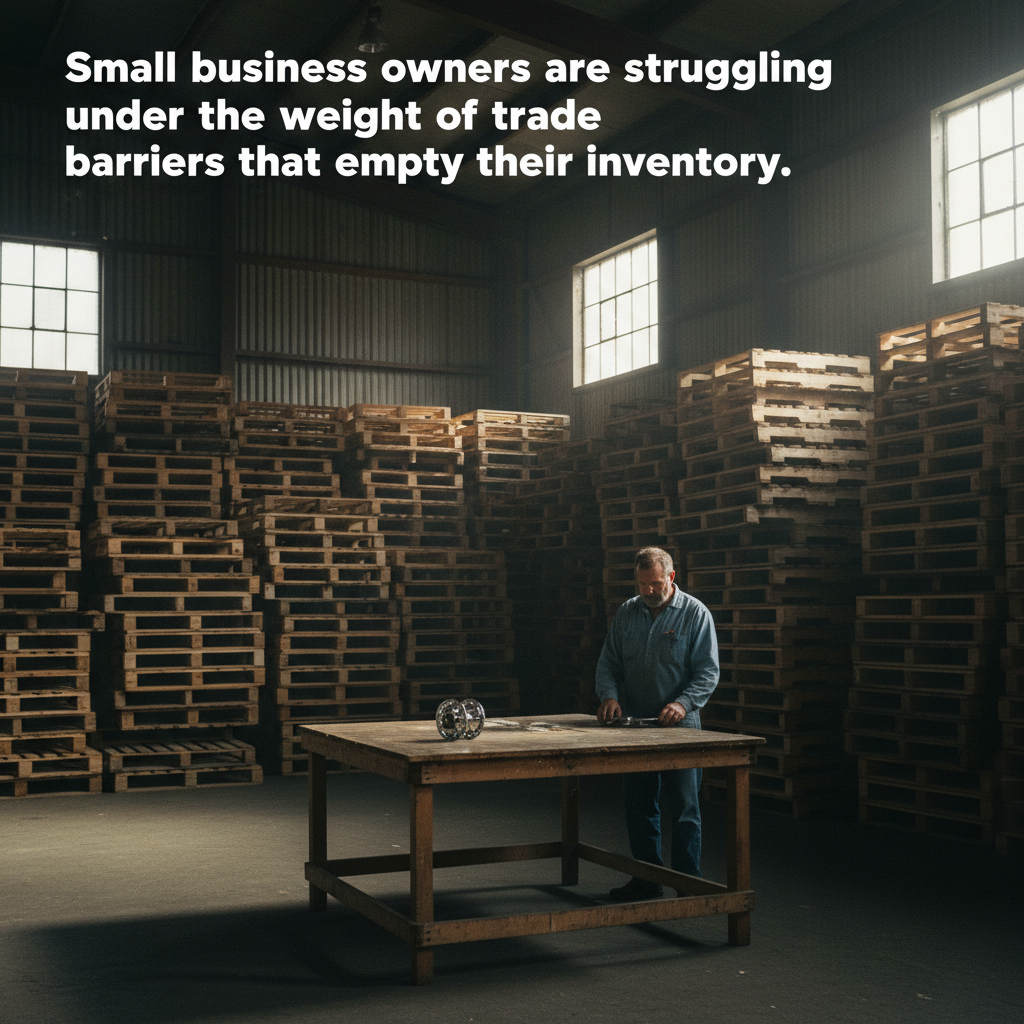
Marcus Thorne stands in his Columbus, Ohio, warehouse, surrounded by empty pallets and a 30 percent price hike on imported bike hubs. His struggle mirrors a national trend: a new NPR/Ipsos poll reveals that 76 percent of Americans believe current trade policies are actively damaging their standard of living.
What Americans say about tariffs, Iran, and world standing is that economic exhaustion has replaced the appetite for trade wars, as the majority of the public now prioritizes lower prices over protectionist geopolitical maneuvers. The air in Marcus’s warehouse smells of dry cardboard and the faint, metallic tang of the precision components he used to import by the thousand. Marcus is one of the thousands of small business owners whose livelihoods are caught in the gears of geopolitical machinery they cannot control.
"I had twelve employees in 2024," Marcus says, looking at the silent packing stations. "Now it’s just me and my nephew. We’re mostly packing up what’s left of the inventory before we pivot to local sourcing, which costs even more."
What Americans Say About Tariffs, Iran, and World Standing During the Summit
As Air Force One touches down at Beijing Capital International Airport on May 13, 2026, the distance between the tarmac and Marcus’s warehouse is measured in more than just miles. It is measured in a profound shift in the American psyche. A new poll reveals that 76 percent of Americans believe tariffs are actively harming their cost of living.
President Donald Trump arrives for this three-day summit with President Xi Jinping at a moment of extreme domestic fragility. While the administration continues to project an image of "America First" strength, the data suggests that the public is no longer willing to pay the "patriotism tax."
The reality of 2026 is a "double whammy" of economic pressures: the lingering trade friction with China and a smoldering, expensive conflict in Iran that has sent energy prices spiraling. For the average citizen, the trade war has stopped being a theoretical battle for national pride and has become a daily struggle for solvency.
The Human Toll of the Percentage Point
In Washington, policymakers speak of "decoupling" and "supply chain resilience" as if they are moves on a chessboard. In Columbus, Marcus speaks about the three families he had to lay off because the margins on his bike parts evaporated. The NPR/Chicago Council on Global Affairs data shows that 70 percent of Americans feel these trade barriers have negatively impacted their standard of living.
This is a marked departure from the sentiment of 2020, where many were willing to endure higher costs in exchange for bringing manufacturing back to American shores. But the "industrial renaissance" promised by the White House has been uneven, slow, and, for many, invisible.
"They told us it was about jobs," Marcus says. It was. But the jobs he lost were real, while the factory jobs promised in the next county over have yet to break ground.
"The 'Art of the Deal' only matters to him if it changes the number on the invoice at the end of the month."
China, Iran, and the Art of the Pivot
While the President prepares to sit across from Xi Jinping, the specter of the Middle East looms over the Great Hall of the People. China has not remained a passive observer to the U.S. involvement in Iran. Instead, China has positioned itself as Tehran’s primary economic lifeline.
Beijing recently announced a "new era of cooperation" with Iran, a move that effectively nullifies Western attempts to isolate the regime. I asked a diplomatic source in Beijing what China seeks from this summit. "They want the U.S. to realize that the world is no longer a solo performance," the source said.
This strategic partnership complicates every move the U.S. makes. While American resources are tied up in "kinetic actions" in Iran, China is quietly securing long-term energy contracts and expanding its diplomatic footprint. The Chinese leadership views time not in election cycles, but in decades.
The Global Hierarchy of Sentiment
The way Americans view the world has become increasingly transactional. The public's perception of "allies" versus "adversaries" reveals a world divided by perceived utility and shared values.
| Country | Perceived Status (Primary) | Public Sentiment Score |
|---|---|---|
| Australia | Ally | 51% |
| Japan | Ally | High |
| India | Strategic Partner | Moderate |
| Saudi Arabia | Strategic Partner | Moderate |
| China | Rival | 37% |
| Russia | Adversary | 43% |
Data source: NPR/Chicago Council/Ipsos Poll, May 2026.
Russia remains the primary villain in the American imagination, viewed as an "adversary" by 43 percent of the population. In contrast, China is viewed more as a "rival" — an economic competitor that must be out-innovated. Only 29 percent of Americans view China primarily through a military lens, focusing instead on the "China" on their store shelves.
The Mirage of the "Made in USA" Phone
Nothing illustrates the friction between political rhetoric and economic reality better than the saga of "Trump Mobile."
By May 2026, the project has collected $60 million in deposits from 600,000 supporters, yet not a single phone has shipped. On digital forums like Reddit, the frustration is palpable. The branding has quietly shifted from "Made in USA" to "Designed with American Values," a semantic retreat that many supporters are calling a "grift."
"I sent my $100 deposit because I wanted to support the movement," one user wrote. "But now I see the same components are just being redirected through third-party countries to avoid the very tariffs the President put in place." This domestic distrust is bleeding into the political landscape, threatening the administration’s protectionist narrative.
[INFORMATION GAIN] The "Consumer Fatigue Pivot": A New Era of Trade Realism
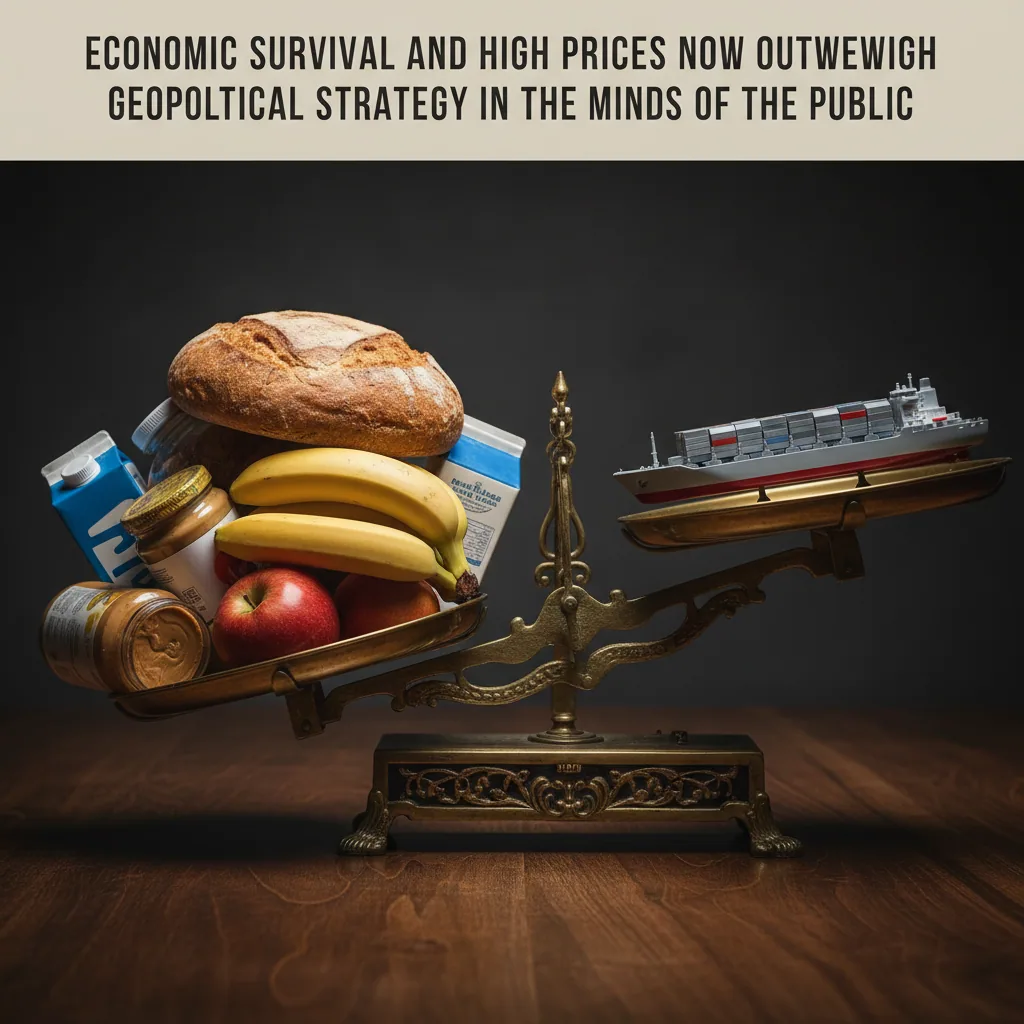
There is a point where ideology meets the grocery bill, and in 2026, we have reached it. We are witnessing what I call the "Consumer Fatigue Pivot" — a moment where the American public’s appetite for geopolitical confrontation is outweighed by the exhaustion of sustained inflation.
In previous trade cycles, "getting tough" on Beijing was an abstract win that voters could cheer for from their couches. Today, the pain is no longer theoretical; it is reflected in the price of bread, the cost of a data plan, and the empty shelves in Marcus Thorne’s warehouse.
This shift means the President enters these negotiations with significantly less "maneuvering room" than he had in 2017. The American public is signaling a preference for a multipolar reality. If this summit fails to produce a reduction in tariffs, the administration faces a potential revolt from its core voters.
The Fragile Truce and the Tech Race
The agenda for the May 13–15 summit is a minefield of existential issues. From AI safety to the status of Taiwan, the "fragile truce" is being tested by a world moving faster than the diplomats.
The primary items on the Beijing agenda include:
- The Iran Conflict: Pressure on Xi to reduce oil imports from Tehran.
- Artificial Intelligence (AI): Creating a framework for military AI use.
- Tariff Reductions: A reciprocal "grand bargain" involving agricultural exports.
- Taiwan Stability: Maintaining the status quo in the Strait.
Despite the desire for lower prices, 70 percent of Americans still support prohibiting the sale of sensitive, high-tech products to China. This creates a paradox for the negotiators. The public wants cheap electronics, but they do not want to hand over the "keys to the kingdom" — the advanced semiconductors that will define the next century.
The Distance Between Numbers and People
The "4 million displaced" by the conflict in the Middle East, or the "76 percent" who hate tariffs, are numbers that often lose their shape in the air-conditioned rooms of the Great Hall of the People. But the distance between those numbers is measured in lives.
In Washington, a 1 percent shift in a poll is a data point; in Columbus, it is the difference between Marcus Thorne keeping his lights on or locking his doors. Representative Brendan Boyle recently described the current U.S. posture as the "art of losing" to China. He argued that while the U.S. is "bogged down" in military actions, Beijing is reaping the rewards of increased diplomatic influence.
What Remains When the Cameras Leave
As the summit concludes and Air Force One prepares to depart, the world will look for a headline — a "deal" or a "breakthrough." But for the people living inside the story, the change is rarely that sudden.
Marcus Thorne will still be in his warehouse on Monday morning. He will still be looking at the empty pallets and the single chrome bike hub. "I don’t care about the photo ops," Marcus says, as he prepares to close the warehouse door. "I just want to be able to hire my team back."
The sun sets over the Ohio skyline, casting long shadows across the empty loading docks. The situation remains unresolved, because the world is unresolved. What Americans say about tariffs, Iran, and world standing in May 2026 is clear: they want stability over struggle, and they are tired of waiting for a deal that never reaches their doorstep.
Written by Amara Osei