Iran Reviewing US Proposal to End War as Tankers Wait in the Strait of Hormuz
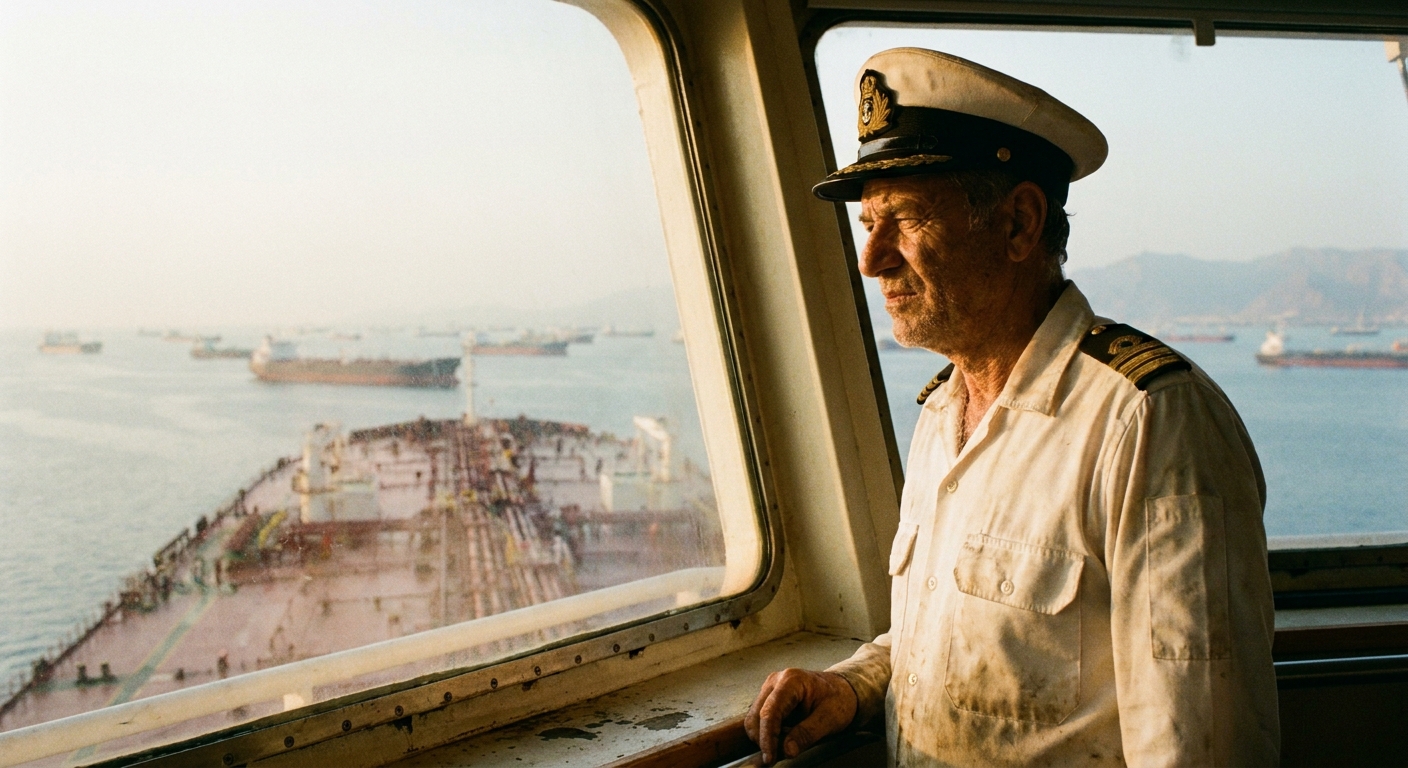
Iran is currently reviewing a US proposal to end the war while sixteen hundred tankers remain stranded in the Strait of Hormuz. Aris Kallakis stands on the bridge of the MV Helios, watching the sun burn through the haze over a sea that has become a graveyard for trade.
The U.S. and Iran are reportedly nearing a maritime ceasefire to reopen global shipping lanes, bypassing complex nuclear negotiations in favor of a simplified, one-page memorandum of understanding.
Aris Kallakis has spent forty-two days staring at the same patch of turquoise water. The air is thick with the smell of diesel and salt, a heavy, humid weight that clings to his skin.
He is the captain of a vessel carrying two million barrels of crude oil, but today he is merely a spectator to a war he did not choose. He is caught between the shifting moods of Washington and Tehran, where the distance between diplomatic cables and the sweat on his brow is measured in failed promises.
This is what a modern war looks like up close. It is not always the flash of a missile; often, it is the silence of sixteen hundred ships waiting for a signal that never comes. While the world watches the "One Trillion Club," these sailors are counting the days until their fresh water runs out.
Diplomatic Breakthrough: Iran Reviewing US Proposal to End War
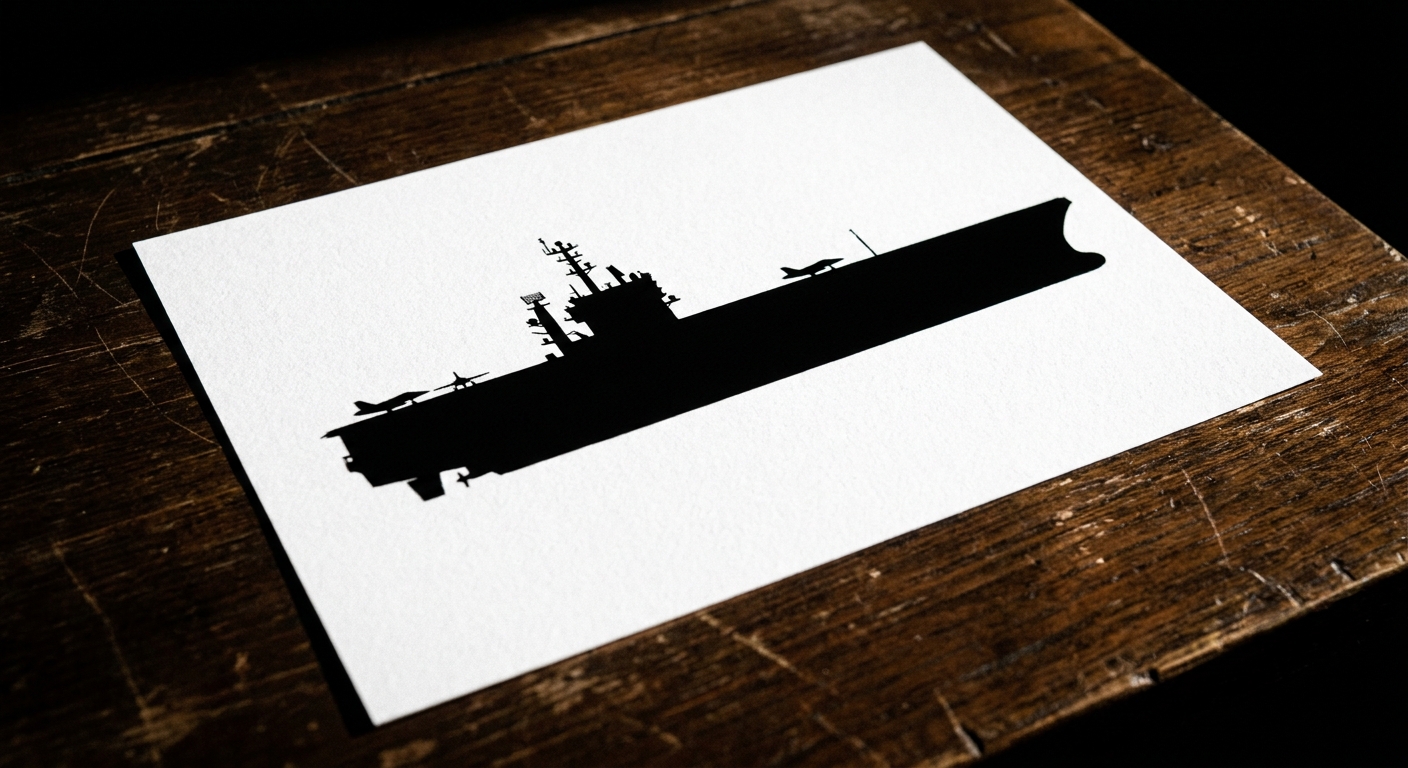
In Washington, the language of conflict has been distilled into a single sheet of paper. On May 6, 2026, reports emerged that the United States and Iran are nearing a decisive breakthrough—not a comprehensive treaty, but a one-page memorandum of understanding.
The brevity is intentional, a "short-form diplomacy" designed to bypass the legislative labyrinths that swallowed the JCPOA. President Donald Trump has extended a ceasefire, pausing the military operations known as "Project Freedom" while Tehran reviews this minimalist exit strategy.
The document reportedly focuses on two things: stopping kinetic strikes and reopening shipping lanes. By stripping away complexities like regional proxy networks, the administration is betting that a "win" can be secured through the sheer force of a simplified signature.
I asked a veteran diplomat at the UN what a one-page peace actually buys. "It buys a headline," he told me, speaking on the condition of anonymity. "It doesn't buy a future, but it might buy enough time for the tankers to move before the global economy collapses."
The Human Cost of the "Project Freedom" Pause
While diplomats celebrate the "concise" nature of the memo, the streets of Tehran tell a different story. The war has provided a convenient shadow under which the Iranian state has accelerated its domestic crackdown.
Clarissa Ward of CNN recently documented a wave of political executions that has seen at least 28 people put to death in seven weeks. One of them was a twenty-four-year-old student named Reza, arrested during a protest against the maritime blockade.
He was charged with "war against God," a familiar catch-all for those who demand a voice during a national emergency. Nobody in the White House briefing room mentioned Reza’s name today, but his death is as much a part of this conflict as the missile strikes.
The Iranian Foreign Ministry remains defiant, with spokesman Esmaeil Baqaei insisting that Tehran will not make "compromises" on its core sovereignty. They are reviewing the American proposal with cold clarity, knowing that the "Project Freedom" pause is a tactical choice, not a humanitarian one.
Maritime Stagnation by the Numbers
The Strait of Hormuz is currently the world’s most expensive parking lot. The Islamic Revolutionary Guard Corps (IRGC) Navy has asserted that safe passage is now contingent on "new procedures," a euphemism for total Iranian control over the waterway.
This is not just a military maneuver; it is a fundamental restructuring of how the world’s energy moves. The table below represents a stalled heartbeat for global commerce.
| Maritime Metric | Status as of May 6, 2026 |
| :--- | :--- |
| Ships Stranded | 1,600 |
| Vessels Hit by Missiles | 32 |
| Successful U.S. Escorts | 2 |
| Strait Status | Contested / Iranian "New Procedures" |
For shipping companies, the risk is no longer just physical; it is financial. Wartime clauses in insurance contracts mean that a single vessel moving without a formal agreement could result in a total financial loss that no corporation can absorb.
The Shadow of the "One Trillion Club"
On the trading floors of Seoul and New York, the news of the one-page memo acted like a shot of adrenaline. Samsung joined the "One Trillion Dollar Club" as Asian markets rallied, reacting to the possibility that Gulf tensions might finally cool.
It is a surreal juxtaposition: the soaring wealth of tech giants contrasted against the physical reality of sixteen hundred ships going nowhere. President Trump met with executives from Chevron and ExxonMobil to discuss the energy landscape, hinting at Venezuela as a potential alternative.
He speaks of oil as if it were a game of Risk, a set of colored pieces to be moved across a board. But for the mother in a suburb of Accra or a village in Devon, the "energy landscape" is simply the price of a bus fare that just doubled.
The market’s optimism is built on the hope that "Short-Form Diplomacy" will work. But this minimalist approach carries a specific risk: by decoupling the maritime threat from the nuclear clock, the U.S. is treating the symptom rather than the disease.
The Religious and Regional Fracture
The conflict has never been contained by the borders of the Gulf. In Lebanon, the fragile silence was broken on Wednesday evening when Israeli Prime Minister Benjamin Netanyahu confirmed a strike on a top Hezbollah commander in Beirut.
It was the first strike in the capital since a local truce began, a reminder that peace with Iran does not necessarily mean peace with its shadows. Meanwhile, a historic rift has opened between Washington and the Vatican.
Secretary of State Marco Rubio is preparing to meet Pope Leo XIV, who has become one of the most vocal critics of the war. The President’s claim that the Pope is "endangering a lot of Catholics" reveals the deep ideological fractures this conflict has widened.
In the village of Debel, the Israeli military is investigating reports of soldiers desecrating religious sites. These are the details that fuel the next decade of resentment, the "Chapter One" that Western media often ignores until it turns into a "Chapter Ten" explosion.
Short-Form Diplomacy and the Estonian Perspective
The emergence of the "one-page memo" marks a shift into an era of minimalist international relations. For nations like Estonia, who rely on the stability of international norms and the free flow of energy, this precedent is deeply unsettling.
A one-page agreement is easy to sign, but it is equally easy to tear up, offering no long-term security in a world that feels increasingly transactional. This approach allows both administrations to claim a narrow, temporary victory.
If Vice President JD Vance finally departs for Pakistan to meet with Iranian mediators, it will be a sign that the theater of diplomacy is moving into its final act. But the world should be wary of any peace that fits on a single sheet of paper.
The complexities of a forty-year rivalry cannot be solved by deleting the paragraphs that are too difficult to negotiate. Minimalist diplomacy prioritizes the optics of the present over the stability of the future.
Returning to the Bridge
Back on the MV Helios, Aris Kallakis receives a brief update on the satellite radio. He hears the words "breakthrough" and "ceasefire," but he looks out at the horizon and sees only the same stalled fleet.
He knows that a memorandum in Washington does not immediately change the "new procedures" of the IRGC speedboats circling the strait. I asked Aris what he wanted most when this ends.
"I want to be in a place where the water doesn't smell like oil," he said. "And I want to see my son’s face without a screen between us."
The sun begins to set, casting long, bruised shadows over the motionless tankers. The next forty-eight hours will determine if the Iran reviewing US proposal to end war process is a bridge to real peace or just a temporary pause in a long-form catastrophe.
---
Written by Amara Osei