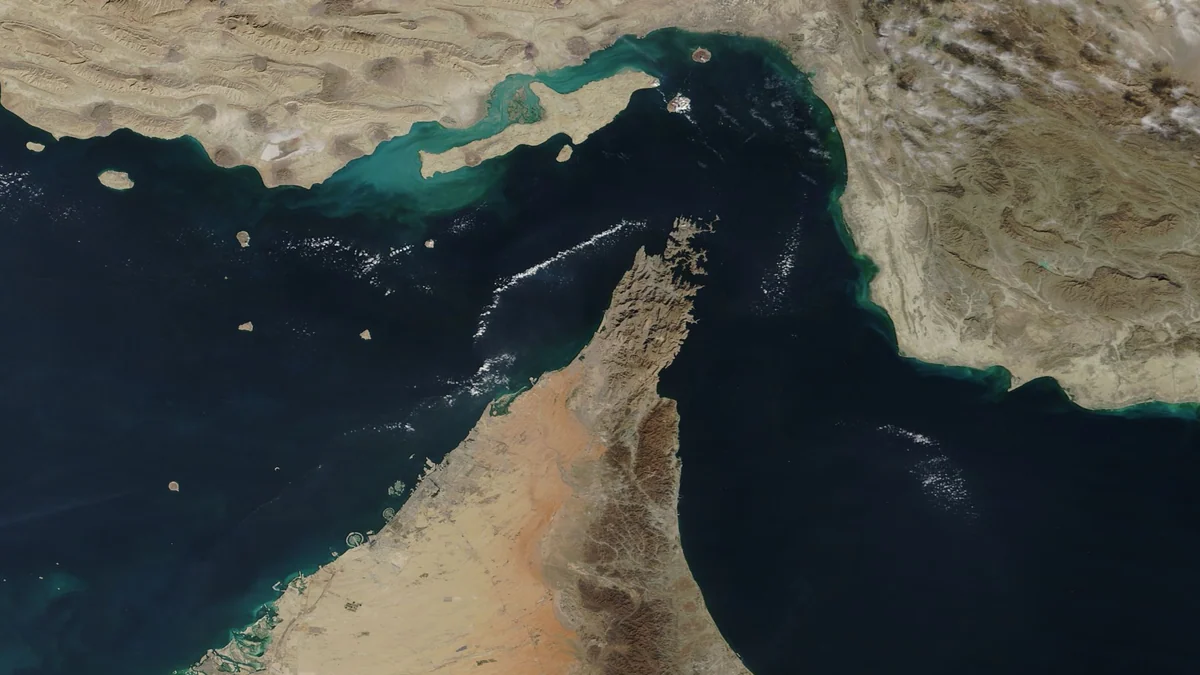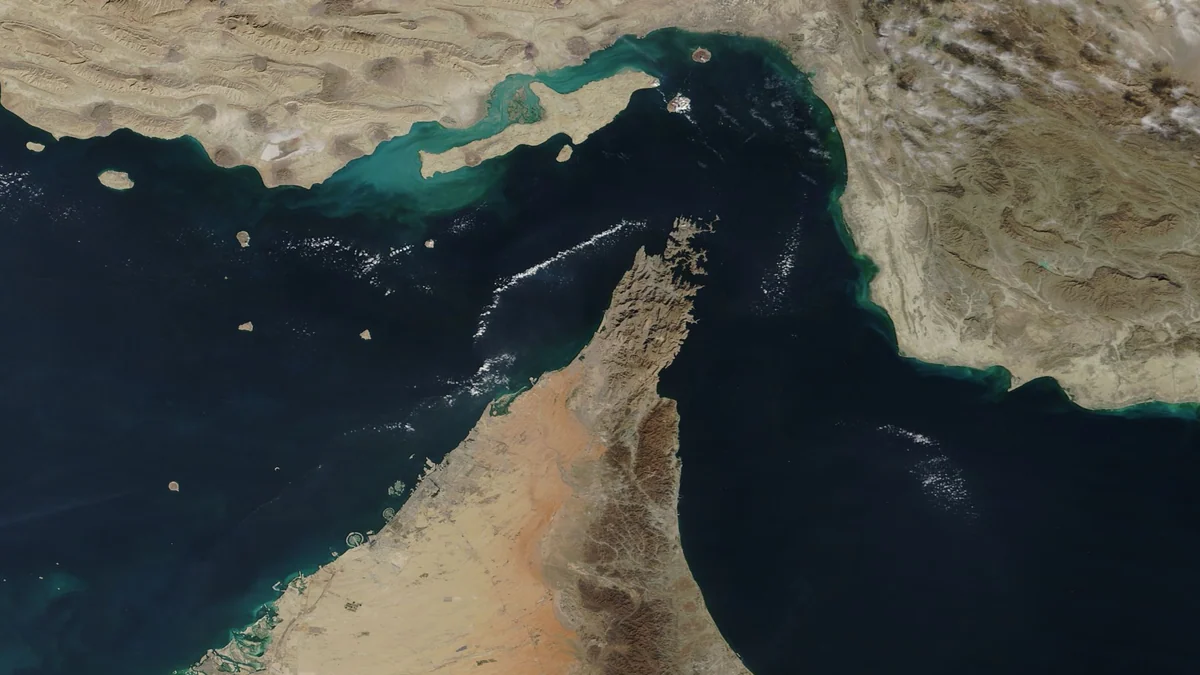
Tensions in the Strait of Hormuz escalated in early 2026 following the death of Iran’s Supreme Leader and the subsequent military closure of the waterway. Shipping traffic dropped by 65%, while 90% of tankers disabled tracking systems to avoid drone attacks, resulting in twenty-five confirmed sailor deaths by November.
The Architecture of a Crisis: When the Pivot Fails
In September 1939, a telegram to the Estonian Foreign Ministry signaled the end of a small nation's neutrality. History demonstrates that when a regional order loses its central pivot, the buffer states are the first to be crushed by falling debris. The 1939 comparison is instructive, yet it breaks on the liquid geography of the Persian Gulf where the stakes involve the survival of the global commons.
On February 28, 2026, the pivot of the Middle Eastern order was removed. Airstrikes by the United States and Israel killed Ayatollah Ali Khamenei, a move that was less a tactical hit and more a structural demolition of the Iranian state's internal balance. The removal of the Supreme Leader left a vacuum that the military apparatus was designed to fill with immediate aggression.
The response followed with a mechanical inevitability. On March 2, 2026, the Islamic Revolutionary Guard Corps (IRGC) declared the shipping corridor closed to hostile nations. The IRGC closure of the Strait is the load-bearing wall of the current crisis.
The Ghost Fleet: A Technical Breakdown of Transparency
The digital map of the waterway has become a study in strategic absence. Before February 2026, the corridor was crowded with commercial transponders and clear intent. Today, the screen is largely a void.
Shipping traffic through the Strait has decreased by 65% compared to levels recorded before the war began. Those who still attempt the passage have vanished from public tracking. Over 90% of tankers now operate with their Automatic Identification Systems (AIS) disabled.
The United Kingdom Maritime Trade Operations (UKMTO) maintains the region's danger level at "SEVERE." In the precise lexicon of maritime security, this is the highest possible grade. It indicates that an attack is not merely a risk, but a statistical certainty.
The collapse of AIS standards represents the structural failure of a century-old effort to make the high seas legible to international law. When the great powers exchange fire, the ledger of norms is the first document to be redacted. Without digital visibility, every vessel becomes a ghost until a verified peace agreement permits the machine to restart.
The Khasab Ledger: The Human Cost of Asymmetric Attrition
The geography of the Khasab peninsula is a jagged Omani finger poking into the throat of the world. It is the specific point where the small-nation floor meets the crushing weight of imperial signaling. In October 2026, maritime attacks reached their highest monthly frequency with thirty-one reported incidents.
The tactical reality suggests a complete breakdown in safe passage for global energy supplies. On November 17, 2026, a tanker strike near Khasab resulted in eleven injuries and left one crew member missing. Within a week, the pace of violence accelerated when two tankers were struck by unknown projectiles within a fifty-minute window.
In this brand of asymmetric naval warfare, every merchant hull becomes a potential proxy for a great-power negotiation that has moved from the table to the waterline.
The Singapore-flagged Ever Lovely recently served as a practical test case for drone swarm capabilities against civilian targets. When a vessel under a neutral flag is targeted, the signal is intended for the risk-assessment desks of global insurance markets. In this brand of asymmetric naval warfare, every merchant hull becomes a potential proxy for a great-power negotiation.
The human cost is recorded in the cold ledgers of the International Maritime Organization. At least twenty-five merchant sailors are confirmed killed as of mid-November 2026. These men are the primary collateral when the IRGC and the US-led coalition trade kinetic messages across the water.
Load-Bearing Walls and Decorative Molding: The Kinetic Escalation
On November 18, 2026, US ordnance dismantled an IRGC rocket base on the salt-domed coast of Qeshm Island. The explosion was a surgical removal of a load-bearing wall of Iranian denial. In the cold logic of the map room, such strikes are intended to restore the freedom of navigation.
Iranian drones soon reached across the water to strike US military positions in Kuwait and Bahrain. These states have become the new borderlands, the small floors upon which the great powers choose to settle their scores. The bill for the Qeshm strike was promptly delivered to Manama and Kuwait City.
In the center of this churn sits the USS Theodore Roosevelt. The aircraft carrier remains a masterpiece of naval engineering, yet it functions as decorative molding while traffic has gone dark. The carrier is a symbol of overextended power trying to hold a door that has already been unhinged.
The Ledger of Volatility: Market Impact of Tensions in the Strait of Hormuz
Markets generally prefer a predictable tyranny to an unpredictable vacuum. In April 2026, when a blockade was ordered, the verdict appeared on digital ledgers rather than in diplomatic cables. Bitcoin rose toward $75,000 as capital fled the traditional infrastructure of the West.
This was a vote of no confidence in the ability of great powers to protect their own trade routes. It was the first time a maritime chokepoint crisis was priced in a currency that requires no navy to move. By October 2026, the tactical pressure from Tehran pushed Brent crude to $104 per barrel.
In Estonia, Raivo Vare has noted the critical threats this volatility poses to global oil trade and domestic stability. For a small nation, energy prices are a structural vulnerability that deepens whenever an empire tests the regional order. The mechanical reality is visible in the sharp decline of weekly shipping volumes.
Weekly passages reached 263 in mid-November, a sharp decline from the baseline of 300. Investors are no longer hedging against a single regime or a specific ideology. They are hedging against the end of the sea as a regulated, predictable space.
The Paper Peace: Why the Pakistani Mediation Failed
The June 2026 Memorandum of Understanding mediated by Pakistan proposed a sixty-day ceasefire that never reached the tactical level. The original Iranian decree remains the governing text: "The Strait of Hormuz is closed and all ships entering the strait must be set on fire." Diplomats in Islamabad may sign papers, but the logic of the waterway is dictated by those holding drone controllers.
Market behavior provides the only honest audit of regional stability. Shipowners have largely ignored the diplomatic thaw, keeping 90% of their tankers off the AIS grid to avoid targeting. The industry does not trust a peace that cannot be found on a radar screen.
Watch one specific marker in the upcoming Swiss-led draft: "independent satellite verification of IRGC patrol craft positioning." If the final communiqué uses the word "should" regarding naval de-escalation, the deal lacks load-bearing walls. In that case, expect these tensions in the Strait of Hormuz to persist well into 2027.