Kushner's European Security Plan: The Helsinki Template, Taken Off the Shelf Again
Kushner's European security plan borrows an old blueprint. The Final Act was signed in Helsinki in August 1975 with considerable ceremony and very little enforcement. Thirty-three European states, the United States, and Canada put their names to a document that affirmed sovereign equality, territorial integrity, and the right of peoples to self-determination - and the Soviet Union signed because it calculated, correctly for a while, that the security clauses mattered more than the human rights ones.
The Helsinki comparison is already circulating in Brussels briefing rooms this week, and it deserves one sentence of caution before it hardens into shorthand: the 1975 process ran between states none of which were actively shelling each other's power grids.
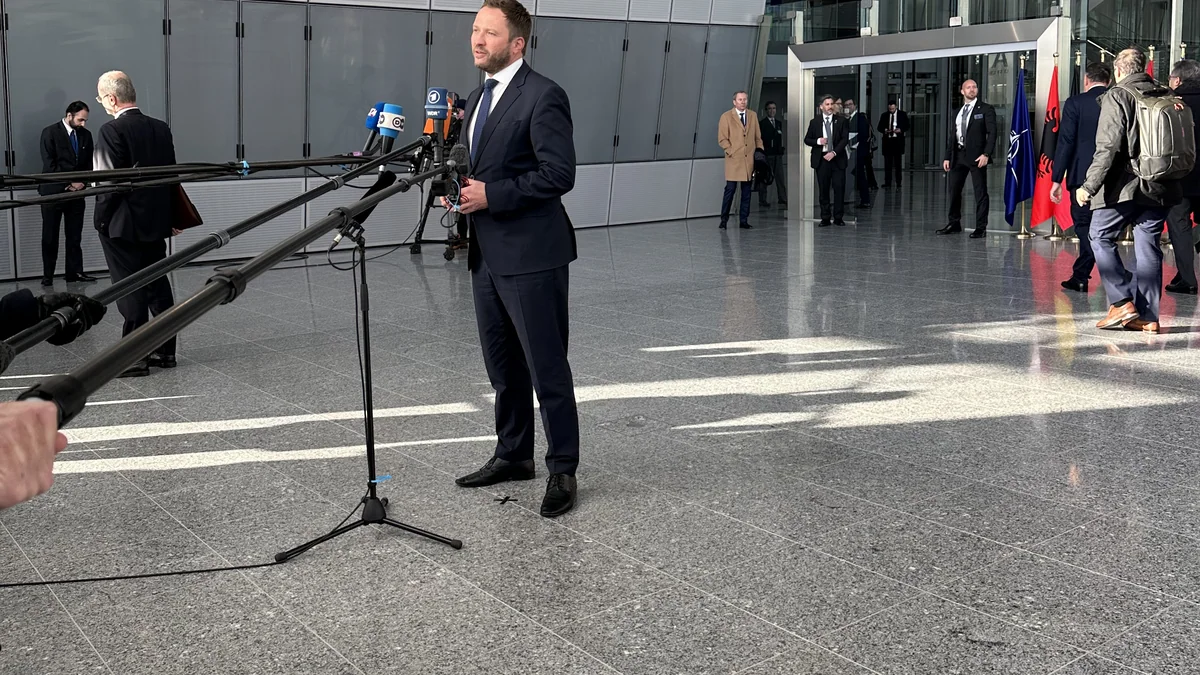
What Jared Kushner introduced in Brussels between November 4 and 6 carries the same architectural vocabulary. The plan revives Cold War détente concepts - permanent consultations, crisis communication channels, military transparency measures - and assembles them into five pillars, the structural framing of which the communiqué labels a "European security architecture." That word, architecture, does specific rhetorical work.
It implies load-bearing walls, permanence, something that cannot be easily vacated. A ceasefire is temporary; an architecture endures. The choice is not accidental.
The consultations brought together representatives from Ukraine, NATO, the European Union, the United Kingdom, France, and Germany under what officials have taken to calling the Shell Bay format - a new diplomatic track designed to give the framework a multilateral surface. The five pillars, presented in Brussels as a first structural pass, are: permanent consultations, crisis communication, military transparency, mutual de-escalation, and a long-term stability framework.
That is the announced skeleton. The question of whose interests each pillar actually supports is a different exercise, and it comes next.
What the Five Points Actually Say
The plan has five pillars: permanent consultations, crisis communication, military transparency, mutual de-escalation, and a long-term stability framework. Read in sequence, the structure moves from the procedural to the existential - from a standing telephone line to the proposition that the continent's security order can be rebuilt through mutual agreement rather than victory. That progression is not accidental.
It is a design choice, and it carries a price.
The sovereign-alliance clause is the most carefully worded element. Nations retain the right to choose their own alliances without a third-party veto.
On paper, this is simply international law restated. In practice, it is the sentence Kyiv needed to see before anyone in that building would read the rest.
NATO is named as the central pillar of European collective defence. Article 5 is explicitly preserved for member states. Kushner said in Brussels - and the same formulation appeared in Estonian as "praktiliste ja vastastikuste kokkulepete kaudu," through practical and mutual agreements - that the goal is to resolve the security problems of all parties.
The word "practical" is doing a great deal of work there. It is a word that can accommodate almost anything.
The gap the text does not close is specific: no mechanism is named for how Article 5 applies to Ukraine, which is not a member. The five pillars describe a process. They do not describe an outcome for the one state whose territory is at issue.
A framework can be simultaneously genuine in its stated commitments and silent on the question that most needs answering. This one manages both.
Read the sovereign-alliance clause. The rest is furniture.
The Plumber's Annex: Nord Stream and the Price of Stability
Buried inside the Brussels consultations, almost as a footnote to the security architecture, was a proposal to bring a US investor into the Nord Stream pipelines and restore gas sales to Europe. The phrasing matters: not rebuild, not recommission, but invest. Someone intends to profit.
The EU's current policy sets 2027 as the deadline for ending Russian gas purchases. That deadline did not appear in any communiqué from the Shell Bay format meetings. The two positions cannot both be true at the same time, and no one in Brussels has yet been asked, on the record, which one yields.
Energy infrastructure is the load-bearing wall. The five pillars, the consultation formats, the military transparency measures - those are the moulding. A plan that restores Russian gas to European markets through American-branded pipes does not merely complicate the EU's energy-independence project; it finances the party whose army is still inside Ukraine. The revenue would flow before any territorial question is settled.
The states with the clearest exposure are the ones with the least leverage in this room: the Baltic republics and Poland, whose energy transition away from Russian supply was not an abstraction but a political survival calculation made after 2014 and accelerated after February 2022. They are being asked to absorb the geopolitical cost of a deal whose financial upside accrues elsewhere. That is a familiar structural position, and they have a word for it, though diplomats tend to reach for softer ones.
Watch the 2027 deadline. If it disappears quietly from the next joint statement, the pipeline has already won, and the security moulding is irrelevant.
Kyiv and Moscow: The Asymmetry That Decides Everything
On November 5, Trump received Kirill Dmitriev at the White House. Dmitriev is not a foreign minister. He is a financial intermediary, the kind of man Moscow sends when it wants to signal flexibility without conceding anything structural. What Washington received was a posture, carefully wrapped.
The day before, Zelensky had spent ninety minutes with Kushner and Witkoff. Security guarantees and post-war reconstruction were on the table. The meeting lasted longer than most such encounters, which is itself a data point - duration is one of the few honest signals left in a process where every communiqué is built to avoid naming the thing.
The gap between these two encounters is the gap the whole plan must cross. Ukraine's floor is territorial integrity. Not a phrase, a floor - the kind that holds the building up.
Any ceasefire drawn along the current front line leaves Russian forces occupying roughly eighteen percent of Ukrainian sovereign territory, and Kyiv has said, repeatedly and in writing, that it will not ratify that arithmetic as permanent.
Moscow has said the opposite, without saying it aloud.
Then there is the money. Ukraine has reported difficulties with the disbursement of approximately sixteen billion dollars in US financial aid. That number does not appear in the five-point framework text.
It does not need to. Everyone in the room understands what frozen disbursement buys, and what releasing it would require.
November 6, 2026 marks 1,717 days since the full-scale invasion began. Neither side named that figure in any communiqué from Brussels. Numbers that embarrass a process tend to disappear from the official paperwork - which is, of course, one way of knowing which numbers matter.
One party is fighting for survival; the other is negotiating from occupation.
The asymmetry is structural. One party is fighting for survival; the other is negotiating from occupation. No five-point framework rewrites that arithmetic.
It only decides how visibly the gap is acknowledged before Abu Dhabi.
What European Allies Fear and Why They Will Not Say It Plainly
European diplomats have been careful with their language in Brussels this week. The stated concern is tidy and defensible: institutionalising Russian participation in a continental security forum grants Moscow a seat at a table it was excluded from precisely because of what it did in February 2022. The structural paradox that follows is not subtle.
NATO Article 5 survives in the plan's text; Russian "security concerns" are inscribed in the same framework, two clauses apart. What the text preserves with one hand, it qualifies with the other.
The Helsinki Accords of 1975 are the obvious precedent, and it is worth turning on that analogy before it hardens. Helsinki traded human-rights language for Soviet border recognition and took fifteen years to bite. The Kushner plan has no equivalent enforcement clause, no follow-on review conference built into its bones, and the party asking for legitimation in 1975 had not launched a full-scale invasion eighteen months prior.
The comparison flatters the current document.
What no European government says in public is the variable that actually governs the plan's shelf life. The 2026 US midterm results are a pressure point every Shell Bay format partner has modelled privately and none will name in a briefing. A shift in congressional composition changes the aid arithmetic, the sanctions coalition, and the domestic cost of standing beside a Washington initiative that may not survive its own political cycle.
Formal endorsement of the final document is not the same as attending the Shell Bay consultations. Participation is deniable; a signature is not. Any European government that co-signs a framework institutionalising Russian presence in security architecture will carry that co-signature through the next election, whatever Washington does next.
Watch the Abu Dhabi communiqué on November 11. If European partners are listed as endorsing parties to Kushner's European security plan, they calculated the domestic cost and paid it. If they appear only as observers, they have not.