From Interference to Arson: Russia's Hybrid War Crosses a Threshold
In the autumn of 2002, a Russian trawler dragged its anchor across a Baltic cable and cut Estonia's data link to the world for eleven hours. The official explanation was navigational error. No one with access to the relevant charts believed it, and no one said so in print. The incident passed without consequence - which is, in retrospect, the most important fact about it.
What has followed since is not a continuation of that ambiguity. It is a structural change. Between 2024 and 2026, Russian intelligence services moved from cyber disruption and information operations to direct physical sabotage: arson, infrastructure interference, GPS jamming, packages designed to start fires in transit warehouses. The architecture is different. The purpose - to hollow out Western will to sustain Ukraine - is not.
Physical sabotage acts across Europe increased fourfold in 2024 compared to the previous year. That is not a trend line that bends; it is a threshold crossed. Ken McCallum, the director general of MI5, confirmed what the numbers already implied: state threats against the United Kingdom from foreign actors have quadrupled over the last decade, and Russia is his primary aggressor.
Lord Ricketts, former head of the Foreign Office, offered the logical endpoint. He stopped short of predicting tanks on the north German plain - the 1940 comparison would be lazy, and he is not a lazy man - but he said plainly that the hybrid attacks are growing more reckless and will likely produce casualties.
That word, casualties, is doing a great deal of work in a single sentence. It marks the line between a security problem and a political crisis. We are approaching it.
The Gig Economy of Deniable Violence
The arithmetic of expulsion forced a structural change. When European governments removed roughly 700 Russian intelligence officers operating under diplomatic cover, Moscow did not simply shrink its network - it outsourced it. The GRU turned to Telegram, recruiting locals for discrete, deniable tasks: the "quick job" model, where operational security rests on the handler never meeting the hand.
The FSB's migration operation on the Ivangorod border illustrates the logic at its most stripped-down. Drivers were paid approximately 100 euros per group to transport Syrian refugees to the crossing zone. The payment is not a salary; it is a logistics fee. No ideology required, no tradecraft training, no chain of custody that survives scrutiny.
Targeted migration runs as a supply chain, and the border is the delivery address.
The recruitment logic cuts both ways. A Swedish citizen was arrested in Pskov on allegations of planning sabotage on behalf of Ukraine - the mirror architecture, a private actor allegedly hired across the same grey zone Russia has been developing for years. Neither side invented the model. Both sides now operate inside it.
Unit 29155 sits at the other end of the organisational spectrum. The GRU structure linked to kinetic operations across Europe carries the same fingerprint identified in cyberattacks against Estonian state institutions.
Ask the small question first: who is the borderland here, and who is the empire? The answer does not change between a server in Tallinn and an arsonist's brief in a Telegram channel. The network is one network. The methods have simply been unbundled.
Estonia as the Laboratory: What the Small Cases Reveal
The cases are small in scale and large in implication. In one, individuals detained by KAPO had vandalised the car of Interior Minister Lauri Läänemets on GRU direction - not a provocation aimed at infrastructure, but at a named official, a face attached to a policy.
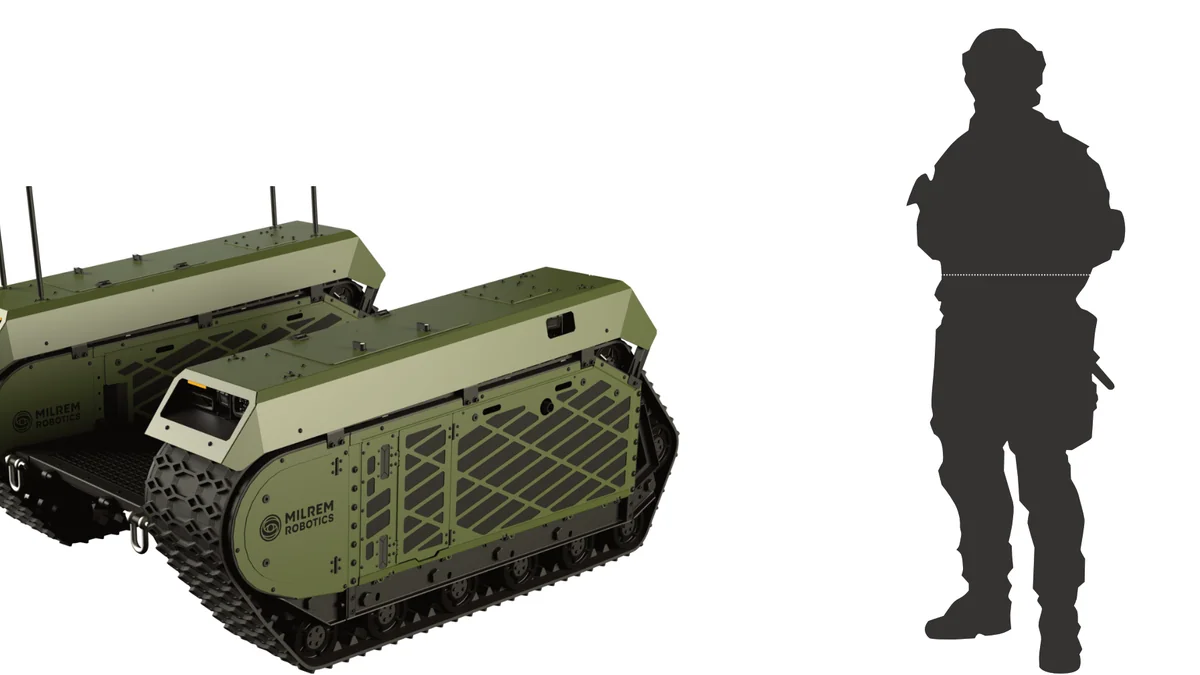
In another, arson struck Milrem Robotics in 2026, a firm whose unmanned ground vehicles appear in Ukrainian operational planning. Russian special services chose that target deliberately: symbolic disruption and practical delay in the same fire.
KAPO director Margo Palloson has put it plainly. Russian influence activity has become physically harder and more brutal. That is a practitioner's verdict, not an analyst's forecast, and it is grounded in what his service is actually arresting people for.
The Baltic sequencing is by now a pattern, not a coincidence. Tactics that appear first in Tallinn or Riga tend to reach Warsaw, Berlin and London within two to three years - the diplomat harassment model, the infrastructure interference model, the border instrumentalisation model, all travelled that road. Estonia functions as the development environment; Western Europe is the deployment target.
The small cases are not peripheral. They are the preview.
What the laboratory reveals, practically, is this: the attacks are calibrated to stay below the threshold that triggers a formal collective response, while still imposing costs on specific people and specific capabilities.
A minister's car is not a power grid. A robotics factory fire is not a military strike. The deniability is architectural, built into the target selection from the start.
Estonia functions as the development environment; Western Europe is the deployment target.
The Infrastructure Layer: Cables, Signals, and Airspace
The Newnew Polar Bear is a Chinese-registered vessel. In October 2023, it crossed the Baltic, and when it had passed, the Balticconnector gas pipeline between Estonia and Finland lay broken on the seabed, along with a telecommunications cable. Whether an anchor dragged by accident or by instruction remains, formally, unresolved.
That is precisely the point: the damage is real, the bill is real and the question of intent dissolves into maritime law and diplomatic correspondence.
Below the airspace, the signals are already gone. Russian forces jam GPS along the eastern border and across the Baltic Sea with sufficient persistence that civil aviation authorities now treat disruption as a planning condition, not an anomaly. Pilots file contingency routes.
The jamming is not declared. It simply occurs, regularly enough to be a fact of the operating environment, and infrequently enough that no single incident crosses NATO's threshold for a formal response.
In September 2025, approximately twenty Russian drones crossed into Polish airspace simultaneously. Twenty. The number is the message: a stress-test calibrated to find the exact threshold at which alliance procedures seize up. The response was slow, the communiqués careful, and the drones long gone before the language was agreed.
Inside Russia, a parallel lock runs. Legislation now criminalises reading what the state designates as fake news, a designation broad enough to cover any account of the operations described above. The domestic information seal and the external sabotage campaign are not separate policies. They share a load-bearing wall.
Europe's Response and the Fracture Line Running Through It
The European Union's answer to October 2026 was a ledger: nearly 1,600 new sanctions listings targeting Russia's military-industrial complex. It is a serious number. It is also the kind of instrument that works best when all parties holding the pen apply it together.
They do not. In the same October window, Donald Trump waived several economic sanctions on Russia. The timing is not incidental - it is the point. The fracture line running through the Western response is not new, but it is wider now, and the Russians have been reading load-bearing walls longer than Brussels has been building them.
NATO's Eastern Sentry and Baltic Sentry initiatives represent the structural acknowledgement that hybrid attacks require a hybrid threshold. What that threshold actually is remains publicly undefined. The alliance has named the architecture without specifying when the doors open, which is precisely the ambiguity Moscow is designed to exploit.
Mette Frederiksen said it plainly: Europe must respond more forcefully. She is correct, and the question her statement leaves open is more uncomfortable than the statement itself. More forcefully than what, and with whom?
The comparison that haunts every European defence discussion in 2026 is not 1938 - that analogy is too worn to carry weight - but 2014, when the response was measured, proportionate and insufficient.
The fracture line is structural, not temperamental. Europe can list, sanction and surveil. What it cannot yet do is compel a coherent allied deterrent when the largest member of that alliance is simultaneously relaxing the economic pressure the others are tightening.
Watch the sanctions waiver list. If it widens in the next quarter, the fracture is a policy, not an aberration.
The Marker to Watch
NATO has not published the Eastern Sentry threshold language. That absence is itself data. What the alliance will eventually release - a document specifying when coordinated kinetic sabotage triggers collective response obligations - carries a single operative word in its load-bearing clause.
If that clause reads shall, the threshold is binding. If it reads should, it is decorative moulding, and Moscow's targeting analysts will have read it the same morning it prints.
The 1,600 EU sanctions listings adopted in October 2026 are real, and Trump's simultaneous waiver of several economic sanctions is also real. The synthesis is uncomfortable: Europe built a wider net while the US cut a hole in it. What is not yet known is whether US intelligence cooperation with European services has been quietly degraded alongside the sanction-waiver logic - that cooperation being the load-bearing wall, not the sanctions count.
Watch for that word in the Eastern Sentry text when it surfaces. Physical sabotage acts in Russia's hybrid war increased fourfold in 2024 alone. A document that hedges the response obligation will tell you, with some precision, whether the alliance has understood that the baseline changed - or is still treating arson at a defence plant as an exception worth managing rather than a system worth breaking.