The Morning a Quarter of Russia's Internet Went Quiet
On the morning of October 9, 2026, a taxi driver in Moscow named Yevgeny opened his Yandex Go app and found nothing. Not an error message. Not a spinning wheel. Nothing. He later told AFP he had never seen anything like it in five years on the job. He was not alone, and the silence was not a glitch.
Cloudflare's traffic monitors told the story in numbers. Bot traffic originating from Yandex networks had fallen to 0.4% of its peak levels — not a dip, not a degradation, but a near-total collapse, the kind of number that reads less like a service disruption and more like an amputation. NetBlocks confirmed it from another angle: Yandex Cloud network capacity had sunk to 30% of normal within hours, a figure that represents not just slowness but structural failure.
What filled that silence? Eighty-four distinct services, simultaneously dark. Yandex Music stopped mid-song. Alice, the voice assistant that had become as familiar to Russian households as a wall socket, went mute. Yandex Go left drivers stranded. Yandex Pay stopped working at checkouts. Navigation, entertainment, transport, money — the whole stack of daily digital life, switched off at once.
Here is the strange part. This was not a cyberattack, not a software vulnerability, not a cascading server error. Something physical had happened. The question of what force can reach into the humming heart of a country's digital infrastructure and simply turn it off — that question is where this story begins.
A Company Already Under Siege Before the First Drone Flew
By the time the first strike hit Sasovo on October 8, 2026, Yandex had already survived a different kind of destruction — the slow, bureaucratic kind, which leaves no visible rubble but is no less thorough. The corporate siege had begun two years earlier, when Western sanctions and mounting political pressure made the original structure of the company impossible to hold together. The result was a forced amputation: in 2024, Yandex's entire Russian business was sold to Consortium.First, a domestic buyer anchored by PJSC Lukoil and the company's own management, for 475 billion rubles.
That number sounds enormous. It was not. The Russian government had imposed a mandatory 50% exit discount on any foreign company leaving the Russian market, meaning the sellers accepted roughly half of what those assets were actually worth. This was not negotiation. It was the price of the door.
What walked out of that door was the international rump of the original company, rebranded as Nebius Group and headquartered in Amsterdam. Its co-founder Arkady Volozh, who had already condemned the war in Ukraine in 2022, completed the severance more personally in February 2026: he renounced his Russian citizenship entirely. John Boynton, Chairman of the Board who had overseen the divestment, summarized the result with the kind of bluntness that corporate announcements rarely permit: "All connections with Russia have now been severed."
That sentence was meant to draw a line. What the drone campaign of October 2026 demonstrated, with cold efficiency, is that lines drawn on corporate org charts do not rearrange the physical geography of server halls. The infrastructure stayed in Russia. And what stays in Russia can be reached.
Four Days, Three Cities: The Yandex Drone Strikes
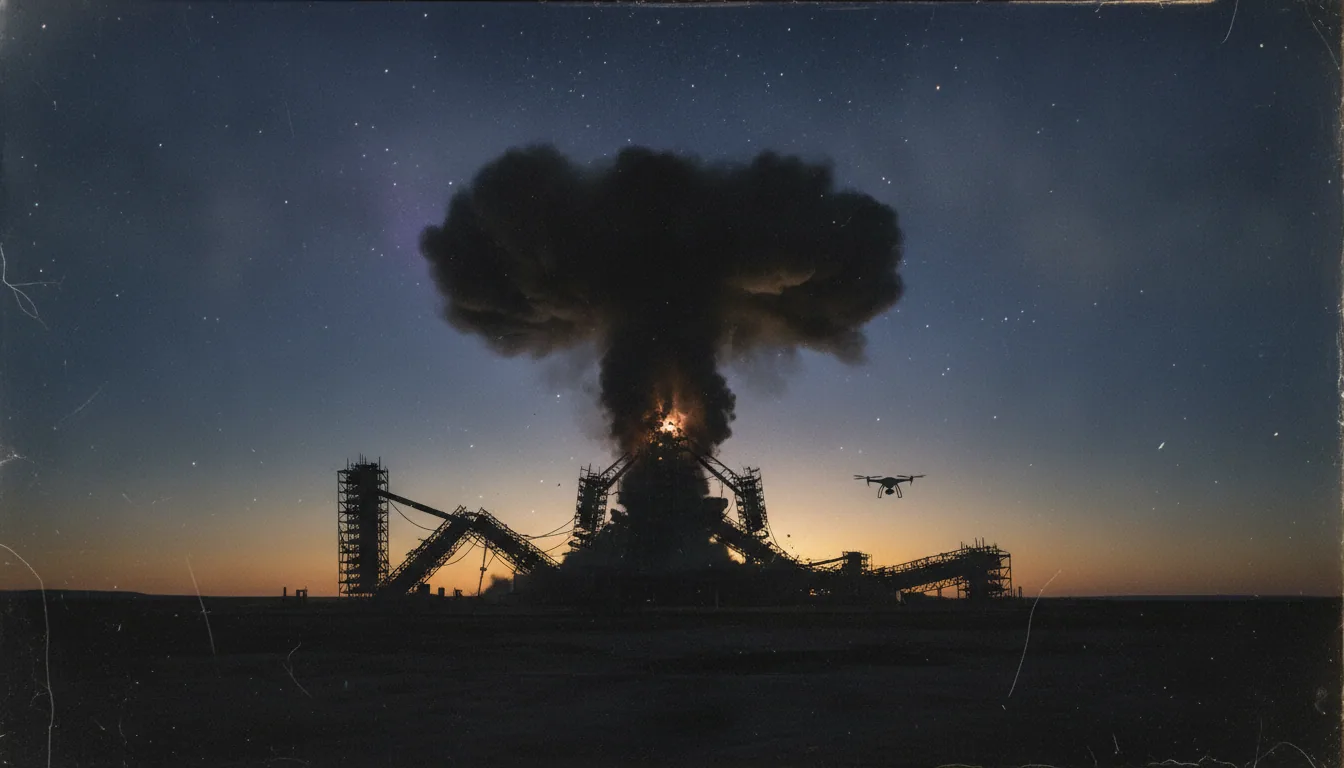
The sequence was deliberate. On October 8, 2026, a drone struck the Sasovo data hub in the Ryazan region and disabled two of Yandex's three primary AI supercomputers: Chervonenkis and Lyapunov. Two machines named after Soviet mathematicians, gone in a night.
Two days later, on October 10, Kaluga took the second hit. That facility held 3,800 server racks spread across multiple modules, and several of them went dark. Think of those racks as the physical shelves on which the internet sits — each one a cabinet of humming processors, routers, and memory, irreplaceable under any ordinary timeline, let alone under active sanctions that block chip imports.
October 11 was the final day. A drone strike on Vladimir, east of Moscow, shut down a 50-megawatt facility designed to house 2,880 IT racks and the Galushkin supercomputer. "Operations at the data centre have been completely suspended," read Yandex's own alert. Not degraded, not impaired. Suspended.
No injuries were reported among Yandex employees during any of the four days. The damage was infrastructure, not people — a distinction that mattered, though it did not make the scale of the loss smaller.
Ukrainian President Volodymyr Zelenskyy made the logic explicit. "We always respond in mirror-like fashion," he said. "They have been hitting and continue to hit our data centres. We are responding." Russia had previously targeted Ukrainian data infrastructure in Kyiv to sever connectivity and disrupt commerce. The strikes on Sasovo, Kaluga, and Vladimir were an answer written in the same language.
Three cities in four days. Three supercomputers down. The question the sequence raises is not whether this was effective — the numbers that follow make that plain — but what it means when the machinery of artificial intelligence becomes a military target like a bridge or a power station.
What 84 Silences Sound Like on the Ground
Yevgeny, a Moscow taxi driver, said it plainly to an AFP reporter: "I've never seen anything like this before. It hasn't happened in the last five years." He wasn't describing an explosion. He was describing an absence — the peculiar horror of an app that simply refuses to exist.
That absence radiated outward from the struck data centers in concentric rings of disruption. Russian Railways passengers found booking portals unresponsive. Avito, the classified-ads marketplace where ordinary Russians sell furniture and find apartments, went dark. T2, one of the country's major mobile carriers, reported technical failures it traced directly to the cascading infrastructure collapse. Eighty-four distinct Yandex services had gone quiet simultaneously, and the silence was loud enough to register on balance sheets: Yandex shares fell more than 4% on the Moscow Exchange as confirmation of the Vladimir shutdown spread through trading floors.
Then there was Alice. Russia's most widely used voice assistant, the thing millions of people asked for recipes, weather, and directions, simply stopped answering. For a country that had invested enormous national pride in building a domestic alternative to Western AI infrastructure, a mute Alice was not just an inconvenience. It was a symbol wearing the shape of a glitch.
The cloud, it turns out, has a body. And bodies are vulnerable.
The coffee was getting cold, the navigation was frozen at the last known turn, and somewhere in the Ryazan region, two supercomputers named Chervonenkis and Lyapunov were no longer thinking. Silence, it turns out, has a texture. And on October 9, 2026, it felt exactly like the future that had been promised, running slightly but unmistakably behind.
The Cloud Has a Body — and It Can Burn
Somewhere in the popular imagination, artificial intelligence floats. It lives in the ether, in the hum of abstraction, nowhere and everywhere at once. That picture is wrong in a way that matters.
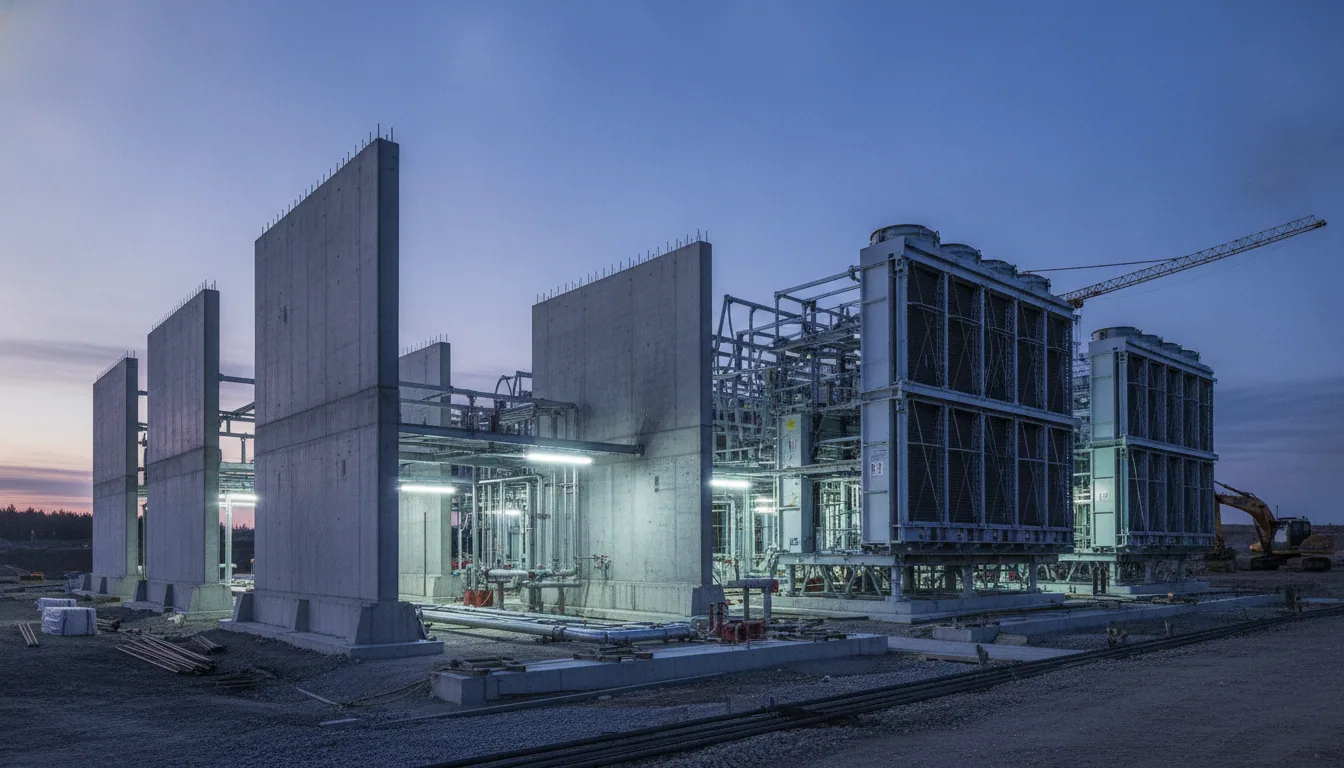
The three Yandex supercomputers destroyed across four days were named after Soviet-era mathematicians: Chervonenkis, Lyapunov, Galushkin. The names carry a certain grandeur. The hardware beneath the names does not float — it sits in racks, row after row, drawing electricity, generating heat, requiring chillers, cables, fire suppression, and a constant supply of power measured not in kilowatts but in megawatts. The Vladimir facility alone consumed 50 megawatts. To put that in body-sized terms: a typical household runs on roughly 1.5 kilowatts. The Vladimir site ran at the equivalent of more than 33,000 homes, burning continuously, every second of every day.
These three machines were not general-purpose servers. They were the backbone of Russia's domestic large language model training — the infrastructure on which a sanctioned state was building its own path to AI capability. Replacing them is not a matter of ordering parts. Under current sanctions, the high-end chips required for that class of machine are precisely what Russia cannot easily procure. That asymmetry is the strategic core of what happened.
A low-cost drone costs thousands of dollars. The hardware it destroyed costs hundreds of millions, and cannot be reordered from a catalog. The analogy to a historical siege is almost too clean, so name where it breaks: a medieval wall, once down, could be rebuilt with stone from the same quarry. The quarry here is closed. Whatever reconstruction Russia attempts will take years, and may not reach the same ceiling.
Two Yandexes, Two Futures — and the Questions Nobody Can Answer Yet
The company that emerged from the 2024 restructuring now runs in two directions at once, like a river split by an island. Arkady Volozh, who renounced his Russian citizenship in February 2026, leads Nebius Group from Amsterdam, expanding into Finland, Israel, and the United States, where a 1.2-gigawatt facility is under development in Missouri. That number is worth pausing on: 1.2 gigawatts is roughly the continuous output of a mid-sized nuclear power plant, poured into servers.
The Russian entity, now owned by Consortium.First — a coalition anchored by PJSC Lukoil — inherited the geography and the brand, but also the sanctions. Replacing the high-end chips inside Chervonenkis, Lyapunov, and Galushkin is not a matter of ordering new parts. Export controls make the specific hardware those supercomputers required essentially unreachable through legal channels. Whether Russia will fill that gap through subsidies, smuggling routes, or domestic fabrication programs remains, for now, genuinely open.
Three hard unknowns sit at the center of any honest accounting. Nobody has publicly stated what fraction of the hardware inside those server halls is permanently unrecoverable, as opposed to damaged but replaceable. Nobody has confirmed whether the Russian government intends to subsidize reconstruction of what is, technically, private infrastructure. And nobody can say yet how many years of AI development capacity burned with those racks in Vladimir and Kaluga.
What started as corporate paperwork — a sale valued at 475 billion rubles at a mandatory 50% discount — ended in smoking server halls and a Cloudflare measurement of 0.4% normal traffic. The siege of Yandex began in boardrooms and finished with drones, and what the next chapter looks like for Russia's battered domestic internet, nobody has written it yet.