The US-Russia negotiations in Abu Dhabi, November 10–11, 2026, produced one deliverable: a prisoner exchange potentially covering 1,200 people. No ceasefire, no border agreement. One number, and a flight path to Moscow.
The Runway: How US-Russia Negotiations Reached Abu Dhabi
In July 1994, the United States and North Korea produced the Agreed Framework in Geneva - two envoys, a third-country host, a bilateral channel kept deliberately narrow. The comparison to Abu Dhabi is tempting and mostly wrong: North Korea had no territorial army occupying a neighbour's cities, and Washington had not spent two years calling the other side a civilisational threat. But the format rhymes, and format is not nothing.
Trump's return to the White House shifted American posture faster than most observers expected. Where the previous administration had treated diplomatic isolation as pressure, the new one treated it as a problem to be managed by personal envoys with direct presidential authority. Jared Kushner and Steve Witkoff were not State Department men working a cable chain. They were proxies, which is a different instrument entirely.
The channel that made Abu Dhabi possible had opened quietly four months earlier. On July 23, 2026, Secretary of State Marco Rubio met Foreign Minister Sergei Lavrov in Manila - the first high-level US-Russia exchange in years. Bilateral diplomatic missions had been frozen long before that meeting, their staffs gutted by expulsions and counter-expulsions until the embassies became largely symbolic addresses. The Manila encounter did not restore normal relations. It established that both sides were willing to be in the same room, which after the preceding silence was the prerequisite for everything that followed.
Abu Dhabi was built around that freeze, not despite it. A neutral venue, a narrow agenda, envoys whose authority derived from the president rather than the institution.
Abu Dhabi, November 10–11, and Moscow, November 12
The trilateral talks opened in Abu Dhabi on November 10, 2026, with delegations from the United States, Russia, and Ukraine sitting across from one another in what passes, these days, for a diplomatic room. The Russian side was led by Vladimir Medinski, the presidential aide who has served as Moscow's designated negotiator since 2022 - a man whose presence signals continuity of position, not flexibility. Abu Dhabi was the neutral capital: equidistant enough from Washington, Kyiv, and Moscow that no one had to concede anything merely by landing.
The talks ran through November 11. One agreement emerged: a prisoner exchange, potentially covering up to 1,200 individuals. Set against 1,722 days of full-scale war, that number is not nothing, and it is not a ceasefire.
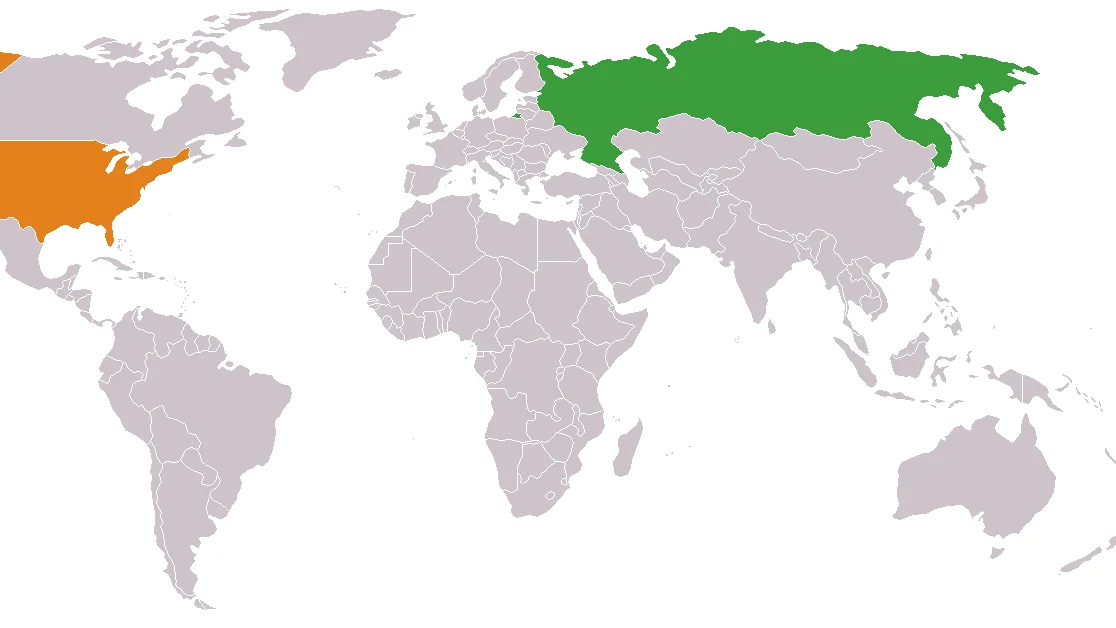
Then the envoys flew north. Kushner and Witkoff arrived in Moscow on November 12 to meet Putin directly. The two-stage structure - neutral capital, then the Kremlin - was not logistical convenience. It was a map of the power gradient drawn in flight paths. Abu Dhabi is where Ukraine is present. Moscow is where the decisions are made. That sequence, unremarked upon in most of the wire copy, tells you more about the architecture of this process than any communiqué. Ask the small question first: who is the borderland here, and who is the empire? The answer was written in the itinerary before the talks began.
What Kushner and Witkoff carried into the Kremlin, and what they carried back out, is examined in the section that follows.
The One Yield: 1,200 Prisoners
One number came out of Abu Dhabi with a pulse. Zelenskyy put it plainly to France 24: the exchange could reach, in his words, "maybe even 1,200." For 1,722 days of full-scale war, that is the single concrete yield the talks produced.
The scale matters, and so does the precedent it dwarfs. The August 2024 Ankara swap moved 26 people across seven countries - Evan Gershkovich among them, Vadim Krasikov among them, a logistical feat that took months to coordinate and was treated, rightly, as a diplomatic event in its own right. A 1,200-person exchange is a different order of magnitude. It requires agreed lists, transit states, a mechanism, and a timetable. None of those have been announced.
What a prisoner exchange does is specific and real: it returns living people to their families. What it does not do is stop a gun, fix a border, or constitute a political architecture. The humanitarian yield and the political settlement are separate ledgers, and Abu Dhabi moved only one of them. Calling the exchange "the talks' single deliverable," as Zelenskyy's framing invites, is accurate - which is precisely the problem. A swap of 1,200 prisoners is not a ceasefire dressed in softer clothes. It is what two parties can agree on when they cannot agree on anything structural. The number is large. The silence around it is larger.
The Lines Russia Did Not Move
Vladimir Medinski led the Russian delegation in Abu Dhabi. He is a careful choice: a man whose career has been built on the proposition that history belongs to whoever controls its narration. When the Ukrainian ceasefire proposal arrived across the table, his delegation rejected it. Zelenskyy stated the outcome without ceremony: "A ceasefire will not happen. The Russians rejected our proposal."
The American envoys had arrived with something to offer. They floated a redrawing of Donbas administrative borders - a cartographic adjustment designed to let Moscow claim full regional control without requiring Ukraine to sign a surrender document that used that word. It was a reasonable guess at what a deal might look like, if Russia's objectives were still what they were in early 2022.
They were not. The Institute for the Study of War had mapped the drift: the Novorossiya logic that animated the initial invasion had since expanded its own perimeter. Donbas, by November 2026, was not the ceiling of Russia's demand. It was the floor. Crimea, Kherson, Zaporizhzhia - each named, each formally required. One anonymous former Russian ambassador had described Crimea's status with the flat finality of a deed filed in a registry: "finally and irreversibly." The other regions now carry the same grammar in Moscow's internal documents, whatever the communiqués say publicly.
A concession calibrated to 2022 territorial logic lands in 2026 as an opening bid, not a closing one.
This is the structural problem that border-redrawing cannot solve. Russia's refusal in Abu Dhabi was not a negotiating posture designed to extract a better offer on the same terms. It was a signal that the terms themselves have shifted - and that the map the Americans brought had already been superseded by a newer, larger one, drawn somewhere the envoys were not invited to see.
Europe's Empty Chair and the Vanishing Framework
The European chair in Abu Dhabi was not merely empty. It was not set. European representatives were formally excluded from the trilateral talks on November 10 and 11 - the first substantive Washington-Moscow-Kyiv negotiating forum in years - while the continent whose eastern edge is the actual battlefield watched from outside the room. Ukraine's position is that any deal must carry approval of both Kyiv and European partners. That veto was architecturally guaranteed to be unexercisable, because Europe was not present to exercise it.
Compare this with Helsinki 1975, when every European state from Portugal to the Soviet Union signed the same document. The comparison is not flattering to the present arrangement. Helsinki was imperfect and exploited, but it was at least a framework in which the smaller parties held a chair and a pen. What Abu Dhabi produced was a G3 format - Washington, Moscow, Kyiv - in which the continent most exposed to the outcome negotiated nothing.
The nuclear frame is gone too. New START expired on February 5, 2026, without a formal replacement. For the first time in decades, US-Russia nuclear relations operate without a verification mechanism. Both sides claim to respect the old 1,550-warhead ceiling. Claims without inspection are decoration, not architecture. The US has proposed what it calls a new European Security Treaty that would require specific Russian de-escalation steps, but the contents remain undisclosed - a document whose load-bearing walls, if any exist, are invisible to the public and apparently to Europe as well.
The RAND Corporation concluded that UK and European NATO members are currently unprepared for a major war with Russia. That finding sits uncomfortably beside the September 2026 decision by US Congress to impose high tariffs on countries purchasing Russian energy - a lever aimed partly at European governments still managing difficult transitions. And reports, soft but persistent, describe US pressure on Baltic states to reduce public criticism of Putin. The frontier states are being asked to lower their voices precisely as the framework meant to protect them disappears line by line.
What to Watch: The Marker That Will Settle the Question
One structural fact sits behind the Abu Dhabi talks that the communiqués did not name. US intelligence reporting from October 2026 documents ongoing Russian AI-driven disinformation operations targeting American politicians. These are the domestic conditions in which Kushner and Witkoff conducted their mediation - a negotiating partner running coordinated influence campaigns against the government they were negotiating with.
Two markers will tell the reader whether Abu Dhabi was a beginning or a deferral. First: whether the logistics of the 1,200-person exchange are publicly confirmed within 60 days. The 2024 Ankara swap moved 26 people; scaling that mechanism by a factor of 46 requires institutional commitment, not goodwill.
The second is a single word. Read the final instrument on Zaporizhzhia's territorial status. If it says shall, someone conceded something real. If it says should, the question was parked, not resolved - and US-Russia negotiations are back on your screen before spring.