The Ledger of 1815 Meets the Reality of 2026
The legal foundation of Swiss neutrality was laid in 1815, when the diplomats at the Congress of Vienna drafted a document to turn the confederation into a permanent buffer. They needed a static space between the clashing empires of Europe. That is the load-bearing wall. Everything else is molding - pull it and nothing falls.
On September 27, 2026, the voters in the cantons were asked to turn that wall into a fortress. The Neutrality Initiative was a bid to codify a strict, modern isolation. It sought to ban non-UN sanctions and block even the smallest peacetime cooperation with NATO.
The Swiss People's Party and the group Pro Schweiz pushed for an armed neutrality to be etched into the federal constitution. They argued that adopting sanctions since 2022 had compromised the state. In their view, Switzerland had lost its role as the impartial mediator.
The response from the polling stations was a sharp, mathematical rejection. Projections show that between 68 and 71 percent of the electorate chose foreign policy flexibility over the old dogma. The Federal Council's recommendation to reject the measure was heard in every canton.
This was a stress test for national identity. History shows that such rigid orders frequently fall, and the Swiss vote suggests a necessary evolution. For a small nation, neutrality is often the price of survival when great powers cut a deal.
Foreign Minister Ignazio Cassis argued that the measure would reduce the state's maneuvering space and harm national security. The voters agreed. They recognized that in the current geography, total isolation is no longer a guarantee of peace.
The Blocher Blueprint: A Bid for Constitutional Isolation
The Swiss People's Party (SVP) and the group Pro Schweiz did not merely propose a policy shift. They sought to fossilize a specific, rigid definition of "permanent and armed" neutrality directly into the federal constitution. This was an attempt to turn a flexible diplomatic tool into an unalterable domestic law.
The architect of this strategy remains Christoph Blocher, the billionaire and former Federal Councilor who has long viewed policy flexibility as a form of moral decay. Under his blueprint, the state would have been constitutionally prohibited from joining any military alliance. This ban included even the peacetime cooperation programs currently shared with NATO.
The structural constraints extended to the nation's economic ledger. The initiative sought to block Switzerland from imposing any economic sanctions unless they were explicitly mandated by the UN Security Council. In a room where great powers use the veto to shelter their own atrocities, such a rule would effectively mandate Swiss indifference by decree.
Blocher argued that by aligning with European Union sanctions after the 2022 invasion of Ukraine, Bern had discarded its role as a credible mediator. To the SVP, Swiss neutrality is not a strategy to be weighed against risks, but a static shield that must never be adjusted. They view the world from the Alps, hoping the clouds hide that the valleys are already wired into the European grid.
The proposal was an attempt to legislate a return to the strategic conditions of 1815. It ignored the two centuries of integration that have since bound Swiss banks to the neighbors the SVP now treats as strangers. By seeking to mandate stasis, the initiative ignored the reality that a small nation's sovereignty is rarely preserved by silence alone.
Breaking the Profitability of Silence
The Swiss model has long relied on a specific kind of silence where neutrality was never a moral vacuum but a primary export. Harri Tiido observed that Switzerland successfully managed to make its neutrality profitable by becoming the world's essential safe-room. There is, after all, a certain comfort in the vault when the world outside is burning, provided the ventilation holds and the locks remain Swiss.
The 2022 invasion of Ukraine shattered this ledger. When the tanks crossed the border, the concept of a sanctions-free zone in the heart of Europe became an untenable luxury for a state surrounded by the West. Berne chose to adopt almost all European Union sanctions against Russia in a move that signaled the end of the old business model, recognizing that the middle ground had been mined.
Christoph Blocher and the SVP argued that this alignment destroyed the state's role as an impartial mediator. They claimed that a mediator must be a blank slate, a technician for whom a moral verdict is merely a defect in the machinery of statecraft. They preferred the old Immerwährende Neutralität, even if it meant providing a quiet basement for the proceeds of aggression while the wire services laundered the meaning of impartiality.
For a small nation, silence is often the first step toward a deal made at its expense. The 2026 vote suggests that the Swiss public has begun to distrust the profit found in looking away while acting as the warehouse of a continent. The profitability of silence has finally reached its ceiling, and the voters have decided that some deals are simply too expensive to broker.
The profitability of silence has finally reached its ceiling, and the voters have decided that some deals are simply too expensive to broker.
The Quiet Shift in Swiss Neutrality: Toward Cooperative Security
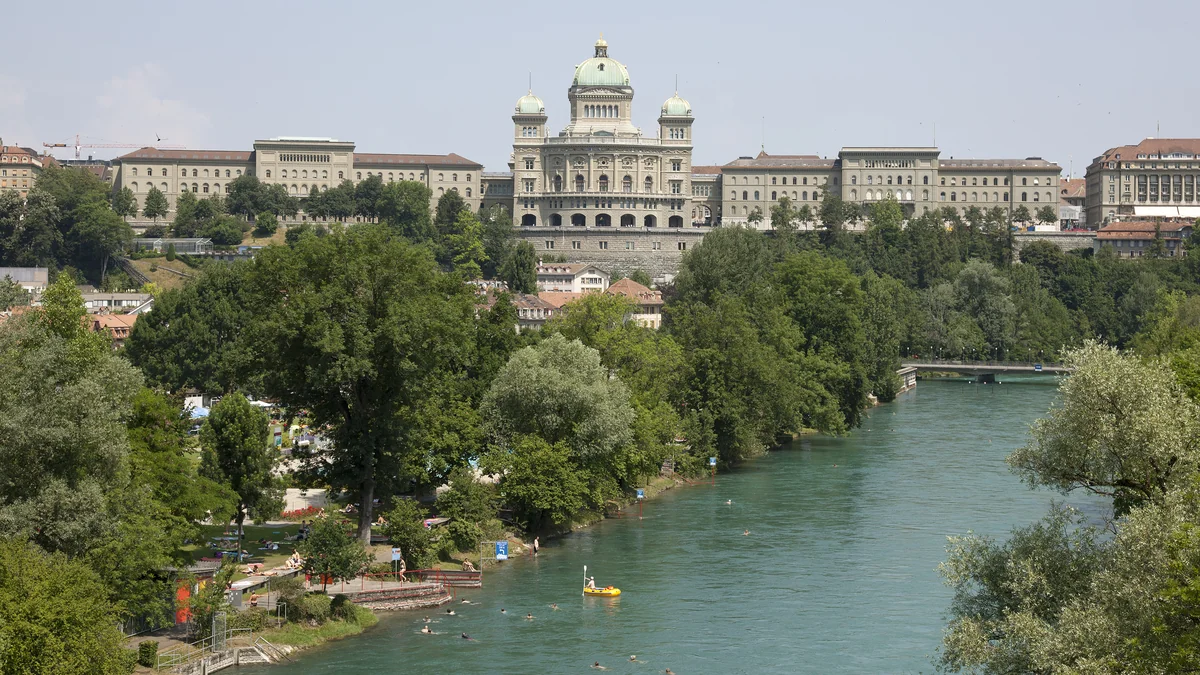
Behind the thick walls of the Federal Palace in Bern, the ink is dry on the Individually Tailored Partnership Programme (ITPP) for 2025 to 2028. This document functions like a renovation plan for a house that has finally admitted the roof is leaking. It aligns Swiss protocols with NATO standards without the messy requirement of an oath.
The ITPP is a quiet admission that the floor beneath the neutrality dogma needed reinforcing. This transition toward Kooperative Neutralität, or cooperative neutrality, suggests that technical specifications are safer than the loud promises of empires. It is the language of interoperability rather than ideology.
In 2024, Switzerland joined the European Sky Shield Initiative to coordinate regional air defense. An incoming missile does not check for a certificate of neutrality before it crosses a border. By sharing the cost of the dome, Bern has acknowledged that geography is no longer a fortress.
The old maps are being replaced by screens that show a single, integrated airspace. This is not a military alliance in the 1815 sense. It is a procurement club where the Swiss pay for the luxury of not being the only blind spot on the radar.
The true test arrives with the NATO crisis management exercises scheduled for Spring 2025. Swiss officers will sit in rooms they previously avoided and speak the jargon of collective security. They will maintain the legal fiction of solitude while learning the tradecraft of the group.
From the buffer state logic established in 1815 to the satellite-linked realities of 2028, the Swiss have finally accepted that a nation cannot hide behind a mountain if the sky itself is shared. Neutrality remains the official anthem, but the music is now being played in a different key. It is a necessary hypocrisy for a nation that has watched several eternal orders fall.
The Maneuvering Space of the Small State
The Swiss Federal Council and Parliament officially recommended that voters reject the initiative. They viewed the proposal as a tactical error disguised as a moral principle, a remnant of a geopolitical era that ended when the first tanks crossed into Ukraine in 2022. In the cold light of the desk, rigid mandates are a luxury that a small nation in a fragmented Europe can no longer afford.
Foreign Minister Ignazio Cassis led the government opposition with a flat, pragmatic warning. He stated that the initiative's rigid definition would reduce foreign policy flexibility and harm national security in an era of renewed great-power competition. In the vocabulary of the Federal Palace, maneuvering space is survival.
The 1815 status quo functioned because the great powers of the day found it useful to respect the silence of the Alps. Today, the small-nation floor requires a different kind of calculation where neutrality is no longer a static wall but a complex set of levers and necessary trade-offs. A sanctions-free zone in the heart of Europe is a logistical gap that neither Brussels nor Washington would have tolerated for long.
The rejection of the initiative allows Bern to continue its security cooperation and maintain alignment on sanctions with its Western neighbors. This choice ensures that the state remains an integrated part of the European financial and defense architecture rather than becoming a suspicious, isolated outlier. The Swiss public opted for the maneuvering space of the desk over the frozen dogmas of the past, preferring the hard reality of the map to the comfort of the myth.
The Marker to Watch: Re-exports and the 2028 Window
The rejection of the Neutrality Initiative by 68 to 71 percent of voters on September 27, 2026, represents a fundamental shift in the Swiss strategic ledger. This data point provides the domestic mandate for the Individually Tailored Partnership Programme, which governs Swiss-NATO relations through the end of the decade. Swiss intelligence and defense officials have identified 2028 as a critical security vulnerability window for the European continent, a timeline no longer set by the 1815 Congress of Vienna and its "immerwährende Neutralität" but by the procurement cycles of modern air defense.
The defeat of Walter Wobmann and his committee leaves the War Materiel Act as the next legislative barrier to be dismantled or reinforced by the Bern executive. This act currently blocks the re-export of Swiss-made weapons, a policy that has frustrated European neighbors since the 2022 invasion of Ukraine and significantly complicated the continent's collective response. If neutrality was once a profitable export, it is now perceived as a supply-chain bottleneck, suggesting that sovereignty is now a function of security rather than a purely historical record.
The marker to watch is the specific wording of the "non-re-export declaration" in upcoming Swiss arms contracts. If the Federal Council introduces a clause allowing for exceptions in cases of blatant violations of international law, the 1815 era is finished and the silent vault has been traded for a regional security seat. Watch the text of the next defense procurement ledger for the word "integrated," as its presence will confirm that the strategic floor of Swiss neutrality has finally moved.