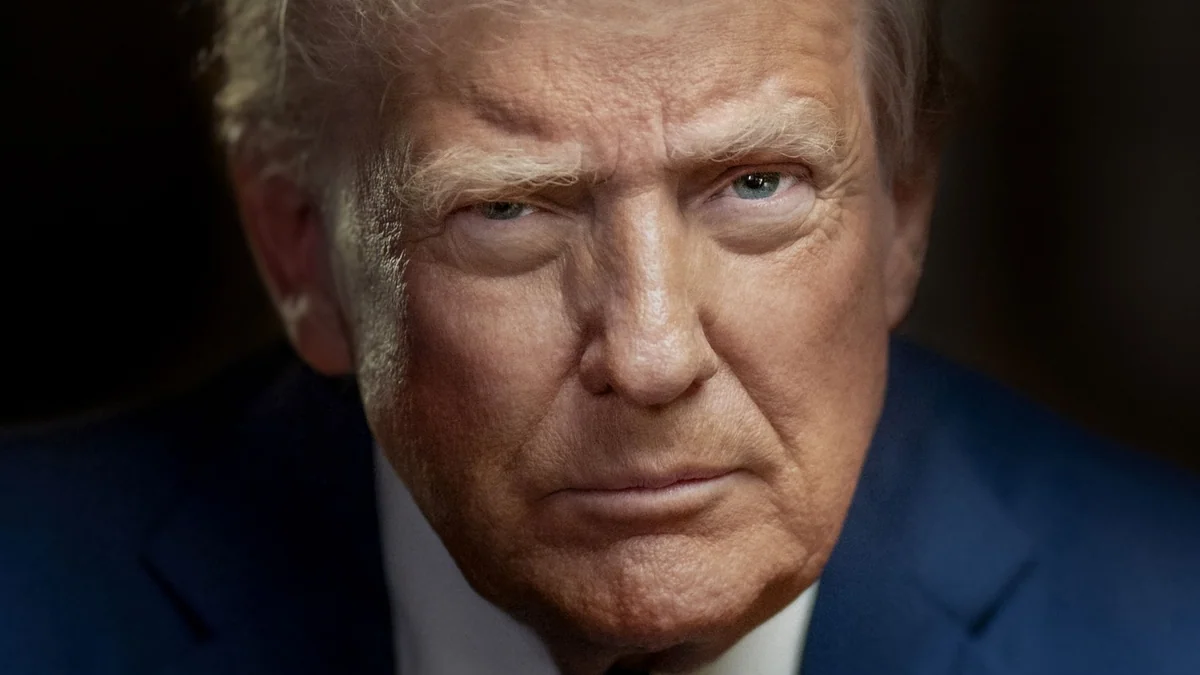
Trump's ultimatum to European banks demands a total cessation of financial ties with Iran or immediate expulsion from the U.S. dollar clearing system. This policy, part of Operation Economic Outcast, forces banks to choose between global market access and Iranian business before an August 30 deadline.
In November 1979, the Carter administration froze Iranian assets held in American banks and their overseas branches. Washington has since learned that the name of a sanction is itself the policy's first blow.
On August 19, 2026, Donald Trump posted his ultimatum to Truth Social: "This will be an ECONOMIC D-DAY, and we need all of our Allies to stand with the United States." The D-Day comparison is deliberate staging, intended to make the opening move of this financial offensive feel irreversible.
The United States and Israel have been in active conflict with Iran for approximately six months. Operation Economic Outcast is not the beginning of a confrontation; it is the financial phase of one already underway. Treasury Secretary Scott Bessent aims for economic asphyxiation sufficient to force Tehran into a new negotiation without the cost of expanded military strikes.
What Operation Economic Outcast Did on Its First Day
On August 24, 2026, the U.S. Treasury formally launched the operation by sanctioning 60 individuals, entities, and vessels. The sectors named were specific: digital assets, technology, gold, aviation, and shipping.
The geographic spread of these designations reveals the true strategy. Entities in the UAE, Hong Kong, China, Singapore, and Europe all appeared on the list within the first 24 hours. This is a map of the intermediary layer—the brokers and refiners who turn Iranian barrels into receivable currency.
The most concrete European case is a cooking-oil refinery in France. This inclusion signals that the U.S. Treasury has traced the supply chain several nodes further than prior administrations typically bothered to. It suggests the threshold for designation is lower than European compliance officers had assumed.
Treasury's message is that it has already drawn the network and that inclusion is a technical determination rather than a diplomatic one. For a refinery outside Lyon, the answer arrived via a press release from Washington. The architecture of the first day demonstrates that the list of targets will continue to grow.
Trump's Ultimatum to European Banks: The Choice of Systems
The mechanism is not complicated. Treasury Secretary Scott Bessent has stated that any financial institution providing Iran a lifeline faces expulsion from the dollar-based system. This is a binary offer: access to the dollar clearing network or access to Iranian business.
The instrument is secondary sanctions, and its logic is extraterritoriality. A bank in Frankfurt or Amsterdam has no U.S. operations and answers to European regulators, but that no longer provides protection. Because the dollar is the settlement currency for global trade, Washington can effectively legislate in every financial capital on earth.
Because the dollar is the settlement currency for most global trade, Washington can effectively legislate in every financial capital on earth.
Bessent was precise about the timeline. He announced that a major financial institution is scheduled to be sanctioned before the end of August 2026. August 30 is not a forecast; it is a deadline designed to force immediate compliance.
The administration has also defined a "cure period" during which banks may legally unwind existing Iranian contracts. Bessent's framing was unusually candid: "Why would I want to blow up the global financial system?" The cure period is structured relief designed to avoid a disorderly market cascade while maintaining maximum pressure.
The China Variable: The Structural Flaw Washington Cannot Sanction Away
The UAE recently announced a halt to trade with Iran following U.S. diplomatic pressure. This is a case of a Gulf state choosing dollar access over its trading margin. While this is a real concession, it remains arithmetically marginal to the overall Iranian economy.
Chinese refineries purchase approximately 90 percent of Iranian oil exports. This single figure is the load-bearing wall of the entire operation. The UAE joining the pressure campaign is decorative compared to the volume of trade flowing toward Beijing.
Defense Secretary Pete Hegseth confirmed the U.S. military is prepared to maintain a blockade of Iranian ports if financial measures fail. A blockade is a different order of commitment with massive consequences for energy prices and global shipping insurance.
China is not the UAE and does not hold dollar reserves that make secondary sanctions an existential threat in the same way. Beijing has calculated that it is too large to sanction cleanly, creating a limit to what Treasury can achieve. The naval blockade threat is the honest acknowledgment of that structural limit.
The Shadow Fleet and the Crypto Loophole
Tehran's lesson from the first round of "maximum pressure" was to diversify its evasion infrastructure. The shadow fleet of off-registry tankers was one answer. Trump's ultimatum to European banks also accounts for the shift toward digital assets as a primary evasion tool.
The May 2026 seizure of one billion dollars in Iranian cryptocurrency was a reconnaissance in force. It told Treasury that Iran had moved significant volume onto blockchain rails. SWIFT exclusion made traditional channels too costly, leading the administration to list digital assets as a primary target sector.
The shadow fleet consists of tankers that change flags and owners faster than a sanctions list can follow. Bessent claimed that Treasury has now mapped every node and facilitator Iran uses to move oil. Whether the map is current enough to actually close these gaps remains an open operational question.
The Cure Period and the One Date That Matters
European markets read the first wave of 60 designations as a sign of restraint. When the financial world did not immediately seize, relief was audible in the price movements in Frankfurt and Paris. However, this perceived restraint is likely a tactical delay rather than a change in strategy.
The November midterms influence this calibration. A sanctions package that detonated the global financial system would hand the administration's opponents a powerful weapon. The cure period is not an act of mercy; it is a piece of political engineering.
Bessent announced that a major financial institution will be publicly sanctioned by August 31. This date is the only checkable marker this operation has handed the public. Ultimately, the market will decide the credibility of Trump's ultimatum to European banks by how Treasury handles this looming deadline.