The Swiss Channel is a 45-year diplomatic mechanism where Switzerland represents U.S. interests in Iran. In June 2026, it serves as the primary technical link for a 60-day nuclear negotiation, facilitating communication between officials to ensure regional stability and humanitarian aid flow.
The Swiss Channel functions as the sole diplomatic bridge between Washington and Tehran, using a secure communication link in a locked room at the Swiss Embassy to prevent global conflict.
A 6:00 AM Arrival at Emmen Air Base
At 6:00 a.m. on Sunday, June 21, 2026, the air at Emmen Air Base near Lucerne was still cool. Most people were thinking of their first coffee or the quiet of a weekend morning. But when US Vice President JD Vance and Second Lady Usha Vance stepped off their aircraft, a very expensive clock started ticking.
They have exactly 60 days to finish a technical sprint. This is not about vague promises or handshakes for the cameras. It is a 60-day deadline to hammer out nuclear details that could determine if we can afford to heat our homes this winter.
When you live on a budget, you know that global instability is never just a headline. It is the price of a liter of petrol and the cost of bread. Right now, 20 percent of the world’s oil and gas sits behind a potential blockage in the Strait of Hormuz.
The Swiss presence is the only reason these two sides are talking at all. For 45 years, Switzerland has been the "protecting power," acting as a bridge where no bridge exists. It is a role that has moved $6,000,000,000 for humanitarian needs and delivered 2,300,000 Euros in medicine.
Now, negotiators like Steve Witkoff and Jared Kushner are on the ground to do the arithmetic. They are meeting Iranian officials to see if a deal can be made before the 60 days run out. That is what policy feels like when the stakes are this high.
The Swiss Channel: Forty-Five Years of the Protecting Power
Since 1980, Switzerland has served as the protecting power for United States interests in Iran. This arrangement exists because formal diplomatic ties were severed over 45 years ago. It is a unique role that turns a neutral nation into a vital diplomatic mailbox.
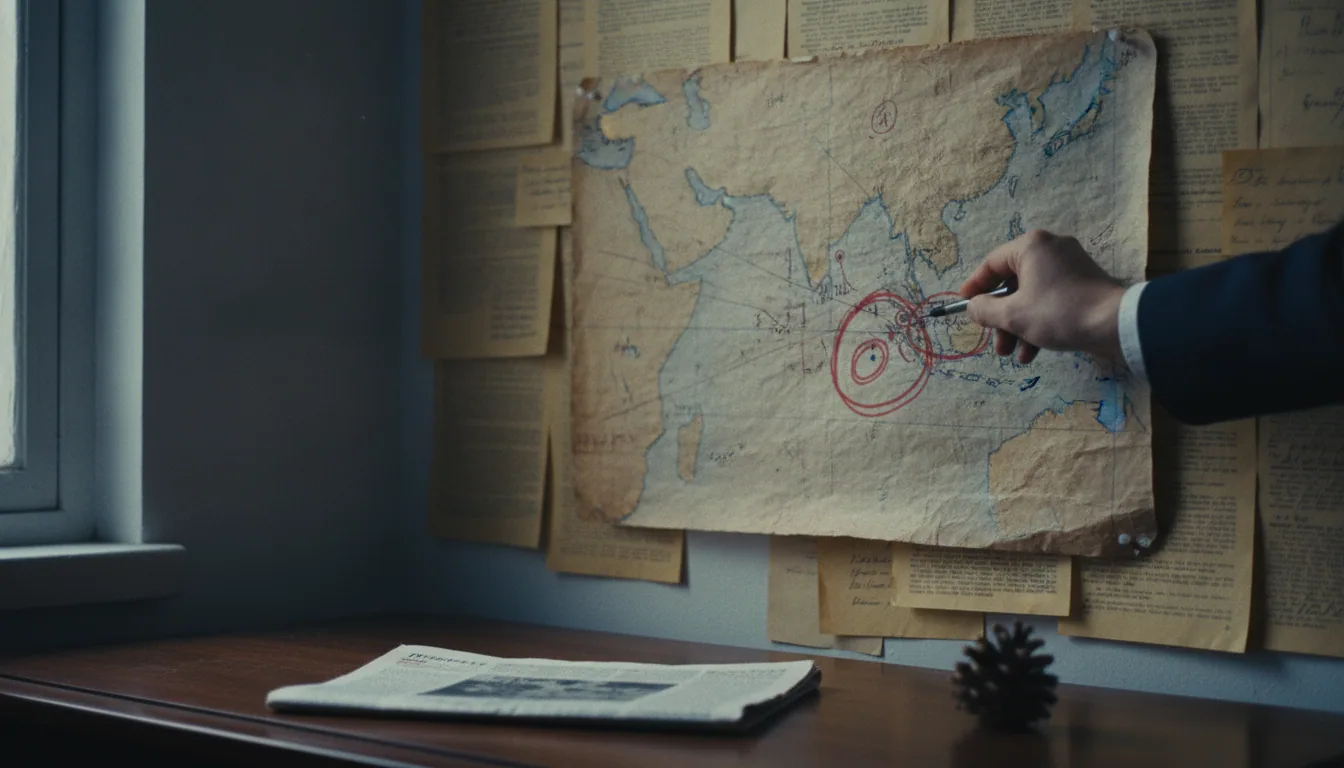
The mechanics of this relationship are surprisingly physical. Inside the Swiss Embassy in Tehran, there is a locked room. It contains a secret fax machine that serves as the primary encrypted communication link between the two governments.
Do the arithmetic. For more than 45 years, this single machine has been the main way to prevent a total blackout of communication. It is an old-fashioned tool used for the highest stakes imaginable.
Donald Trump recently described these efforts as "services rendered as the Guardian Angel to the countries of the Middle East." That is a grand phrase for a difficult, practical job. It means keeping a line open when every other door has been shut.
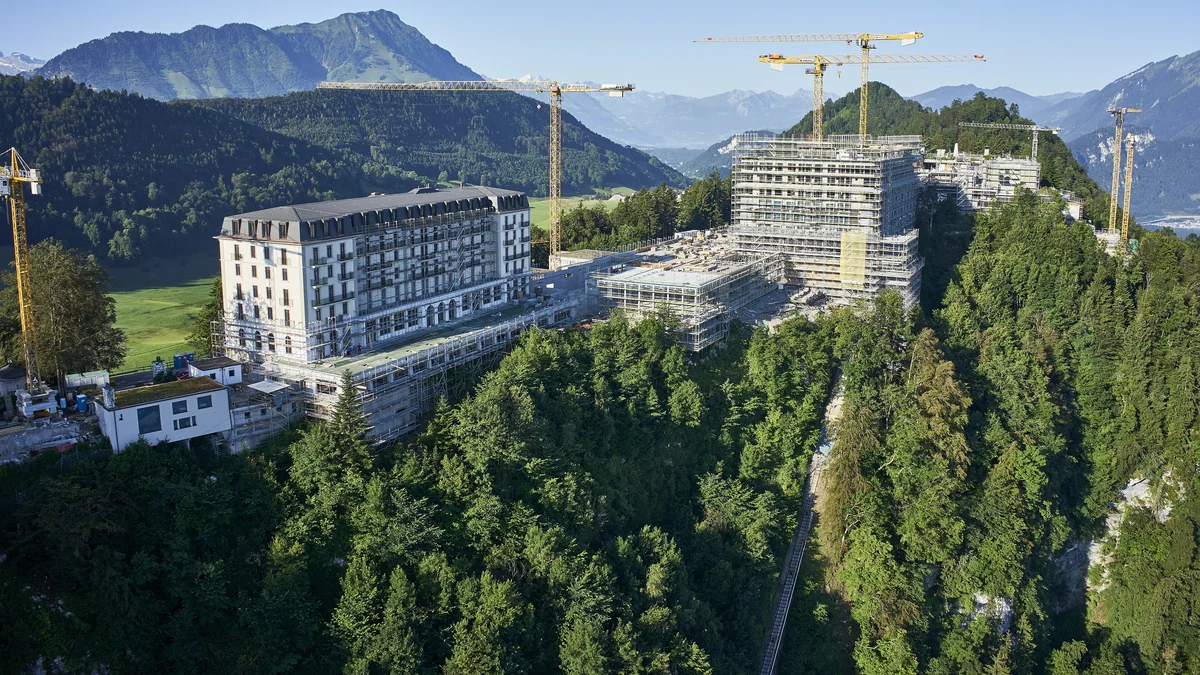
Now, the conversation has moved from that embassy room to the Burgenstock resort near Lucerne. This site was designated for high-level talks between officials like Abbas Araghchi and Steve Witkoff. They are there to turn forty-five years of faxes into a technical framework for the future.
I think about that locked room when I read the news at my kitchen table.
Diplomacy is often just a tired official waiting for a message to print in a quiet office.
It is how we try to keep the costs of a distant conflict from reaching our own heating bills and grocery bags.
The $6 Billion Pipeline for Medicine
Do the arithmetic. Policy is just a word until it finally lands on a pharmacy shelf or a crowded, anxious kitchen table. The Swiss Humanitarian Trade Arrangement (SHTA), established in February 2020, ensures that life-saving goods bypass US sanctions to reach the families who need them most.
The system proved itself during its first real test with the pharmaceutical firm Novartis. They provided a vital pilot shipment of cancer and transplant medications valued at 2,300,000 Euros. To make this possible, the Banque de Commerce et de Placements (BCP) became the first Swiss bank to manage the essential financial transactions that keep patients alive.
By 2023, the stakes grew from millions to billions of dollars. The diplomatic link facilitated the unfreezing of $6,000,000,000 in Iranian assets specifically for vital medicine and food purchases. That is six billion dollars in humanitarian funds designated to keep a civilian population from paying the ultimate price for a diplomatic freeze.
That is what policy feels like when it actually touches the ground. It is the difference between a child receiving medicine or a family watching a manageable illness become a life-threatening tragedy. When one income is no longer enough, I write so that the stubborn, practical math of survival is not buried under these billions.
One-Fifth of the World’s Energy: The Strait of Hormuz
Imagine a narrow strip of water that dictates the cost of your morning commute. This is the Strait of Hormuz. It is the world’s most critical maritime chokepoint for global energy supplies.
One-fifth of all globally traded oil and gas passes through this single gate. That is 20 percent of the fuel used to heat homes and power factories. That is what policy feels like when you are choosing between a full tank and a full fridge.
In June 2026, Iran claimed they had officially closed the Strait. US Central Command was quick to dispute the claim, asserting that traffic continued to flow. While Tehran spoke of a blockade, the tankers kept moving across the horizon.
Vice President JD Vance pointed to the physical reality to calm the markets. He stated that millions of barrels of oil have moved through the strait in recent days. Policy is often a game of nerves played with the resources we need to survive.
Whether the water is truly open or closed should not be a matter of debate. For a parent checking their bank balance, uncertainty is just another hidden expense. I write so that we remember how maritime chokepoints eventually become kitchen table issues.
Negotiating While the Neighborhood Burns
Diplomacy is a fragile thing, held together by a schedule and a shared fear of what happens if the talking stops. On Friday, June 19, the Swiss link almost went dark. Iranian officials canceled their attendance after fighting intensified in Lebanon, showing how easily regional fires can scorch even the most insulated negotiating table.
By Sunday, the chairs were finally filled again. US negotiators Steve Witkoff and Jared Kushner arrived at the summit to manage the technical grit of the nuclear talks. They sat across from Iranian parliamentary speaker Mohammad Bagher Qalibaf and Foreign Minister Abbas Araghchi to discuss the framework signed by President Masoud Pezeshkian.
Do the arithmetic. While these men discuss isotopes, Prime Minister Benjamin Netanyahu says his forces will stay in southern Lebanon until every threat is eliminated. That is what policy feels like when you are caught between a treaty and a tank, balancing nuclear stability against the reality of regional war.
The summit survives because of more than just Swiss neutrality. Pakistani and Qatari officials are acting as additional mediators, keeping the lines open when the primary actors refuse to look at one another. They serve as the insurance policy for a high-stakes negotiation happening while the regional neighborhood burns.
June is not a month for diplomatic pride. It is a month for practical survival, where we watch these talks because the alternative is a world where one income is no longer enough. I write so that we remember that every person deserves a warm home and the stability that only a finished agreement can provide.
What We Mean When We Say 'The Swiss Channel'
In diplomacy, a channel is a bridge for voices that cannot speak directly. For a citizen in Zurich or Geneva, it usually refers to public broadcasters like SRF or RTS. It is the background noise of daily life.
Engineers use the term with more grit. In hydraulic research, the phrase refers to specific gauging stations used to measure water-runoff. Precision matters because a small error in flow data can flood a field.
High-energy physics demands even more from the word. The CMS experiment searches for evidence of Z boson pairs within its own "channels" during proton-proton collisions. These experiments operate at 13 TeV.
Whether measuring water or subatomic particles, a channel is defined by its capacity to carry something vital. Diplomats now have 60 days to prove their communication link is just as robust. If the talk stops, the arithmetic of survival gets harder.
That’s What Policy Feels Like: The Interim Path Forward
Do the arithmetic. Under this interim deal, Iran sells oil freely and accesses billions in frozen assets previously blocked by maximum pressure sanctions. In exchange, they must commit to the dilution of enriched uranium to prevent a wider conflict.
Switzerland’s institutional neutrality is the anchor for these negotiations. This protecting power stays stable even when political administrations change or regional tensions boil over in Lebanon. It is the steady hand that keeps technical talks moving while the world watches the price of fuel and basic goods.
I write so that you know exactly what is being traded in your name. That is what policy feels like when one income is no longer enough to cover the heating. These 60 days are a sprint for global stability, keeping the Swiss Channel open when we cannot afford to close it.