The Vote That Ended a 40-Year No
Italy's nuclear renaissance became official on September 23, 2026, when the Senate voted 81 to 51, with 7 abstentions, to pass the enabling law for nuclear energy. Forty years of official no, ended in an afternoon.
Minister Gilberto Pichetto Fratin called it a "historical step." He is not wrong. But a historical step costs money, takes time, and lands somewhere — and Italian households deserve to understand exactly what was and was not decided that day.
What passed is an enabling law. It authorizes the government to spend the next 12 months writing the actual decrees on licensing, safety, and waste management. No reactor was approved. No site was chosen. No concrete was poured.
The law opens a door; it does not build what is behind it. Italy currently relies heavily on energy imports, making it structurally vulnerable to price swings that land hardest on people with the least margin. That dependency is not abstract — it shows up in electricity bills, in production costs, in the price of everything made or heated or cooled by power.
The first operational reactors are not expected before 2033 at the earliest. So the "historical step" is a historical step toward something still mostly on paper.
The politics moved fast. The physics and the engineering will not.
Chernobyl Closed the Door. Fukushima Locked It. Here Is What Changed.
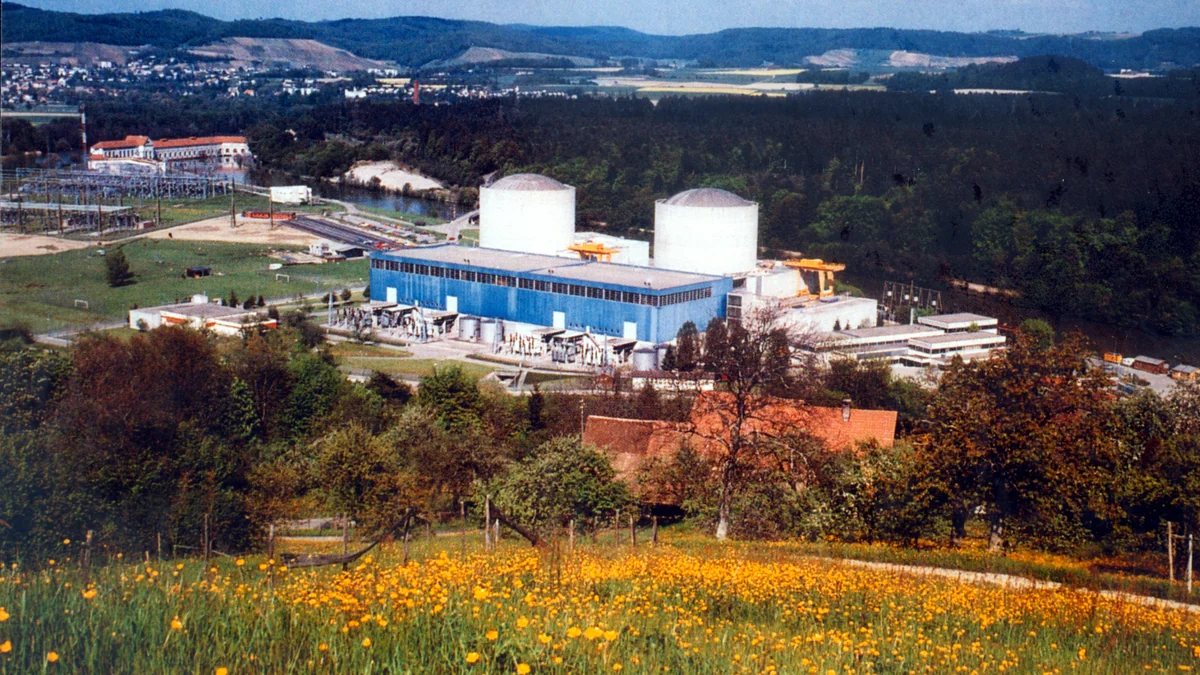
Italy first walked away from nuclear power not by accident but by ballot. In 1987, one year after the reactor fire at Chernobyl sent a radioactive cloud across Europe, Italians voted in a referendum to shut down the country's nuclear plants. That vote ended nearly 40 years of nuclear electricity generation.
The moratorium was not a bureaucratic decision. It was fear, expressed democratically.
The door stayed closed for two decades. Then, in 2009, the Berlusconi government tried to reopen it. Fukushima happened in March 2011.
By June, Italians went back to the polls and rejected the restart plan with roughly 94 percent of the vote. Two disasters, two referendums, one clear answer.
So what is different in 2026? Three things, and they are all pulling in the same direction. The European Green Deal has set hard decarbonization deadlines that Italy cannot meet by renewables alone, at least not cheaply.
Energy prices across the Italian industrial sector remain among the highest in Europe, and every delay costs real money. And the technology on the table is no longer Chernobyl-era engineering: the new plan focuses exclusively on Small Modular Reactors and fourth-generation Advanced Modular Reactors, smaller, faster to build, and cheaper to site than the giants that failed so publicly before.
The gap between two failed referendums and one successful Senate vote is not a map of forgetting. It is a map of how much pressure a country can absorb before the calculus shifts.
Small Reactors, Big Bets: The Industrial Plan Behind Italy's Nuclear Restart
Italy is not rebuilding the nuclear plants it shut down in 1989. The law passed last Tuesday bets entirely on Small Modular Reactors and fourth-generation Advanced Modular Reactors — newer, smaller designs that their advocates say can be built faster and cheaper than the colossal plants of the previous century. Whether that promise holds is the central question the next decade will answer.
The industrial architecture is already in place. In 2025, the joint venture Nuclitalia was created to coordinate how this actually gets built. Enel, Italy's largest utility, holds 51%; engineering firm Ansaldo Energia takes 39%; aerospace and defense company Leonardo holds the remaining 10%.
These are not startups betting on a hunch — they are established companies putting their industrial weight behind a long-term project.
The government put 135 million euros into nuclear and fusion research in 2024. That is seed money relative to what eventually follows, but it signals the direction of travel before the Senate had even voted. The first operational reactors are targeted for 2033 to 2035 — nine years away, which sounds like a long runway until you map what needs to happen: regulatory decrees within 12 months, siting decisions in a country with strong NIMBY sentiment, a national waste repository that has no confirmed location yet.
The timeline is tight. Not impossible, but tight. What Nuclitalia and the government are racing against is not just engineering schedules.
They are racing against the political cycle, against public patience, and against the next energy price spike that might make everyone forget why this matters.
The law set the direction. The decrees set the price.
The Arithmetic of Energy Independence
Eleven percent minimum. Twenty-two percent maximum. Those are the targets Italy has set for nuclear's share of its energy mix by 2050.
For a country that currently imports more electricity than almost anyone else in the EU, the numbers are not ambition for its own sake. They are the floor and ceiling of a calculation that begins with energy bills and ends with industrial survival.
The headline figure is 17 billion euros — the projected saving in decarbonization costs by 2050 if the nuclear plan holds. Read it carefully. It is not a promise. It is a model built on assumptions about gas prices, carbon permit costs, and SMR build timelines that could all shift.
But even if you discount it by a third, you are still looking at a number that would fund a great deal of public infrastructure, hospitals, and schools. The 2050 horizon feels abstract until you remember that Italy has Europe's third-largest industrial economy, and its manufacturers are already pricing their goods around energy costs their German and French competitors do not carry.
The government has twelve months to convert the enabling law into something operational: licensing frameworks, safety standards, a waste management regime. Twelve months is not long. The bureaucratic and political muscle required to produce credible regulatory decrees in that window is exactly the kind of work that never makes headlines but determines whether a "historical step" becomes a functioning grid asset or stays a well-voted resolution.
The European Green Deal is not waiting. Its decarbonization clock runs regardless of whether Italy's paperwork is in order.
Do the arithmetic. The targets are set. The savings are projected.
What remains is the unglamorous machinery of actually making it happen.
Half the Country Says Yes. The Other Half Wants to Know Where the Waste Goes.
Fifty-one percent. That is the share of Italians who told Demopolis pollsters in 2026 that they support returning to nuclear energy. A majority, yes. Not a comfortable one.
Compare that to the Senate arithmetic: 81 votes in favor, 51 against. In parliament, the law looked decisive. In the country, it barely clears the bar.
That gap is not a footnote — it is the political risk the government will be managing for the next decade.
Left-center opposition has been direct about its objections: costs are too high, and the question of nuclear waste has no answer yet. They are not wrong to ask. No site has been named for the reactors, and no location has been identified for a long-term waste repository.
The government has 12 months to issue the regulatory decrees that should address both questions — licensing, safety standards, waste management. Twelve months is not long.
NIMBY resistance is the older European story here. France has nuclear infrastructure that Italy does not. But France also spent decades navigating exactly these fights — which commune, which valley, whose groundwater.
Italy is beginning that argument without having settled where the conversation happens.
The 51-to-51 mirror — public support against Senate opposition, both exactly at that number — is almost too neat to be coincidence. It says something honest: the country is divided, not by ignorance, but by the same practical questions the opposition is raising.
Where does the waste go. Who pays if the cost projections are wrong. Nobody has answered those yet.
What the Law Didn't Settle — and Why That Is the Next Story
The Senate vote is the headline. The next twelve months are the story.
Italy's government now has a 12-month window to issue the decrees that will define everything that matters: licensing procedures, safety standards, and how nuclear waste will be handled. That window is where abstract political ambition becomes concrete regulatory reality. What comes out of it will either make the 2033-2035 reactor timeline plausible or quietly push it further away.
Three critical questions remain unanswered. No specific sites for Italy's first SMRs have been identified. No final location for a national nuclear waste repository has been agreed.
And while 17 billion euros in projected decarbonization savings by 2050 is a number the government repeats often, the total investment required to get the first reactors online has not been publicly detailed.
Those three gaps are not footnotes. Site selection will trigger the sharpest political fights, because every region will want the economic activity and none will want the waste. The repository question has blocked progress in every country that has tried to move fast on it.
The 135 million euros allocated in 2024 for SMR and fusion research is real money, but it is seed funding, not a construction budget.
Readers in Italy, and energy importers across the EU who depend on what Italy does or doesn't produce, should watch the decree process closely. The law set the direction. The decrees set the price.
When those draft texts are published, run the numbers. That is when Italy's nuclear renaissance stops being about political ambition and starts being about your bill.