The Agreement That Was Always Coming
The Greenland Security Pact signed in September 2026 replaces the 1951 defense agreement between Washington and Copenhagen — a text few bothered to reread because it seemed permanent enough not to require it.
It was not, as it turned out, permanent enough. On September 18, 2026, Donald Trump announced via Truth Social that the United States, Denmark, and Greenland had reached a trilateral security agreement replacing and significantly amending that original 1951 deal. The announcement landed on a Thursday. Four hundred soldiers from eleven nations were already on the ground in Narsarsuaq, running Arctic Shield 2026 — which is either a coincidence or a stage direction, and experienced observers of this administration have learned to discard the former explanation early.
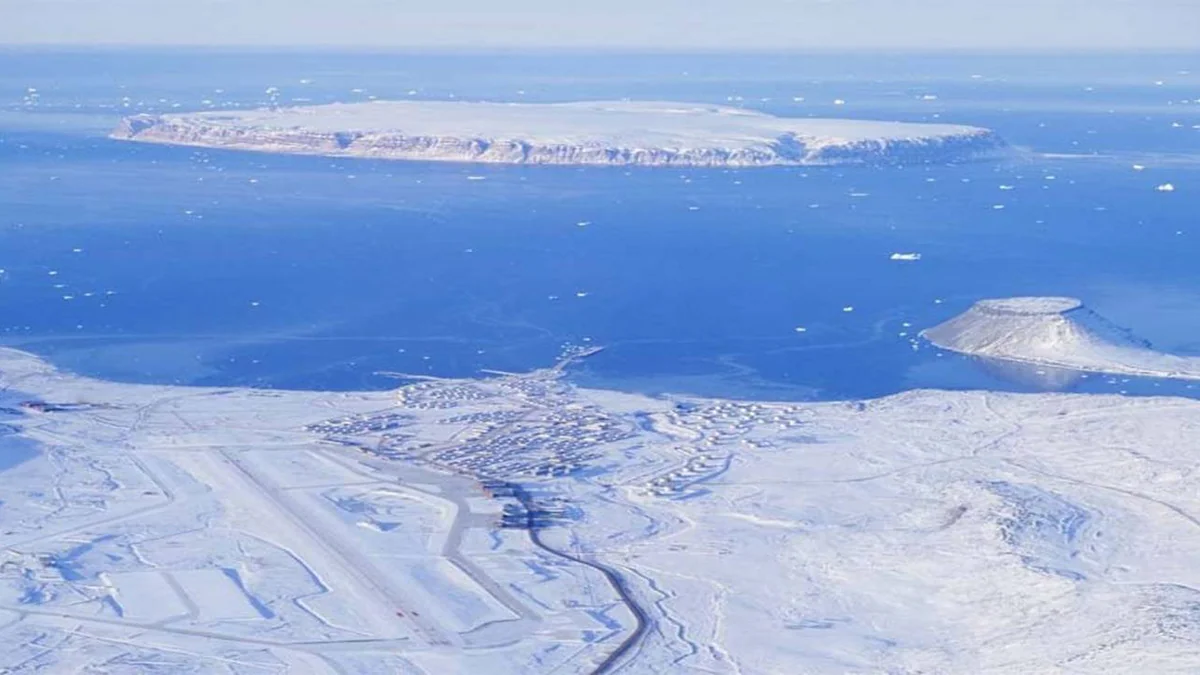
The proximate causes are not obscure. The 2025 annexation crisis — the threats, the 25-percent tariff leverage, the European unified rebuke — produced a kind of managed alarm that required a managed resolution. A meeting at Davos in January 2026 between Trump and NATO Secretary-General Mark Rutte is credited with ending the standoff, and this pact is what the standoff resolved into. Pituffik Space Base, formerly Thule Air Base, has held American personnel since the early Cold War without pause or interruption. The formal signing is scheduled for the week of September 21 at the United Nations General Assembly in New York — which is, at minimum, a more dignified venue than a social media platform.
What the Words Actually Say
Begin with the language, because the language is doing real work. Trump's announcement gave the United States "permanent control over security, and all other needs." The first clause is familiar enough — basing rights, force projection, the architecture of a military alliance. The second clause is the one worth reading twice: "all other needs" is not a term of art; it is a container, and what the drafters chose to leave undefined, a future administrator will define.
Trump's secondary formulation sharpens the point. "This is an Infinite Life Agreement, there is no end." Legally, the claim is a challenge: every treaty can be abrogated, every parliament can vote, sovereignty does not extinguish itself by contract. Politically, the claim is a signal directed at Nuuk and Copenhagen as much as at Moscow and Beijing — the cost of reversal has been set very high, and the party who set it was not Greenlandic.
An agreement with no exit architecture is not a partnership. It is a ceiling.
Rubio's formulation deserves its own sentence. Greenland, he stated, will "forever be part of the strategic defense area of North America." Not the Arctic Alliance. Not the NATO perimeter. North America. The geographic designation does the doctrinal work quietly: it places Greenland inside a continental defense logic from which Denmark, a European state, is structurally distinct.
The prohibition on non-NATO military bases provides the clearest structural boundary in the document. Russia and China are excluded by name from basing rights and sensitive investments. What that exclusion also does, less visibly, is confirm that the island's security decisions now run through a filter the Inatsisartut did not design and cannot unilaterally remove.
What Copenhagen and Nuuk Kept — and What They Gave
The pact explicitly recognizes the sovereignty and territorial integrity of the Kingdom of Denmark. Read that line carefully, because it is doing a specific job. It appears in the preamble, which is the part of an agreement that states aspirations and face-saving declarations. The operative text — the clauses that assign actual authority — is where the security control lands, and it lands in Washington.
The self-determination language for the Greenlandic people is real in the sense that it is written down. What it does not do is specify a mechanism, a timeline, or a threshold. Self-determination affirmed in a preamble while security arrangements are locked into an infinite-life framework is a structural asymmetry, not a contradiction — both things can coexist, as they did for Estonia between 1940 and 1991, when sovereignty was recognized by several Western governments and simultaneously irrelevant on the ground.
Here is the practical read for anyone following this closely. The Arctic security agreement requires ratification by two parliaments: the Folketing in Copenhagen and the Inatsisartut in Nuuk. Those two votes are the remaining points of leverage before this framework hardens into the permanent architecture its authors intend. Folketing approval is the more predictable variable; Prime Minister Frederiksen has already endorsed the pact publicly. The Inatsisartut vote is less certain, and less discussed in Western coverage.
That asymmetry — sovereignty affirmed in the preamble, security assigned in the operative text — is the load-bearing wall. The self-determination clause is the decorative molding. Watch which parliament deliberates longer, and what language its members use about the word "permanent."
An agreement with no exit architecture is not a partnership. It is a ceiling.
The Excluded: Russia, China, and the Architecture of Veto
The prohibition is written plainly enough. Russia and China may not build military bases on the island. They may not make what the text terms sensitive investments. The pact forbids, more broadly, the construction of any non-NATO military base on Greenland's soil. Call it what it is: a named exclusion zone, drawn in ink, at the edge of the Arctic.
The operational corollary arrived in the same announcement. The United States will immediately begin expanding its existing facilities. Pituffik Space Base, which older readers will remember as Thule, has sat at the northwestern rim of Greenland since the early Cold War. It is about to get larger. The specific locations and precise budgetary figures remain unstated, which is itself a kind of statement.
Trump announced, without visible discomfort, that the deal would cost the United States nothing. Somewhere a spreadsheet was quietly updated. The expansion of Arctic basing — personnel, logistics, hardened infrastructure — carries a number, and that number will surface eventually in a procurement line or a supplemental budget request.
The pact situates all of this inside NATO's collective framework. Secretary of State Rubio declared Greenland permanently part of North America's strategic defense area and explicitly named the adversaries it excludes. The architecture is layered: NATO membership provides the outer frame, the bilateral expansion provides the actual capability, and the named exclusions provide the political signal. Whether that layering strengthens the alliance structure or quietly routes around it — by concentrating decision-making in Washington rather than Brussels — is a question the Folketing and the Inatsisartut will have to answer before they ratify.
The Minerals Below the Ice
The pact's security architecture is, in one respect, a rebranding exercise. Strip the defense language away and what remains is a framework governing who extracts Greenland's rare earth deposits, and on whose terms. Greenland holds some of the world's largest concentrations of the minerals that underpin battery technology, defense electronics, and the broader industrial competition between Washington and Beijing. The agreement's provisions for strategic raw materials extraction sit inside a document framed entirely as a security instrument.
The investment veto is where the two registers fuse. The pact prohibits Russia and China from making sensitive investments in Greenland, with Washington holding the power to define what qualifies as sensitive. That is not a security clause wearing economic clothing. It is an economic clause wearing security clothing, and the difference matters more than the drafters appear to have acknowledged.
The comparison that forces itself here is the Committee on Foreign Investment in the United States, CFIUS, which has for decades blocked Chinese acquisition of American firms by classifying the transactions as national security risks. Greenland's veto clause imports that architecture into Arctic soil, applying it to a territory whose parliament has not yet ratified the text. CFIUS criteria evolved over thirty years of litigation and legislation; the pact offers no equivalent definition. The criteria for a sensitive investment will be whatever Washington says they are, at the moment Washington says it.
Watch the implementing regulations that follow ratification. If they define sensitive by ownership nationality alone, the veto is a blunt trade instrument. If they define it by sector, the rare earths market remains open to European capital. The difference is the whole question.
Read the Ratification Vote
Two parliaments now hold what three governments have signed. Ratification by the Folketing in Copenhagen and by the Inatsisartut in Nuuk is the one procedural gate left where the pact's actual terms can be tested in public. Watch both votes with the same attention given to the announcement.
The Folketing's margin matters less than its record. What the Inatsisartut vote will reveal is whether Nuuk attaches conditions: a guaranteed percentage of mineral revenue returning to Greenland, a fixed timeline for any self-determination referendum, a clause converting "recognizes" to "guarantees." Shall versus should. The passive construction versus the active one. A ratified text that softens every verb from the announcement language is a concession map, and it will be readable.
The harder question sits beneath the procedural one. Trump called this an infinite-life agreement. That phrase appears in the same document that affirms Greenland's right to self-determination. Read the final ratified text of the Greenland Security Pact for what it says about how those two clauses interact. If the Inatsisartut approves without condition, the evidence forces a plain conclusion: a people's right was named, and then quietly shelved.