On Tuesday, They Vote Whether to Close the Doors
The Kennedy Center bankruptcy warning became a scheduled vote: tomorrow, the board of the John F. Kennedy Center for the Performing Arts meets to decide whether to shut the doors on one of the most recognizable cultural institutions in the United States. The date is September 15, 2026. The vote is real, and so is the money problem behind it.
Internal documents distributed to the board use the words "certain fiscal collapse." Not a rough patch. Not a projected shortfall requiring adjustment. Certain collapse. The center is carrying a $23 million deficit for the fiscal year ending September 30, 2026, and the gap between what the institution expected to earn and what it actually will earn is closer to $100 million.
Do the arithmetic. A national memorial to a murdered president, established by Congress, funded in part by American taxpayers, is weeks away from running out of money.
As of September 14 — yesterday — no formal bankruptcy case has been filed. The warning is still a warning. But the board meeting is not a formality. It is a scheduled vote on immediate closure of the main building, the one that bears Kennedy's name and hosts the concerts, operas, and performances that hundreds of thousands of people travel to see each year.
The newer annex, called the Reach, would stay open. The heart of the complex would not.
What brought a $220 million institution to this point is a longer story, involving political decisions, withdrawn donors, a ceiling that fell 60 feet, and a president who wants his name on the building. That story is worth understanding, because it did not have to end here.
The Money Stopped Coming In
The Kennedy Center projected $124 million in revenue for this fiscal year. Its original budget target was $220 million. That gap — nearly $100 million — is not a rounding error. It is the difference between an institution that functions and one that cannot pay its bills.
The shortfall did not arrive suddenly. It built up steadily after 2025, when Trump allies took control of the board and the Center's identity shifted from a national arts memorial into contested political territory. Ticket sales fell. Major donors pulled back. The fundraising pipeline that cultural institutions depend on — the reliable, relationship-based giving that fills budget gaps before they become crises — dried up.
This is how philanthropic collapse actually works. It rarely arrives as a single dramatic withdrawal. It arrives as unreturned calls, deferred pledges, and names quietly removed from gala programs. Donors do not issue press releases when they disengage; they simply stop writing checks.
The revenue collapse predates the ceiling incident on September 4. The structural damage is real and serious — 46 out of 278 soffit panels with severe corrosion, plaster falling 60 feet to the Grand Foyer floor. But the financial crisis was already embedded in the institution's books before that storm arrived. The $23 million projected deficit for the fiscal year ending September 30 is the arithmetic result of a political realignment that made the Center radioactive to the donors it needed most.
Naming a national memorial after a living, polarizing president is not just a symbolic act. It is a donor relations strategy that works in one direction only.
The Ceiling Fell First. The Rest Followed.
On September 4, 2026, a four-by-five-foot section of plaster fell 60 feet from the Grand Foyer ceiling. Nobody died. That is the only good news in this part of the story.
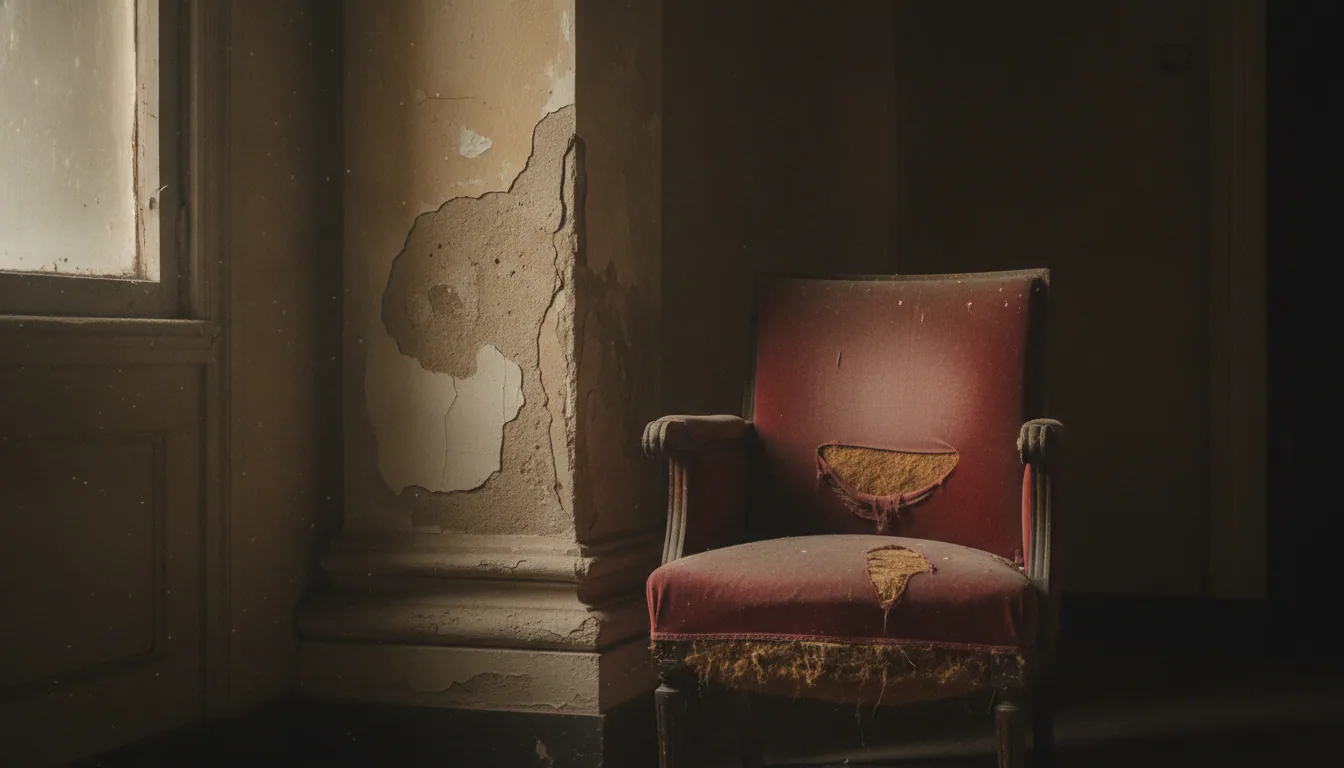
Management used the incident to declare the entire main building unsafe for occupancy. The stated reasons go well beyond one falling panel: structural deterioration, electrical problems, water damage working its way through the bones of a building that has been visibly neglected for years. When engineers examined the soffit panels, they found severe corrosion on 46 out of 278 inspected. That is one in six. Not a rounding error.
The Department of Justice has gone further. Its lawyers have raised the possibility that the building may ultimately require demolition. That is a federal agency, in writing, suggesting that a national memorial to a murdered president might need to be torn down because the people responsible for maintaining it did not.
Here is what that means practically. The ceiling did not fail because of the September storm. Plaster does not corrode overnight. Forty-six panels do not develop severe structural problems in a single fiscal year. Deferred maintenance is just a polite term for a choice — the choice to delay repairs until the cost becomes someone else's problem or the building becomes someone else's crisis.
The Grand Foyer ceiling fell because the money that should have paid for maintenance was either never raised or quietly redirected by priorities that had nothing to do with the building's actual condition. A storm gave management a date and a headline. The neglect gave them the facts they needed.
The President's Offer: His Name Back on the Building
There is a deal on the table. Donald Trump has said he will lead a financial rescue of the Kennedy Center. The condition is simple: his name goes back on the building.
It came off in June 2026. A federal judge, Christopher Cooper, had ruled the previous month that renaming the center after Trump was illegal. The board, which Trump allies had taken control of in 2025, did not have the authority to rebrand a national memorial to a president. The letters came down. The court had spoken.
Now the center's spokesperson says Trump's involvement is the only viable path to attracting new donors. That is a striking thing to say out loud. It means the institution is telling the public that its financial survival depends on a political arrangement that a federal judge already called unlawful.
Think about what that looks like from the outside. A building that Congress established as a memorial to John F. Kennedy. A board that tried to put another president's name on it. A court that said no. And then, with the deficit at $23 million and the closure vote scheduled for Tuesday, the same argument returning through a different door.
The rescue offer is not charity. It is a negotiation. And the price being asked is not money — it is the name of the building and what it stands for. Whether any judge will allow that exchange is a separate question. The one already asked has an answer on record.
A building that belongs to everyone cannot be saved by a deal that belongs to one person.
One Lawmaker Said No
Representative Joyce Beatty is not accepting the board's timeline. The Ohio Democrat and trustee filed a legal challenge contesting the decision to close the center, and she is not alone in questioning whether safety is the real driver here.
A federal judge already blocked a previous attempt to shut the building. Judge Christopher Cooper ruled earlier this year that the board had not adequately considered the consequences of closure. That ruling exists. It set a legal bar. The question now is whether a falling ceiling clears it.
The pattern matters. In May 2026, Cooper ruled that renaming the center after Trump was illegal. Trump's name came down from the exterior in June. By September, management is citing structural corrosion and plaster falls as grounds for an emergency closure. Beatty's legal challenge frames that sequence as a maneuver — one designed to accomplish through safety language what earlier injunctions prevented through direct action.
Courts are not easily fooled by chronology. The judge will have to decide whether the September 4 ceiling incident constitutes a genuine emergency or a convenient one. Those are not always the same thing. Other institutions have managed phased closures, partial evacuations, and rolling repairs without locking the doors entirely.
What Beatty is asking, stripped of legal language, is simple: who decided safety required total closure, and why now.
What Would It Actually Take to Pull the Kennedy Center Back from Financial Collapse
The board is looking at a two-year, $250 million renovation project. There is no confirmed funding source for it. That number is worth sitting with: $250 million to fix the building, against a $23 million deficit that is already pushing the institution toward closure. One is a patch. The other is a repair. Right now, the center cannot afford either.
Even if the main building closes Tuesday, The Reach — the newer addition to the complex — would stay open. That is not nothing. It means the institution survives in some form while the legal and financial fights continue. But The Reach is not the Grand Foyer. It is not the institution Congress established as a national memorial.
A real path forward has three parts: donors willing to give without political conditions attached, a renovation plan the court finds credible, and leadership that does not drive away the next round of funders before the ink dries. Those three things are not complicated. They are just hard to assemble at the same time, in the same building, under the same roof.
The money exists in this country to pull the Kennedy Center back from bankruptcy and save a 60-year-old national arts institution. What has been missing is the will to separate the funding from the politics. A building that belongs to everyone cannot be saved by a deal that belongs to one person. The door is still open. Someone has to walk through it without conditions.