On September 9, Trump Promised Every American Adult $5,000
Five thousand dollars. Say it out loud once and notice what happens in your chest. It is a month's rent in some cities. It is a car repair you have been postponing. It is the school trip your kid stopped asking about.
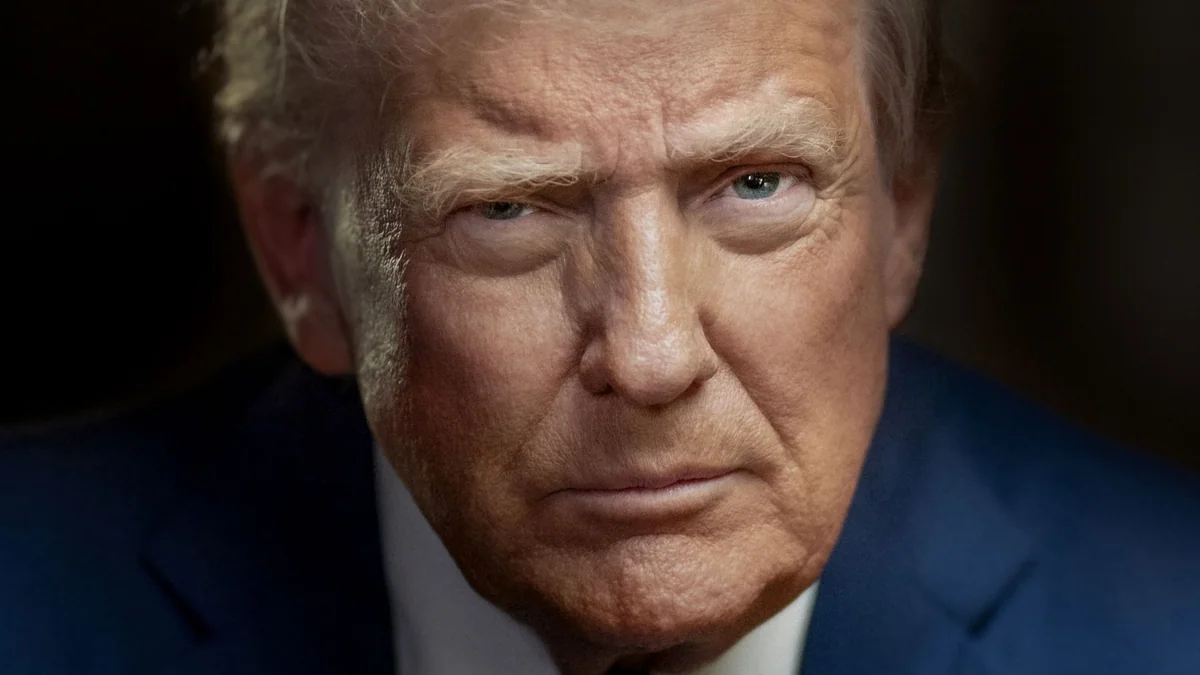
On the first night of the Republican midterm convention in Dallas, President Donald Trump walked onto the stage and said exactly that number out loud, to exactly that effect. "I will issue a dividend to every adult citizen in the United States of America for $5,000." The crowd heard it. Social media heard it. Every household that has been watching grocery receipts climb heard it.
The word he chose was not "payment." Not "check." Not "stimulus." He said "dividend."
That word is doing deliberate work. A dividend is what a shareholder receives when the company performs well. It implies ownership. It implies you earned this, that it was already yours, that the corporation called America simply held it until now. Trump compared the country to a profitable corporation, its tariff revenues to company earnings, and its citizens to shareholders collecting their due.
He also made the frame explicit: this only happens if Republicans hold both the House and the Senate in November. "I'm asking you to pretend that I'm on the ballot," he told the crowd. "Just one more time."
So Trump's $5,000 promise is not quite a promise. It is a conditional offer, tied to a specific electoral outcome, announced from a convention stage, dressed in the language of wealth and ownership rather than need. Whether the arithmetic behind it holds is a question for the next section.
There Is One Condition — and It Is the Whole Point
The money comes with a lock on it. Trump's exact words in Dallas: "If the Republicans win the House of Representatives and the United States Senate, both of them... I will issue a dividend." Not before. Not otherwise. Both chambers, or nothing.
That condition is not a footnote. It is the entire mechanism.
The payment is also restricted to spending inside the United States, though no verification system was named. Nobody explained how the government would confirm that $5,000 spent by 260 million people stayed within the country's borders. The "spend in the USA" rule exists as rhetoric, not as policy architecture. A rule without enforcement is not a rule.
Put these two conditions together and something becomes clear. This is not fiscal policy in any conventional sense. Stimulus logic says: people are struggling, inject money, reduce hardship. Dividend logic says: the country earned profits, share them with citizens. This proposal says something different: vote correctly, receive payment. That is not economic policy. That is a transaction.
Public money becomes campaign infrastructure when its release depends on which party wins.
The $1.3 trillion is not budgeted, not legislated, not allocated. It is promised — conditionally — to an electorate being asked to perform a specific political act first. The distinction matters enormously, because it tells you what problem this proposal is actually designed to solve. And that problem is not yours.
The Bill: $1.3 Trillion, Funded by Tariffs, Flagged by Economists
Do the arithmetic. There are roughly 260 to 270 million adult Americans. Multiply by $5,000. The total comes to more than $1.3 trillion — not a rounding error, not a budget line item, but a sum larger than most countries' entire annual output.
Trump says tariffs pay for it. His administration has argued that revenue generated by its trade policies has made America profitable enough to share the gains with citizens. The nation, in his framing, is a corporation. The adults are shareholders. The $5,000 is a dividend.
Economists at the Brookings Institution disagree with the math. They warn that injecting more than $1.3 trillion into the economy would widen the federal deficit and accelerate inflation. That means the people who receive the check could find that prices have risen enough to erode a significant part of what they just got.
For context, the administration has previously issued checks of $1,776 to military members. That was a specific payment to a specific group — a few million people, not 260 million. This proposal is not a larger version of that program. It is a categorically different fiscal operation.
The gap between promised revenue and projected cost has not been publicly reconciled. No specific tariff categories have been identified to cover $1.3 trillion. No legislative pathway has been named. The "spend it in the USA" requirement has no stated enforcement mechanism.
That is not a detail. That is the central question. A promise that costs $1.3 trillion needs to show its funding sources line by line — not as a general gesture toward trade policy success, but as an actual budget. That work has not been done in public. It may not have been done at all.
This Is Not the First $5,000 Promise From This Administration
The Dallas speech felt familiar. Not because Trump is a reliable narrator, but because the number itself had appeared before, worn different clothes, and quietly disappeared.
In April 2025, the administration floated a "Baby Bonus" — a one-time $5,000 payment for new mothers. It landed in the news cycle with a splash, circulated on social media for two weeks, and never became law. No bill. No vote. No check in anyone's mailbox.
Before that, in February 2025, came the "DOGE dividend." The idea was straightforward enough: Elon Musk's Department of Government Efficiency would cut $2 trillion in federal spending, and some of the savings would flow back to citizens. Round number, conditional on savings that had not yet materialized, delivery date unspecified. It also went nowhere.
A pattern runs through all three proposals. Large round numbers. Conditions attached to things that haven't happened yet. A future date when the money will arrive. And each one emerged at a particular political moment — when the administration needed attention, momentum, or voter enthusiasm.
None of them became law. Each served its purpose in the news cycle and moved on. The question a working household has to ask is simple: what makes September 2026 different from April 2025? The number is the same. So is the structure. So is the silence where the legislative mechanism should be.
What Else Happened in Dallas That Night
The $5,000 pledge was the headline, but it was not the whole speech. Trump called the opposing party "dumocrats" from the convention stage — a schoolyard jab delivered to a crowd that cheered it. He endorsed Texas Attorney General Ken Paxton. He urged supporters to vote as if he personally were on the ballot.
Compare that to what was missing. Republican senators Susan Collins and Dan Sullivan, both running in competitive races, skipped the convention entirely. Their absence said something the applause lines did not. When your party is staging its biggest midterm rally, you find reasons not to be photographed there.
The strangest moment of the night may have belonged to Democratic Senator John Fetterman, who made a surprise virtual appearance to introduce his Republican colleague Dave McCormick. Cross-party gestures like that are rare enough to notice. What to make of it is harder. A personal friendship, a Pennsylvania calculation, or simply proof that the normal rules of political gravity feel suspended right now.
A convention is always two events at once: the one on stage and the one happening in the empty seats. Dallas had both. The $5,000 promise drew the cameras. The absences and the awkward alliances told a quieter story about a party navigating a midterm cycle where the math is uncertain and the loyalty is conditional.
A Check Is Not a Policy — But Here Is What One Would Look Like
The total bill for this promise is $1.3 trillion. That is the estimated cost of sending $5,000 to approximately 260 to 270 million American adults. Trump says tariff revenues will cover it. The Brookings Institution says it will expand the federal deficit and push inflation higher.
Both of those things can be true at once. A large cash injection into a consumer economy tends to raise prices. If it raises prices faster than wages adjust, the $5,000 buys less than it did on paper. Working households have seen this before.
What is not known matters just as much as what is. There is no specified legislative pathway. There is no mechanism to enforce the domestic-spending requirement. There is no earmarked revenue stream that has been legally designated to cover the cost. There is no delivery timeline. These are not minor implementation details. They are the architecture of the thing.
A one-time transfer of $5,000 does not lower rent. It does not raise the minimum wage. It does not build a single unit of affordable housing or pay for one hour of childcare. The structural costs that drain household budgets arrive again in January, and in February, and every month after.
What sustained economic dignity actually requires — wage floors, housing investment, childcare access — is slower to build and harder to photograph at a convention. It does not fit on a banner.
Watch Trump's $5,000 promise. Not because it will necessarily happen, but because what a government promises working people tells you what it thinks they deserve. That is always worth knowing.