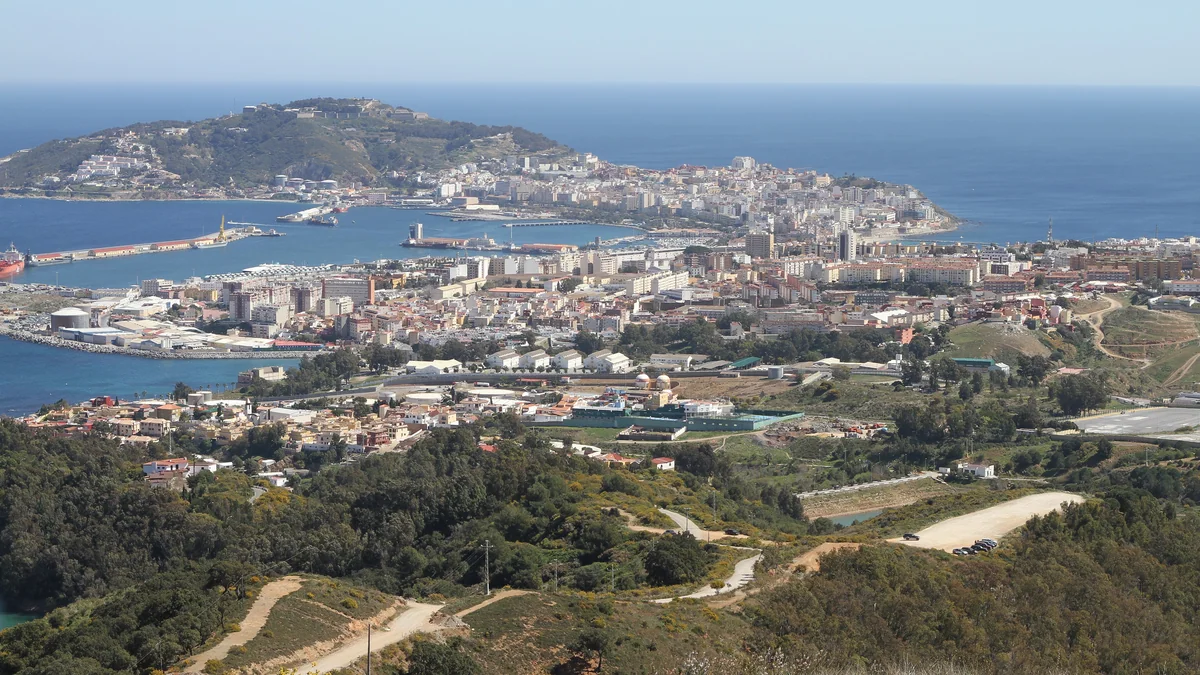
In July 2026, the Spanish exclave of Ceuta faced a humanitarian surge when 80,000 migrants crossed the Moroccan border in 48 hours. This event caused at least 111 deaths, strained reception centers housing 1,900 minors, and triggered a €25 million emergency response from the Spanish government.
The Ceuta Crisis and Spanish Migration Policy is a struggle to balance humanitarian dignity with border security after 80,000 people crossed into the exclave in two days. I spent yesterday evening looking at a receipt for two liters of milk and a loaf of bread, doing the math for the week ahead. Most of us live our lives in these small, nervous calculations.
Between July 30 and 31, 2026, the Spanish exclave of Ceuta faced a math problem that no household could ever solve. This is the physical reality of the EU’s southern edge. Ceuta is a frontline where policy meets the pavement.
The logistical shock was immediate. The Red Cross began distributing over 2,500 food rations every single day to keep up with the surge. Reception centers are now buckling under the pressure.
It is hard to grasp that scale until you do the arithmetic. It is like an entire mid-sized city arriving at your door without a suitcase. These are people, not just statistics on a screen.
The facilities currently house nearly 1,900 unaccompanied minors. These children need more than just a temporary roof. They need a system that is not already broken.
The government has since allocated €25 million for emergency management. However, the human cost is already paid. Between 111 and 141 people died or disappeared during those two days of chaos.
This was not just a border crossing; it was a systemic collapse. When 80,000 people move at once, the map of Europe feels very fragile.
Human arithmetic: The Ceuta Crisis and Spanish Migration Policy in action
Policy makers often talk about "flows" and "border pressures," but the reality of the Mediterranean is simpler and more brutal. Between 111 and 141 people died or disappeared beneath the waves during those two days in July. They are empty chairs at kitchen tables and phone calls that will never be answered.
For those who survived the water, the struggle did not end with a dry towel. By late August, approximately 5,000 migrants remained in the exclave, waiting in a state of legal and physical limbo. The Red Cross handed out more than 2,500 food rations daily just to keep people fed.
It is the equivalent of feeding a small town three times a day in a very confined space. Most of these meals went to people who arrived with nothing but the salt on their skin. The most difficult part of these figures involves the children.
Nearly 1,900 unaccompanied minors currently live in reception centers that face severe overcrowding. These are children who crossed one of the world’s most dangerous borders without a parent to guide them. These centers were built to house hundreds, not thousands.
Now, they are the primary residence for 1,900 young people waiting for a decision on their lives. The staff are working around the clock, but the infrastructure is at a breaking point. This overcrowding means 1,900 children need stability and safety.
A border is only as strong as the information people receive about it.
The €25 million bill and the policy of "pull factors"
The Spanish government has allocated €25 million for the care and management of the people currently in Ceuta. To a mother checking her bank balance, that is an astronomical figure. It is the price of an emergency that is still unfolding.
Migration Minister Elma Saiz and Interior Minister Fernando Grande-Marlaska are now the faces of this spending. The money is meant to stabilize a system that was never built for 80,000 people arriving in just 48 hours. Much of the political anger focuses on what happened just before the surge.
From April 16 to June 30, 2026, the government implemented a regularization scheme for unauthorized migrants. Opposition parties like PP and Vox have labeled this a "pull factor" that exacerbated the Ceuta Crisis and Spanish Migration Policy debate. They argue it served as a digital flyer telling the world Spain was ready to process anyone who arrived.
Minister Saiz defends the move as a matter of dignity and labor reality. Meanwhile, Minister Marlaska has to manage the physical pressure on the border and the 1,900 unaccompanied minors currently in reception centers. They are trying to fix a crisis with a checkbook.
The €25 million is spent on food, shelter, and basic processing. This feels like a lot until you divide it by the thousands who still need a bed. For families on the mainland, the bill represents a system that can only react, not lead.
Screen time and social unrest: The disinformation war
The 48-hour surge in July did not start at the border fence. It began with the blue light of phone screens in the middle of the night. Fact-checkers identified a wave of Arabic-language disinformation spreading across TikTok and Facebook.
The message was simple: Spain had "opened its doors." One video showed a crowd walking past a fence without any resistance. For thousands of people looking for a way out, this lie was an invitation.
By the time the authorities could react, 80,000 people were already crossing into Ceuta. A viral video travels faster than any patrol boat and costs nothing to produce. It is a cheap way to create a very expensive crisis.
Prime Minister Pedro Sanchez accused networks linked to Russia and Israel of spreading these lies. He described it as a form of "hybrid warfare" where algorithms are used as weapons. Critics argue that blaming foreign actors is a way to distract from policy failures.
In the end, the digital war has a real human cost. Whether the lies come from a foreign capital or a local group, the result is the same. A border is only as strong as the information people receive about it.
The dependency trap: Spain, Morocco, and Western Sahara
We have seen this pattern before. In 2021, thousands of people crossed into Ceuta following a diplomatic row over Western Sahara. The tension always comes back to this disputed territory that Morocco claims.
When diplomacy fails, the border opens. Data shows that Moroccan security can be very effective when they choose to be. In 2025, they intercepted 73,640 irregular crossings using their own resources.
However, a leaked report alleges that Moroccan gendarmerie actually ushered migrants toward the fence. This was not a failure of policing, but a policy choice. It is the instrumentalization of migration, using people as a political tool.
Spain relies on a neighbor to do the difficult work of policing. If the price of a quiet border is a diplomatic concession, the peace never lasts long. It just waits for the next disagreement over territory or trade.
From Madrid's streets to the EU's edge: What happens next?
On September 2, 2026, the weight of the border crisis reached the Spanish heartland. Roughly 50,000 people gathered in Madrid to protest how the government has handled the surge. Protesters are demanding practical solutions for a humanitarian emergency that feels increasingly permanent.
As of late August, 5,000 migrants remain in Ceuta, including nearly 1,900 unaccompanied minors in overcrowded centers. These are children who need a system that knows who they are and where they are going. Spain has since requested assistance from Frontex to help screen those who crossed.
One country cannot solve a continental challenge with only its own budget and its own police. We are looking for a policy that offers both order and dignity. Order at the frontier allows families in Madrid and Riga alike to feel secure.
True security comes when the system is transparent and the vulnerable are protected. We can build a migration policy that reflects our values without breaking our budgets. Addressing the Ceuta Crisis and Spanish Migration Policy is a difficult path, but it is the only one that leads to a stable home for everyone involved.