The crisis defining Ceuta 2027 began thirteen months before the eclipse, in a forty-eight-hour window no emergency planner had modeled.
Eighty Thousand People in Forty-Eight Hours
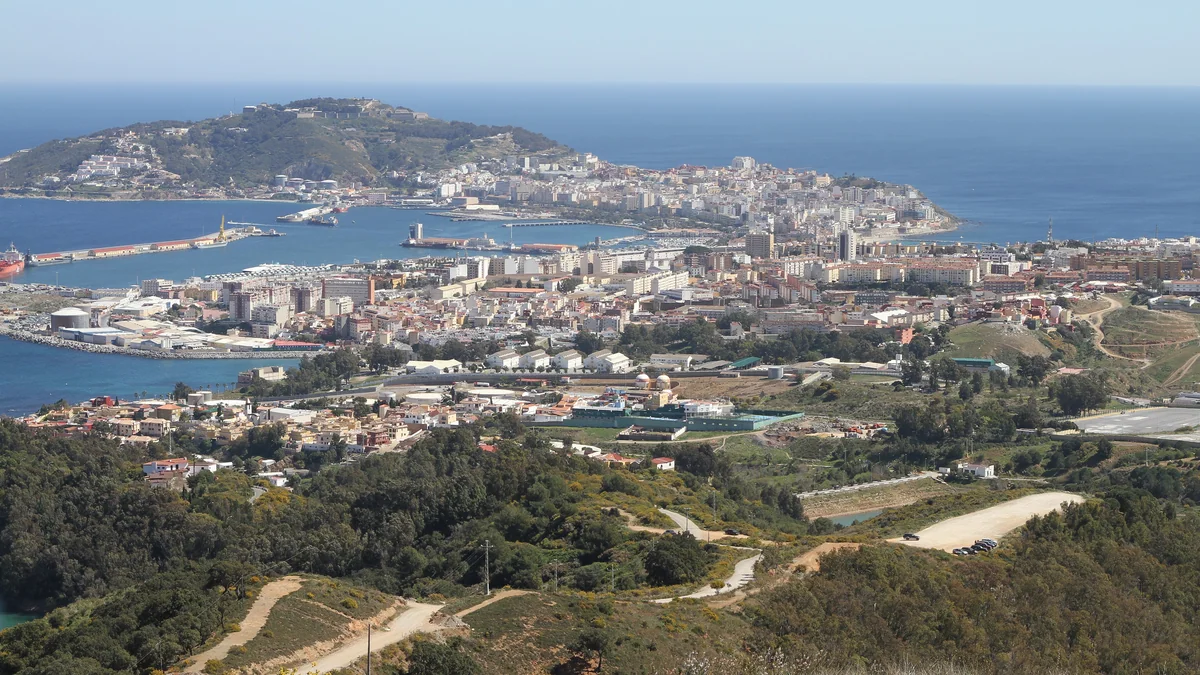
On July 30, 2026, Ceuta had 83,500 permanent residents. By the end of July 31, it had something close to double that. Between those two dates, an estimated 70,000 to 80,000 people crossed from Morocco into the Spanish exclave. Not over weeks. Not over a season. In forty-eight hours.
Do the arithmetic. A city the size of a mid-sized Latvian town, absorbing its own population again, overnight, with the same hospitals, the same shelters, the same streets.
By August 4, 111 deaths had been confirmed. Most of them drowned at the Tarajal breakwater, trying to swim into Europe. Spain deployed 2,000 soldiers and more than 1,500 police and Guardia Civil. Mayor-President Juan Jesús Vivas declared "a total humanitarian and social emergency." That phrase does a lot of work when you say it out loud.
Healthcare and housing infrastructure hit 170% capacity. That is not a peak. That is the new baseline — the number that was still sitting there, unresolved, when planners began calculating how to host 400,000 eclipse tourists the following summer.
That's what policy feels like when the emergency never actually ends. You don't recover; you absorb the next thing on top of the last thing. Workers in Ceuta's overstretched services did not get a period of calm to rebuild. They got a number — 170% — and then they got told to prepare for August 2027.
The scale of the July crisis was not inevitable. It was built from a specific combination of economic desperation — youth unemployment among Moroccans aged 15 to 24 runs at 29.2% — and something far more modern: a court ruling, misread, shared on TikTok and WhatsApp until it became a rumor that traveled faster than any border force could.
How a Court Ruling Became a Hashtag, and the Hashtag Moved a Crowd
On June 29, 2026, the Spanish Supreme Court issued a ruling on procedures for processing sea arrivals. It was a legal document, narrow in scope, technical in language. By the following weekend, it had been stripped of every qualification and compressed into a single sentence spreading across TikTok, Facebook, Instagram, and WhatsApp: "The Spanish border is open and you can cross without papers."
That was not what the ruling said. The University of Alicante's Golden Owl research group tracked exactly how the misreading traveled — how an administrative judgment about processing timelines became, through translation and distortion and algorithmic acceleration, a signal that the gate was unlocked. The slogan moved faster than any correction could follow.
Do the arithmetic on the audience. Moroccan youth unemployment for those aged 15 to 24 stands at 29.2%. That is nearly one in three young people with no work, watching a phone screen in Fnideq or another border town, reading that Europe had just announced it was open. The message did not create desperation. It found desperation that already existed and gave it a direction.
A misread legal sentence became a trigger. A generation without jobs was already at the door. That is not a story about social media being dangerous, though it is that too. It is a story about what happens when a platform's incentive structure — share fast, verify never — intersects with structural unemployment on one side of a fence and an administrative text on the other. The misinformation did not cause the crisis. It lit a fuse that economic conditions had spent years laying.
Platform policy is now border policy.
The Border That Was Never Just a Border
Ceuta has been Spanish since 1580. Morocco calls it an occupied city. That is 446 years of disputed sovereignty, and it has never once been resolved by paperwork alone.
Understanding that history is practical knowledge, not trivia. When Morocco deployed a "police shield" from Tetouan to Nador on August 12, 2026, it was not simply a security response to chaos. It came after the political pressure had already landed, after the numbers had already broken Ceuta's hospitals and housing. The shield was the message, and Madrid understood it.
Analysts point directly to the 1975 Green March, when Morocco moved 350,000 civilians into disputed territory as a diplomatic instrument. The parallel is not subtle. Population movement, controlled or released at Rabat's discretion, is a tool of statecraft. One analyst writing in EUobserver named it plainly: Europe has made the security of its borders "dependent on a state capable of turning that dependence into leverage."
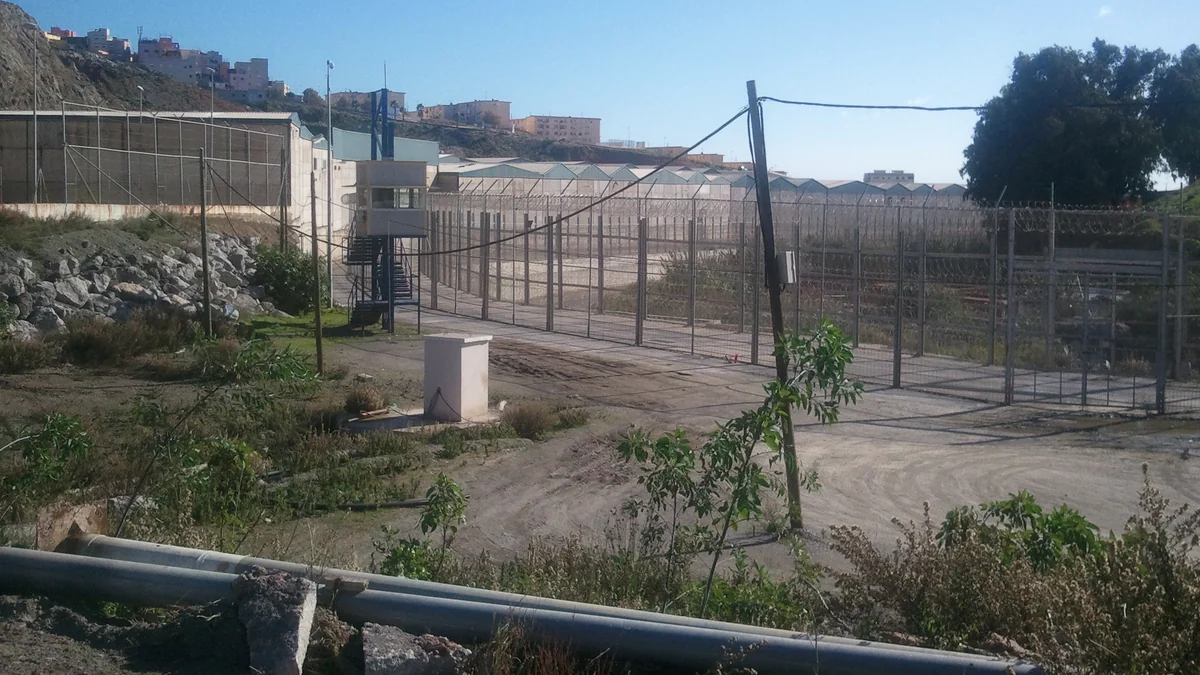
That dependence has a geography. Ceuta and Melilla are the only land borders between the European Union and Africa. Every other EU external border touches another country that is either a member state, a candidate, or a treaty partner with aligned interests. These two cities sit inside a different logic entirely.
That's what policy feels like when a sovereignty dispute from the sixteenth century shapes your emergency response in the twenty-first. The question for European policymakers is not whether this leverage exists. It clearly does. The question is whether the EU is willing to build a border architecture that cannot be switched off by a neighboring government's political calculations.
Four Hundred Thousand Tourists Are Coming Anyway
On August 2, 2027, at 10:50 in the morning, the moon will slide in front of the sun over Ceuta. Totality lasts 4 minutes and 48 seconds. For those four minutes and forty-eight seconds, one of the most politically pressurized stretches of coastline in Europe will go dark.
Tourism experts are forecasting 400,000 additional visitors to the path of totality across southern Spain and the exclaves. The projected economic impact: €347 million. NASA and MIT scientific teams are already scheduled to arrive. AEMET, Spain's meteorological agency, is warning that temperatures on the day will exceed 35°C.
The eclipse is the second of what astronomers are calling the Iberian triad, a rare sequence running 2026, 2027, and 2028. Ceuta sits at the center of the 2027 path. There is no moving it.
Picture what the city looks like right now. Healthcare and housing infrastructure at 170% capacity. Red Cross tents still in use. Processing centers built for hundreds holding thousands. And somewhere in the middle of all that, a logistics team trying to figure out where 400,000 people put their telescopes.
The scientists coming from Cambridge and Houston and Tokyo do not know what the border felt like last July. They booked hotels. They packed solar filters and tripods. They are coming because the sky over Ceuta on August 2, 2027, is one of the best seats in the world for this particular 4 minutes and 48 seconds.
That is not irony. That is just the calendar. The question the city cannot afford to avoid is whether the infrastructure will hold, and who gets to decide who crosses which line to witness it.
A City at 170 Percent Capacity Cannot Absorb a Half-Million More
Ceuta's healthcare and housing infrastructure hit 170% capacity after the July 2026 crisis. There was no pause, no rebuild window, no quiet season to catch up. The eclipse tourists start arriving in August 2027.
The EU sent emergency funding to the Red Cross to manage the migrant situation. Emergency money is not the same as rebuilt capacity. It keeps people fed and sheltered; it does not add hospital beds or water mains or sewage treatment for a city suddenly hosting double its population.
Compare this to the 2021 incident, when roughly 10,000 people crossed in a single event. That was called a crisis. July 2026 was eight times larger, and the infrastructure it strained is the same infrastructure that must now receive 400,000 additional visitors.
Then there is the double filter. Entering Ceuta does not grant access to mainland Spain or the wider Schengen zone. That rule exists for migrants. Whether Spain will apply or quietly waive it for international eclipse tourists arriving through Morocco is, publicly, still unresolved.
That asymmetry is not an accident. It is a policy architecture. The border must look open for astronomers and commerce, and closed for asylum. Holding both positions at once, in the same city, on the same road, requires something more than emergency funding.
What Ceuta 2027 Could Mean If Europe Decides to Use It
August 2, 2027 cannot be rescheduled. The moon does not negotiate with border ministries. That fixed deadline is, strangely, Europe's best asset right now: it forces Spain and the EU to rebuild Ceuta's infrastructure on an actual calendar, not a political one.
Do the arithmetic. A projected €347 million in eclipse tourism revenue is a concrete funding argument — not a wish, a number. Infrastructure that currently sits at 170% capacity needs investment regardless of the eclipse. The tourists simply make the case impossible to ignore.
The July 2026 crisis also exposed something that no border fence can fix. What TikTok amplifies, soldiers have to manage. Platform policy is now border policy. If the EU does not treat algorithmic misinformation as a structural border risk, the next misread court ruling will move another 80,000 people.
And 29.2% youth unemployment in Morocco is not a footnote. Rachid el Jalfi can blame trafficking mafias. The numbers tell a different story.
A city that survives both crises becomes proof that Europe's edge can hold. That is what Ceuta 2027 is actually being asked to demonstrate — not four minutes and forty-eight seconds of totality, but whether the infrastructure and the political will can hold together long enough to matter. Europe still has time to make that choice.