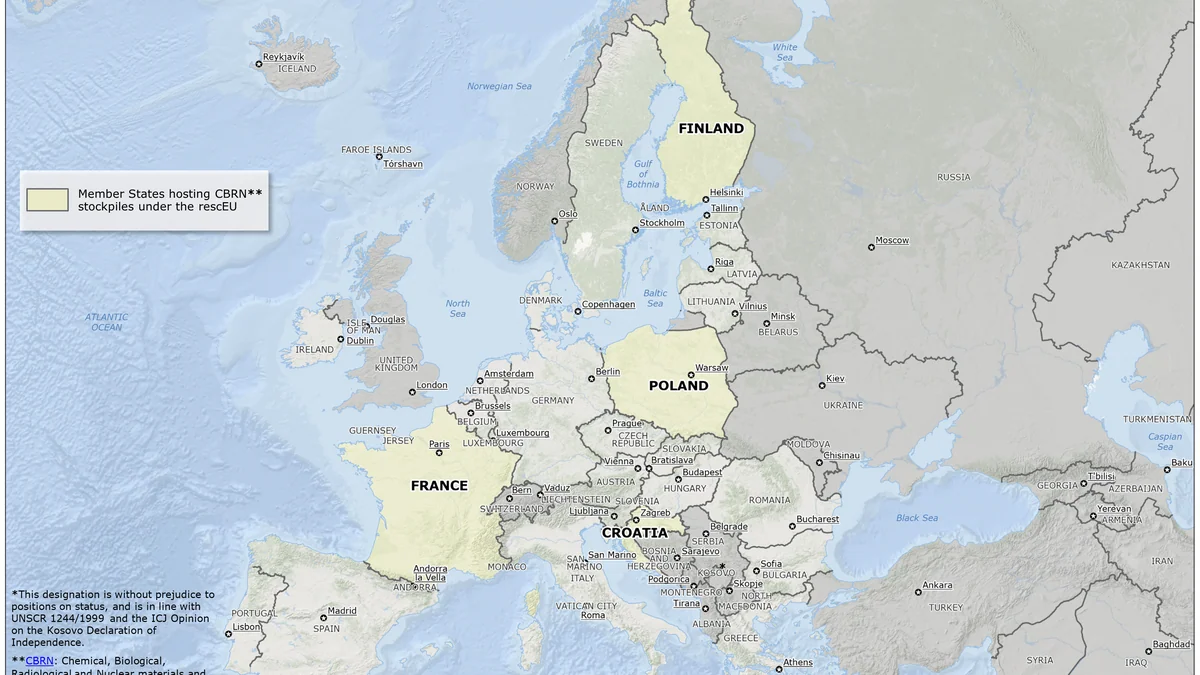
Global wildfire cooperation is shifting from ad-hoc diplomatic requests to permanent infrastructure as climate-driven disasters overwhelm traditional mutual aid systems. In 2025, the European Commission doubled its rescEU fleet, moving beyond symbolic gestures to establish regional hubs that ensure resources are pre-positioned before the first spark ignites.
The breaking point of the old model arrives when simultaneous extreme fire seasons in both hemispheres exhaust the global pool of shared crews and equipment. This math of exhaustion renders traditional handshake agreements obsolete when every nation faces its own crisis at the same time.
The Cyprus Hub: Why Regionalized Response is a Lever, Not a Gesture
In 2025, the European Commission’s calculated expansion of the rescEU aerial fleet proved that owning the hydrant is better than borrowing a bucket. The most destructive season on record, with 1 million hectares burned, showed that infrastructure holds where diplomacy falters.
The strategic shift crystallized with the establishment of a regional firefighting hub in Cyprus to address the eastward shift of fire risk. This location replaces ad-hoc emergency requests with permanent, pre-positioned assets that move the needle in the Levant and Mediterranean.
Regionalization is the working model for a warming world where resources are spread thin. Decentralized hubs succeed because they do not rely on a single global provider. This move from "mutual aid" to "permanent infrastructure" is born of necessity as old models buckle under the heat.
July 2026: The Collapse of Traditional Global Wildfire Cooperation
In July 2026, the United States and Canada reached Preparedness Level 5 at the exact same moment. This numeric ceiling meant national resources were fully committed, leaving no surplus for international neighbors.
The shared safety net tore under the weight of simultaneous crises across the North American landscape. Canada lost 15 million hectares in 2023 and 8.3 million in 2025, leading to a total exhaustion of global resource pools.
The "opposing seasons" model failed because fire seasons now overlap globally and occur year-round. This forced the Pacific Northwest to seek aid from Australia and New Zealand while their own seasons were dormant. The calendar of crisis has officially changed.
Regionalization is the working model for a warming world.
The US Consolidation: Efficiency vs. the 65% Budget Reality
In January 2026, the US consolidated federal programs into the US Wildland Fire Service to create a permanent, year-round workforce. However, data shows that US Forest Service programs simultaneously faced budget reductions ranging from 43% to 65%.
For homeowners, this reorganization represents a management of scarcity rather than an expansion of safety. To balance the books, the US canceled international training contracts that built fire management capacity in developing nations.
The US has transitioned from a primary global provider of aid to a net consumer of resources. Without these training contracts, partner nations are less able to contain fires early, increasing the global demand for help.
The Management Bottleneck: Why We Have Planes but No Pilots-in-Command
A large air tanker sitting silent in British Columbia is not a fuel problem; it is a lack of Incident Management Teams. These personnel act as air traffic controllers for disasters, and their global shortage is a critical bottleneck.
The 2025 Kananaskis Wildfire Charter framed wildfires as a year-round threat and emphasized Indigenous cultural burning. Cultural burning is a lever that reduces fuel loads before the summer heat arrives.
The honest scorecard shows a gap between diplomatic promises and the actual payroll. Sharing commanders is a lever, but failing to fund their training proves that despair is just procrastination with better PR.
The Rise of Global Data: FAO, UNEP, and the Binational Roadmap
Historically, wildfire aid functioned like a diplomatic gift exchange, but advice alone is not a lever when the water runs dry. The new model prioritizes shared digital data over national flags to ensure resources go where they are needed most.
In 2025, the FAO and UNEP launched the Global Fire Management Hub to sync technical languages before the smoke rises. Smaller nations are building the blueprints for this regional safety, such as the Colombia-Ecuador binational roadmap.
Standardizing fuel load measurements across borders saves more hectares than ceremonial press conferences. This shift to "syncing systems" is what actually moves the needle for front-line communities.
The Honest Scorecard: From Global Heroics to Proportional Preparation
The data from 2026 reveals a system reaching its structural limit as primary aid exporters hit full capacity. International aid must be viewed as a supplement rather than a standalone strategy. To survive, we must pivot toward regional hubs and localized training to strengthen global wildfire cooperation.