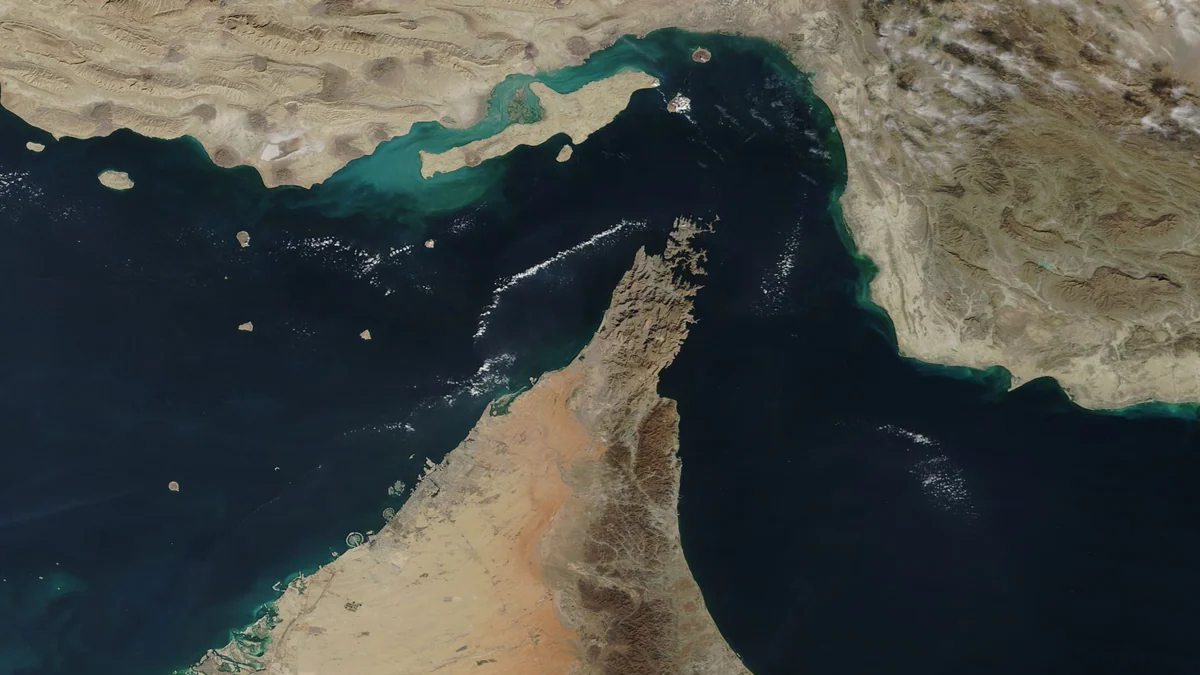
The Hormuz Strait blockade threat became a physical reality on July 20, 2026, marking 141 days of restricted maritime passage. With 21 million barrels of oil stalled daily, the closure has driven Brent crude to $90.49, creating a structural economic siege that renders traditional land-based pipelines insufficient.
I have heard this promise of maritime closure before: 1987, the Persian Gulf. It failed then for the reason it will fail now: no empire can afford to turn a global artery into a cul-de-sac forever. Yet as of mid-2026, the Strait of Hormuz has been effectively closed to commercial shipping for 141 days.
What was once a strategic nightmare is now a daily ledger entry. Iran has officially announced it has restored control over the waterway in response to the US blockade, while US President Donald Trump states the blockade will continue until a full agreement is reached.
This is not a sudden rupture but a logical sequence. We saw the rehearsal in April 2024 when the Revolutionary Guard seized the MSC Aries to demonstrate control. Today, the blockade is no longer a symbolic gesture; it is the load-bearing wall of regional geopolitics.
Two Miles of Sovereignty: The Architecture of the Hormuz Strait Blockade Threat
The geography of the strait is an exercise in claustrophobia. At its narrowest point, the shipping lanes are two-mile-wide corridors carved through the territorial waters of Iran and Oman. That is the load-bearing wall, and everything else is molding.
The numbers are heavy. Every day, 21 million barrels of oil move through this throat, roughly 21 percent of global consumption. Qatar sends its liquefied natural gas through these waters, accounting for up to 25 percent of the global LNG trade, leaving zero room for error.
There is a recurring myth that land-based pipelines provide a safety net. Saudi Arabia and the UAE maintain routes that bypass the water, but their combined capacity is a mere 6.5 million barrels per day. These pipes can divert at most 30 percent of the usual oil volume, making a total bypass mathematically impossible.
The water does not care about the 20 percent tariff declared in Washington, respecting only the physical reality of the two-mile shipping lane.
Diplomacy by Spreadsheet: The 20 Percent Peace
The US administration is seeking "leverage for a regional settlement" via a 20 percent transit tariff on all goods exiting the Gulf. Somewhere a spreadsheet was quietly updated in Washington, but the math does not balance for the small nations waiting at the other end of the pipe.
This tariff is the load-bearing wall of the current crisis. When the price of moving oil is dictated by a ledger in the West, the world’s most critical artery is treated as a private toll road. The true deterrent is not the carrier group but the math of war risk insurance, which has risen to 16 times its normal rate.
The estimated daily economic cost of the Hormuz closure now exceeds 4 billion dollars. This is a rhythmic bleeding of global capital that outpaces any military budget. Tanker spot rates for routes from the Gulf to Asia have tripled, placing a crushing weight on importers like Japan and South Korea.
The View from the Small-Nation Floor: Energy and Enclosure
After 141 days of enclosure, the silence in the strait has become a measurable quantity. Only ten vessels passed through the narrow neck of the Gulf on July 12, compared to the usual average of eighty-eight.
For island-minded economies, the strait is not a tactical map but a life support system. Their energy security has been traded for a seat at a table where they were never invited. Geography has no mercy when the great powers cut a deal that excludes the primary consumers.
Over 150 commercial vessels now sit stranded in regional waters, their steel walls turned into expensive waiting rooms. Shipping companies have begun the long retreat toward the Cape of Good Hope. This detour adds fourteen days to every voyage, acting as a two-week tax on geography that resets the global clock.
Escalation as Stasis: The Ledger of the Ninth Day
On July 20, 2026, the US military recorded its ninth consecutive day of strikes against Iranian targets. While US forces maintain their kinetic rhythm, the Revolutionary Guard reports that two oil tankers were immobilized in the southern strait. To the small-nation bystander, the difference between a strike and an explosion is academic, as both ensure the waterway remains a graveyard for commerce.
Unlike the 1980s tanker wars, this is a siege by spreadsheet and drone. The US maintains its 20 percent tariff while the IRGC counts the wreckage in the water. This is the structure of the crisis; the diplomatic talk of a "full agreement" is merely decorative.
Watch the movement of the $90.49 price floor for Brent crude. If it stays high despite naval posturing, the market has accepted a permanent state of enclosure. The Hormuz Strait blockade threat has transformed from a seasonal warning into a fixed price of being a borderland state in an era of great power competition.