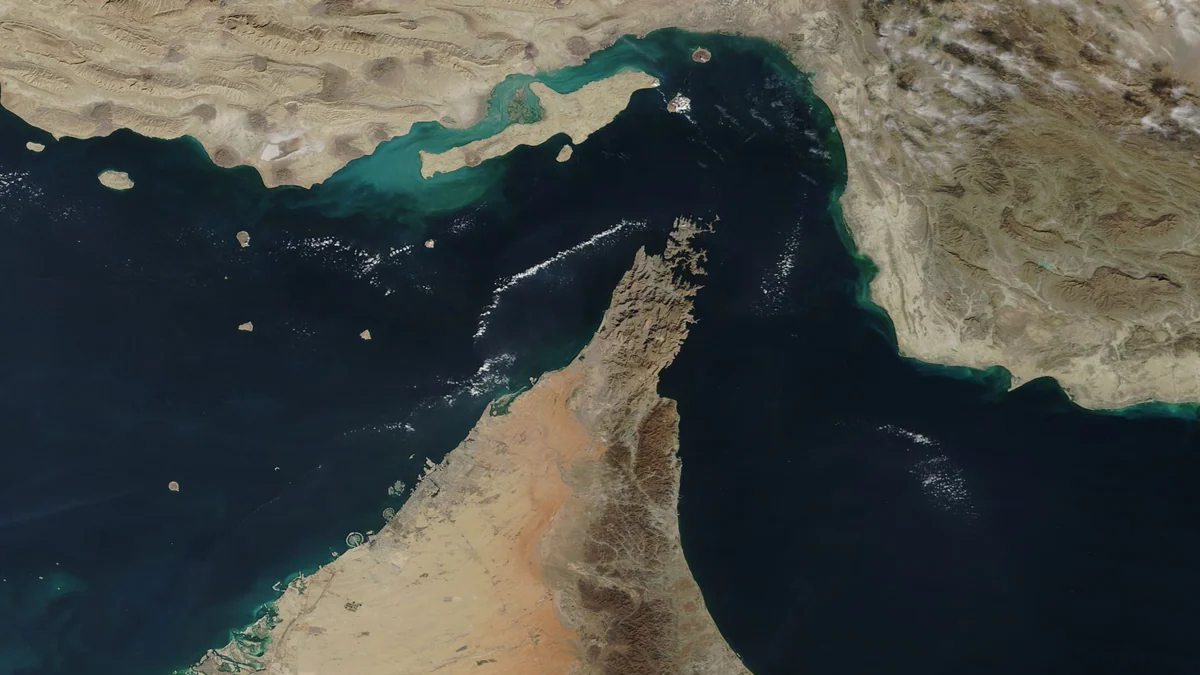
The global economy faces a systemic energy crisis: Red Sea and the Strait of Hormuz are simultaneously restricted. As of July 2026, Iranian naval maneuvers and Houthi missile strikes have severed the world's primary oil arteries, driving Brent crude over $100 and threatening Eurozone industrial production.
The current dual blockade is a structural amputation of global transit that has no historical precedent, effectively ending the era of safe maritime passage. In 1979, the analysts in Moscow and Washington watched the same satellite feeds of the Iranian coast, waiting for a single lever to be pulled. Today, the uncertainty is gone, replaced by a spreadsheet of vanishing hulls.
The 1979 Tehran comparison is lazy, and here is exactly where it breaks. Half a century ago, the threat was a political gesture, a tactical move used to gain leverage in a Cold War world. In 2026, we are witnessing a structural amputation of maritime transit that has no precedent in the post-war order.
Iran has restricted the Strait of Hormuz since February 28, 2026. This is no longer a temporary friction. Daily transits through the Strait have collapsed from a pre-crisis average of 60 to 88 down to approximately 14 or 15 vessels.
Between July 22 and July 24, the count dropped further to just three vessels per day. The wire says the situation is fluid. The world’s most critical energy artery is effectively severed.
We have moved from a singular crisis to a synchronized maritime closure where the Red Sea and the Gulf are treated as a single theater. Somewhere a spreadsheet was quietly updated to reflect the end of the era of safe passage. For the small nations who survive on the margins of these trade routes, the math is simple.
The Yanbu Relief Valve and the Energy Crisis: Red Sea and the Strait of Hormuz Under Pressure
The Saudi strategy for a Hormuz crisis has always rested on the East-West Pipeline. The pipeline was a multi-billion dollar bet that geography could be defeated by steel and concrete. In early July, the plan appeared to hold.
Yanbu exports surged to 3.8 million barrels per day as the relief valve took the strain. But on July 20, 2026, the Houthi leadership in Sanaa announced a total naval blockade of Saudi Arabian ports. A non-state actor effectively challenged the maritime sovereignty of a G20 power.
The spreadsheet of global supply was quietly updated as insurance premiums for the Red Sea moved toward the prohibitive. The kinetic reality arrived forty-eight hours later. On July 22 and 23, the Saudi-flagged tankers Encelia and Layla were targeted by Houthi missiles and drones.
The Encelia was reported ablaze, a pillar of black smoke visible to any satellite passing over the Bab el-Mandeb. These were not random acts of maritime banditry; they were a calculated strike against the only remaining exit for the Kingdom’s oil. Riyadh now finds itself caught between an Iranian lock and a Yemeni hard place.
The world’s most critical energy artery is effectively severed.
The Ledger: When the Spreadsheet Corrects the Policy
Brent crude surpassed $100 per barrel on July 23, 2026. The price rose 13 percent in a single week and 40 percent throughout the month of July. Somewhere a spreadsheet was quietly updated.
Murban crude prices surged 19 percent to above $106 as the global market entered a state of severe backwardation. Traders no longer believe in the physical security of the maritime corridors. This technical term reflects a panicked reality where the barrel held today is worth far more than any future promise.
In the domestic sphere, the verdict is equally flat and unforgiving. German diesel reached €2.18 by July 23, while the average gasoline price in the United States rose to $4.09. These numbers are the load-bearing walls, and everything else is merely decorative molding.
War-risk insurance premiums have increased significantly, creating what is effectively a private-sector embargo. You do not need a military boarding party to stop a tanker if the London insurance market refuses to cover the hull. This surge in costs has closed the Red Sea to all but the most desperate or state-subsidized vessels.
The European Central Bank estimates that three percent of Eurozone production is now at risk due to these energy shortages. For the small nations on the Baltic floor, this is where the great-power game hits the bone. This is the cold price of a maritime geography that no diplomatic summit can negotiate away.
Thirteen Nights and Fifty Thousand Personnel: The Limits of Force
The hum of the cooling units in a windowless command center is the sound of imperial overstretch. By late July 2026, CENTCOM had moved over 50,000 personnel into the theater to manage a crisis that refuses to be managed. Now, these personnel are the static targets of a geography they were sent to pacify.
The wire says thirteen nights of kinetic strikes have dismantled the threat. The reports say something colder: they are hitting "nodes," while the shipments remain stopped. The load-bearing wall is the stubborn reality of the dual blockade itself.
The cost of this display is visible in the retaliatory strikes. Iran has targeted American-linked military sites in Bahrain, Kuwait, and Jordan with surprising accuracy. US officials are now investigating whether Russian or Chinese intelligence provided targeting support for these operations.
From the 1979 panic to the present deployment of 50,000 personnel, the strategic error remains the same. Believing that a sea can be owned by the one with the loudest guns is a persistent fallacy. Somewhere a spreadsheet was quietly updated to reflect the burn rate of precision munitions against the static price of crude.
The Small-Nation Floor: Twenty Thousand Stranded Mariners
In 1967, the "Yellow Fleet" was trapped in the Suez Canal for eight years. Today's arithmetic is colder and the scale is larger. Approximately 2,000 ships and 20,000 mariners are currently stranded in the Persian Gulf.
They are the human buffer caught between an Iranian restriction and a Houthi blockade. The wire says the global economy is resilient, but the original data suggests three percent of Eurozone production is now at risk. When the maritime chokepoints close, the spreadsheet in Frankfurt reflects the reality of a ship that cannot move.
The European Central Bank estimates are the sound of factories slowing down. It is rarely the decider in Washington or Tehran who gets sold when the empires cut a deal. It is the merchant sailor from a small nation waiting on a deck while the missiles fly overhead.
This is the load-bearing reality of the crisis. Everything else, the diplomatic statements and the summit photos, is just molding. The great powers fight for the map while the small peoples inhabit the lines.
Decoding the Rhetoric of Punishment
President Trump has promised "major military punishment" for those holding the straits. This promise failed in 1991 and 2003 for the same reason it will fail now: the market values the reliable flow of tankers, not the volume of kinetic fire. The ink never quite dries on the map of maritime vulnerability.
The spreadsheet is indifferent to the number of sorties flown from the deck of a carrier. Brent crude has already surpassed the $100 mark, but analysts have identified $120 as the threshold of no return. The European Central Bank’s projection of a three percent loss in Eurozone production is no longer a warning, but a recorded fact.
Political "punishment" is merely decorative molding. The load-bearing wall of this crisis is the daily transit count through Hormuz, which has withered from 80 vessels to a mere 14. If the war-risk insurance premiums continue their ascent, the routes will remain closed even if the guns fall silent.
Ignore the summit photograph and the staged handshakes. Watch the draft of the next joint communiqué from the regional security meeting in Riyadh. Read point four — if it says they "should" de-escalate, everyone is lying and this energy crisis: Red Sea and the Strait of Hormuz will drive Brent crude to the $120 marker before the first frost.