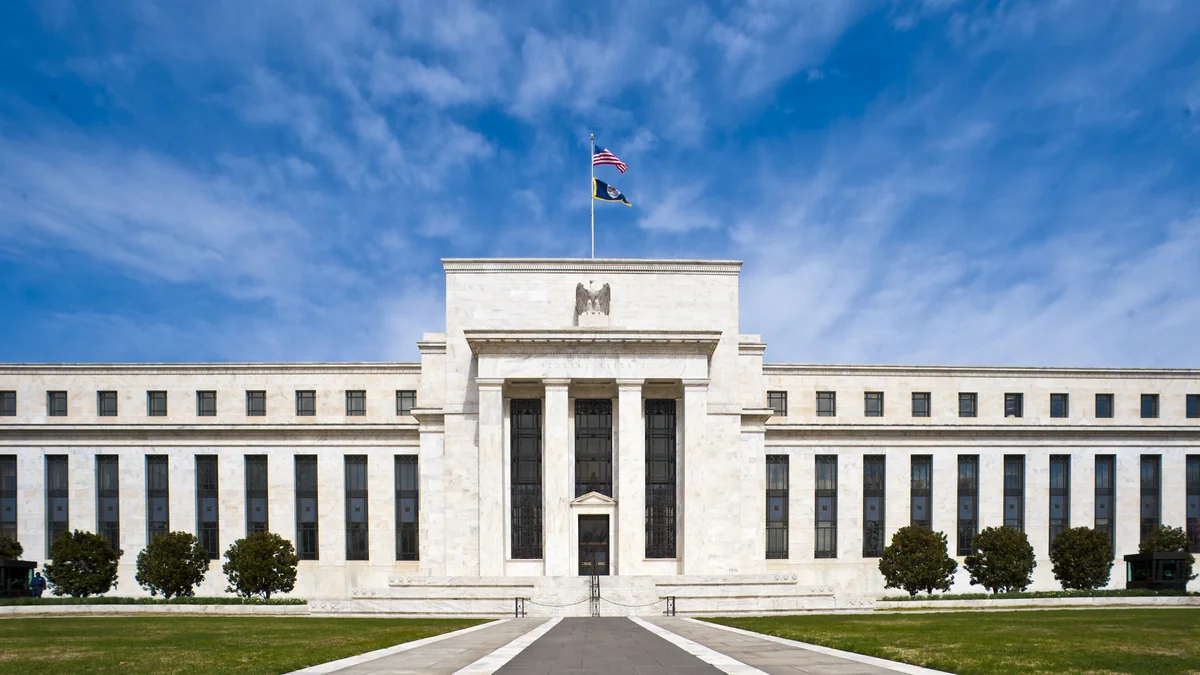
The Bessent Yen Gambit refers to the U.S. Treasury’s 2026 strategy of using intentional public disclosure to influence global currency markets. By allowing a photographer to capture a "To Do" note at Camp David, Secretary Scott Bessent signaled a $5-10 billion yen purchase to stabilize the economy.
This maneuver represents a strategic pivot where public transparency is used to anchor market expectations and stabilize the Japanese yen through coordinated state action. We often assume that the most sensitive levers of global finance are pulled behind soundproof glass and encrypted channels. Yet, the most significant shift in currency markets this decade occurred because a simple note was left visible in the rustic setting of a presidential retreat.
On July 31, 2026, a Reuters photographer at Camp David captured a high-resolution image of U.S. Treasury Secretary Scott Bessent’s notepad. The underscored header simply read "To Do," followed by a blunt directive to "Buy Japanese Yen (JPY) $5-10 bil." The optics of transparency are now as potent as the actual deployment of capital.
Only twenty-four hours earlier, Bessent had publicly signaled his discomfort by stating that excessive yen volatility isn't healthy. This notepad disclosure gave the market exactly what it craves: a concrete socio-economic blueprint for direct intervention. It suggests a calculated use of institutional behavior to anchor market expectations before the first trade was even executed.
Analysts are debating whether this was a genuine security lapse or a masterful piece of theatrical jawboning. In the Estonian context, where digital transparency is a baseline, such analog theater signals that Scott Bessent is rewriting the old order. This paradigm shift redefines the cross-border correlation between state secrets and market stability.
The Bessent Yen Gambit and the Mechanics of Market Intervention
Global trade thrives on the illusion of predictability, yet the Japanese economy had recently become a theater of extreme volatility. Prior to the Treasury’s strategic maneuver, the yen had collapsed to historic 40-year lows near 164 per dollar. This profound weakness forced a departure from the "hands-off" institutional behavior that had defined the past decade.
The immediate market response to the notepad disclosure provided a clinical lesson in rapid-fire cross-border correlation. Within a single hour of the high-resolution image circulating, the yen strengthened by 0.8 percent, pivoting from 158.9 to 157.6 against the dollar. This maneuver rewrote the old order of quiet diplomacy with the brutal efficiency of a high-frequency trade.
While the U.S. Treasury spokesperson declined to comment on the specific notepad contents, they confirmed "close coordination" with Japanese authorities. This calculated official silence stood in sharp contrast to the data-backed reality of the intervention's scale. By August 1, 2026, the yen surged as Japanese authorities aggressively stepped in to stabilize the Tokyo markets alongside the Federal Reserve Bank of New York.
The synchronized execution between these modern states signals the emerging paradigm for global market management. This paradigm shift utilizes primary dealers to execute trades that reflect a data-driven approach to maintaining currency corridors. In the Estonian context, this maneuver raises a fundamental question: Is the era of secret central bank maneuvers over?
We are witnessing an emerging paradigm where the invisible hand is being replaced by a highly visible and data-driven state agenda.
Institutional Behavior: The Executioners of the New Order
High-frequency digital liquidity meets the manual intent of a state-directed mandate. While retail investors operate under the assumption of automated market forces, the actual structural pivots are managed by the Federal Reserve Bank of New York. This institution executed the Treasury’s strategic yen purchases by systematically selling euro reserves to achieve the desired balance.
This institutional behavior requires a sophisticated conduit between executive policy and global market liquidity. To translate Scott Bessent’s intent into financial reality, the Treasury utilized primary dealers such as Goldman Sachs and Morgan Stanley. Primary dealers serve as the operational executioners of the new order, bridging the gap between political theater and fiscal mechanics.
History provides a rare yardstick for this level of cross-border correlation. This action represents the first direct U.S. intervention to support the yen since the 2011 Tōhoku earthquake. Unlike 2011, which followed a natural disaster, this current maneuver signals a proactive paradigm shift in state-directed economic management.
In the Estonian context, where economic stability remains tethered to the Eurozone, this strategy is actively rewriting the old order of passive central banking. If the U.S. Treasury continues to utilize primary dealers to enforce specific currency thresholds, the global socio-economic blueprint will fundamentally shift toward managed outcomes.
The Architect’s Paradox: From Yen Bear to Sovereign Defender
Private sector gain and public sector duty often exist in a state of high friction. In 2013, Scott Bessent secured a $1.2 billion profit for Soros Fund Management by betting aggressively against the Japanese yen. Today, he occupies a seat of sovereign authority, tasked with reversing the very devaluation he once exploited for gain.
The predator’s instinct for market weakness has been repurposed into a defensive shield for the global financial order. This behavioral mapping reveals a leader who understands the technical anatomy of a currency collapse from the inside. The state has co-opted the tactical brilliance of the private actor to enforce its will.
Institutional credibility now relies on a deep cross-border correlation between the U.S. Treasury and the Bank of Japan. Bessent specifically praised BOJ Governor Kazuo Ueda for his commitment to financial stability during their coordinated efforts. This partnership signals a rewriting of the old order of disparate, uncoordinated central bank policies.
In the Estonian context, this level of strategic coordination provides a new socio-economic blueprint. When a former short-seller stabilizes a global currency, it creates a predictable floor that protects smaller market participants from erratic swings. This paradigm shift validates the fusion of private-sector agility with public-sector responsibility.
Synthesis: Global Coordination and the Estonian Context
The institutional ideal of central bank independence suggests a world of isolated decision-making, yet the Bessent maneuver reveals a raw fusion of geopolitical alignment. On July 31, 2026, the U.S. Treasury did not act in a vacuum, as the intervention was coordinated precisely with the Bank of Japan. This represents the emerging paradigm where market stability is managed through cross-border correlation involving major global dealers.
We are witnessing the rewriting of the old order, where technical fiscal policy is subordinate to strategic power projection. This shift signals a paradigm shift for the socio-economic blueprint of the West, moving from passive observation to active, state-led market molding. The precision of this execution suggests that currency value is no longer a matter of pure discovery, but one of institutional design.
In the Estonian context, this transition carries risks for a small, open economy that depends on predictable institutional behavior. If liquidity providers treat currency values as geopolitical tools, domestic cost of capital and export competitiveness may become collateral damage. We are entering an era where the data-driven precision of a hedge fund manager meets the sovereign authority of the state.
The Bessent Yen Gambit suggests that tactical, coordinated interventionism has replaced the era of predictable, rule-based global finance. For a nation like Estonia, this raises a critical question regarding economic agency. How can a small state maintain its footing when the rules of the global financial system are being redrawn in the backrooms of Camp David?