
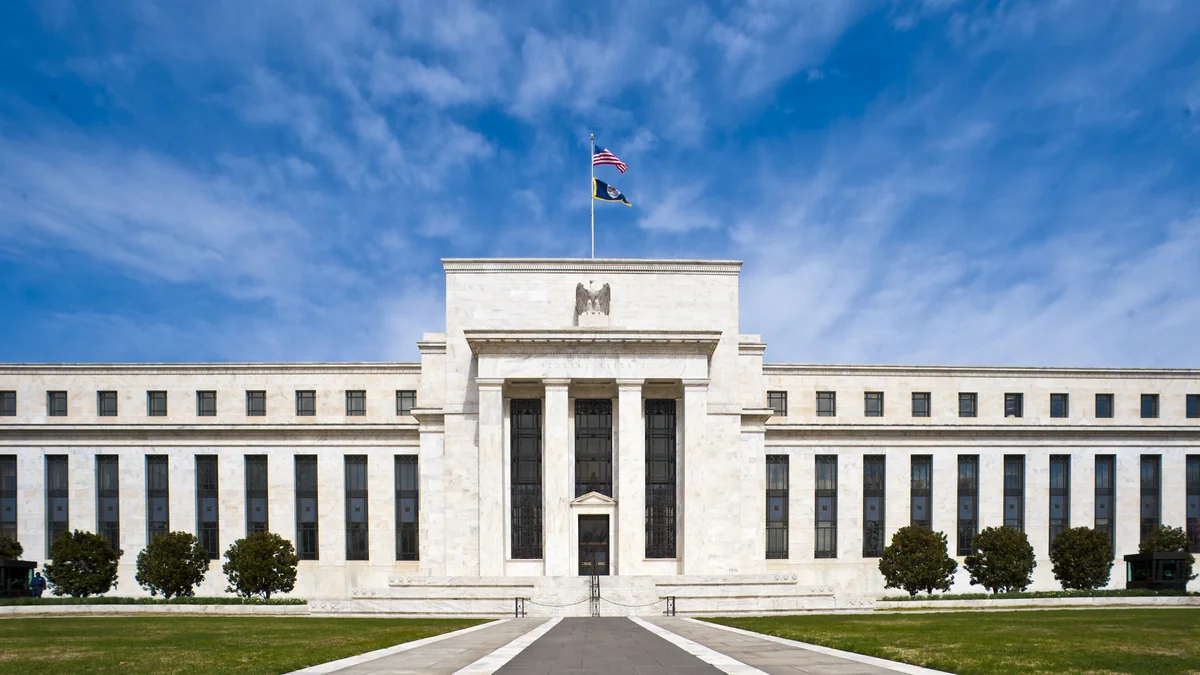
The U.S. Federal Reserve independence crisis centers on a legal and political shift toward executive control over monetary policy. As the "for cause" removal protection for governors faces Supreme Court scrutiny and political pressure, the traditional firewall between fiscal demands and central bank stability is rapidly eroding.
A U.S. Federal Reserve independence crisis occurs when the executive branch challenges the statutory "for cause" removal protections that historically shielded central bank governors from political retaliation. This historical fortress of independence is now under siege by the very executive it was meant to check. In June 2026, the U.S. Supreme Court ruled 5-4 to temporarily block the removal of Governor Lisa Cook, yet the narrowness of that margin reveals a fragile consensus.
The legal friction centers on the Federal Reserve Act, which specifies that governors may only be removed "for cause." While the Court’s opinion acknowledged the Fed’s historical tradition, it simultaneously provided a roadmap for dismantling this protection. This shift suggests that the "for cause" provision is no longer an absolute barrier, but a procedural hurdle for a determined executive branch.
The emerging paradigm of the unitary executive views independent institutional behavior as an obstacle to be cleared. White House aide Dan Scavino solidified this trajectory by issuing a letter giving Lisa Cook until August 26, 2026, to contest her removal. This specific deadline represents a calculated test of the state's capacity to subordinate monetary policy to political directives.
If the executive successfully redefines "cause" to encompass policy disagreement, the socio-economic blueprint of the last century is effectively nullified. This rewriting of the old order carries profound cross-border correlations, signaling to every central bank that their autonomy is a loan, not a right. In the Estonian context, this shift destabilizes the global norms we rely on for forecasting and raises a vital question about the state's role as a neutral arbiter.
Institutional Survival Amid the U.S. Federal Reserve Independence Crisis
High-level institutional stability often masks the granular friction of personal litigation. In May 2026, Kevin Warsh succeeded Jerome Powell as Chair during a period that functioned as a violent stress test for democratic institutions. This transition was less a standard handoff and more a strategic pivot within a broader movement rewriting the old order of American finance.
Powell’s choice to remain on the Board of Governors until January 2028 represents a significant act of institutional behavior. He mirrors the 1948 precedent set by Marriner Eccles to maintain continuity. This presence creates a necessary friction point against the emerging paradigm of direct executive influence over the money supply.
Administrative scrutiny frequently serves as a tactical proxy for political pressure. In January 2026, the Department of Justice launched a criminal investigation into Powell regarding renovation costs for the Fed headquarters. Although the DOJ dropped the probe, active internal reviews continue to shadow the board’s operations as a form of bureaucratic weaponization.
Technical oversight is being repurposed to facilitate a paradigm shift in governance. If the state utilizes budgetary discrepancies to intimidate central bankers, then the socio-economic blueprint of the nation becomes secondary to political optics. In the Estonian context, this erosion of independence serves as a sobering warning of how quickly technocratic norms dissolve under populist pressure.
The 1% Mandate: Politicizing the $6.7 Trillion Balance Sheet
Unprecedented executive ambition frequently collides with the structural inertia of established monetary safeguards. While the Federal Reserve’s balance sheet stood at a staggering $6.7 trillion in May 2025, political pressure to weaponize this capital has reached a fever pitch. President Trump has demanded interest rates drop to 1% to stimulate growth, prioritizing short-term expansion over long-term stability.
This top-down pressure finds its legislative mirror in the strategic maneuvering of Congressional leaders who seek to reclaim fiscal dominance. Senator Rick Scott introduced the Rein in the Federal Reserve Act in May 2025 to increase legislative oversight and transparency. This intervention represents a shift where institutional behavior is no longer governed solely by technocratic data.
Rewriting the old order of monetary policy creates a cross-border correlation where American instability becomes a local economic burden for international firms.
If political cycles dictate interest rates, the dual mandate of price stability and maximum employment effectively evaporates into partisan signaling. For the modern professional, this introduces a permanent, volatile risk premium into every long-term contract. In the Estonian context, the correlation between U.S. executive demands and global liquidity is a vital socio-economic blueprint for navigating future shocks.
The Credibility Tax: Modeling a $2.5 Trillion Erosion
In July 2025, the circulation of a draft letter threatening to terminate Jerome Powell proved that institutional trust is fragile. Bond yields surged within minutes, while the dollar fell sharply against every major currency as the world watched the potential collapse of technocratic insulation. This market spasm was a visceral rejection of political interference in monetary policy.
The Peterson Institute for International Economics (PIIE) offers data-backed future-casting of this institutional decay. Their research models a staggering $2.5 trillion cumulative loss in real U.S. GDP by 2040 if Federal Reserve independence is eroded. This figure represents more than just a fiscal shortfall; it is a socio-economic blueprint for long-term stagnation.
Small, open economies like Estonia are most vulnerable to these sudden global shifts. Institutional behavior is increasingly dictated by the news cycle rather than the statutory dual mandate. If the Federal Reserve Act is reduced to a legal suggestion, the global financial architecture begins to crack under the pressure.
Currency Warfare and Global Volatility
Global financial markets are designed to operate on the premise of predictable institutional behavior. In August 2026, Treasury Secretary Scott Bessent signaled a joint U.S.-Japan intervention intended to prop up the yen against speculative attack. This was a calculated maneuver within the emerging paradigm of global currency warfare.
The U.S. executed a strategic pivot by selling euros instead of dollars to protect the U.S. Treasury bond market. If the dollar’s status as a safe haven is compromised by political interference, the state must sacrifice secondary currencies to maintain its own yields. This suggests that the stability of the euro is now intrinsically tied to Washington’s internal power struggles.
Over a period of just 27 days in 2026, South Korea’s market value suffered a staggering 40% drop. This collapse demonstrates how a localized breakdown in Washington can trigger a multidisciplinary crisis that wipes out decades of regional wealth. We are moving away from a world where central bank independence was the undisputed socio-economic blueprint.
The behavioral mapping of modern economic actors reveals a world that is more interconnected and yet more fragile than ever. As the traditional boundaries between executive power and monetary policy continue to blur, small states must prepare for permanent volatility. Estonia requires extreme pragmatic foresight to protect its interests while navigating the U.S. Federal Reserve independence crisis.