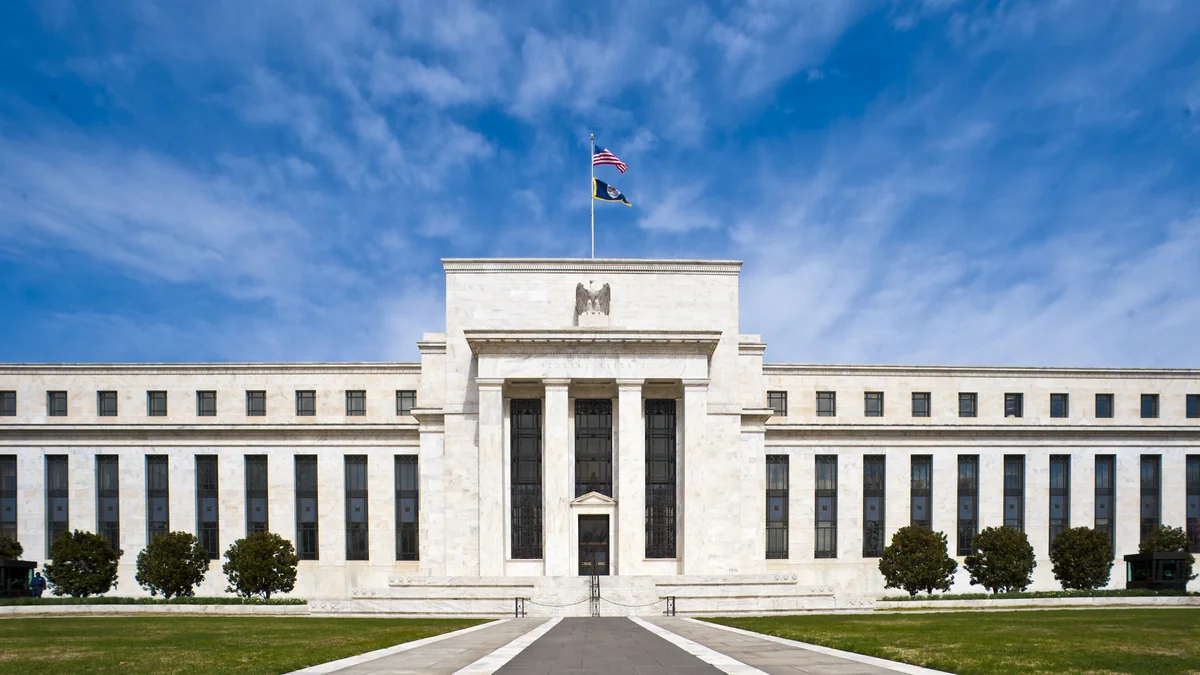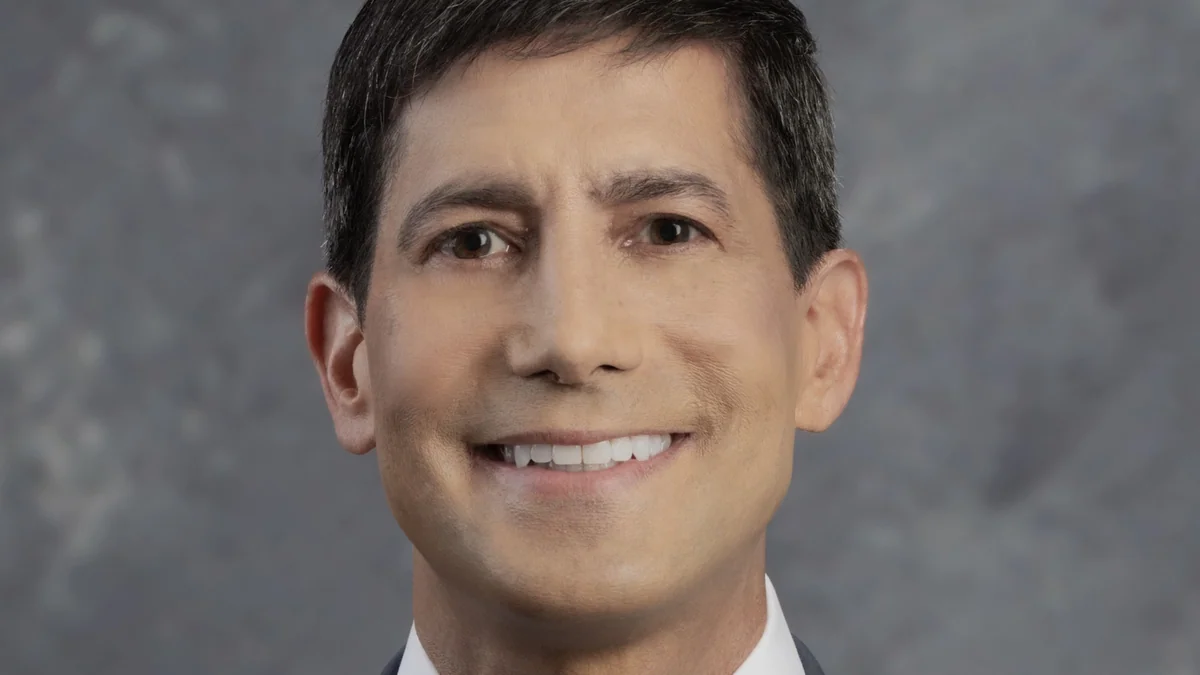
The Federal Open Market Committee maintained the federal funds rate at a target range of 3.5 % to 3.75 % on July 29, 2026. Under Chairman Kevin Warsh, the central bank has shifted toward a policy of tactical reticence, emphasizing data-driven restraint over the traditional market transparency of forward guidance.
The current Fed's interest rate stasis represents a strategic refusal to cut borrowing costs despite intense political pressure and a volatile global economic landscape. Executive demands for the world's lowest interest rates suggest a return to an era of frictionless credit. Instead, we are witnessing a disciplined silence from Washington's most influential institution.
Kevin Warsh, who succeeded Jerome Powell as Fed Chair in May 2026, is rewriting the old order of central bank communication. This new regime favors a tactical reticence that challenges the emerging paradigm of global finance. If the previous era relied on telegraphing every move, this one prioritizes internal review over market reassurance.
The friction between populist rhetoric and monetary reality has reached a historical peak. President Donald Trump publicly requested rate cuts on July 28, stating that the United States should have the lowest rates in the world. By choosing a hold, the Fed has signaled its refusal to act as a reactive arm of the executive branch.
In the Estonian context, this divergence forces a re-evaluation of the socio-economic blueprint for an environment where capital remains expensive. This shift suggests that the role of central banks is moving from market stabilizer to a hardened volatility buffer. Institutional reticence may become the permanent foundation of a more austere economic reality.
The Death of Forward Guidance and the 1,153-Point Feedback Loop
A sophisticated era of high-frequency market transparency has collided with a sudden, deliberate institutional silence. Under the leadership of Chairman Kevin Warsh, the Federal Reserve has systematically dismantled the predictive signaling that once anchored global expectations. By eliminating forward guidance, the committee is forcing market participants to do their own analytical heavy lifting.
Warsh explicitly frames this transition as a period of "watchful thinking, not watchful waiting." This is a fundamental shift in institutional behavior that prioritizes internal rigorous review over external market reassurance. The Fed no longer seeks to manage private-sector expectations through curated verbal cues.
The market response to this new informational vacuum was both immediate and profoundly visceral. Deprived of a clear roadmap, the Dow Jones Industrial Average plummeted 1,153 points, marking a 2.19 percent decline. This volatility highlights a cross-border correlation between reduced transparency and a shift in the behavioral mapping of economic actors.
The Fed is no longer signaling its path, but testing the resilience of the financial structure in real-time.
Long-term indicators reflect deep-seated economic anxiety and a rejection of the previous status quo. The 30-year Treasury bond yield surged to 5.22 percent, a peak not seen since the pre-crisis era of 2007. While Warsh claims uncertainty does not mean a lack of clarity, some observers critique the maneuver as a purely tactical delay.
The 9-3 Fracture: Internal Schism and the Fed's Interest Rate Stasis
A history of monolithic institutional unity often masks the underlying friction of diverging economic realities. The recent 9-3 vote by the FOMC serves as a stark disruption, marking an unusually high level of dissent for the committee. If the Federal Reserve can no longer maintain a veneer of total agreement, the traditional consensus model of central banking is dead.
This internal schism is led by a trio of regional presidents: Beth M. Hammack of Cleveland, Neel Kashkari of Minneapolis, and Lorie K. Logan of Dallas. All three voted against the majority, advocating instead for an immediate 25-basis-point increase. Their dissent highlights the emerging paradigm where regional data points clash with the central board's caution.
Chairman Kevin Warsh has been quick to redefine this institutional behavior to prevent market complacency. He noted that he would not characterize the decision as a pause, but rather as a rigorous review of the current economic situation. This distinction is critical for entrepreneurs navigating the current socio-economic blueprint.
The practical implications of this fracture are already manifesting in market sentiment. Current estimates place the probability of a September rate hike between 53 % and 77 %. For professionals operating within the Estonian context, this cross-border correlation dictates a strategy of extreme liquidity and risk-aversion.
Geopolitical Volatility and the New Inflationary Paradigm
In the sterile rooms of the Eccles Building, the smell of expensive coffee masks the reality of conflict in the Persian Gulf. Global energy markets are witnessing high-tech logistical precision colliding with the raw destruction of the war in Iran. Traditional monetary tools are struggling to contain supply shocks born of geopolitical fire.
Chairman Kevin Warsh has adopted a stance of "watchful thinking," describing the labor market as resilient with little change in unemployment. If the American worker remains productive amidst a theater of war, the Fed finds a precarious buffer against immediate economic contraction. The central bank prioritizes long-term stability over the frantic expectations of the equity markets.
This directive illustrates a significant paradigm shift where "elevated uncertainty" is now a permanent structural variable. The FOMC appears to have refused to be swayed by external political friction or the immediate, 1,153-point drop in the Dow. Warsh instructed his colleagues to "play the ball, not the referee" during these intense deliberations.
In the Estonian context, we recognize such pragmatism as a necessary survival mechanism. This cross-border correlation between regional conflict and domestic interest rates exposes the inherent fragility of the previous globalized era. If the 3.5 percent inflation floor persists, the 2 percent target may be merely a relic of a calmer past.
Rewriting the Old Order: From Treasury Yields to the Estonian Context
While the 30-year Treasury bond yield surged to 5.22 percent, the actual impact is profoundly local and immediate. This cross-border correlation proves that US policy functions as a global pricing mechanism for every risk-bearing asset. The Fed's benchmark rate directly affects consumer interest rates for mortgages and credit cards across the Atlantic.
In the Estonian context, the ripple effect of this monetary policy recalibrates the socio-economic blueprint for digital-native households and local firms. If the US dollar remains the anchor of liquidity, European debt markets must eventually mirror its gravity or risk significant capital flight. We are witnessing the rewriting of the old order through strategic silence.
Kevin Warsh's rejection of future signaling forces a sharp paradigm shift for Baltic entrepreneurs who once relied on central bank transparency. The old rules are dead, replaced by reactive, data-driven norms that require a far more sophisticated approach to investment. The burden of real-time risk management has shifted entirely to the local state and private actors.
When the primary engine of global finance operates behind a veil of strategic reticence, the horizon becomes inherently more volatile. The Fed's interest rate stasis signals the birth of a more opaque, reactive statecraft that leaves smaller economies off-balance. We must ask if this silence is a temporary tactical shield or the final end of institutional guidance.