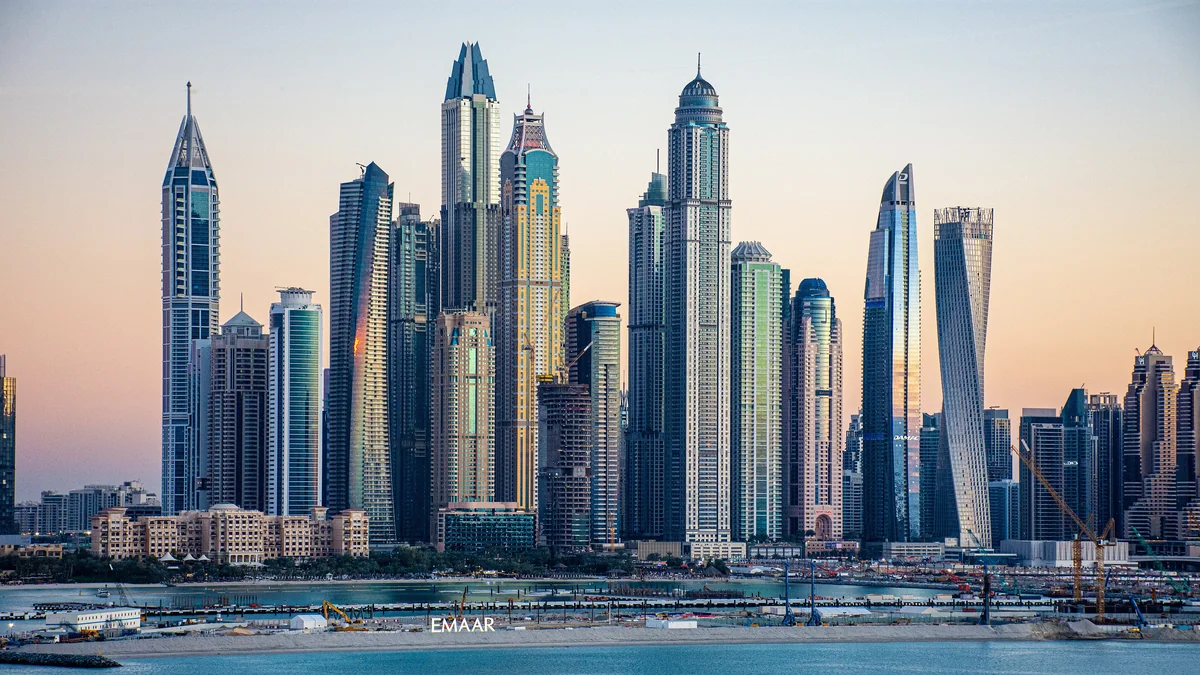
The dissolution of the Dubai Sanctuary represents a fundamental shift in the global economic landscape, driven by regional kinetic warfare and a strategic move toward international financial transparency. Recent capital outflows and aggressive regulatory enforcement signal the end of the city’s era as an untouchable, no-questions-asked safe haven for global wealth.
The Dubai Sanctuary is ending because regional military escalation and strict global compliance standards have shattered the illusion of sovereign immunity for international investors. We have witnessed glass towers rise as monuments to global capital, yet these structures offer no protection against the raw mechanics of regional friction. A systemic wealth panic following 2026 strikes on Iran catalyzed a massive capital exodus that questioned the city's very foundation.
The sighting of an Iranian Shahed drone over al-Mamzar beach exposed the terrifying fragility of the luxury facade to the modern world. While investors focused on digital asset hedges, the physical sky became a corridor for hardware that ignores traditional institutional boundaries. Richard Florida’s critique highlights the inherent limitations of an urbanism centered purely on commerce rather than physical survival.
The 2026 crisis represents a fundamental paradigm shift in how we evaluate global safe havens within the modern economic landscape. It was a structural response to the realization that branded luxury cannot hedge against regional military escalation. If the physical territory is vulnerable, then the legal and economic norms built upon it begin to dissolve.
We are seeing a cross-border correlation between geopolitical stability and capital retention that data-driven actors can no longer ignore in the Estonian context. Institutional behavior is shifting toward a more pragmatic, sober assessment of risk that favors established security over aesthetic isolation. A global financial hub cannot survive when its primary value proposition of sanctuary is negated by a single drone flight.
The End of the Dubai Sanctuary: Why Branded Luxury Cannot Hedge Against War
A global financial hub often projects an image of impenetrable neutrality while it quietly dismantles the very privacy that once attracted its initial capital. On February 23, 2024, the UAE’s removal from the FATF grey list signaled a shift toward global market integration. This transition prioritized international compliance over the legacy of a no-questions-asked sanctuary.
The institutional behavior of the Emirates has evolved from passive compliance toward active, aggressive enforcement to protect its global market access. In August 2024, the Ministry of Economy suspended 32 gold refineries for anti-money laundering violations. This move served as a calculated signal to Western regulators that the UAE is actively rewriting the old order.
If the physical territory is vulnerable, then the legal and economic norms built upon it begin to dissolve.
If a state wishes to remain a central node in the cross-border correlation of global trade, it must eventually police its own corridors. By 2025, Emirati authorities had confiscated Dh4.23 billion in assets. This aggressive behavioral mapping reveals a state no longer willing to risk secondary sanctions for illicit liquidity.
The socio-economic blueprint of the specialized financial crime court provides the legal teeth for this era. This institutional pivot suggests that sovereign immunity is no longer a guaranteed commodity in the Gulf. Legal norms are being traded for continued access to the dollar-denominated financial system.
Even the most isolated financial ecosystems eventually succumb to the pressure of international transparency standards. In the Estonian context, we recognize this trajectory as the inevitable cost of institutional maturity. If the world’s most famous sanctuary has pivoted toward enforcement, the concept of a sovereign safe haven must be redefined.
The Collapse of Sovereign Immunity: Rewriting the Old Order
The image of an untouchable desert fortress has collided with the cold reality of shifting diplomatic priorities. Hospitality is now secondary to institutional survival. The arrest of high-profile figures in Dubai ended a period of perceived immunity that many believed was permanent.
This was not an isolated incident but a deliberate realignment of the socio-economic blueprint. The high-profile extradition of organized crime figures signals that the "no-questions-asked" decade has officially closed. Emirati institutional behavior now reflects a pragmatic choice to maintain correlation with Western legal norms.
The fear of secondary sanctions has forced this change. If a state risks isolation from the global financial grid, then even the most lucrative guests become expendable. In the Estonian context, this demonstrates how quickly a paradigm shift occurs when global law enforcement leaves no room for safe harbors.
Cross-Border Correlation: The Great Wealth Migration of 2026
The ultra-wealthy often mistake global mobility for genuine security. Glass-and-steel monuments became frozen liabilities as Dubai faced £15 billion in capital outflows during Q1 2026. This exodus proved that the illusion of a risk-free desert hub was over.
A single drone hovering over al-Mamzar beach provided the necessary sensory shock to global investors. It was the physical manifestation of regional instability. This moment forced a radical re-evaluation of the socio-economic blueprint that once drew the global elite to the Gulf.
Luxury real estate sales dropped by 75% as kinetic conflict replaced the promise of perpetual appreciation. For many, the emerging paradigm meant watching their most expensive assets become suddenly illiquid. Russian oligarchs and Indian billionaires liquidated billions to hedge against the onset of regional instability.
This great wealth migration signals a fundamental shift in the global economic landscape. If a famous sanctuary can lose its luster in a single quarter, the traditional concept of a safe harbor must be entirely reimagined. Estonia’s digital infrastructure must be ready to absorb the capital fleeing the collapse of the old order.
Digital Governance: Taming the Privacy-Coin Paradigm
Digital autonomy and absolute anonymity often collide with the rigid structural requirements of global legitimacy. In January 2026, Dubai’s Virtual Assets Regulatory Authority (VARA) resolved this tension by banning all privacy-focused cryptocurrencies. This decision marked a definitive move away from the opaque digital frontier.
If the twentieth-century financial order thrived on physical opacity, this emerging paradigm demands digital transparency. In April 2026, UAE authorities targeted informal Sarraf networks linked to illicit finance. The state signaled that traditional informal systems are no longer compatible with modern institutional behavior.
The forced closure of the Shelbit exchange in July 2026 provides a sharp case study in this systemic regulatory realignment. Unlike historical precedents of slow-moving judicial proceedings, this swift action illustrates a proactive behavioral mapping of economic actors. The closing of doors for unregulated wealth will permanently force capital into transparent, data-driven channels.
Evaluating these shifts in the Estonian context requires a move away from passive observation toward active engagement with global data. Small states must embrace data-backed future-casting to navigate a world where legal norms are re-evaluated in real time. If the Dubai Sanctuary disappears under the dual pressure of transparency and kinetic war, the next generation of global capital must find security through integration with the rules-based order.