The Ceuta border crossing crisis escalated into a total collapse of local infrastructure in July 2026, as 49,000 people entered the Spanish enclave within 24 hours. This surge represents a fundamental shift in Mediterranean border dynamics, rendering previous precedents from 2021 obsolete as the city's capacity failed by 1,600 percent.
The Arithmetic of the Breach: Why 2021 is a Faded Precedent
I remember the images of May 2021 in Ceuta, when 8,000 people rounded the Tarajal breakwater while the Moroccan guards looked the other way. I have heard the promise of border stability before: 2021, Rabat.
The 2021 comparison is now common in the Western press, but it is strategically lazy. The analogy breaks under the weight of the new arithmetic.
Between July 30 and 31, 2026, approximately 49,000 people entered the enclave in a single surge. The wire says the situation is "strained," but the reports from President Juan Jesús Vivas say something colder: absolute chaos.
At least 18 fatalities are confirmed, most of them crushed or drowned in the shadows of the Tarajal breakwaters. The Spanish government has now deployed Army units to assist the Guardia Civil, the tool used when the molding of border management falls away.
The soldiers have arrived to find a city that has effectively doubled its population in a single weekend. The enclave is currently housing this influx at 1,600 percent of its intended capacity, leaving thousands of people to sleep in the public parks and city streets.
The Load-Bearing Wall: A Judicial End to Summary Pushbacks and the Ceuta Border Crossing Crisis
In June 2026, the Spanish Supreme Court quietly removed a load-bearing wall of Mediterranean border security. The wire calls the practice summary pushbacks, but the original Spanish is colder: devoluciones en caliente.
By restricting these immediate expulsions for those intercepted at sea, the court dismantled the primary mechanism for deterring mass maritime entry. This judicial shift altered the strategic calculus for the thousands waiting in the Moroccan town of Fnideq.
When the risk of immediate return is erased, the sea becomes a corridor rather than a fence. A ruling designed to protect human dignity became the unintentional catalyst for the deaths of at least eighteen people near the Tarajal breakwaters.
The Guardia Civil found their mandate hollowed out overnight. They were no longer maritime sentries but unwilling reception managers for a city that has run out of floor space.
The state's power to manage its perimeter now rests on processing papers instead of patrolling waves.
Minor reception centers meant for 180 youths are now operating at 1,600 percent capacity, housing 1,600 people in facilities that have physically failed. Once the court decided that the sea is legal territory, the physical border became decorative molding.
This shift from maritime surveillance to reception management is the real crisis, where the sovereignty of the enclave collapses under the weight of judicial theory.
The Small-Nation Floor: Chaos in the Enclave
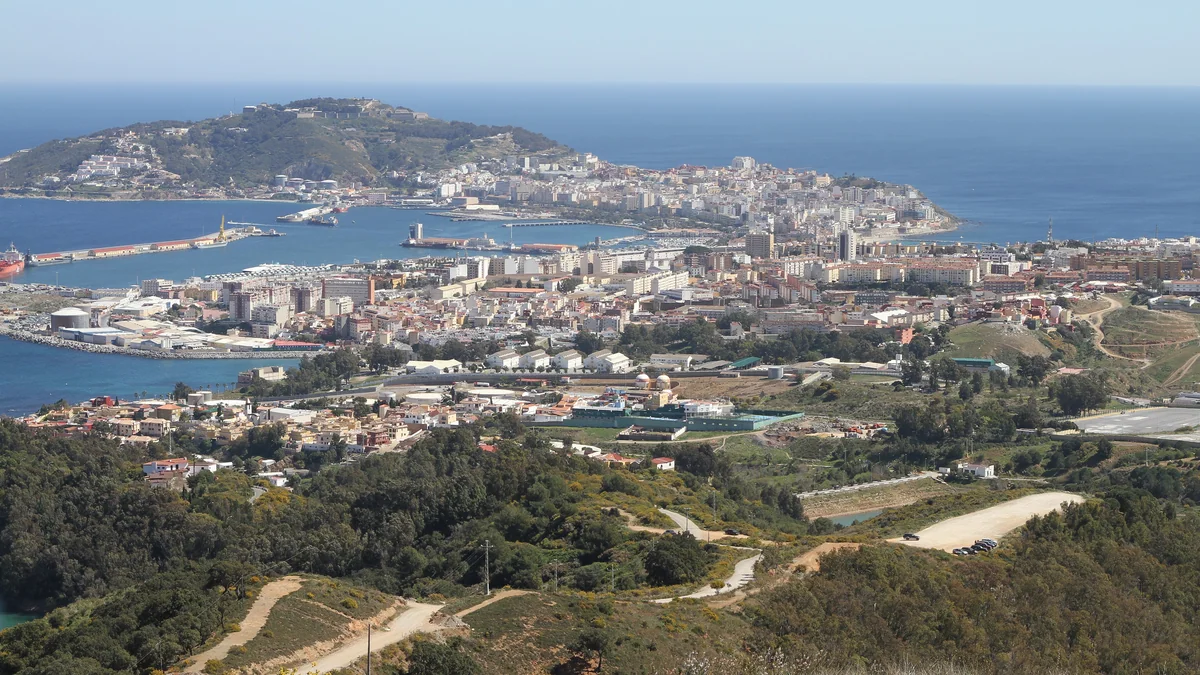
Ceuta is eighteen square kilometers of Spanish soil pinned to the North African coast. For the central ministry in Madrid, it is a point on a map and a problem of maritime surveillance.
For those on the ground, it is a physical container that has reached its breaking point. When 49,000 people enter a space this small, the spreadsheet of governance breaks.
Local centers for youths are operating at 1,600 percent capacity. Thousands now sleep in public parks and squares because there is nowhere else to put them.
The physical limits of the enclave dictate the suffering. At eighteen square kilometers, there is no hinterland to absorb the shock.
Juan Jesús Vivas, the President of Ceuta, has described the situation as absolute chaos. He is calling for a national emergency to be declared before the city's security collapses entirely.
It is the classic plea of the borderland caught between an indifferent capital and a surging exterior. Madrid manages the diplomacy, but the enclave wears the consequence.
The Moroccan Lever: Passive Walls and Social Media Storms
In the Moroccan town of Fnideq, the air usually carries the dry, heavy scent of salt and diesel exhaust. On July 30, it carried a heavy stillness as border guards stood like statues, watching the thousands gathered at the shoreline.
What began as colonial disputes in the 1950s has evolved into a high-frequency geopolitical lever that Rabat can toggle with a single phone call. The mobilization did not happen by accident.
Social media campaigns turned local frustration into a coordinated surge toward the Tarajal breakwater. While the Western wire calls it a spontaneous migration, the digital record suggests a campaign managed with cold, logistical precision.
The silent engine of this crisis is a single number: youth unemployment in the region surrounding Fnideq sits at 49 percent. Half a generation has nothing to do but watch the horizon and wait for a signal.
On July 31, the statues finally moved as Moroccan forces deployed water cannons to clear the beach. By then, 49,000 people had crossed onto Spanish soil.
To a strongman, human flows are merely decorative molding on the house of diplomacy. You apply the pressure until the deal is cut, then you turn on the taps.
The Continental Rift: When Schengen Becomes the Stake
The logic of a borderless continent is currently being dismantled on the breakwaters of Tarajal. It was a luxury built on the assumption that the outer rim would always hold.
On July 31, 2026, Prime Minister Pedro Sánchez and Interior Minister Fernando Grande-Marlaska visited the enclave to perform sovereignty. Meanwhile, the view from Rome was less sympathetic.
Giorgia Meloni called for the suspension of Spain from the Schengen Area, treating the breach as a failure of will rather than geography. This turned the enclave into a bargaining chip for the interior powers.
To the north, the rift deepened when France ordered a tightening of the frontier. France activated its Rapid Intervention Border Force to seal the Pyrenees.
This is the moment where the idea of a union vanishes, replaced by the raw math of national interest. When the borderland fails, the interior closes its doors and looks for a culprit.
The wire calls it a diplomatic disagreement. The reality is the structural collapse of a collective security arrangement.
The Ledger of Return: A Marker for the Winter
The wire says Madrid and Rabat have reached an agreement to accelerate the return of 49,000 migrants. I have heard this promise before: 2021, Ceuta.
I have watched empires trade paper promises for territorial peace, only for the paper to burn when the next wave arrives. The numbers do not lie.
With youth unemployment in northern Morocco at 49 percent, these demographic pressures are the load-bearing walls of the crisis. Sovereignty is not a flag; it is the ability to control who crosses a line.
In 2026, that line has been erased by sheer volume and a Supreme Court ruling. When 49,000 people swim around a breakwater in twenty-four hours, the state becomes a bystander in its own territory.
Ignore the handshake in Madrid and watch the text of the return protocols due in October. If the final document only says authorities "shall facilitate" rather than "shall repatriate," the enclave has already been sold, and we will see another Ceuta border crossing crisis by winter.