The LHS 1140b atmosphere discovery confirms the first stable atmosphere around a rocky planet in a habitable zone. Using the Magellan Clay telescope, researchers detected escaping helium, suggesting a "Super-Earth" or "Water World" capable of supporting a massive liquid ocean, a major milestone in astrobiology.
The LHS 1140b atmosphere discovery confirms that rocky worlds can maintain their air even when orbiting temperamental red dwarf stars. For years, we have been staring at the TRAPPIST-1 system like a neighbor looking for a light in the window, only to find the shutters closed. Every time we looked at those seven rocky worlds, we found nothing but airless husks stripped of their atmospheres by radiation.
The script changed on July 16, 2026, when a study published in the journal Science ended a long streak of disappointment. Researchers led by Collin Cherubim found the unmistakable signature of air around LHS 1140b. This is the first actually observationally confirmed atmosphere on a rocky planet in the habitable zone, providing a crucial win for astrobiologists.
For decades, confirmed atmospheres were the exclusive domain of gas giants where there is no "down" to land on. The focus has shifted from those bloated gas giants to a world where we might actually stand. This discovery marks the moment we stopped looking at distant rocks and started looking at distant homes.
Sifting Light in the Atacama
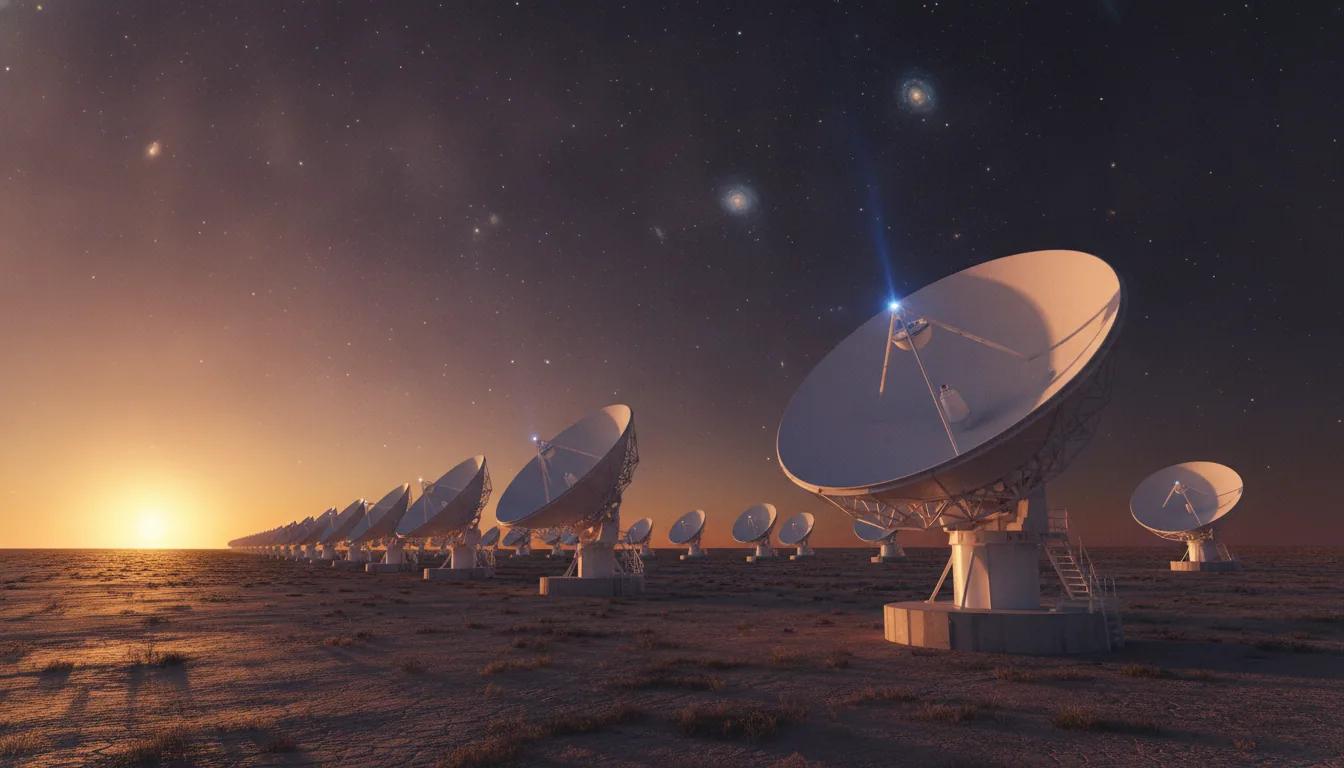
To find LHS 1140b, you have to look toward the constellation Cetus roughly 48 light-years away. To someone standing here in 1610, the ability to see the air of such a distant world would have been indistinguishable from magic. Researchers used the 6.5-meter Magellan Clay telescope and a specialized instrument called the WINERED spectrograph.
This device does not take snapshots; it sifts light into a detailed barcode of colors. The team was not looking for a solid surface, but for what was leaking away from it. By catching the specific signature of helium gas escaping into the void, they found the smoking gun for an atmosphere.
A spectrograph acts like a precision prism using a process known as transmission spectroscopy. We look at the star's light through the planet's air like a stained-glass window. Helium left its thumbprint in the infrared data by absorbing specific frequencies of light.
Now hold that thought. We are essentially measuring the ghost of a breath from across the galaxy. This is the first confirmed atmosphere on a rocky world sitting in its star's habitable zone.
Why the LHS 1140b atmosphere discovery happened here
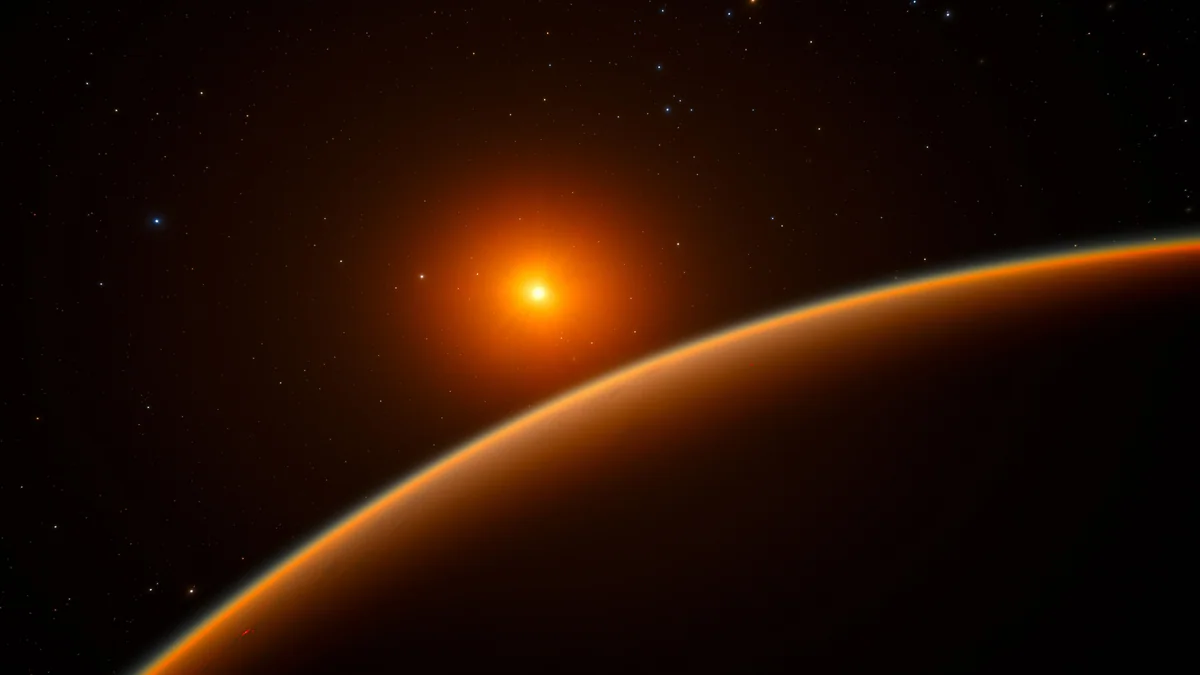
Red dwarfs are usually temperamental teenagers screaming with radiation flares that strip planets down to the bone. To someone standing here in 1610, this would have been indistinguishable from magic, but today we know it as stellar wind. LHS 1140 is a rare exception, an M4.5 dwarf that is remarkably quiet, calm, and predictable.
The contrast is stark when you look at the sibling planet, LHS 1140c, which was scorched into a bare rock long ago. Our target maintains its distance during its 24.7-day orbital dance. This buffer allows it to keep its volatiles, those lighter gases like helium that escape so easily from smaller worlds.
Even with a quiet star, this atmosphere is not a static bubble. Jayne Birkby from Oxford noted that the signal actually varies over time. The gas reacts visibly to the star's ultraviolet radiation, creating a dynamic tug of war where the planet stubbornly holds onto its air.
Not a Giant, But a Very Heavy Rock
LHS 1140b is a heavy hitter, packing the mass of 5.6 Earths into a body only 1.73 times our radius. The number is so large it stops meaning anything, so let's try it another way. Imagine taking nearly six Earths and crushing them with a cosmic vice into a sphere not even twice as wide as our home.
For a long time, we wondered if this was a "mini-Neptune," a puffy ball of hydrogen gas. However, 2024 data from the James Webb Space Telescope moved us away from that gas-ball theory toward something more substantial. The density points to a "Super-Earth" or a massive "Water World."
This is a structural ingredient, creating a very heavy rock likely wearing a deep, global coat of liquid.
Now hold that thought. On Earth, oceans are a thin film, but water could account for 10 to 20 percent of this planet's mass. This density is our first real clue that we are looking at a solid world with the gravity to hold onto its secrets.
The Anatomy of an Eyeball World
Earth is a bit of a poser when it comes to being a "water world." While our maps are mostly blue, water makes up a tiny fraction of our planet's total mass. Now, hold that thought.
If you dried the Earth like a raisin, the oceans would be a thin dampness on a massive stone ball. According to research led by Charles Cadieux, LHS 1140b plays a much wetter game. To someone standing here in 1610, such a world would have been indistinguishable from magic.
Cadieux and his team analyzed data suggesting water accounts for 10% to 20% of the planet's mass. This is not just a deep ocean; it is a fundamental ingredient of the planet's structure. On Earth, we have a thin veneer, but here the water is deep enough to reach the heavy heart of the world.
The planet is likely tidally locked, meaning one side always faces the star, creating an "eyeball world" with a 4,000-kilometer liquid ocean. It is a single blue eye staring into the red sun, surrounded by frozen wastes.
The Mystery of the Disappearing Signal
Here is the strange part. When the team looked at LHS 1140b in 2024, the signal for escaping helium was as clear as a bell. But when they checked again in 2025, the signal had vanished entirely.
In science, a disappearing result usually means you made a mistake or your equipment blinked. We are likely seeing atmospheric fractionation in action, where light gases drift to the highest altitudes. Think of it like a bottle of salad dressing where the oil always floats to the top.
Helium is the light "oil" of an atmosphere, drifting to the highest altitudes while heavier gases stay grounded. Because it sits so high, the star's radiation can blow it away like steam from a kettle. This variability is our first real hint that this world is a dynamic, reacting system.
The Two-Sigma Horizon
The Webb telescope recently gave us a whisper of something else: nitrogen at a 2-sigma confidence level. We still do not know if it is really there, and that, honestly, is the best part.
Lead researcher Collin Cherubim calls this planet the "forefront" laboratory for astrobiology. It is our best chance to see how a rocky world holds onto its life-giving shroud. We have moved past just finding dots in the dark to finally tasting the air of a world 48 light-years away.
A "habitable" world is simply a house with the heat turned on and the water running. Finding the air is just the first step toward the ultimate question: is something actually breathing it? The LHS 1140b atmosphere discovery confirms that we have finally found a rocky planet that isn't just a naked stone, but a place with a legitimate atmosphere.