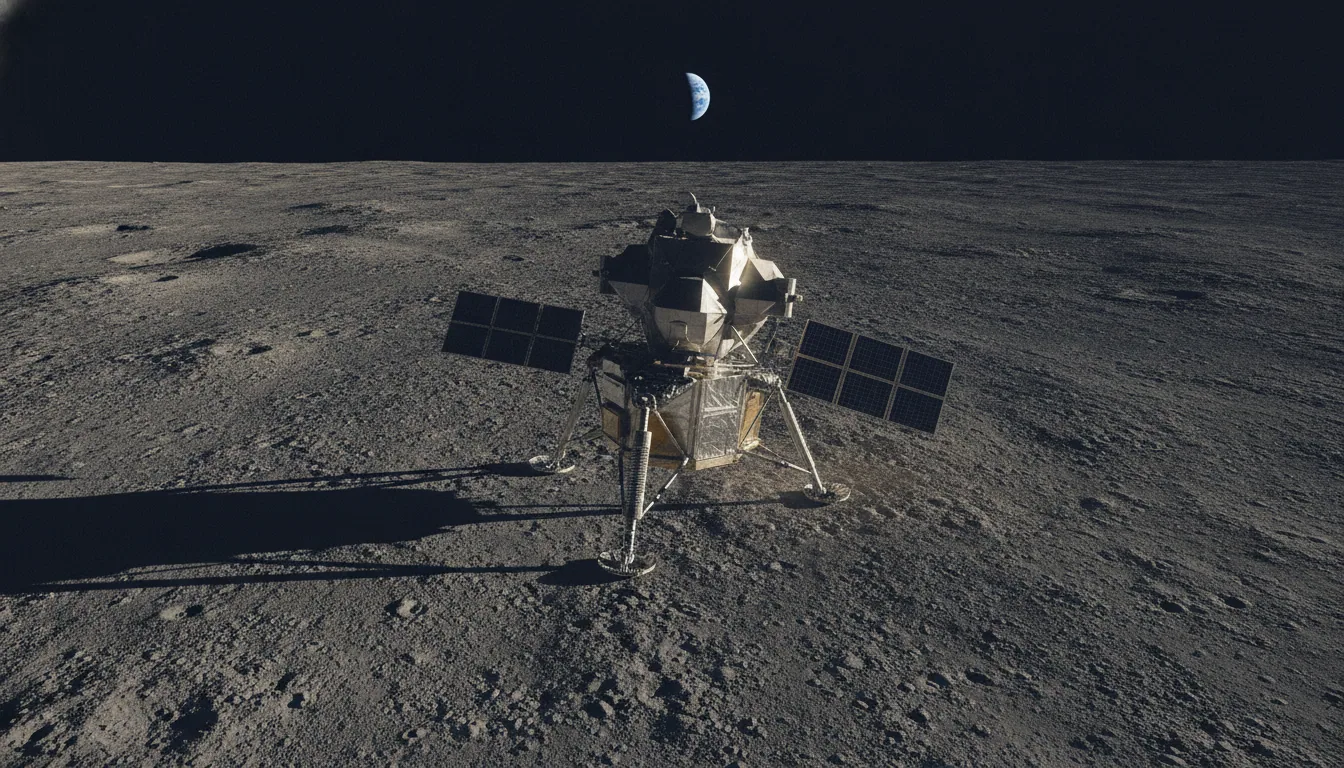
The Price Tag That Deserves a Second Look
Six hundred million dollars is a number that slides past most people without leaving a mark. On June 30, 2026, NASA committed $590 million to send four robotic landers to the Moon by late 2028 — roughly $147 million per landing attempt. The money went to three companies: Astrobotic ($297.9M), Firefly Aerospace ($144.2M), and Intuitive Machines ($148.3M), all under the CLPS program, which buys delivery services rather than owning hardware. The CLPS ceiling runs to $2.6 billion through 2028.
Lunar infrastructure funding is accelerating faster than the hardware it is meant to support — and understanding who is paying, and why the numbers keep climbing, is the only way to read what happens next.
NASA Administrator Jared Isaacman announced Moon Base Phase 1, targeting ten robotic landers sent to the lunar surface every year starting in 2027. Ten per year. That cadence, if achieved, would transform the Moon from a destination into something closer to a worksite visited on a schedule. The word "phase" in the program name is doing real work here. Phase 1 implies Phase 2, and Phase 2 implies something permanent. Whether the companies awarded these contracts can actually deliver at that pace is the question the rest of this story has to answer.
Three Companies, Four Missions, Very Different Report Cards
Here is the strange part. Of the three companies NASA just handed nearly $590 million, two have never successfully landed a spacecraft on the Moon. One has done it twice and still managed to tip over both times.
Start with the numbers. Astrobotic, based in Pittsburgh, received $297.9 million for two separate lunar delivery missions. Firefly Aerospace picked up $144.2 million for one. Intuitive Machines walked away with $148.3 million, also for one. All four missions are targeting late 2028. Now hold that thought, and look at what each of them has actually done so far.
Firefly's record is the cleanest. In March 2025, its Blue Ghost lander became the first private spacecraft to touch down intact and upright on the Moon. That is a real achievement, and the only unambiguous one in this group.
Astrobotic's Peregrine mission never got close. It failed in Earth orbit in January 2024, leaking propellant before it could even point toward the Moon. The spacecraft was lost. Adding financial complexity to technical difficulty, Astrobotic is now in the process of being acquired by Voyager Technologies, meaning its next mission lands under new corporate ownership.
Intuitive Machines presents the strangest case. Its Nova-C lander reached the lunar surface in 2024 and then fell over. A second attempt in 2025 produced the same result. Two flights, two tumbles. The hardware survived the journey; it just couldn't stick the landing.
So why does NASA keep awarding contracts after failures like these? Carlos García-Galán, NASA's Moon Base chief, put it directly: "We need to test many times in different places to be able to say that we've got that down." The logic is deliberately iterative. Each failed landing is data. The CLPS program was never designed to guarantee success on every mission; it was designed to buy enough attempts that success eventually becomes routine. Whether that philosophy is wisdom or expensive optimism is a question the 2028 launch window will begin to answer.
The CLPS program was never designed to guarantee success on every mission; it was designed to buy enough attempts that success eventually becomes routine.
What Each Lander Is Actually Carrying
Every one of the four new CLPS landers will carry three specific NASA payloads, and each one tells you something about what the agency is genuinely worried about. First: SCALPSS, the Stereo Camera for Lunar Plume Surface Studies, which watches what the landing engine does to the ground beneath it. Second: a Laser Retroreflector Array, a cluster of small prisms that lets future orbiters ping the lander's position with laser pulses, essentially a survey marker for the Moon. Third: a Linear Energy Transfer Spectrometer, which measures the radiation environment at the surface. That last one matters enormously for any human who will eventually stand there.
These three instruments are not the headline science. They are calibration work, the kind you do when you are building something bigger and cannot afford surprises. They are also entirely practical: if you are going to put high-value hardware, or people, on the Moon, you need to know exactly what the ground does when a rocket engine hits it.
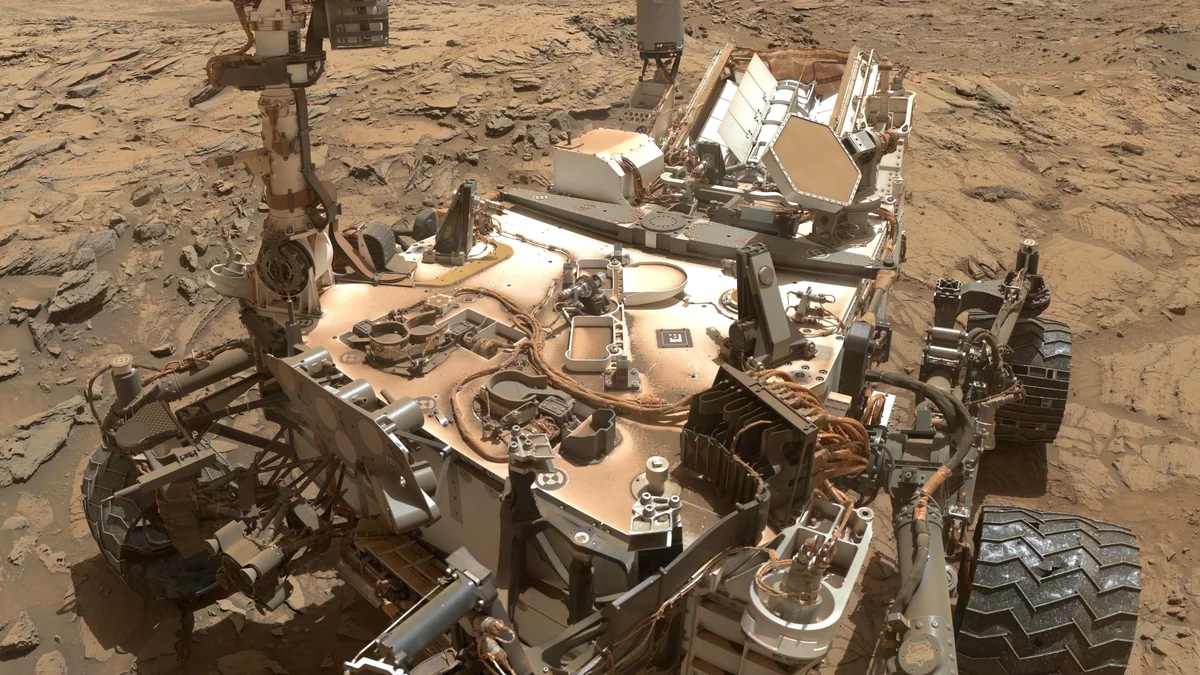
The PROMISE rover concept fits the same logic. A hybrid of the Mars Perseverance and Curiosity rovers, it is designed for the polar regions where the water ice is, and where a permanent base almost certainly has to go.
Parallel to all of this, NASA's June 2026 NextSTEP-3 solicitation created the Lunar Enabling Infrastructure Accelerator, targeting five specific gaps: nanomaterials, surface power, radioisotope power, in-situ resource utilization, and advanced manufacturing. The anchor-customer model running beneath all of it is a policy choice as much as a procurement one: NASA buys the service; the contractor carries the financial risk.
The Artemis Money Mountain — and Where the $93 Billion Goes
Picture a single line item on a government spreadsheet: $93 billion. That is the total projected Artemis spending through the end of fiscal year 2025, accumulated across more than a decade of planning, redesigning, and occasionally rethinking the entire approach. To put it in a unit humans can feel: it is roughly the GDP of Luxembourg, converted entirely into rockets, landers, and the quiet bureaucratic machinery that holds a Moon program together.
NASA's FY2025 budget request came in at $25.4 billion overall, with $7.8 billion ring-fenced specifically for Artemis. That $7.8 billion is the slice that pays for the landers, the suits, the Gateway orbital station, and the commercial contracts that carry payloads to the surface. Even that number, which sounds enormous, covers only one year of a program that has been spending at roughly this scale for years.
Europe is not watching from the sidelines. ESA's member states approved a record €22.3 billion three-year budget at their November 2025 Ministerial Council, a 31% jump from 2022. The appetite, clearly, is growing.
Below the big agencies, the commercial queue is also lengthening. On the same day NASA announced the $590 million CLPS awards, Astrotech Corporation submitted a proposal for the CLPS 2 program, one more company angling for a position in the delivery roster. Analysts tracking this market put the Lunar Surface Infrastructure segment at $343.2 million in 2025, with projections near $1.059 billion by the end of 2026. Those figures come from a single source and the methodology is unclear, so treat them as a directional signal, not a ledger entry. The direction, though, is unmistakable.
The Moon Base Gap: What Surface Infrastructure Is Still Missing
Nokia Bell Labs received a $14.1 million NASA grant to build a 4G/LTE cellular network on the Moon — a genuine telephone tower, essentially, for a place no human has visited since 1972. That grant exists. The network does not, at least not yet. It remains undeployed, a promissory note in the wider ledger of lunar ambition, and it illustrates something worth sitting with: the missions NASA is funding right now can, in principle, outpace the communications backbone those missions will eventually need.
Compare this to Earth in the 1990s, when mobile phones arrived before cell towers covered the countryside. The handsets existed; the signal did not. That mismatch caused a decade of dropped calls and dead zones. The Moon version of this problem is considerably less forgiving. ESA's Moonlight program — a constellation of navigation and communications satellites committed to orbiting the Moon — is real and funded in principle, but incomplete in practice.
The physical infrastructure gap is wide. NASA's own NextSTEP-3 solicitation named five categories of missing capability: surface power, in-situ resource utilization (pulling water and oxygen from the lunar soil rather than launching them from Earth), nanomaterials, radioisotope power systems for surviving the two-week lunar night, and advanced manufacturing. A startup called Lunar Forge is attempting to close one sliver of that gap, laser-sintering regolith dust into construction material suitable for reactor shielding. One company, one technique, one material.
The landers are coming. The moon base infrastructure they will rely on is still catching up.
Whether Any of This Actually Lands
Two of the three companies receiving new contracts have yet to put a lander safely on the lunar surface. Intuitive Machines' Nova-C tipped over on its first attempt in 2024 and tipped over again in 2025. Astrobotic's Peregrine never made it past Earth orbit. The iteration argument NASA offers is honest and reasonable: you learn to land by landing, and failure is data. The deadline risk is equally real: four missions are scheduled for late 2028, and the margin for one more tipped lander is not infinite.
The geopolitical pressure behind that schedule is worth naming plainly. The US has an explicit competitor in China's lunar program, and the pace of CLPS awards mirrors that urgency as much as any scientific logic. When NASA administrator Jared Isaacman frames Moon Base as a race to establish "long-term presence," the subtext is not subtle. Money follows threat perception, and right now threat perception is high.
Private capital is moving in the same direction. Venture investment into space technology reached a record $12.4 billion in the twelve months leading to late 2025, a number that signals the commercial sector believes the anchor-customer model is real and durable. That is not nothing. It means NASA is not the only institution betting on this.
The most basic facts about what happens next remain unconfirmed. Exact launch dates for the three new CLPS missions are listed only as "late 2028." Nokia Bell Labs' lunar 4G network timeline is unclear after two Nova-C failures. Astrotech's CLPS 2 proposal outcome is unknown. We still don't know. That, honestly, is the best part, and also the most demanding part.
The Moon does not care about our lunar infrastructure funding cycles or our geopolitical anxieties. It has been sitting at roughly 384,000 kilometers, keeping its schedule perfectly, for about four and a half billion years. Whether any of this infrastructure actually lands on it, and holds, is a question the next few years will answer, in the only language the universe accepts: evidence.