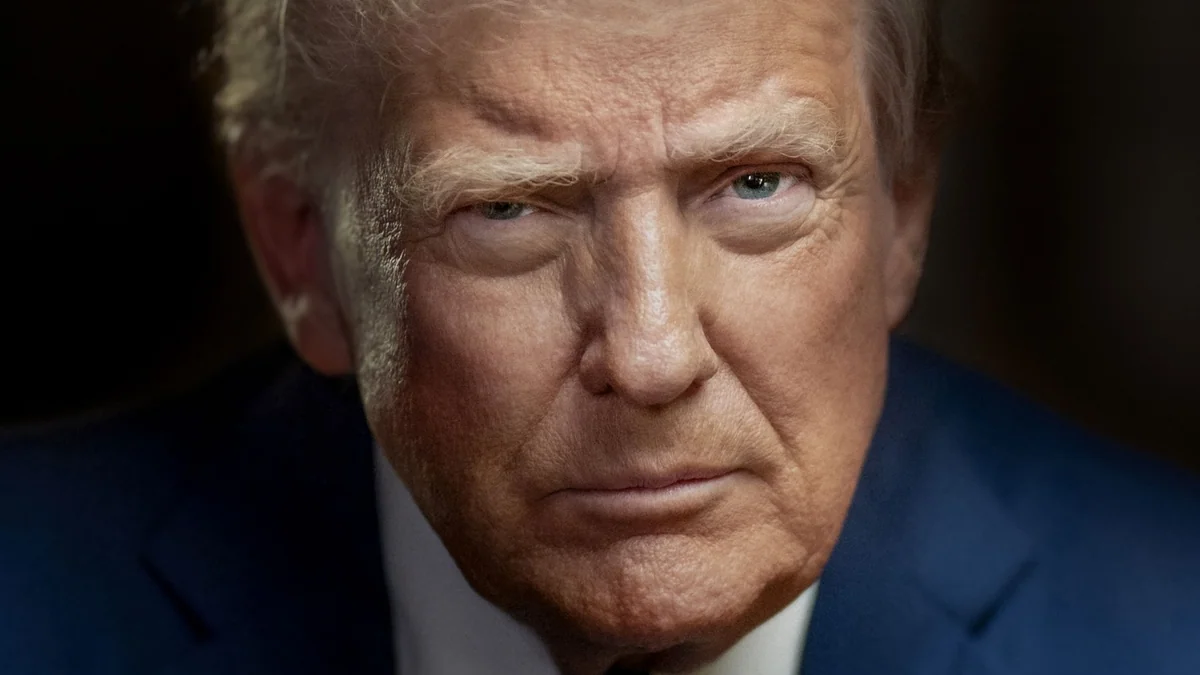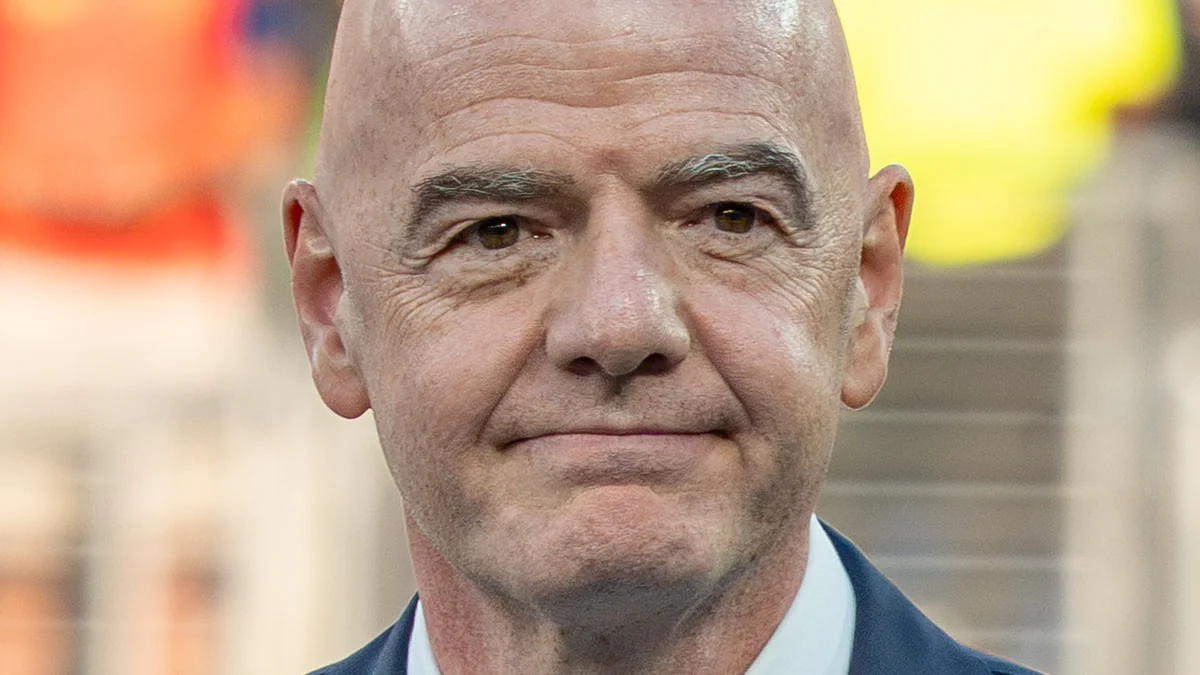
On July 1, 2026, Donald Trump called FIFA president Gianni Infantino to discuss Folarin Balogun's red card suspension. Four days later, FIFA lifted the ban via Article 27 of its disciplinary code — a rarely invoked provision allowing partial or full suspension of penalties. Balogun played against Belgium on July 6.
Here's the thing about the separation of sports and state that nobody in a blazer wants you to understand: it was always a gentleman's agreement, and we stopped having gentlemen around 2016.
Imagine you're ordering a pizza. Not a complicated order — extra cheese, maybe some peppers. But instead of calling the restaurant, you call the mayor. And the mayor calls the restaurant. And the restaurant, after a brief consultation with its lawyers and its conscience (in that order, and not for long), decides that actually, yes, extra cheese is a matter of national interest. Absurd, right?
Welcome to the 2026 FIFA World Cup, where on July 1st, the President of the United States picked up the phone and called Gianni Infantino — FIFA president, man in a suit, keeper of the most profitable sport on the planet — to discuss what is, at its technical core, a referee's decision. Donald Trump called FIFA to talk about a red card. Like it was a trade negotiation. Like the offside rule was a tariff.
The Man, The Card, The Phone Call
USA forward Folarin Balogun picked up a red card during the group stage against Bosnia and Herzegovina — a game the US won 2-0, which made the whole thing feel extra insulting, like getting a parking ticket in a spot you already paid for. Under the rules as written, understood, and applied to everyone who isn't playing in the host nation's backyard, this meant an automatic suspension for the round of 16 against Belgium.
Someone in the White House did the math. Without Balogun, the USA attack is a pizza restaurant out of cheese — technically a restaurant, functionally a tragedy. So Trump called FIFA directly, using the kind of access that comes from hosting a World Cup in your own country and apparently never fully understanding that 'hosting' doesn't mean 'owning.'
On July 5, 2026, FIFA overturned the suspension. Balogun played against Belgium on July 6. The timeline is not subtle.
Article 27: The Fine Print Nobody Was Supposed to Find
FIFA's disciplinary code — which nobody reads until there's a catastrophe and a need for someone to blame — contains Article 27. This provision allows for the full or partial suspension of any penalty. It's the kind of clause that lives in every legal document ever written: the emergency exit the framers installed and then hoped nobody would notice, tucked somewhere between the sections on yellow card accumulation and field dimension requirements.
The US government presented what it called "additional evidence" to FIFA during proceedings. What evidence? Nobody's saying. The White House didn't say. Andrew Giuliani — who was running the tournament task force (a sentence I had to read three times before accepting as real) — declined to elaborate. Remarkable transparency from an administration that chose to intervene in a sporting body's judicial process.
The official argument reportedly involved the claim that referee Raphael Claus had reviewed the incident in slow motion rather than real time — that VAR was being used to catch things invisible at match speed, which was somehow unfair. This is a bizarre argument because that is, literally, what VAR is for. You watch it slowly to catch what you missed. The argument that the referee saw too clearly is the sporting equivalent of a speeding driver complaining that the camera had too many pixels.
The disciplinary system doesn't collapse when someone makes one human error. It collapses the moment political pressure becomes a recognized mechanism for correcting inconvenient outcomes.
The Previous Episodes You Were Supposed to Have Forgotten
Trump and Infantino aren't strangers. FIFA awarded Trump a football 'peace prize' — sit with that phrase for a moment, a football peace prize, given to Donald Trump — and in 2025, Infantino handed him $15,000 worth of tickets to the FIFA Club World Cup final. This is fine. This is normal. This is definitely just two people who enjoy the beautiful game.
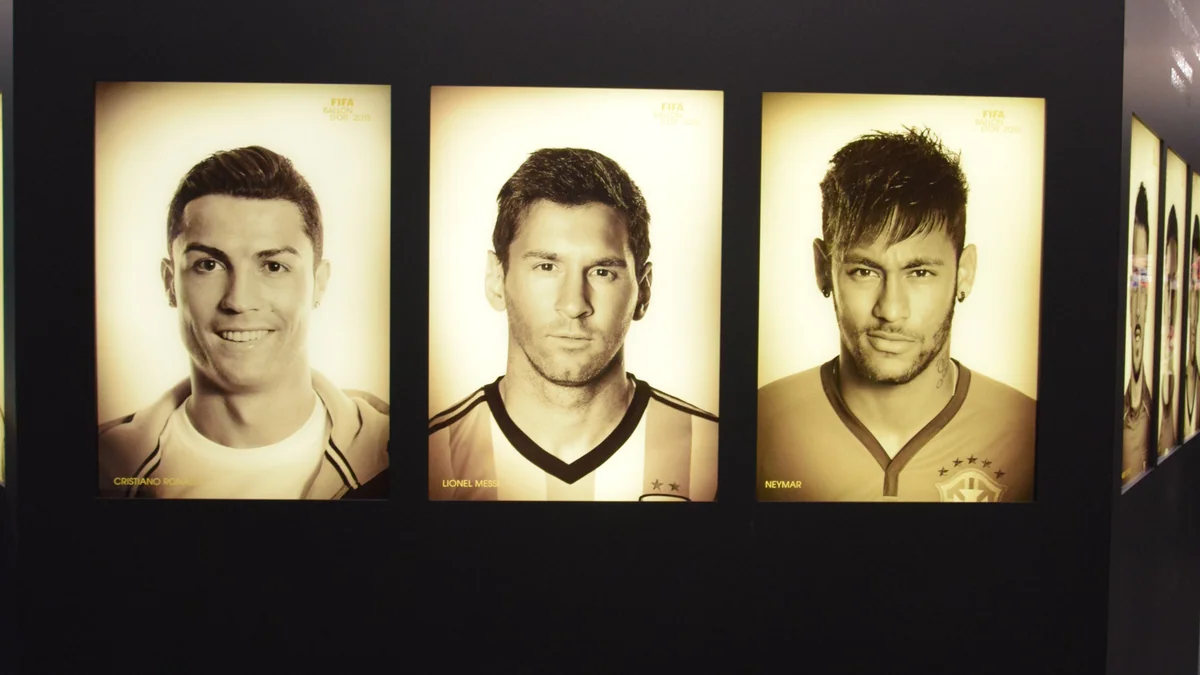
Then there's Cristiano Ronaldo. The Portuguese superstar visited the White House one week before FIFA reduced his match ban — using, as it happens, the same Article 27. Trump subsequently thanked FIFA on social media for "correcting a great injustice," vocabulary historically reserved for wrongful imprisonments and collapsed ceasefires, now applied to football suspensions.
Two suspensions. Same mechanism. Same political adjacency. All coincidence, if you agree to never look at a calendar.
What You've Just Normalized
Here's what Article 27 looked like before July 2026: an obscure procedural tool that essentially nobody invoked in high-profile tournament settings. Here's what it looks like now: a cheat code. The Konami code of FIFA jurisprudence — up, up, down, down, call the president, shake hands, your ban is lifted.
When the same provision gets used twice in the same tournament — for Ronaldo, for Balogun — it stops being an exception and becomes a template. The Belgian Royal Football Association has already announced it's looking into countermeasures. Which means next tournament, every country with a decent lawyer and a head of state willing to make an awkward phone call is going to be running the same play.
This is what happens when you demonstrate that the rules have a workaround: everyone starts looking for the workaround. And we're letting them. We're letting them FIND IT ON LIVE TELEVISION.
Institutional independence is a beautiful phrase for press releases. In practice, it now has to explain why some countries' phone calls count more than others. Would Ecuador get the same treatment? Would Poland? You already know the answer. You knew it before you finished reading the question.
Garrincha Was 1962. This Is Something Else.
In 1962, Brazilian legend Garrincha played in the World Cup final despite a red card. No president called anyone. No government submitted evidence. No legal provision was invoked by a diplomatic apparatus. It was a sporting decision — messy, debatable, made entirely within the game.
The difference between 1962 and 2026 is not the outcome. It's the mechanism. The US government presented formal additional evidence. The President of the United States made a documented phone call to FIFA's president on July 1st. The suspension was lifted on July 5th. The player was on the pitch on July 6th.
Garrincha was an accident. Balogun is a precedent. And precedents are only invisible once — after that, everyone can see exactly where the door is and what it costs to open it.
Anyway. The beautiful game is still beautiful. It's just that some teams get to play it with a slightly different rulebook — delivered via phone, by the most powerful man on earth, to a man who once gave him a peace prize.
Sleep well.