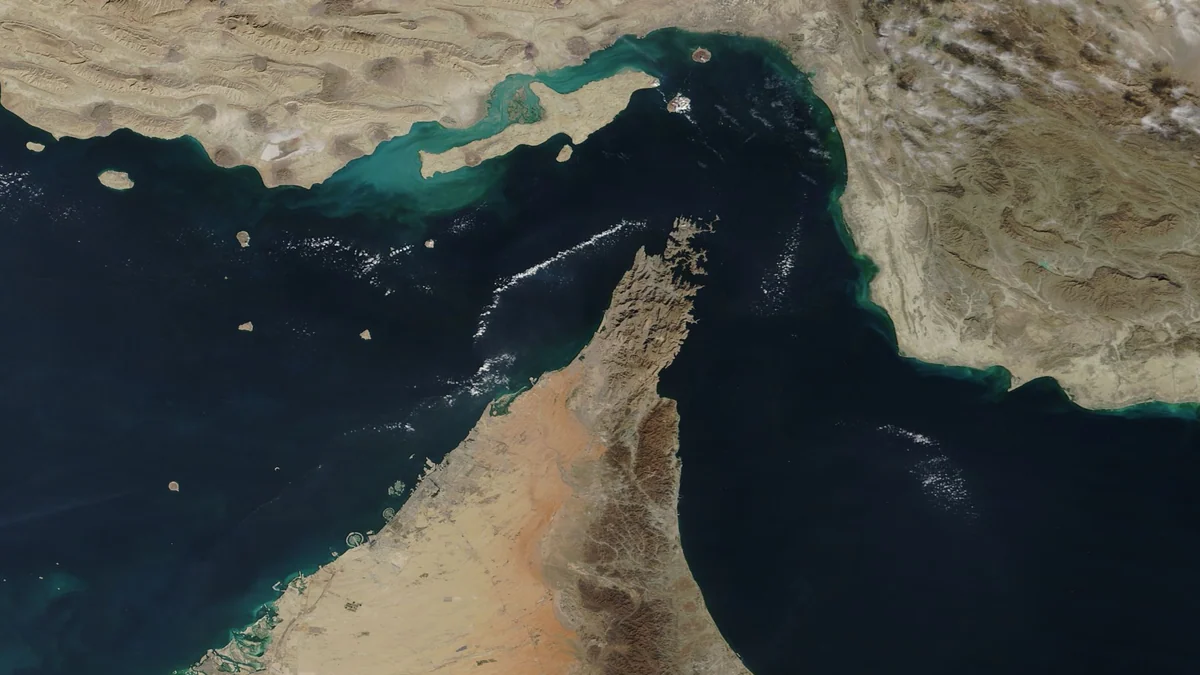
The end of the Iranian blockade and the opening of the Strait of Hormuz occurred on June 14, 2026, following a memorandum of understanding (MoU) designed to restore global maritime trade and stabilize energy prices. Mediated by Pakistan, this agreement seeks to bridge a chasm of deep institutional distrust with the immediate promise of unrestricted maritime flow.
President Trump’s executive authorization for a "toll-free opening" and the removal of the U.S. Navy blockade signals a sharp pivot in American foreign policy. If naval forces successfully transition from active enforcement to passive observation, the global energy market can begin its necessary recalibration. Iranian state media outlet Tasnim has already confirmed the finalized text of the MoU, suggesting a pragmatic acceptance of the new maritime reality.
The emerging paradigm shifts the focus toward the legal weight of the formal signing ceremony scheduled for June 19 in Switzerland. While the MoU specifies that shipping traffic must be unrestricted in both directions, the document functions primarily as a socio-economic blueprint rather than a peace treaty. It represents a calculated attempt by economic actors to stabilize global markets, reflected in the four percent drop in Brent crude prices to $84.
In the Estonian context, this de-escalation provides a critical case study in how cross-border correlation dictates local energy security and inflation patterns. Rewriting the old order requires more than a signature; it demands a total reassessment of institutional behavior in high-risk corridors. One must wonder if a waterway defined by decades of hostility can truly transform into a frictionless transit lane based on a single memorandum.
A Chronology of Constraint: Institutional Behavior from 2024 to 2026
Global energy security often relies on the fragile assumption of maritime neutrality, yet institutional behavior has prioritized territorial leverage over market stability for over two years. When Iran initially closed the Strait on February 28, 2024, the act was framed as a temporary tactical maneuver. This signaled a shift where energy chokepoints serve as primary diplomatic levers for regional actors.
The conflict reached a violent peak in February 2026 after the death of Ali Khamenei triggered a series of U.S.-Israeli strikes, altering the security architecture of the Gulf. This instability forced the United States to implement its own naval blockade on April 13, 2026, as a mechanism of maximum pressure. Examining the cross-border correlation between these escalations reveals a systematic rewriting of maritime law through military friction.
Nearly 25 percent of global oil and 20 percent of LNG shipments were effectively paralyzed by this two-year cycle of constraint. These figures reflect more than market volatility; they indicate a structural vulnerability in how the Western socio-economic blueprint is fueled. Modern industrial capacity met unprecedented material scarcity as the world’s most vital waterway became a silent vacuum.
In the Estonian context, this period exposed the acute fragility of energy-dependent small states when distant maritime nodes fail. This shift requires a re-evaluation of the reliability of globalized supply chains under the threat of institutional volatility. Sovereignty becomes difficult to maintain when a state's economic lifeblood is subject to the behavioral whims of a distant naval chokepoint.
The New Brokerage: Global Mediation and the End of the Iranian Blockade and the Opening of the Strait of Hormuz
Traditional Western diplomacy often claims the spotlight, yet the actual heavy lifting for the memorandum happened in Islamabad. This defines the emerging paradigm where geographic proximity trumps historical hegemony. When Pakistani Prime Minister Shehbaz Sharif emerged as the lead mediator, it signaled that regional stability is no longer a purely Euro-Atlantic project.
Saudi Arabia, Turkey, and Qatar also contributed to this cross-border correlation of strategic interests. Their collaborative involvement demonstrates a shift where Middle Eastern powers act as the primary stabilizers of their own volatile geography. If these regional actors provide the framework, the West must adapt to a new brokerage reality.
On June 15, Emmanuel Macron brought the details of this deal to the G7 summit in Evian-les-Bains. The E4 nations proposed a multidisciplinary legal strategy based on a sanctions-for-supervision trade-off. This blueprint demands that Iran limits its nuclear program under strict IAEA supervision during a critical 60-day verification window.
This structure is more than a peace treaty; it is a precise behavioral mapping of economic actors who value transit over ideology. In the Estonian context, this transition highlights vulnerability to shifts in international legal norms negotiated in Karachi or Riyadh. Rewriting the old order requires policymakers to look beyond traditional alliances.
We are witnessing a fundamental change in institutional behavior across the global energy and maritime sectors. If this 60-day window proves the efficacy of regional mediation, the European Union's role as a global legal authority will be tested. The answer will determine our future strategic posture.
The Friction of Reality: Behavioral Mapping of Maritime Actors
High-level diplomatic optimism frequently meets a hard stop at the waterline, where the physical residue of conflict dictates the pace of progress. While the memorandum envisions a frictionless flow of oil, the sea floor remains cluttered with the machinery of denial. Iranian Deputy Foreign Minister Kazem Gharibabadi stated that a full reopening could take 30 days due to rigorous demining requirements.
On the water, the process of reclamation is a visceral display of tactical patience. The air in the Strait carries the metallic scent of exhaust from U.S. minesweepers working the primary shipping lanes. These vessels have already begun detonating mines, their work marked by muffled plumes of water that disrupt the horizon and the nerves of merchant crews.
If global insurers refuse to follow the lead of the state, then how effectively can the paradigm shift be realized?
For the behavioral mapping of economic actors, the most critical data points are found in the institutional behavior of global shipping lines. These entities and their insurers remain cautious, observing a 30-day insurance gap that effectively halts tankers at the edge of the Gulf. They are closely monitoring the stance of U.S. Central Command, which remains vigilant despite the formal removal of the blockade.
In the Estonian context, this transition reflects the challenge of shifting from a wartime economy to a fragile peace. This situation exposes a correlation between maritime security and the stability of northern European supply chains. Rewriting the old order requires a more robust socio-economic blueprint to bridge the gap between policy and safety.
Strategic Divergence: The Israeli Exception and Regional Fragility
Diplomacy often presumes that a signed memorandum dictates regional behavior, yet the current lifting of the naval blockade faces a crisis of asymmetric compliance. On June 14, 2026, the brokered agreement called for a permanent termination of military operations across all fronts, including Lebanon. This is the emerging paradigm where maritime trade is legally tethered to the cessation of terrestrial conflict.
The institutional behavior of the Israeli state introduces a disruptive variable that challenges this socio-economic blueprint. Prime Minister Benjamin Netanyahu stated that Israel is not bound by the Lebanon terms, effectively isolating Israel from the Pakistani-mediated consensus. A single actor's refusal can destabilize an entire cross-border correlation of regional stability.
Regional divergence threatens the opening. While U.S. Central Command remains present, the safety of merchant vessels remains hostage to a fractured northern front. In the Estonian context, maritime security is rarely a localized phenomenon; it is always a byproduct of broader systemic alignment.
Rewriting the old order requires a synchronization of political will that is currently absent. If kinetic operations persist in Lebanon, the Iranian commitment to a toll-free waterway may rapidly dissolve back into hostility. Can a global energy artery be secured when its primary geopolitical anchors pull in diametrically opposite directions?
Socio-Economic Synthesis: Global Prices and the Estonian Context
Global energy markets often prioritize logistical certainty over the ideological rhetoric of the signing parties. While political distrust between the U.S. and Iran remains at a peak, the market response signals a shift in risk assessment. Brent crude oil prices fell more than four percent to below $84 per barrel following the announcement of the memorandum.
This price correction serves as a leading indicator for a broader socio-economic blueprint. For a small, open economy like Estonia, the $84 floor offers a necessary reprieve from the runaway inflation that has hampered industrial output. If the 20 percent of global oil supply previously blocked returns, we can expect a stabilization of Baltic transport indexes.
The toll-free opening authorized by the U.S. removes a significant fiscal barrier that threatened to permanently alter maritime law. In the Estonian context, this normalization of Middle Eastern transit stabilizes the diversification efforts of European utilities. It proves that institutional behavior, even in times of war, remains tethered to the gravity of global supply chains.
We are currently rewriting the old order of energy security, moving from reactive crisis management toward a fluid correlation of trade routes. This shift requires a sober evaluation of our national resilience against future shocks. Ultimately, the end of the Iranian blockade and the opening of the Strait of Hormuz serves as the definitive test for the stability of the new global energy paradigm.