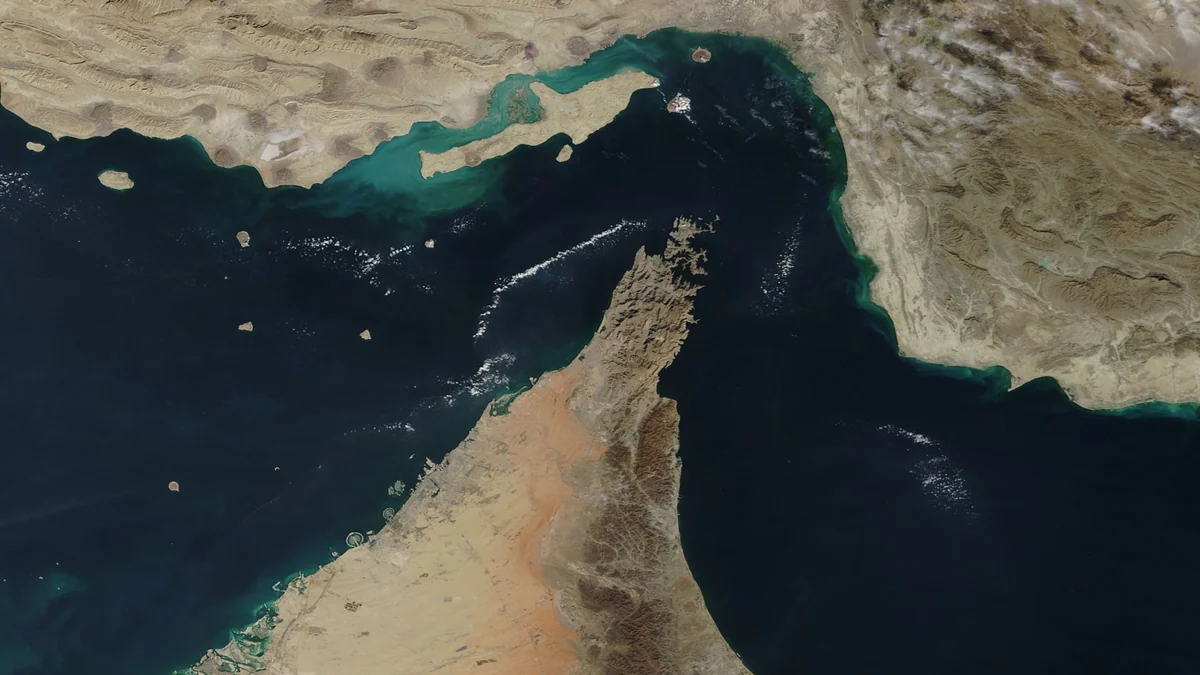
On May 23, 2026, President Donald Trump announced a "largely negotiated" 15-point memorandum of understanding with Iran. The framework includes reopening the Strait of Hormuz, unfreezing Iranian assets, and initiating a 30-day window for nuclear enrichment talks to de-escalate regional maritime conflict and global energy prices.
The Trump-Iran negotiations center on a 30-day countdown to resolve nuclear enrichment concerns in exchange for lifting the U.S. maritime blockade on Iranian ports. This proposed framework aims to end a monthslong war that has effectively throttled the world's most vital energy artery. By trading Iranian restraint for the repatriation of frozen assets, the deal seeks to restore liquidity to the global oil market.
On a humid Tuesday morning at the Port of Singapore, the price to charter a Very Large Crude Carrier (VLCC) for a journey through the Persian Gulf shivered. For months, the war-risk insurance premium for a single transit through the Strait of Hormuz has cost more than the vessel's fuel. When the cost of the risk exceeds the cost of the fuel, the system isn't just stressed; it is broken.
The Mechanics of the Memorandum
Economics is often the story of who can afford to wait. For the past several months, the United States has maintained a maritime blockade on Iranian ports, shuttering Iran's ability to participate in trade. The unfreezing of Iranian capital held in foreign banks is the primary lever being used to bring Tehran to the table.
In Tehran, the "market price" of grain is currently a fiction dictated by the difficulty of bypass-financing. By lifting the blockade and returning vessel numbers to pre-war levels, the U.S. is betting that Iranian leadership values liquidity more than regional friction. The return of sovereign trade rights serves as the carrot for a regime currently operating under a state of siege.
When the cost of the risk exceeds the cost of the fuel, the system isn't just stressed; it is broken.
The Economic Stakes of the Trump-Iran Negotiations
The centerpiece of this announcement is the Strait of Hormuz, a narrow strip of water through which roughly one-fifth of the world's oil passes. In economic terms, the Strait is a singular point of failure where the "invisible hand" is often replaced by a visible fist. The reopening of the Strait to commercial shipping is not merely a military concession; it is a global inflationary relief valve.
While President Trump characterized the agreement as a breakthrough, the Iranian state-affiliated Fars News Agency offered a more restrained interpretation. They confirmed vessel traffic might return to pre-war volumes, but stopped short of promising "free passage" in the traditional sense. The dispute over whether the Strait is "open" or merely "managed" highlights the gap between a diplomatic victory and a functional maritime reality.
The 15-Point Framework: A Transition of Risk
The Trump-Iran negotiations are structured as an iterative memorandum designed to buy time rather than a permanent treaty. It functions as a bridge over a chasm of eight years of failed diplomacy dating back to the 2018 U.S. withdrawal.
| Component | U.S. Interpretation | Iranian Interpretation |
|---|---|---|
| Strait of Hormuz | Complete reopening for international commerce. | Return to pre-war vessel counts under monitoring. |
| Financial Assets | Gradual unfreezing tied to negotiation milestones. | Immediate repatriation of all funds. |
| Nuclear Clock | A 30-day window to resolve enrichment concerns. | A period to verify the lifting of sanctions. |
| Maritime Status | End of the U.S. blockade on Iranian ports. | Restoration of sovereign trade rights. |
President Trump has characterized the chances of success as "50/50," a remarkably candid admission for a leader who usually deals in certainties. The 50/50 odds reflect the reality that this is a ceasefire proposal, not a permanent resolution of the underlying nuclear dispute.
The Regional Calculus: Beyond the Oval Office
Trump conducted a joint call from the Oval Office with a coalition of leaders including Saudi Arabia, the UAE, Qatar, Pakistan, Turkey, Egypt, Jordan, and Bahrain. This recognition suggests that for any deal with Iran to hold, the neighbors must be the primary guarantors. The reported travel of JD Vance to Pakistan suggests the U.S. is seeking a broader Islamic security architecture to underpin the 30-day window.
In Jerusalem, Prime Minister Benjamin Netanyahu convened a limited security consultation to parse American "reassurances" regarding Iran's uranium stockpile. The fear in Israel is that an interim agreement provides Iran with the one thing it needs most: cash. If assets are unfrozen without a corresponding reduction in enriched uranium, the Iranian "breakout capability" remains intact.
The Information Gap: Who Speaks for Tehran?
The contradiction between the President's announcement and the Fars News rebuttal suggests a deep fissure within the Iranian state. On one side is a diplomatic corps seeking to end economic strangulation; on the other is the Revolutionary Guard. The disagreement over "free passage" versus "managed vessel levels" is the primary fault line of the next 30 days.
If a ship is allowed to pass but is shadowed by Iranian fast-attack craft, insurance premiums in London will not drop. If the maritime blockade is lifted but banks remain hesitant to process transactions, the "unfrozen assets" are merely numbers on a screen. Economic deals are only as good as the trust required to execute the transactions they describe.
The Price of a Thirty-Day Clock
What happens on day 31? The current agreement is essentially an expensive way to buy a month of relative peace while the nuclear clock ticks. By tying the reopening of the Strait to a ticking clock, the U.S. has created a scenario where the global economy is once again a hostage to a single meeting.
Unfreezing assets, re-establishing shipping routes, and verifying enrichment levels are processes that rarely align with the speed of international finance. We are watching a high-stakes experiment in whether the threat of economic collapse can move faster than the inertia of geopolitical rivalry. The global market is essentially betting on whether "stubborn" negotiators can find a middle ground before the Strait closes again.
In Singapore, the VLCC captains are still watching their screens, waiting for the first tanker to pass without an escort. The news caused a momentary dip in futures, but the war-risk premiums remain a reality on the water. The Trump-Iran negotiations remain a 50/50 gamble that a memorandum can stabilize an energy system that is currently broken.