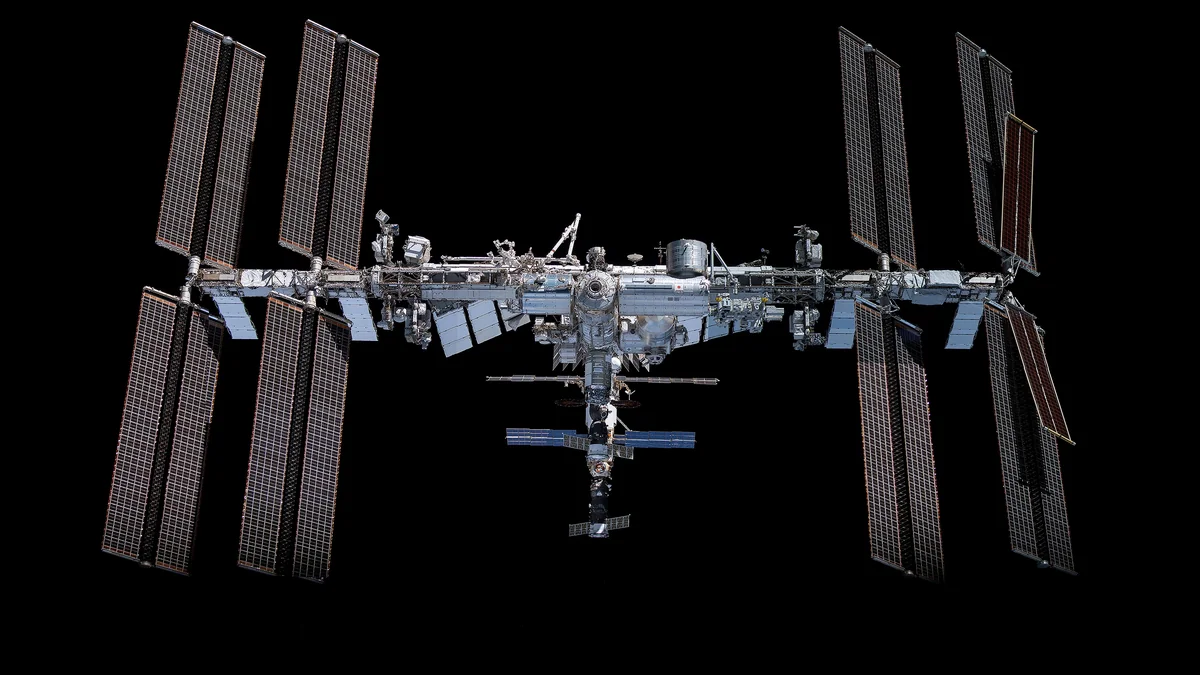
The political cost of the ISS air leak is measured in the erosion of international trust and the looming end of a decades-long orbital partnership between NASA and Roscosmos. On June 5, 2026, this tension spiked when a shelter-in-place order forced the crew to abandon the main modules. This escalation turned a technical nuisance into a diplomatic crisis, highlighting the fragility of cooperation in low Earth orbit.
Imagine waking up in a room where the air is slowly, invisibly being pulled through a straw. A shelter-in-place order flashed across the crew's screens, a command that sounds more like a school drill than a high-stakes emergency.
The station has had a persistent leak in the Russian Zvezda module since 2019. For years, it was a manageable nuisance, like a dripping faucet in a beloved but aging family home. However, during the 24 hours leading up to the order, the pressure loss saw a significant uptick.
Engineers call it depressurization, but you can think of it as the station losing its breath. To the ground teams, the numbers on their monitors had moved beyond data to become an urgent countdown. "We’re monitoring the leak rate every second," a mission control engineer noted, explaining that the crew would have to abandon ship if the loss hit a specific threshold.
Here is the strange part. In a movie, a leak in a vacuum would hiss or whistle, providing a dramatic soundtrack to the crisis. In reality, space is silent, and you would never hear your life support slipping away through a microscopic fracture in the metal skin.
NASA insists the crew is safe and following standard procedures. Yet, this sudden escalation highlights the reality of structural aging in a laboratory that was never meant to last forever. Now hold that thought, because these cracks are about more than just physics.
A Masterpiece Beyond Its Expiration Date
The International Space Station was never meant to be immortal. Most spacecraft are designed like high-performance cars, built for a specific distance and a very limited clock. The original blueprint for the ISS gave it a design life of roughly 15 to 20 years.
We have officially pushed it into the vintage category. Humans have lived inside this metal can every single day without exception since the year 2000. That is over two decades of constant vibration, thermal cycles, and the relentless pressure of keeping a vacuum at bay.
Here is the strange part. We call it microgravity fatigue, the slow, microscopic cracking of metal under the stress of orbital life. Since 2019, a persistent leak in the Russian Zvezda module has served as a constant reminder of this structural aging.
Inside, life is a closed loop of extreme efficiency. NASA engineers often use a phrase that makes new recruits squint: "Today’s coffee becomes tomorrow’s coffee." This recycling system, which turns waste into drinking water, currently shows the urine storage tank sitting at 61% capacity.
But while we can recycle water, we cannot easily recycle a structural hull. The cracks in Zvezda are physical evidence of a masterpiece operating deep in its overtime, asking a 20th-century structure to survive against a patient vacuum. Now hold that thought.
Chasing Ghost Cracks in the Russian Segment
The Zvezda module is the cornerstone of the Russian segment. It provides the living quarters that have kept the station inhabited 400 kilometers above our heads since the year 2000. For five years, however, it has been the station's main source of depressurization.
In May 2026, the crew noticed a new drop in pressure while unloading the Progress 95 cargo ship. Think of the station as a long, metallic limb where moving heavy supplies sends subtle vibrations through the frame. Moving heavy supplies sends subtle vibrations through the frame, finding and widening the existing cracks.
Engineers thought they had won this battle in early 2026 after applying specialized sealants and reinforced tape. For a few weeks, the atmosphere held steady and the alarms remained silent. This was supposed to be the final word on the matter.
Now hold that thought. Here is the strange part about a vacuum: it does not just wait for a hole; it pulls with a relentless physics that makes a mockery of tape. By June, the pressure loss surged once more, proving those "fixed" seals were merely temporary.
We still do not know where the newest cracks are hiding, which, honestly, is the best part. To someone standing here in 1610, this whole pressurized tin can would have been indistinguishable from magic. Today, it is a struggle against metal fatigue that no amount of tape can solve.
In orbit, your neighbor’s problem is always your own.
Calculating the Political Cost of the ISS Air Leak
Imagine sitting in a parked car while the garage slowly fills with water. On June 5, 2026, seven people lived a version of this in orbit. They were not in the wide labs of the station, but tucked inside two "lifeboats" docked at the ports: the SpaceX Dragon and the Russian Soyuz.
This is the safe haven protocol. When the leak in the Zvezda module spiked, the station stopped being a home and became a hazard. The astronauts moved into their respective ships because they needed a door they could close.
Here is the strange part. In space, a hatch is more than a door; it is a literal line of survival. Emergency protocols require these hatches to be kept in a "ready" state for immediate undocking.
Now hold that thought. The Dragon and the Soyuz represent two different eras of engineering. In a crisis, the distinctions between a sleek touchscreen capsule and a battle-tested Russian workhorse vanish.
Both ships are reduced to their simplest function: keeping air in and the void out. We are watching a slow-motion decision. Engineers monitor the pressure every second, waiting for the threshold that says the station is no longer worth the risk.
Full evacuation remains a standing contingency plan. It is a ladder of understanding that starts with a tiny hiss. It ends with the realization that even the greatest laboratory in history has a breaking point.
The Language of Silence in Low Earth Orbit
The International Space Station is a house built of contradictions. It is a fragile collection of metal cans held together by treaties as much as bolts. To someone standing here in 1610, this would have been indistinguishable from magic.
Back then, empires were built on secrecy and the conquest of the horizon. Today, researchers from across the globe share a tiny kitchen while traveling 17,000 miles per hour. This partnership relies on a shared, silent language of technical necessity.
But when the air leak in Zvezda worsened in June 2026, that silence changed flavor. NASA spoke of shelter orders and safety thresholds. Roscosmos, however, offered no official public comment to the world below.
Here is the strange part. On Earth, these nations are often locked in deep, icy diplomatic freezes. Yet, in the Russian segment, an American astronaut might be the one holding the sealant tape for a Russian crack.
Geopolitical tension stops at the airlock because the vacuum of space is a perfect equalizer. The current crew includes representatives from NASA, Roscosmos, and the European Space Agency (ESA). They are all bound together by a simple, brutal math.
If the station loses enough air, everyone leaves, regardless of their passport. In the end, it does not matter which module failed or who paid for the oxygen. In orbit, your neighbor’s problem is always your own.
The Choice Between Dust and Fire
We are currently living on borrowed time. NASA has marked 2030 on the calendar as the year we finally decommission the ISS. It is the hard limit for a structure designed for fifteen years that has somehow lasted double that.
The official plan involves a massive, controlled deorbit into the remote Pacific Ocean. To someone watching from below, the laboratory would look like a violent, man-made meteor shower. US Lawmakers have recently begun inquiries into whether it is possible to "store" the ISS rather than burning it.
Now hold that thought. Keeping a football-field-sized structure in a stable orbit without active engines is like trying to keep a kite still in a gale. It requires a specialized tug spacecraft and a budget that currently do not exist.
We are now racing toward a commercial transition. Private companies must have stations ready before 2030 to avoid a gap in our orbital presence. We are moving from a grand international experiment to a fragmented landscape of private research parks.
Here is the strange part: since the year 2000, there has never been a moment when every single human being was on Earth. Whether our next home is a commercial module or a lunar base, we still don't know what the next chapter looks like. As the pressure drops, the political cost of the ISS air leak reminds us that our presence in the stars is a choice, not a guarantee.