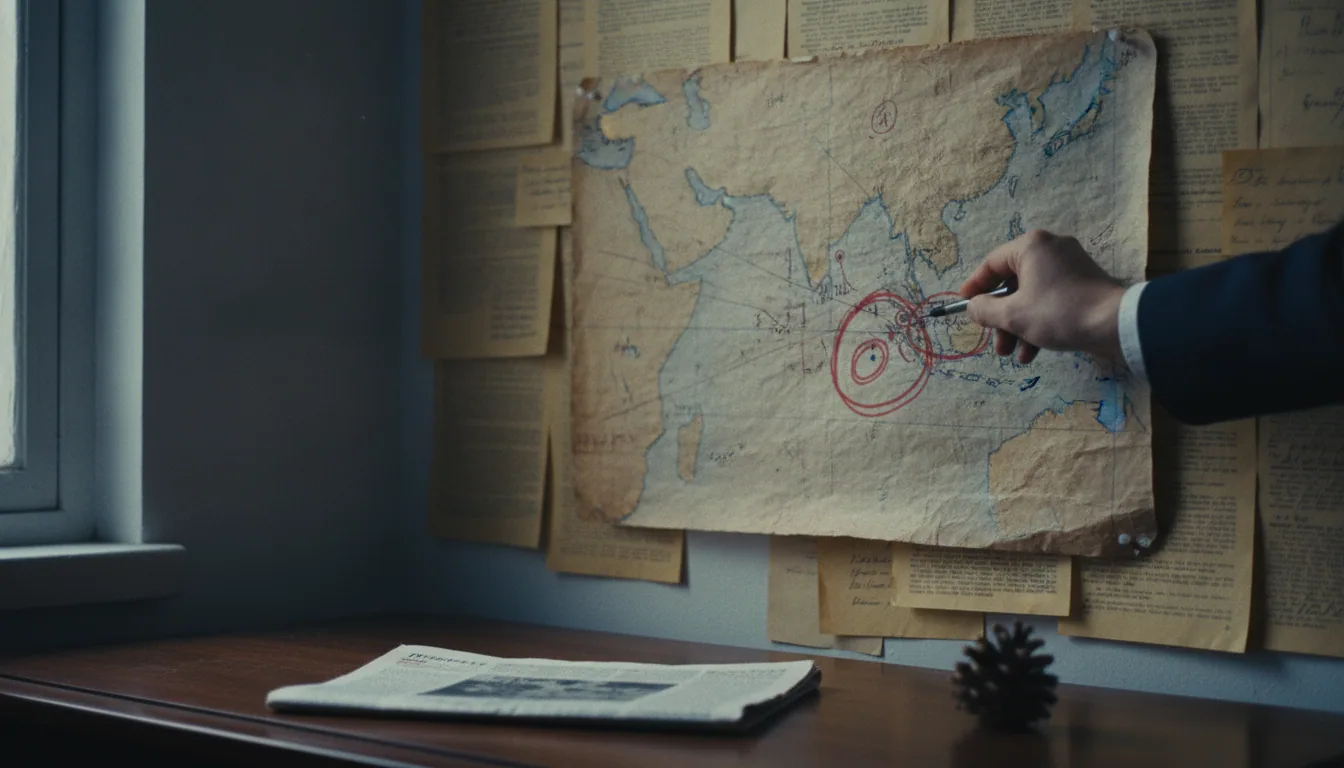
The June 2026 Kuwait airport strike fundamentally altered regional flight paths and exposed the fragile math of global aviation risk. On the morning of Wednesday, June 3, 2026, the Islamic Revolutionary Guard Corps targeted Kuwait International Airport with drones and ballistic missiles, resulting in one fatality and severe structural damage.
The Morning the Sky Closed
The early morning of Wednesday, June 3, 2026, was supposed to be a routine shift for ground crews and travelers at Kuwait International Airport. Instead, the ordinary sounds of rolling suitcases and boarding calls were replaced by the impact of drones and ballistic missiles. One person was killed in the strike, and several others sustained severe, life-changing injuries.
This is what policy looks like when it is translated from a military press release into physical reality. The Islamic Revolutionary Guard Corps claimed the strike was a response to U.S. military actions on Qeshm Island. By the time the sun was fully up, Kuwait's primary gateway was partially unusable.
All commercial flights at the airport were suspended as incoming planes were diverted to regional neighbors. Kuwaiti authorities implemented a full airspace closure, the second such event since the regional conflict began on February 28, 2026. Kuwait Airways stopped all operations "until further notice," leaving the country's connection to the world in a state of sudden, forced silence.
We often discuss geopolitics as a game of chess played with statistics. For those standing in Terminal 1 on June 3, it was a matter of survival math. The arithmetic of a morning like this results in one death, a ruined passenger terminal, and a jagged hole in the global flight map.
Terminal 1 and the Aftermath of the Kuwait Airport Strike
The General Civil Aviation Authority of Kuwait was blunt in its assessment, stating that Terminal 1 suffered considerable damage. On the ground, the impact of Iranian drones and ballistic missiles translates to shattered glass and twisted metal. Large sections of the terminal remain unusable, turning a workplace for ground staff into a restricted zone.
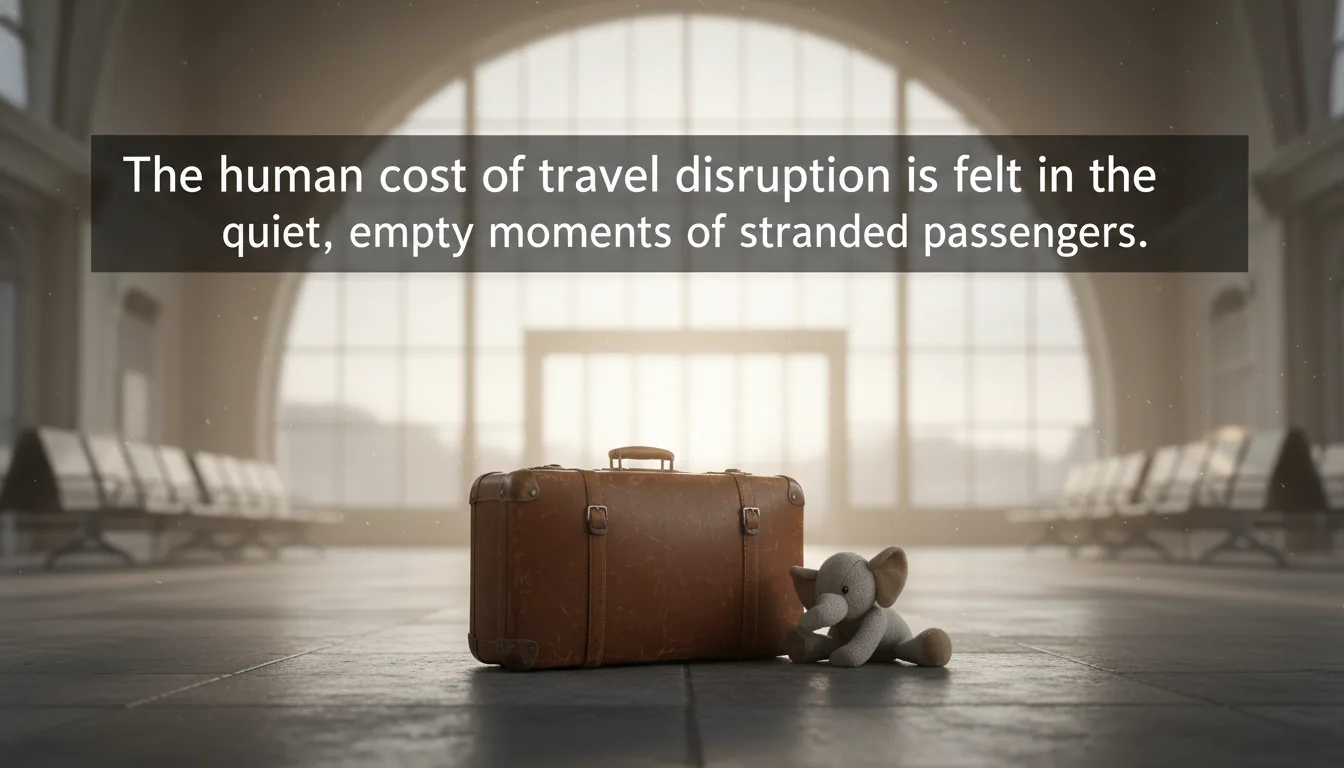
Stranded passengers reported being turned back from the terminal gates with absolutely no prior notice. They arrived with suitcases and tired children only to find cancellations they had never been told about. This is what policy failure feels like when you are standing on a curb with a packed bag and no way to reach your family.
The damage to Terminal 1 reveals the systemic vulnerability of our civilian infrastructure. It is not just about repairs; it is about the arithmetic of risk that follows the smoke. The Joint War Committee has seen aviation war-risk premiums jump to approximately 0.25% of a plane's hull value for every single transit through the area.
For a large aircraft, that insurance spike adds £100,000 to the cost of one journey, an expense that eventually lands on the person who works twelve-hour shifts.
The £100,000 Toll
When you book a flight, you see a seat and a meal, not the war-risk insurance premium. In March 2026, the Lloyd's Market Association's Joint War Committee added Kuwait to its high-risk area list. That insurance spike adds £100,000 to the cost of one journey, an expense that eventually hits the traveler.
The European Union Aviation Safety Agency (EASA) followed with a Conflict Zone Information Bulletin covering the airspace of Kuwait, Iran, Iraq, Bahrain, and Saudi Arabia. Aero Online described the result as "cascading flight disruptions across three continents." To keep passengers safe, airlines now fly much longer routes around the risk, detouring over Turkey or across the Indian Ocean.
Every extra hour in the sky burns more fuel and adds to the wages of the crew. For a worker in Riga or a nurse in Kuwait City, this math is simple. Aviation risk is never just a number on a corporate balance sheet; it is a silent tax on every person who needs to travel.
A Hub Running Dry
An airport is more than gates and shops; it is a machine that drinks fuel. At the Kuwait Aviation Fueling Company (KAFCO), the silence now is heavier than the desert heat. Radar systems and fuel storage tanks had already sustained major damage in a prior attack in March.
Before the disruption, the airport's jet fuel demand was 19,000 barrels every single day. During the peak of the recent chaos, that number plummeted to just 1,000 barrels. That is 18,000 barrels of movement that simply vanished from the books because the arithmetic of survival stopped adding up.
Abdullah Al-Rajhi, the spokesperson for the DGCA, had to tell pilots there was no place to land and no fuel to take. He was managing a hub that was, for all intents and purposes, running dry. In Kuwait, the tanks are broken and the sky is silent because we take for granted that a plane will always have kerosene.
Moving the Fleet to Save the Math
When a factory burns down, the owner moves the machines if they can. Following the strike on June 3, Jazeera Airways relocated its entire fleet to Saudi Arabia for safety. This is survival math in its purest form, as it is cheaper to move a fleet than to lose a hull to a ballistic missile.
Resilience is another word for having a plan when the first door is locked. For Kuwait Airways, this meant resuming partial operations through Terminal 4 on the afternoon of June 3. While Terminal 1 remained unusable, T4 served as a critical insurance policy that kept the country connected.
International carriers like IndiGo suspended all flights to and from Kuwait until at least midnight on June 4, 2026. For a passenger, this suspension is not just a line on a screen, but a lost week of wages or a missed funeral. The friction of conflict occurs when the math of safety outweighs the math of movement.
The Red Line and the Future of the Gateway
Policy experts talk about "red lines" as if they are physical walls. The Kuwait Ministry of Foreign Affairs says the security of the country is a red line, but on June 3, that line was crossed. This conflict began on February 28, 2026, pulling the U.S., Iran, and Israel into a cycle that treats civilian infrastructure as a chessboard.
While U.S. Central Command intercepted multiple missiles and drones that night, the damage to Terminal 1 is done. There is still no clear timeline for when the terminal will be restored to safety. Policy fails the person on the ground when it results in a closed terminal and a mother waiting for news that never comes.
I write so that we remember these numbers represent real lives. My daughters need to know that the world they inherit is connected by more than just high-risk insurance premiums. We must demand that diplomacy does the hard work before the next siren sounds, ensuring that a Kuwait airport strike never again becomes the price of doing business.