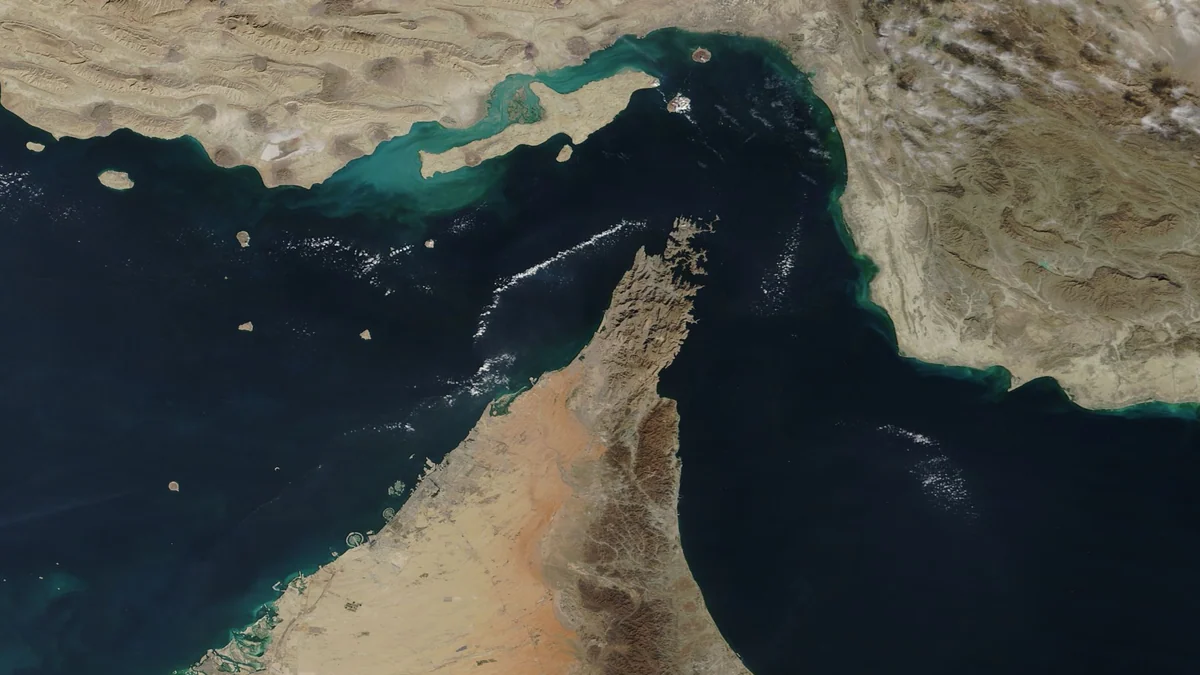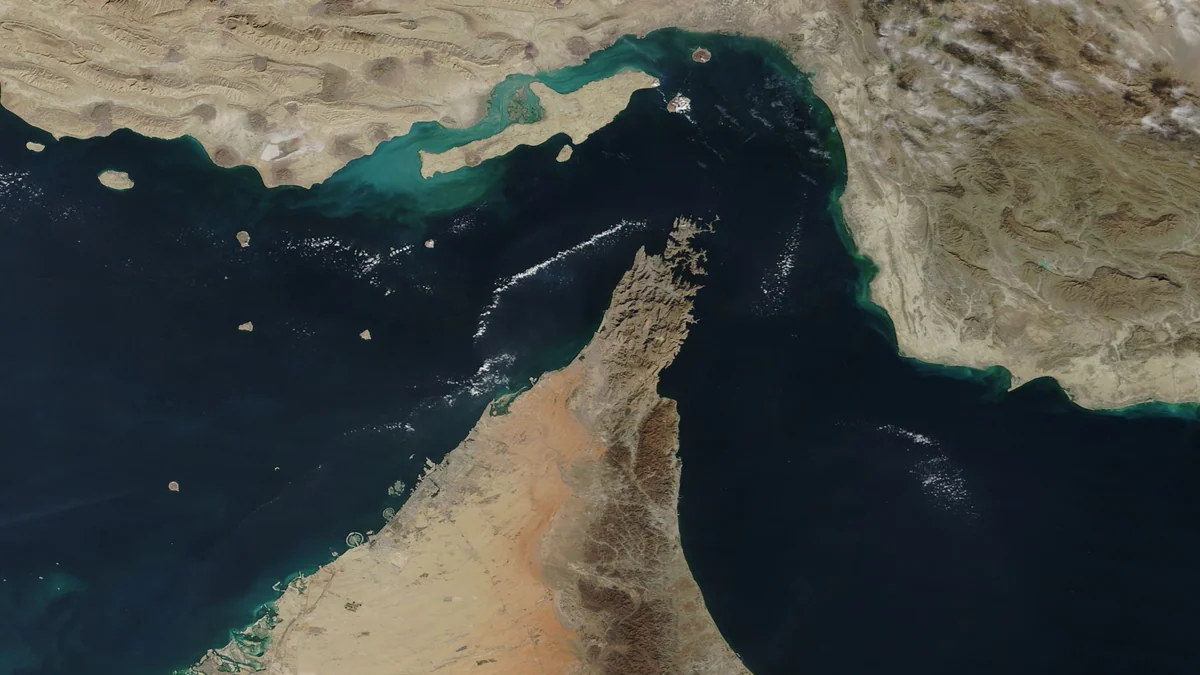
The new oil war in the Strait of Hormuz erupted in 2026 after the collapse of the Ankara memorandum. Escalating tensions between the U.S. and Iran have disrupted 20 percent of global oil transit, driving Brent crude prices to 76 dollars following surgical strikes on maritime infrastructure and tankers.
The conflict in the Persian Gulf escalated because the underlying strategic tensions between the U.S. and Iran were never resolved by the temporary economic incentives of the June ceasefire.
In 1987, the supertanker Bridgeton hit a mine in these same waters. It was a 400,000-ton message from Tehran written in crude and steel. The broader U.S.-Iran war commenced on February 28, 2026, following the strikes that killed Ayatollah Ali Khamenei. That morning changed the map room forever and introduced a new, violent arithmetic to the Strait.
I remember the cold clarity of the Moscow desks in 1991 when orders fell over in a weekend. The same sense of impending weight now hangs over the Persian Gulf. Three commercial vessels were attacked in the Strait of Hormuz prior to the U.S. retaliation on July 7. One was an LNG tanker carrying Qatari gas.
The vessel caught fire near Limah, Oman, after a strike that targeted the engine room with surgical intent. This studied form of asymmetric naval warfare disables the propulsion but leaves the hull mostly intact, ensuring the crisis remains visible. No crew members were reported injured in the three vessel attacks.
This lack of blood is not mercy. It is strategic calibration. The original reports from the UKMTO indicate that transit routes are now a shooting gallery for whoever owns the coast. Tehran remains officially silent on the responsibility.
They have not claimed the strikes. Yet the signature is familiar to anyone who reads world affairs from the small-nation floor. When great powers cut a deal or break one, the borderlands like Oman watch the horizon for smoke.
The precision near Limah proves that the June ceasefire was a house built on sand, as Qatar has already held Iran fully responsible for the fire. This is the reality behind the diplomatic furniture.
Structural Failure and the New Oil War in the Strait of Hormuz
The June memorandum signed in Ankara was never a foundation for regional order. It was decorative molding. This document gave global markets a 27 percent discount on Brent crude, yet it provided no structural stability to the Strait of Hormuz.
I have heard this promise of a temporary ceasefire before. It failed then for the same reason it failed in June: it was built on economic incentives rather than strategic alignment. The Ankara text spoke of de-escalation while the IRGC refitted its fleet.
In Doha, negotiators had hoped that the oil export license would be a sufficient carrot. While oil prices fell by 27 percent during the month of quiet, the underlying strategic tensions remained untouched by the oil export license. It was a miscalculation.
On July 7, the decorative phase ended with the arrival of American precision. CENTCOM air crews struck more than eighty targets across southern Iran, systematically dismantling command networks and anti-ship missile capabilities.
The accounting is clinical. More than sixty IRGC small boats were destroyed or damaged in their coastal moorings, neutralizing the primary tools of asymmetric maritime attrition.
The wire says Tehran is protesting a violation of the ceasefire. The original rhetoric from Mohammad Bagher Ghalibaf is less diplomatic. He speaks of an era of bullying and extortion that has ended, signaling that the Islamic Republic will not fold under pressure.
Ghalibaf is signaling that the MOU is now furniture for a burning room. He insists that his nation will absorb the cost of the strikes. It is a total dismissal of the diplomatic architecture of the previous month.
When the load-bearing walls of a ceasefire are built on temporary oil waivers rather than security guarantees, they buckle. Kinetic reality has resumed its place as the 27 percent price drop proved to be a brief moment of corporate optimism.
The Strait of Hormuz is the load-bearing wall of the global energy architecture.
The Revoked License and the $76 Barrel
Roughly 20 percent of the world's oil transit passes through this single maritime chokepoint. When that corridor narrows, the ledger of global energy is updated with brutal efficiency and immediate market consequences.
On July 7, 2026, the spreadsheet of global survival was rewritten in a single afternoon. The United States revoked the license for Iranian oil sales, causing Brent crude prices to climb six percent to nearly 76 dollars per barrel.
For the small-nation floor, the price of a barrel is not a mere statistic. It is the concrete cost of staying warm or keeping the lights on. We watch the empires play with the valves while we wait for the bill.
The wire says Washington has withdrawn a sanctions waiver. This was a failed economic lifeline, a piece of decorative molding masquerading as a strategy that was never intended to hold weight.
President Donald Trump issued his verdict from the NATO summit in Ankara. This location is an irony not lost on those who remember the June memorandum signed in the same city. "If that happens, the Islamic Republic of Iran will no longer exist!" he told the press.
The empire mistakes its own volume for structural strength. The 76-dollar barrel is the sound of the diplomatic door slamming shut on the global market. It treats necessity as a tool of discipline.
This price movement dictates the survival of the borderlands. Small nations do not decide the cost of fuel, but they are the first to be sold when the great powers cut a deal. The license was the last structural support of the June agreement, and now nothing falls except the standard of living.
Instructions for the Bystanders
In Manama, the air usually smells of dry dust and salt brine. On July 7, the Bahraini interior ministry instructed civilians to find safe locations while the sky ignited with heavy retaliatory strikes.
Further east, the Qatari Foreign Ministry ceased its quiet role as a mediator long enough to name the culprit. For a nation whose sovereignty is built on the flow of cooling gas, a strike on a hull near Limah is an existential threat.
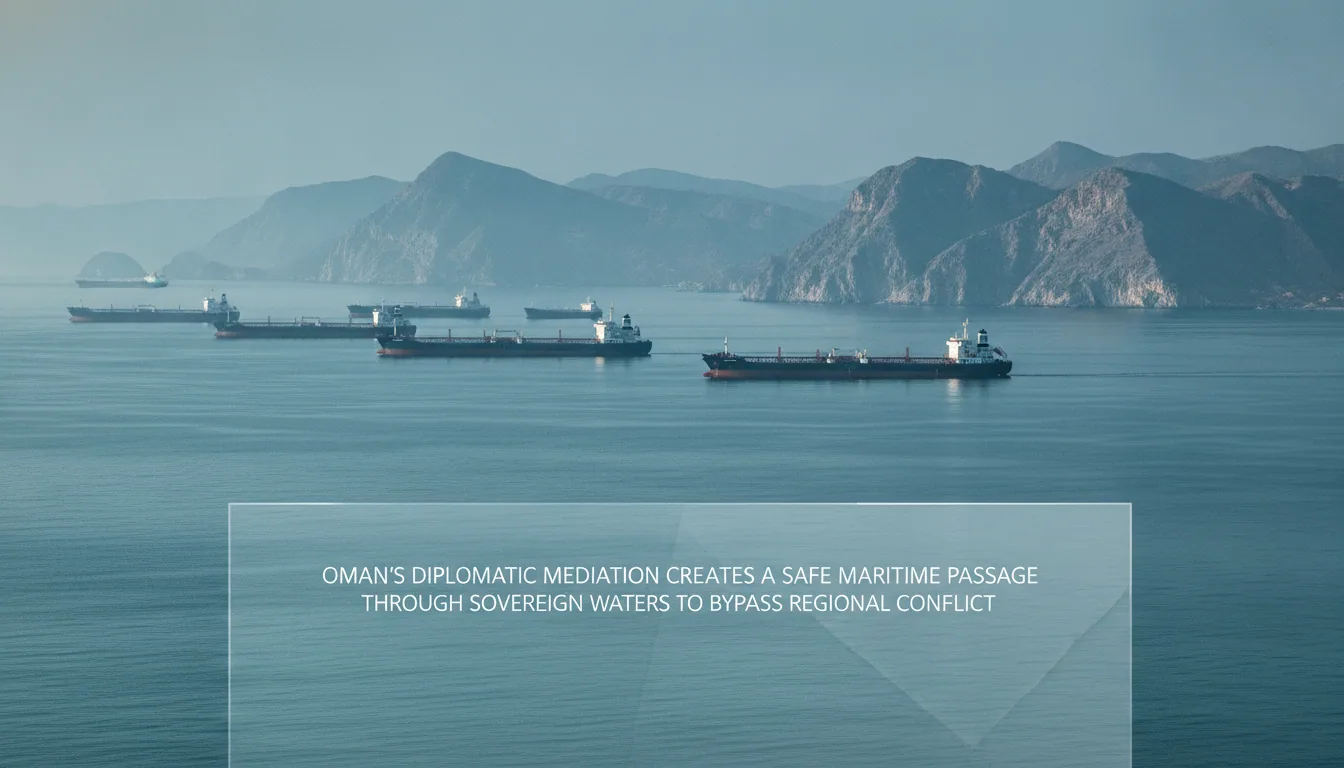
The conflict has become a war of maps and competing maritime bureaucracies. The Navy-led Joint Maritime Information Center recently expanded transit routes to pull vulnerable merchant vessels away from IRGC reach. Tehran countered by warning that all tankers must use Tehran-approved routes.
Ask the small question first: who is the borderland here? On July 4, eight commercial tankers provided a silent answer by turning back toward Iran, signaling the end of the ceasefire. This retreat of steel happened long before the strikes began.
I have heard this promise before: 1987, the Tanker War. It failed then for the reason it will fail now, because no amount of naval furniture can repair a broken architecture. Somewhere, a spreadsheet was quietly updated to reflect the new, higher price of a merchant sailor's life.
The Doha Marker
I have heard the promise of surgical stability before: 1991, Moscow. It failed then for the reason it will fail now, because strategic hubris cannot redact geography. Regional reports indicate that Doha negotiations are a marketplace where the sovereignty of small nations is the primary currency.
Washington claims the primary objective of this campaign is to prevent a nuclear-armed Iran. I treat this as the decorative molding of the conflict, whereas the load-bearing wall is the Strait itself. Power in this region is measured in barrels, not in the speeches delivered at the NATO summit.
Somewhere in a glass tower in Qatar, a spreadsheet was quietly updated to reflect the new price of risk. One empire strikes eighty targets while another vows to close the sea, proving that smaller nations are simply the friction in the great-power machine.
Watch one concrete marker to see if the Doha talks have any life left. Look at the next maritime communiqué from the Navy-led Joint Maritime Information Center to see if the text says tankers "shall" or "should" use the expanded transit route. If the final word is "should," the empires are lying to their publics while cutting a deal in the dark, and this new oil war in the Strait of Hormuz will be back on your screen by winter.