On 22 November 2026, Ukraine's strikes in Libya sank a 2023-commissioned Russian corvette in Benghazi harbour and damaged a military cargo vessel in the same operation — a single night's work that exposed how far Kyiv has extended its asymmetric campaign against Russian logistics infrastructure.
The Port Russia Was Not Supposed to Have
In the autumn of 1979, Soviet naval planners circulated internal assessments of Mediterranean basing options — ports that could anchor a permanent southern fleet presence beyond the Black Sea chokepoints. The documents were eventually declassified; the ambition never went away. What Moscow could not secure by treaty, it has increasingly pursued by other arrangements, and Benghazi is the latest ledger entry.
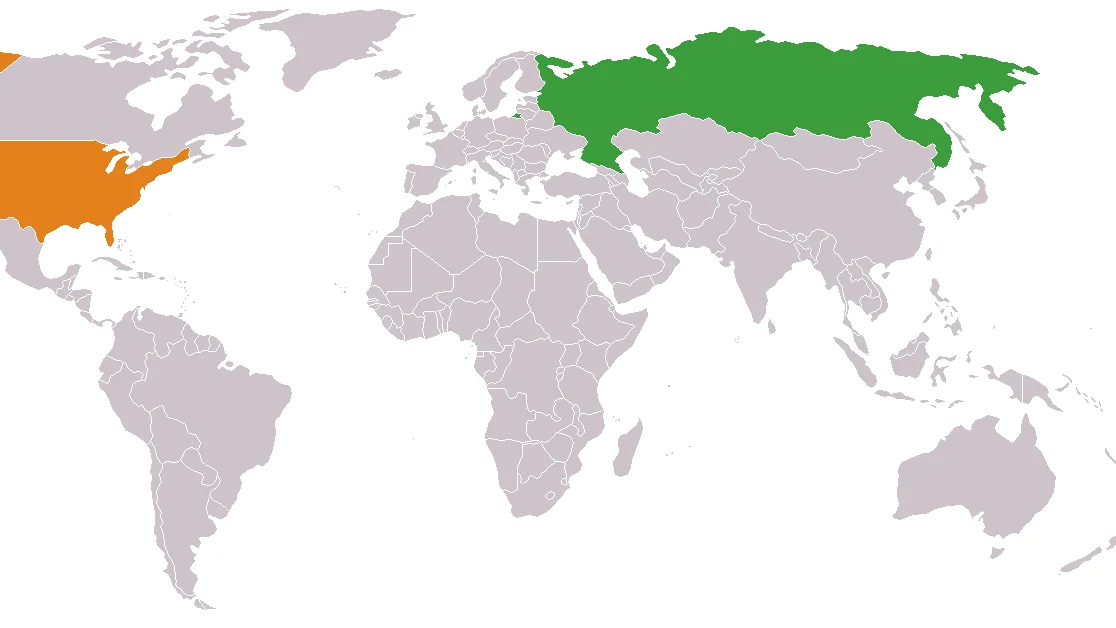
The structural logic runs through Libya's fracture. Khalifa Haftar controls the east, the Tripoli-based Government of National Unity controls the west, and the gap between them is precisely the kind of ungoverned jurisdiction where Russia's Africa Corps — the institutional successor to Wagner Group operations across the Sahel — can park assets without an inconvenient ratification process. Benghazi is not a lease. It is a habit that hardened into infrastructure.
The MV Angara is the clearest illustration of what that infrastructure looks like in practice. The cargo ship was not a warship; it was a logistics vessel, reportedly used for arms transport, the kind of unremarkable hull that moves supplies between a sustaining power and its proxy network without filing the paperwork that an official naval deployment would require. Shadow fleet logic applied to a war in Africa, refuelled through a Mediterranean port. That is the load-bearing wall.
Then there is the Merkury. A corvette commissioned in 2023 — Russia's newest register — does not make a transit stop in Benghazi. It makes a statement about permanent intent. Moscow placed a modern warship in a fractured North African port and called it neither a base nor a deployment, because naming it accurately would have required explaining what it was doing there. On 22 November 2026, seven Ukrainian sea drones provided one answer.
Twenty-Two November: What Ukraine's Strikes in Libya Did
Day 1733 of the full-scale invasion. The number itself carries no drama — the war has long since become a grinding administrative fact. What it frames is a single night's work: seven Ukrainian sea drones entered Benghazi harbour and struck the corvette Merkury at her moorings. The ship sank.
The Merkury was commissioned in 2023 — one of Russia's newest hulls, not a relic pressed back into service. Seven low-cost uncrewed surface vessels settled that account. A Ka-27 helicopter stationed on her deck went down with the ship, adding a second platform to the ledger. The cargo vessel MV Angara, used for military logistics runs across the central Mediterranean, sustained severe damage in the same operation. At least ten crew members were injured, among them both Russian and Libyan nationals; the fatality count remains unconfirmed.
President Zelenskyy confirmed responsibility on 23 November, describing the strikes as a model operation against Russian aggression. The SBU executed the mission. The Tripoli-based government denied that its facilities served as a launch point; eastern authorities under Khalifa Haftar filed a formal complaint with the United Nations. UNSMIL called for an independent investigation, registering what it termed serious concern about conflict expansion. Neither statement changes the operational outcome.
The arithmetic is blunt. A 2023-commissioned corvette, a helicopter, a logistics vessel, and a harbour's sense of safety — all gone or diminished in a single night. Somewhere in Moscow, a naval procurement file was quietly reopened.
Zelenskyy Confirms; Tripoli Denies; the UN Calls for an Investigation
Zelenskyy confirmed the operation on 23 November, calling it an exemplary response to Russian aggression. That is a press office formulation, and it tells us little about doctrine. What it does confirm is that Kyiv has decided the optics are worth the exposure.
The Tripoli-based Government of National Unity denied that its territory or bases served as a launch point. The denial is structurally necessary: reports of a secret basing agreement between Tripoli and Kyiv have circulated alongside accounts of approximately 200 Ukrainian specialists operating in western Libya, primarily at the Misrata Air Force Academy and facilities near Tripoli and Zawiya. A government that has tacitly hosted foreign drone technicians cannot publicly acknowledge the relationship the morning after a NATO-neighbouring maritime strike.
UNSMIL called for an independent investigation on the same day. The mission issued its concern in language that the wire rendered as "serious concern" — carrying the same bureaucratic weight as every UNSMIL statement since the 2020 ceasefire: considerable sincerity, limited instrument.
An independent investigation in a country divided between two governments and three dozen armed factions is not a mechanism. It is a deferral dressed as a process.
Khalifa Haftar's east Libyan administration submitted a formal complaint to the UN. Haftar controls Benghazi and the surrounding territory, and his forces have been the proximate hosts of the Russian naval presence there. His complaint is the one document in this sequence with the clearest self-interest. He did not lose a corvette. He lost the argument that his eastern statelet is sovereign ground on which foreign powers park ships safely.
Read the complaints, not the denials. The denials are furniture. The complaints name the load-bearing problem.
The Asymmetric Arithmetic: A Corvette for Seven Drones
The Merkury had been in service for three years. Commissioned in 2023, it was not a museum piece traded in lieu of something better — it was one of Russia's newest warships, outfitted with the full complement of a modern corvette, including a Ka-27 helicopter on the deck when the drones arrived. Seven uncrewed surface vessels sent it to the floor of Benghazi harbour.
The price ratio between a 2023 corvette and seven mass-producible sea drones is not a footnote; it is the entire argument.
Ukraine has been pressing this arithmetic since it began dismantling Russian Black Sea prestige, and the March 2026 strike on the Arctic Metagaz — a Russian LNG tanker caught near Tripoli — was the first signal that the ledger was being extended southward. That signal was missed, or was deemed manageable. The Merkury is the correction notice.
What the Benghazi operation demonstrates is a force-multiplication principle: staging points matter more than origin points. Ukraine's borders sit over 2,000 kilometres from the Libyan coast. With approximately 200 Ukrainian specialists reportedly working from Misrata, Tripoli, and Zawiya, the distance compresses. The western Libyan infrastructure is not an alliance in the formal sense — it is a force multiplier, the difference between a strategic concept and a kinetic result.
The target logic runs directly against Russian shadow-fleet logistics. The MV Angara, damaged alongside the Merkury, was not a warship. It was a cargo vessel used for military supply runs. Ukraine is not hunting symbols. It is hunting the connective tissue — the ships that move the materiel that sustains the Africa Corps, the network that replaced Wagner's footprint and kept the Sahel within Moscow's orbit.
Libya as the Borderland It Did Not Choose to Be
Libya's 2020 ceasefire was always less a settlement than a freeze — two administrations, two legitimacies, two sets of foreign patrons, all agreeing to pause rather than resolve. The Tripoli-based Government of National Unity held the west. Khalifa Haftar's Libyan National Army held Benghazi and the east. Neither the underlying claims nor the foreign interests behind them were reconciled; they were deferred.
Ask the small question first: who is the borderland here, and who is the empire? Libya did not invite the Ukraine war onto its territory. It arrived because Russian logistics required a Mediterranean node and Haftar's east offered one, and because Ukraine, having decided to disrupt those logistics wherever they could be reached, found that the same geography applied in reverse.
The country became a surface on which others run competing supply lines — which is what happens to states too fractured to control their own coastlines.
The comparison that matters is not Libya 2020 against Libya 2026. It is Libya against any state caught between great-power projects it cannot refuse: the asymmetry between Haftar's eastern administration and Tripoli's western government is real, but neither party chose to host this contest at its present intensity.
Haftar filed a UN complaint; Tripoli denied its bases were used. How much tactical coordination existed between the SBU and Tripoli remains undisclosed, as does the precise launch route of the drones. What is disclosed is the pressure: each strike absorbed by Libyan soil narrows the already thin margin within which a political settlement might still be possible.
What to Watch: One Marker, One Question
The institutional process to track is straightforward: UNSMIL called for an independent investigation on 23 November. Watch the Security Council session language when that request is formalised. If Tripoli's denial holds in the chamber, the fiction of a third-party operation remains usable by all parties and Ukraine retains deniability as a tool.
If the denial is revised, even by omission, the secret basing arrangement reported by multiple outlets becomes a matter of diplomatic record, and NATO's southern-flank governments face a question they have not publicly prepared to answer.
The second variable is harder to resolve. The exact number of Russian fatalities remains unconfirmed; only injury figures — ten personnel including both Russian and Libyan nationals — have been publicised. That gap is not incidental. Casualty opacity is how escalation thresholds are managed, and Moscow has strong reasons to keep the number unverifiable.
One unknown would change the read entirely: confirmation that UK-based drone production contributed hardware to the Benghazi mission. Ukraine's strikes in Libya sent a 2023-commissioned corvette to the harbour floor with seven sea drones. If the hardware chain runs through British manufacturing, this is no longer purely a Ukrainian asymmetric operation. It is a NATO logistics question wearing a Ukrainian flag, and the communique writers will need a better verb than "concerned."