The First Drop: Global Fossil Emissions Fall — by a Little, for Real
2026 is the year the climate hit a breaking point — and the damage kept rising anyway.
For the first time in recorded history, global fossil fuel CO2 emissions fell in a year when the economy was still growing. The Global Carbon Project's 2026 numbers: 38.2 billion tonnes, down 0.4% from the year before. No recession to explain it. No pandemic. Just a real, if modest, structural signal buried inside a very noisy year.
Part of the noise was the Hormuz oil shock. When the Iraqi-Iranian conflict choked the strait, oil prices spiked in a way that functioned as an involuntary carbon tax of over €200 per tonne, well above what any climate negotiator has managed to legislate. Oil emissions fell 1.9%. Electric vehicle sales jumped. Freight operators scrambled for alternatives. It was not a policy success. It was a price signal doing what price signals do, and doing it brutally.
Here is the honest read: 0.4% is a signal, not a solution. The remaining carbon budget for staying below 1.5°C stands at around 150 billion tonnes. At 38.2 billion tonnes per year, that budget runs out in roughly four years even at 2026 levels. A fraction-of-a-percent dip does not change that arithmetic in any meaningful way.
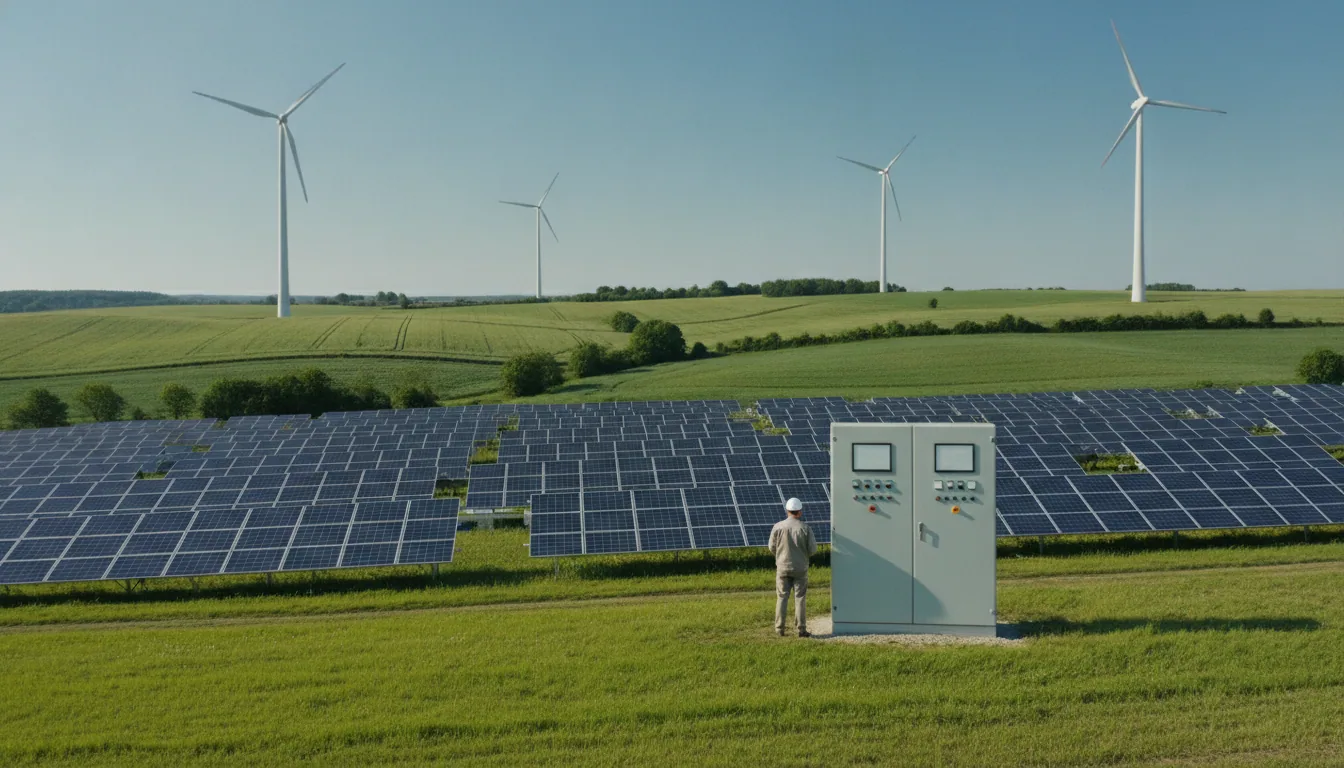
What the 0.4% does prove is narrower but still real. It shows that emissions can fall while GDP grows, which economists spent decades arguing was structurally impossible. It also raises the uncomfortable question: how much of this decline survives a calmer strait? The structural gains, in solar and wind and EVs, are durable. The Hormuz effect is not. Separating those two threads is the work of the next twelve months.
What 1.47°C Actually Costs: Heat, Ice, and Category 5 in 48 Hours
The 0.4% emissions cut is real. The physics running underneath it is indifferent to good news.
In the first half of 2026, surface temperatures reached 1.47°C above pre-industrial levels, placing the year among the four warmest in the instrumental record. That number carries a lag: the heat driving today's disasters was largely locked in by emissions from years or decades ago. A single year's small decline cannot unlock what thermal inertia has already banked.
El Niño amplified the bill. The Niño3.4 index peaked at 1.6°C in June, adding a natural forcing layer on top of the human-caused baseline. Western Europe recorded consecutive record-breaking heatwaves.
Rhine water levels at Kaub fell below 10 centimetres in mid-August, disrupting roughly 80% of German inland waterway freight. Infrastructure built for a twentieth-century climate is now a systemic liability.
The same warm ocean that baked Europe fed Hurricane Polo. It reached Category 5 within 48 hours — one of the fastest storm intensifications ever recorded. Rapid intensification like this is precisely what climate models predicted when sea-surface temperatures rise: a narrower window for evacuation, a larger window for catastrophe.
Antarctic sea ice hit its third-lowest extent since satellite monitoring began in 1979. Ice loss at that scale is not just a polar footnote. It disrupts ocean circulation, accelerates sea-level rise, and reduces the planet's reflectivity — each effect feeding the next.
This is the core asymmetry of 2026. Emissions bent downward by a fraction. Physical damage continued on its own trajectory. The honest question is not whether the 0.4% drop matters — it does — but whether it arrived early enough to change that second line.
Fire, Haze, and a Shophouse in Phuket: The Human Ledger
By mid-November 2026, the global death toll from extreme weather had reached the high tens of thousands. That number will rise. Year-end audits of heat mortality always do, because heatwaves kill quietly, in bedrooms and care homes, and the cause of death gets recorded as cardiac arrest.
Indonesia's wildfire season, its worst in eleven years, burned long enough and wide enough that Jakarta issued a formal diplomatic haze apology to its neighbours. The gesture was unprecedented. It was also an admission that the smoke crossing borders is no longer an occasional misfortune but a recurring cost borne by people who had nothing to do with the land-clearing decisions that started the fires.
In August, a rock-ice avalanche on the Nepal-China border killed over 1,300 people. The mechanism is familiar to glaciologists: warming destabilises the ice that holds mountain slopes together. The death toll is not.
Then there is the shophouse in Phuket. A building, a hot day, an electrical system that was never designed for sustained temperatures like those in the 2026 regional heatwave. The wiring failed. People died. It is not a dramatic story. That is precisely the point. Cascading risk made lethal and local looks less like a disaster film and more like a maintenance log that nobody read in time.
The honest framing: even a year of falling emissions does not stop the damage already baked in. The ledger stays open.
What was built as infrastructure is quietly becoming a systemic risk — and the balance sheet is starting to say so out loud.
Ten Centimetres on the Rhine: When Climate Becomes a Balance-Sheet Problem
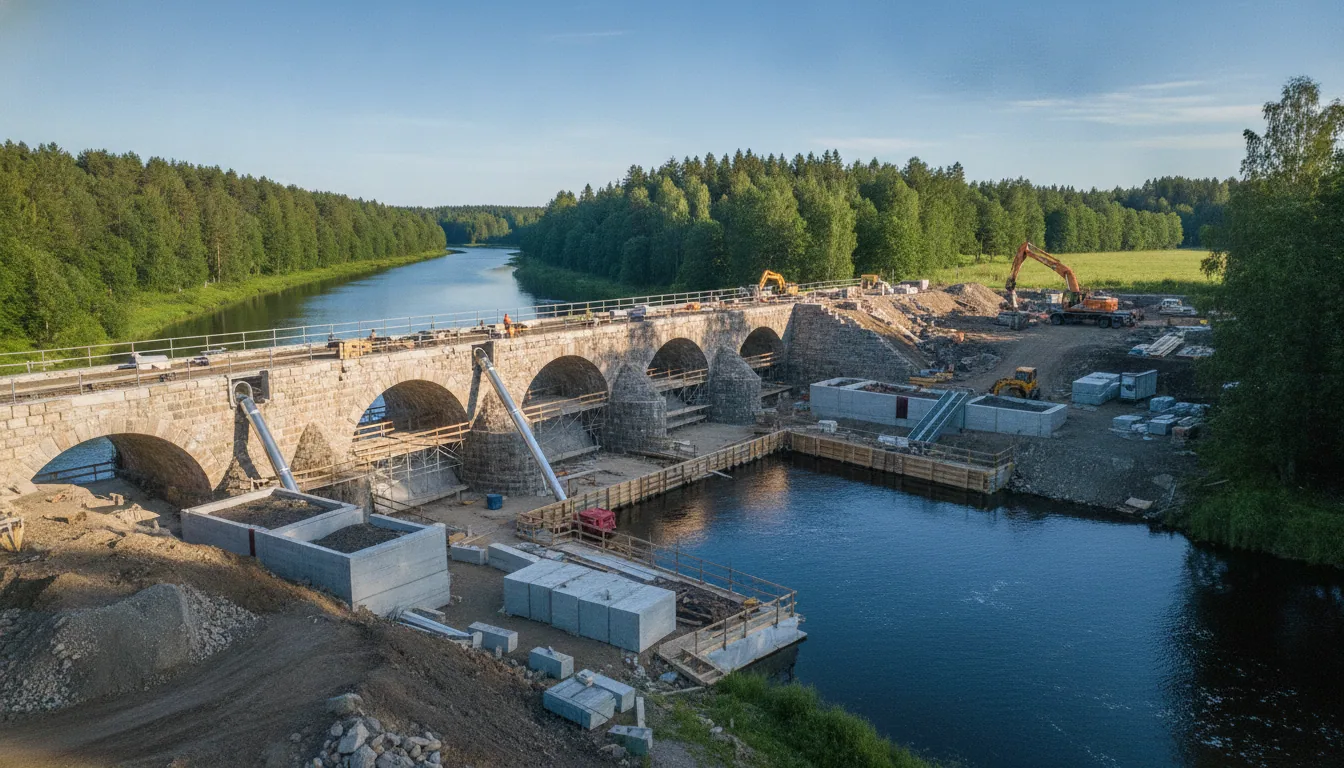
At 06:00 on 14 August 2026, a gauge at Kaub — a narrow bottleneck carved between the cliffs of the Middle Rhine — recorded exactly 10 centimetres of navigable water. Barges carrying diesel, grain, and chemicals turned back. By noon, 80% of German inland waterway freight had stopped moving.
The number sounds abstract until you trace what it touches. Fuel deliveries delayed. Chemical plants idled for lack of feedstock. Grain sitting in barges, heating slowly in the August sun.
A single low-water reading in one German gorge, and the ripple spread across sectors that had no obvious connection to a drought. This is what cascading risk looks like in practice — not a single catastrophe but a chain of small failures, each one triggering the next, across systems that were never designed to hold hands.
The European Environment Agency put a price on it: climate-related infrastructure failure cost the EU an estimated 1% of GDP across 2026. One percentage point sounds modest. It is roughly the annual economic output of a mid-sized EU member state, gone in one year.
The honest framing is that this is not a future liability anymore. The roads, rail networks, ports, and waterways of Europe were engineered for a twentieth-century climate. That climate no longer exists. What was built as infrastructure is quietly becoming a systemic risk — and the balance sheet is starting to say so out loud.
Antalya 2026: The Summit That Named the Tipping Point
Previous summits argued about whether 1.5°C was still achievable. Antalya stopped arguing. COP31, the first climate summit jointly led by Turkey and Australia, opened in November with a formal acknowledgment that the world is on track to exceed the Paris Agreement's headline target. That sentence had never appeared in official UN consensus text before.
The shift in language was not a defeat dressed up as honesty. It was a different question. Instead of "how do we prevent overshoot," the negotiations centred on "how do we manage it" — what levels of temporary exceedance are survivable, which ecosystems cross irreversible thresholds, and who pays for the difference. The Global Carbon Project puts the remaining 1.5°C budget at roughly 150 billion tonnes of CO2. At 2026 rates, that is under four years of current emissions. The number does not leave room for ambiguity.
Compare this to Copenhagen 2009, where delegates fought over whether to name a temperature target at all, or Paris 2015, which enshrined 1.5°C as aspiration without enforcement. Antalya is the first summit where the aspiration officially became a forecast. That is a harder, more useful place to build from.
One concrete output deserves attention: the Global Initiative for Information Integrity, launched at COP31 to counter climate disinformation in advertising. It is a small mechanism against a large problem, and its track record is zero — it is four weeks old. But the acknowledgment that bad information is an infrastructure problem, not just a public-relations nuisance, is the right frame.
The summit also ran alongside a 2026 AI milestone: the FETTUCCINE framework demonstrated brain-to-text decoding on a mobile device. Negotiators used similar AI tools for real-time translation and document synthesis. The same technology that could accelerate climate modelling can also generate disinformation at scale. Antalya named that tension without resolving it.
Estonia's €3.6 Billion and the Honest Scorecard
The Estonian Climate Ministry's proposed €3.6 billion for nature restoration and climate action through 2030 is real money. At roughly €720 million per year against a country with 1.3 million people, it works out to approximately €550 per Estonian annually — more than most European governments spend per capita on climate-specific action. What is not yet clear is whether the allocation is a lever or a line of gestures dressed up as a strategy.
That distinction matters enormously. A budget that funds measurable peatland restoration, grid-connected renewables, and flood-resilient infrastructure moves the needle. A budget that funds awareness campaigns, branding exercises, and consultancy reports does not. The Ministry has not yet published a performance framework with binding emissions and restoration metrics tied to individual line items. Until it does, the €3.6 billion is a promising envelope without a verified address.
Into this ambiguity walked artist Toomas Pikhof, whose "Murdepunkt" exhibition opened at Tallinn Botanic Garden in 2026. Sixteen abstract paintings, one diagnosis: society and climate are fracturing at the same joint. "Education is at a breaking point because society itself is at a breaking point," Pikhof said. The paintings do not solve the budget problem. But they name it honestly, which is more than most line items manage.
The honest scorecard for 2026, then: global emissions fell 0.4% for the first time in history, and the physical damage kept rising anyway, because physics does not wait for policy paperwork. This is what a climate breaking point actually looks like — not a clean threshold crossed, but a year where the structural shift and the physical toll ran on entirely separate tracks. Estonia has committed serious capital. The proportionate next step is straightforward — require every funded project to publish annual, independently verified numbers. What gets measured moves the needle. What doesn't, gets a certificate and a photo.