An Ordinary Thursday Afternoon, and Then Something Unprecedented
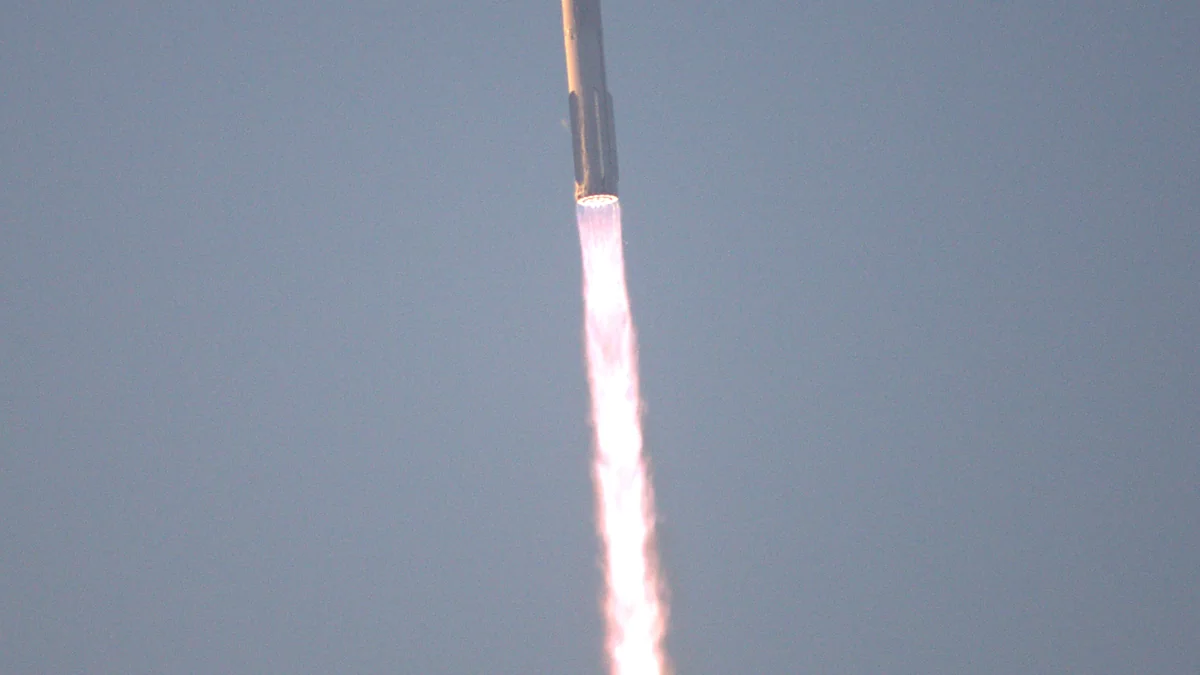
At 4:47 p.m. on a Thursday in Texas, the largest rocket ever built lifted off and headed for orbit. That sentence, by now, has the cadence of routine. Here is the part that does not: roughly twenty-two hours later, the ship came back and was caught, mid-air, by a pair of mechanical arms bolted to the same tower it had launched from. Not landed. Caught.
That image is worth sitting with before anything else.
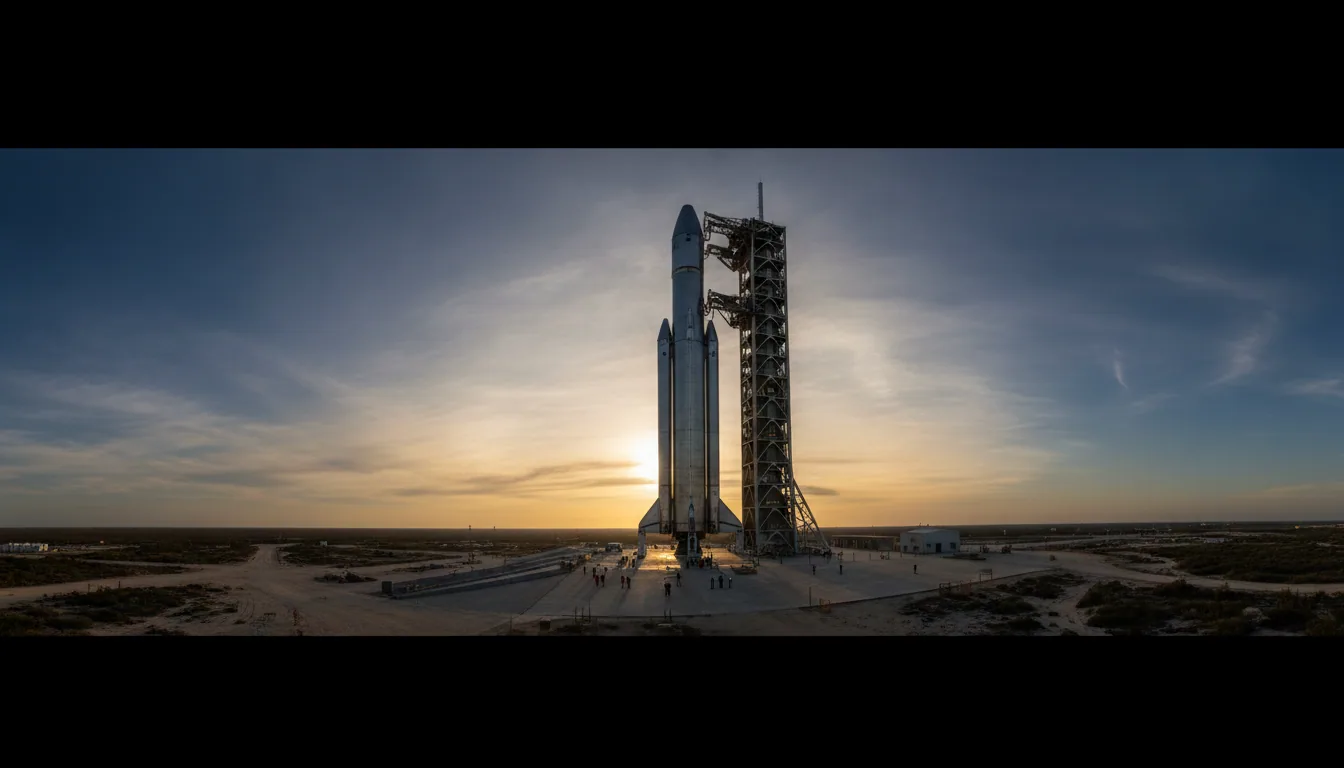
Starship Flight 15 carried Booster 22 and Ship 42, both built to what SpaceX calls the Block 3 standard — the most mature hardware the program has yet produced, incorporating lessons from fourteen previous flights into every weld and sensor. Ship 42 had a nickname stenciled on its hull: "Don't Panic." The humor was apt. This was only the second mission the company officially framed as operational rather than experimental, a subtle shift in language that carries real weight. Test flights explore the edge of the possible. Operational flights are supposed to be repeatable.
The Federal Aviation Administration issued the modified launch license — document VOL 23-129, Revision 10.0 — on the very day of the flight. That detail is easy to glide past, but it speaks to something genuinely new: a regulatory relationship being written in real time, iteration by iteration, alongside the engineering itself. Fifteen launches into the program, the paperwork and the rocket are still growing up together. The 15th total launch, the 2nd operational flight, a Thursday afternoon in November. And then something that had never happened before.
The Last Unsolved Problem in Rocket Reusability
SpaceX had caught Super Heavy boosters from the sky three times before Flight 15. The footage never got less astonishing: a booster the height of a fifteen-story building slowing itself to a hover and sliding into two mechanical arms like a letter into a slot. And yet, each time it happened, the harder half of the problem remained untouched. The upper stage — Ship itself — had never come home.
That asymmetry matters enormously, and not just for the optics of a clean landing. A rocket's first stage is essentially a fuel tank with engines. Powerful, expensive, yes — but its job is to burn for roughly two minutes and fall back toward the launch site, never leaving the lower atmosphere. The upper stage does something categorically different. It reaches orbital velocity, traveling at roughly 7.8 kilometers per second, absorbing the full violence of reentry, and surviving a thermal load that would turn most materials into vapor. Returning it intact is orders of magnitude harder than catching a booster. The engineering is not a larger version of the same problem. It is a different problem.
Which is why ship recovery had been openly cited as the primary reusability bottleneck for the full Starship system. Without it, SpaceX was doing something economically similar to buying a commercial airliner, flying it once, and dropping the fuselage into the ocean. The Super Heavy booster is formidable hardware. Ship 42 is the more expensive, more complex piece — carrying the payload bay, the heat shield, the orbital maneuvering system, and the six Raptor engines that do the work above the atmosphere. Catching the booster three times was an extraordinary achievement. It was also, bluntly, half the equation. The Starship Flight 15 mission was the attempt to solve the other half.
Twenty-Six Satellites, Three Watchful Eyes, and a 276-Kilometer Orbit
One hour and seventeen minutes after liftoff, Ship 42 opened its payload bay and released 26 Starlink V3 satellites into the dark. The rocket had not simply survived launch; it was already doing its job. That transition — from experimental vehicle to operational delivery truck — is the quiet revolution buried inside this flight.
The orbit Ship 42 settled into was deliberately modest: approximately 276 kilometers above Earth, nearly circular, chosen with the controlled return in mind rather than any operational ambition. For context, the International Space Station cruises at roughly 420 kilometers. At 276 kilometers, atmospheric drag is a constant whisper, which suits a mission designed to come back down on a precise schedule rather than loiter indefinitely.
Three of those 26 satellites carried something unusual. SpaceX mounted specialized cameras on them to watch Ship 42's heat shield during reentry, turning the freshly deployed payload into an observation platform looking back at the vehicle that released it. Here is the strange part: the ship's passengers became its inspectors. That kind of real-time thermal data, gathered from orbit, feeds directly into understanding how the heat shield behaves under actual reentry conditions, not simulated ones.
The mission ran for 22 hours and 32 minutes from liftoff to landing burn, a new record for the Starship program. That number matters less as a trophy and more as a demonstration of sustained, controlled operations. A sprint tells you a vehicle can survive; a marathon tells you it can be managed. Twenty-two hours is long enough to establish orbital rhythms, run diagnostics, and execute a deorbit burn on a timetable, not an emergency.
How the Starship Upper Stage Came Back to Its Own Tower
Sometime after midnight on November 14, 2026, a 50-meter rocket fell out of the sky over the Gulf of Mexico — and was caught by the same tower it had left less than a day before.
Getting Ship 42 to that moment began quietly, with a single Raptor 3 engine. Not a cluster of them, not maximum thrust. One carefully aimed push out of orbit, a deorbit burn whose job was precision rather than brute force. The burn altered Ship 42's trajectory by just enough to let gravity do the rest, threading the vehicle onto a reentry arc aimed at a specific patch of Texas. The margin for error at this stage is not small. It is essentially nonexistent.
Then came the landing flip. Ship 42 had been descending mostly horizontally, using its body as a brake against the thickening atmosphere. At the right moment, it rotated — nose up, belly down, then vertical. Imagine a falling leaf deciding, at the last second, to become a javelin. The transition has to be completed within a narrow window of altitude and velocity, or nothing that follows works.
Mechazilla's chopstick arms closed around Ship 42's hull on November 14, the first time in history that an orbital-class upper stage had been recovered this way.
The numbers involved are almost unkind to describe: the arms had to meet a vehicle traveling at hypersonic speeds moments earlier, now decelerating hard, with structural tolerances and timing measured in fractions of a second. Autonomous guidance systems made the final calls — no human hand could move fast enough. For a moment, the tower held the ship. The ship held together. That was the whole plan, and it worked.
What the Fuel Alarm Actually Tells Us
Booster 22 never made it back to the tower. During the boostback burn, the autonomous GNC system detected a low fuel mass alarm and made a decision in milliseconds: abort the catch, divert to the Gulf of Mexico, and protect the infrastructure. The booster performed a controlled splashdown, and the flight termination system was subsequently triggered following the landing burn over water.
Compare that to how rocket programs handled anomalies a generation ago. The default instinct was to push through, to squeeze the last margin out of a vehicle because the vehicle was, by definition, expendable. You were not protecting anything that would fly again. Booster 22 changed the calculation. The tower — Mechazilla, with its chopstick arms and the launch mount beneath it — represents a fixed, irreplaceable asset. The booster is a replaceable one.
An autonomous system that aborts a recovery attempt to protect a billion-dollar tower is not a failure signal. It is a maturity signal. The GNC did exactly what a well-designed safety system should do: it ranked the risks correctly and acted without waiting for a human to second-guess it at the worst possible moment.
Elon Musk acknowledged afterward that the booster was "slightly low on fuel." What caused the shortfall — sensor error, actual propellant deficit, something in the boostback burn profile — remains unknown. That open question matters for the next flight. But the abort itself? That was the system working.
What Flight 15 Unlocks — and What It Does Not
A single successful catch does not a transportation system make. But it removes the last major structural objection to one, and that is a different kind of milestone entirely.
The numbers carry weight. SpaceX is targeting a weekly Starship flight cadence by the first half of 2027, a figure that would have sounded delusional twelve months ago and now merely sounds ambitious. Gwynne Shotwell has placed propellant transfer tests — the technical prerequisite for NASA's Artemis lunar landing — in the same early-2027 window. Ship 42's successful tower catch removes what SpaceX itself had described as the primary reusability bottleneck. One domino down; several still standing.
The financial stakes are not abstract. SpaceX carries a valuation of approximately $1.9 trillion, a number that rests, at least partly, on the credibility of full reusability. The Flight 15 mission is a de-risking event in the financial sense as much as the engineering one. When a single vehicle class is supposed to serve Starlink, Artemis, and eventual Mars logistics, every successful recovery is a data point that the architecture is real.
What we do not yet know is equally honest. The root cause of Booster 22's fuel sensor alarm remains undiagnosed. Ship 42's refurbishability after its first tower catch is unproven. The road to orbital propellant transfer is mapped but not yet walked. Starship Flight 15 brought the rocket home — and with it, the open question of how quickly a species can learn to leave.