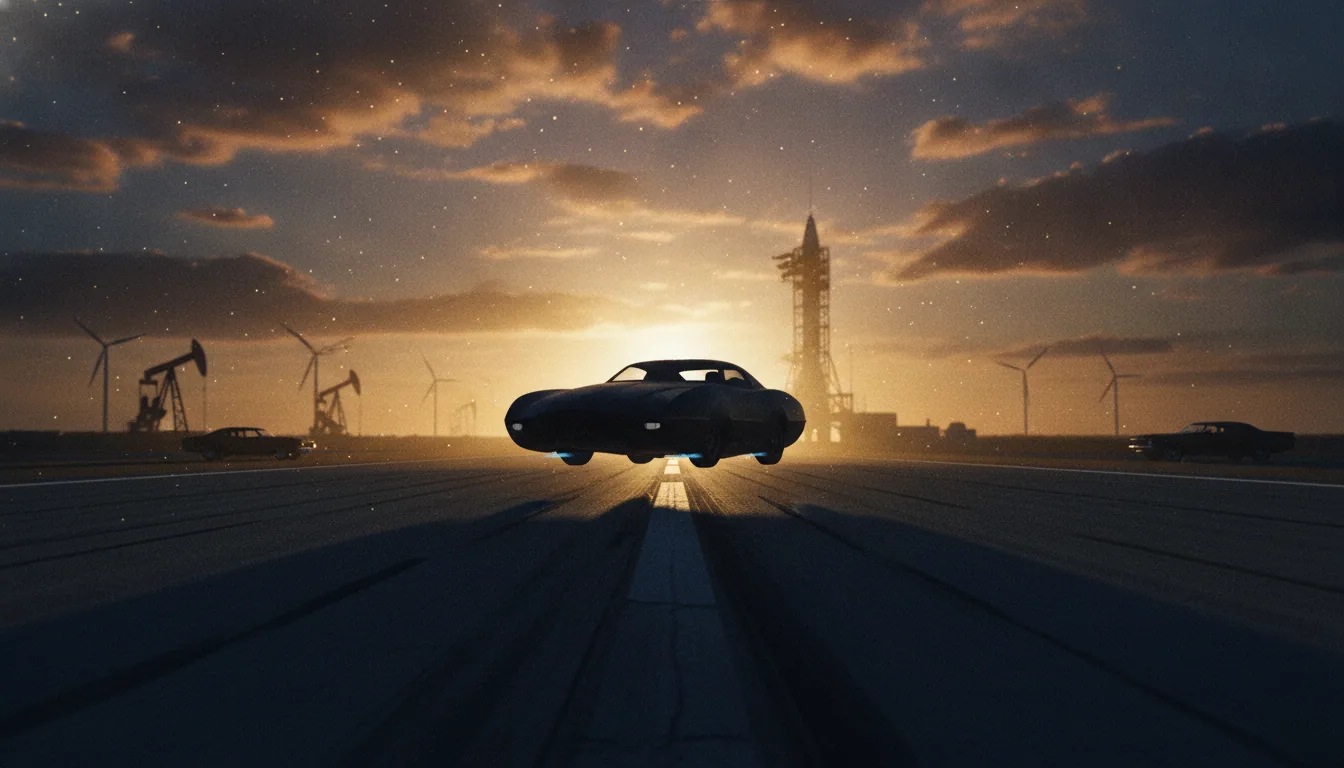
One October Afternoon, the Tesla Roadster Flying Version Left the Ground
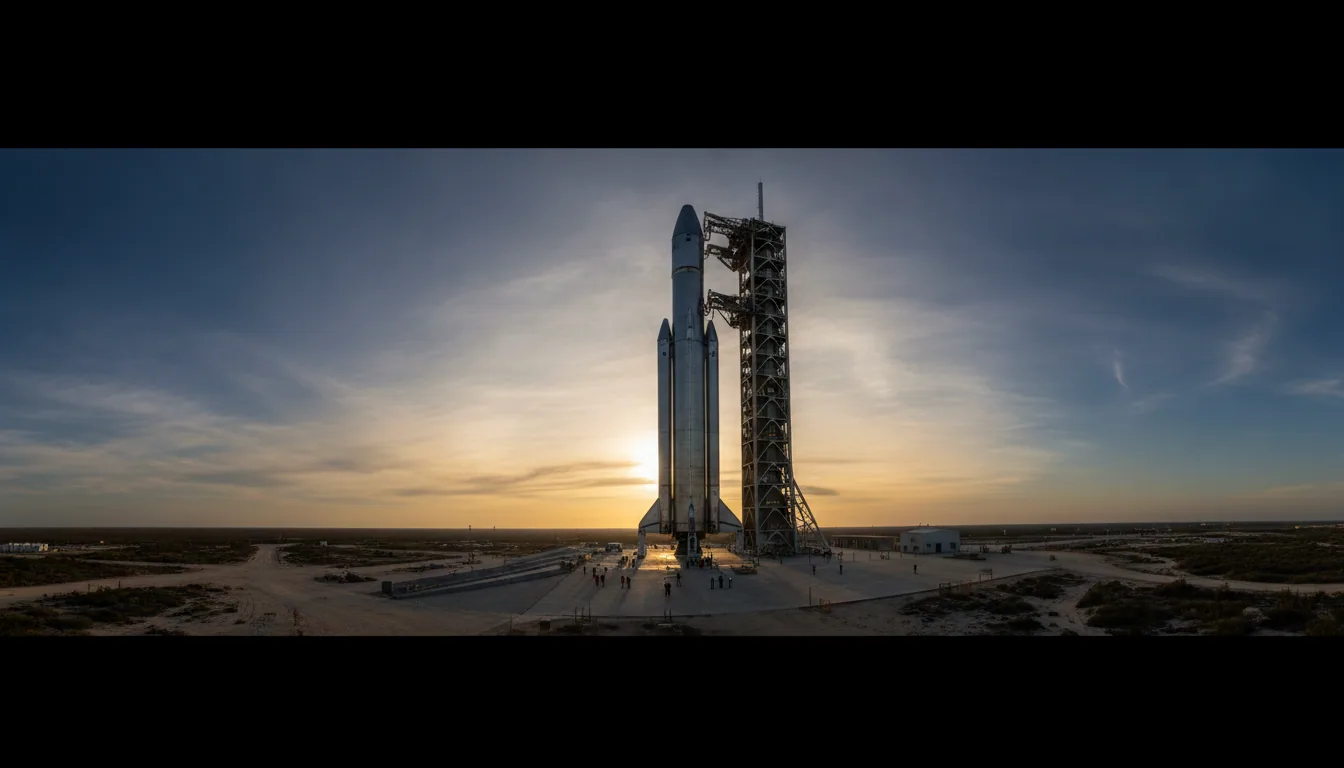
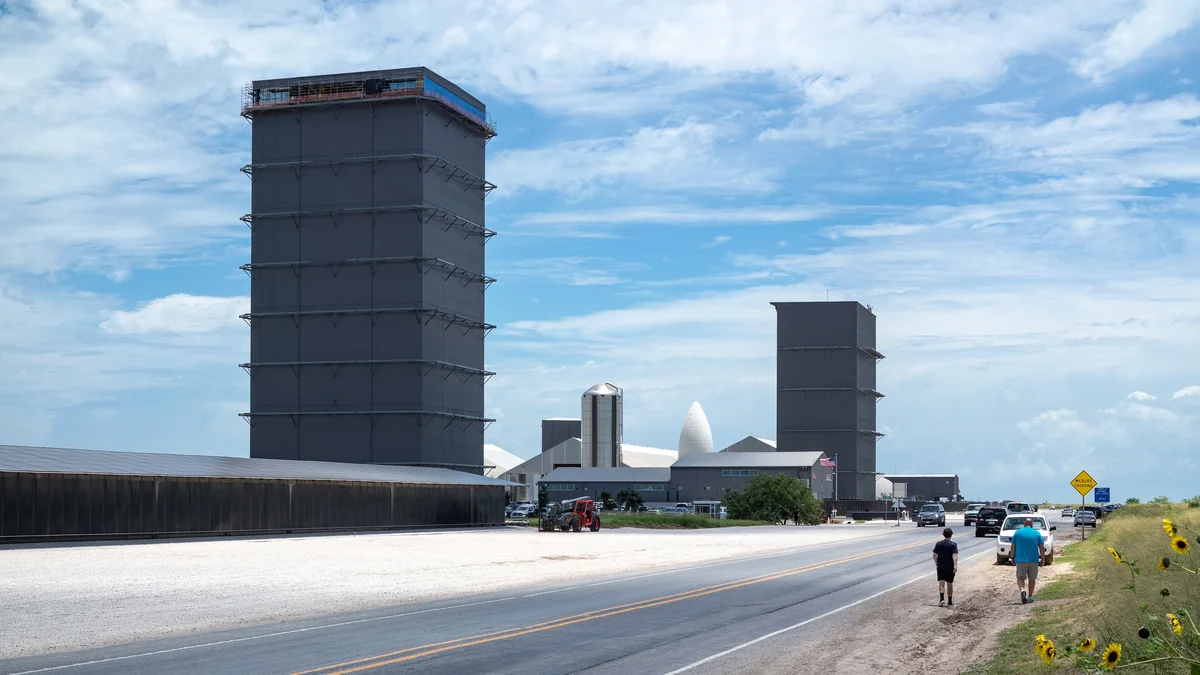
The Tesla Roadster flying version made its first confirmed public appearance on October 15, 2026, at McGregor, Texas — a test site where ordinary things do not happen. Rockets detonate on purpose there, engines scream at full thrust while engineers scribble numbers, and the air carries a permanent suggestion of something about to be proved.
So when a low, dark shape crouched on the tarmac and then, briefly, wasn't on it anymore, the engineers watching had some context for the spectacle. The rest of us did not.
Elon Musk's announcement was characteristically modest: "Well, it worked. Flying cars are real." Nine years after the second-generation Tesla Roadster was first revealed to the world in 2017 — with a production date of 2020 that the calendar made a fool of — the vehicle had finally done something undeniable. It had left the ground.
Tesla presented three configurations at McGregor. The Performance trim is the closest thing to a conventional sports car in the lineup. The Thrust variant adds the cold-gas thruster package for acceleration and cornering beyond what any tire can achieve.
Then there is the Rocket: single seat, available by invitation only, and named without much ambiguity about its intentions. The body language of all three versions borrows deliberately from aerospace — the design team has cited the SR-71 Blackbird and the F-35 fighter jet as primary references, and once you know that, you cannot unknow it.
Production is now targeted for 2028 at Gigafactory Texas. Whether that date holds is a question the calendar will answer. The physics questions, though, are more interesting.
The Ceiling That Rubber Built
Every car accelerating on a road is having the same negotiation with physics, whether it costs ten thousand dollars or ten million. The rubber touches the asphalt, and the asphalt pushes back. That push-back is described by the coefficient of friction, a dimensionless number that sits, for the best performance tires on the best asphalt, at roughly 1.0.
Translate that into acceleration and you get a hard ceiling of around 1.26g — the point at which the tire stops gripping and starts sliding.
That ceiling is not an engineering problem waiting to be solved with better motors or bigger batteries. It is a consequence of how surfaces interact at the molecular scale. Add more power and the wheels spin; add more torque and the wheels spin faster.
Tesla VP of Vehicle Engineering Lars Moravy put it plainly: every car on the road today is limited by one thing, tire grip. No amount of electrical engineering changes that conversation.
Now hold that thought, and consider what 0.59 seconds to 60 mph actually feels like. A blink takes roughly 150 milliseconds. In the time between two blinks, the Roadster Rocket would already be traveling at urban speed-limit velocity.
The human brain, in that same window, has not yet registered that movement has begun. At 1.26g, reaching 60 mph takes a minimum of around 2.1 seconds — a figure that already feels violent to most passengers. Getting there in 0.59 seconds requires roughly 3.5g sustained across the run.
That is not a tire's job. Tires cannot do it. No tire ever built can do it.
This is precisely why the Rocket version carries something entirely different under its carbon-fiber skin.
Ten Nozzles and a Very Large Flask
The cold-gas thruster is the least glamorous rocket technology ever invented, which is exactly why it works so well here. There is no combustion, no flame, no boom: you open a valve, compressed gas escapes at high velocity, and Newton's third law does the rest. SpaceX has used this principle for spacecraft attitude control for years, and the Roadster Rocket borrows ten of these nozzles — manufactured in COPV tanks by Hexagon Masterworks, a SpaceX-owned supplier.
Those tanks store compressed air or nitrogen at up to 10,000 psi. To feel what that means: your car tires run at roughly 35 psi. The Roadster's tanks hold pressure nearly three hundred times greater than that, packed into composite vessels totaling 600 liters.
A single 0.59-second launch run consumes about one-third of that reserve.
Underneath the car, a fan-suction system presses the chassis toward the road with up to 2g of downforce — twice the force of gravity, pointing down. The concept is not entirely new; 1970s Formula 1 teams experimented with fan cars for exactly this reason. Tesla's version uses modern electric actuators and runs continuously, meaning the car is being actively sucked onto the surface rather than passively shaped by airflow.
The thrusters are not there to keep the car airborne. They fire in bursts — forward, backward, sideways — handling the jobs that tires handle on a normal car but faster and without friction limits. Acceleration, braking, cornering.
The active rear wing handles a different job entirely: if the ADAS system detects an imminent collision, the wing retracts automatically — a detail that suggests the engineers thought carefully about what happens when a 10,000-psi system meets a fender-bender. That is engineering thinking, not just showmanship.
The Tesla Roadster Rocket: Not Quite Flying — and That Distinction Matters
Watch the footage carefully. The Roadster leaves the ground, rotates — a full barrel roll, perimeter thrusters firing in sequence around the car's body like a clock ticking through positions — and lands back on its wheels.
Your brain files it under "flying." Your brain is slightly wrong, and the difference matters more than it seems.
What happened at McGregor was a ballistic trajectory. The thrusters fire, the car becomes a projectile, and gravity collects its debt on the way down.
There is no wing generating lift, no sustained upward force negotiating with the air. It is a very precisely aimed hop — controlled, repeatable, genuinely astonishing — but the physics underneath it are closer to a long jumper than a helicopter.
Here is the number that brings the whole thing into focus. A single 0.59-second launch burns through roughly one-third of the compressed air supply. Three launches and the tank is empty.
Whatever else the Roadster Rocket is, it is not a vehicle that loiters above the asphalt at will.
The suction system tells the same honest story from a different angle. That fan-driven 2g of downforce is powerful enough, in theory, to hold the car stationary against a vertical surface — or even an inverted one. That claim is extraordinary.
It is also a claim about grip, not flight. The car would be stuck to the ceiling the way a suction cup is stuck to a window, not the way a plane is held aloft.
None of this diminishes what Musk's team built. A car that can barrel roll is not a small achievement. But calling it a flying car and meaning it the way an aircraft engineer would mean it are two separate things, and that distinction will matter considerably when the FAA enters the conversation.
It is a very precisely aimed hop — controlled, repeatable, genuinely astonishing — but the physics underneath it are closer to a long jumper than a helicopter.
Three Versions, One Long Wait, and a Very Large Deposit
The Roadster comes in three configurations: Performance, Thrust, and Rocket. That last one has a single-seat interior and arrives by invitation only. Tesla is not advertising who gets invited.
The comparison that comes to mind is not another car but a private club with a very unusual membership criterion.
The deposit to hold any reservation is $50,000. The estimated purchase price, once the Rocket trim actually reaches a customer, sits somewhere between $200,000 and $250,000. For reference, the Rimac Nevera — currently the closest thing to a rival on raw performance numbers — costs roughly the same, and it does not leave the ground.
Here is the thing that deserves to be said plainly: this vehicle was first revealed in November 2017 with a production date of 2020. That date came and went. So did several others.
The current target is 2028, which means some reservation holders will have waited eleven years from concept to delivery. The $50,000 deposit has been sitting in Tesla's accounts for most of a decade for the earliest buyers.
What the reservation list actually represents is harder to read than a price tag. These are collectors and believers and people for whom the wait itself is part of the story. The Roadster, whatever else it is, has become a test of patience as much as a test of physics.
The Question the FAA Has Not Answered
Here is the uncomfortable fact buried at the bottom of the spec sheet: the Tesla Roadster Rocket is not currently approved for use on public roads. Not in California. Not anywhere.
The vehicle that performed barrel rolls in Waco yesterday is, legally speaking, a prototype on private land.
The regulatory problem is not trivial. FAA rules govern anything that achieves powered flight in American airspace, and the agency has not yet ruled on where a car that "hops" to two or three meters using SpaceX-derived thrusters actually falls in the legal taxonomy.
Is it an automobile? A low-altitude aircraft? Something that requires a pilot's certificate alongside a driver's license?
Nobody has formally answered that question, because nobody has formally asked it on behalf of a production vehicle.
The unknowns compound. Tesla has not published the recharge time required to refill a 600-liter tank to 10,000 psi after a hard run. The final curb weight, which will carry the mass of those tanks plus the fan suction system, remains unconfirmed.
European and Asian type-approval is an entirely separate labyrinth.
These are not reasons to dismiss the machine. They are the most interesting part of the story. Every genuinely new technology arrives wearing a legal blank stare, because the rules were written for the last thing that existed.
The question the FAA has not answered about the Tesla Roadster flying version is the same question every era faces when something refuses to stay in its category: what do you call it, and who is responsible for what it does next?