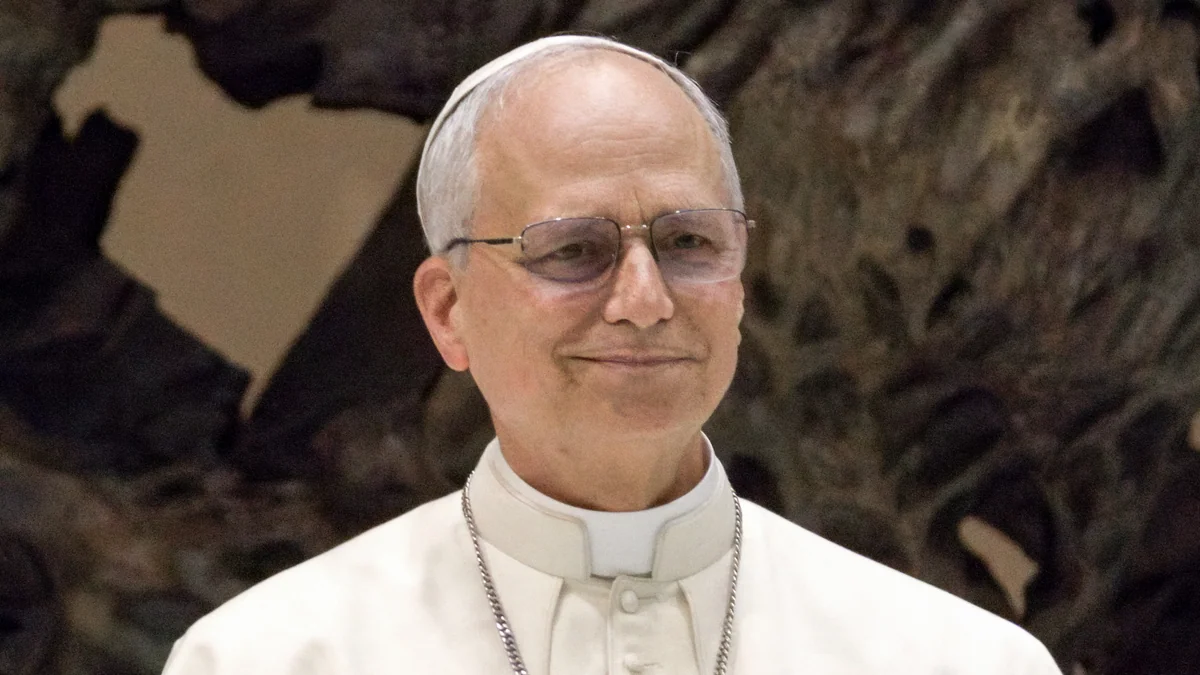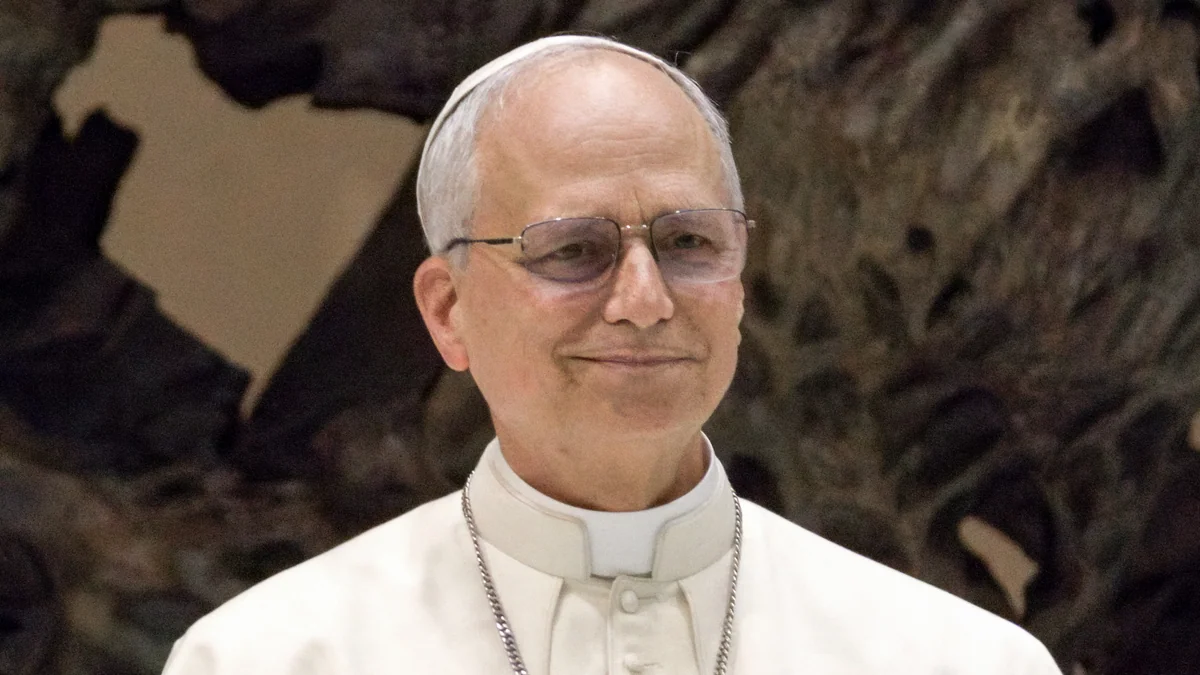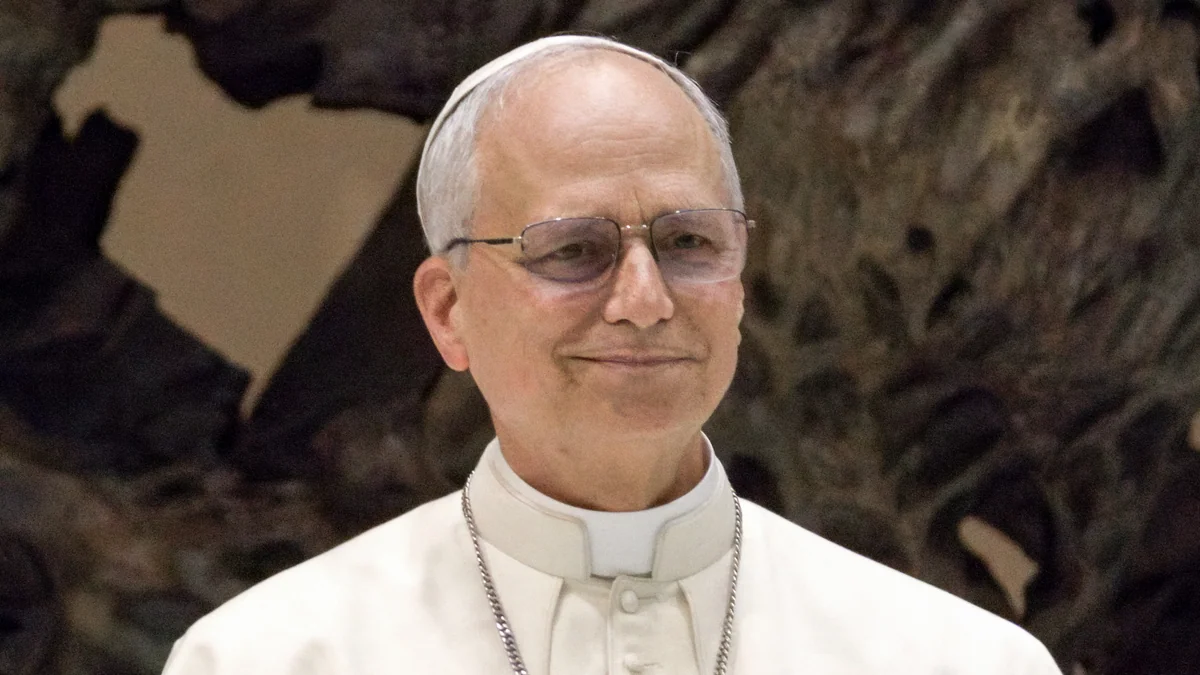
Leo XIV landed in Buenos Aires on November 8, 2026, three years into Javier Milei's presidency. His central challenge: Argentina's theology of austerity has pushed 9.7 million people below the poverty line while delivering the country's first budget surplus in fourteen years.
Buenos Aires, November 2026: Two Doctrines in the Same Room
When John Paul II landed in Warsaw in June 1979, the Polish state apparatus understood immediately that the visit was not a pastoral courtesy. A pope on home ground is a structural event. The Warsaw comparison is tempting but breaks at the obvious joint: Leo XIV is not arriving to rally a people against a foreign occupation.
He is arriving to contest a doctrine held by a freely elected president, in a democracy that is, by its own account, working.
Leo XIV touched down in Buenos Aires on November 8, 2026, the first pontiff to set foot in Argentina in nearly forty years. The visit fell three years into Javier Milei's presidency, which began on December 10, 2023, and which has used every one of those years to dismantle the architecture of the Argentine state with what its author calls a chainsaw. The Vatican seat itself has changed hands in the interval: Pope Francis died in April 2025, and his successor Leo XIV inherited both the office and the unfinished argument.
The collision that followed is not personal, whatever the tabloid framing. Milei has described social justice as "a moral aberration and theft." Leo XIV holds that "the economy must be at the service of the people, not the people at the service of the economy."
Two complete and incompatible moral systems landed in the same capital on the same November week. One runs the government. The other holds the loyalty of roughly 90 percent of Argentines who identify as Catholic. That is the structural fact from which everything else follows.
The Chainsaw as Theology of Austerity
Javier Milei does not describe himself as a reformer. The word he reaches for is anarcho-capitalist, and the distinction matters. A reformer adjusts the state; an anarcho-capitalist regards the state itself as the original violence.
The chainsaw - the motosierra that became his campaign symbol and governing emblem - was never mere theatre. It was a doctrinal statement about what government spending is and where it comes from.
The doctrinal claim is worth stating plainly, because it rarely survives translation into wire copy. Milei has said in direct terms that social justice is "a moral aberration and it is theft." Not a policy disagreement. Not a question of timing or fiscal space.
A theft - which is to say, a crime against the person who earns and the future generation that will pay. Fiscal discipline, in this framework, is not cruelty deferred; it is rectitude owed. The theology of austerity - a phrase Milei's administration has applied to its own programme - casts cuts to the present as a moral debt to the future. The pope arrived with a competing account of exactly the same transaction.
The numbers his team presents as vindication are not trivial. Argentina recorded its first budget surplus in fourteen years at the end of 2024, a marker the administration treats as the load-bearing exhibit of its entire argument. By mid-2026, inflation had reached its lowest level in five years - a figure that in any other Argentine context would constitute a small miracle.
These are real facts, and they deserve precise acknowledgement before the analysis moves on. What they do not resolve is the question the papal visit placed back on the table: a surplus is an accounting identity, and what it subtracts from matters as much as what it adds.
What the Ledger Carries: 9.7 Million Lines
The surplus is real. Argentina's first balanced budget in fourteen years is a verifiable achievement, and Milei's economists have earned the right to cite it. The question Leo XIV brought to Buenos Aires was simpler: balanced against what.
The poverty rate stood at 32.3% in the first half of 2026, up from 28.2% in late 2025. Behind that figure sits a more concrete number: 9.7 million Argentines below the poverty line. The surplus and the poverty count are not separate stories. They are the same account, read from different columns.
The specific line items Leo XIV named were cuts to subsidies for retirees and people with disabilities. These are not abstractions. They are the structural cost of the chainsaw - the rows where the arithmetic actually landed, on populations with the least room to absorb it.
The Pope did not dispute the fiscal logic. He disputed the distribution of its weight.
There is a third ledger entry that resists easy quantification. Argentina's youth emigration has been accelerating as stabilisation ground forward, and Leo XIV's plea - that the government work to keep young people home - should be read in its economic context, not only its pastoral one.
A country that balances its books by exporting its next generation of taxpayers has purchased the surplus on credit. The repayment terms will not appear in this quarter's figures.
The poverty rate is the number to watch. If it falls measurably through the second half of 2026, Milei's argument that the pain is transitional gains ground. If it holds above 30%, the ledger does not close the way the surplus photograph suggests.
A country that balances its books by exporting its next generation of taxpayers has purchased the surplus on credit.
The Pope's Critique, Stripped to Its Load-Bearing Parts
Leo XIV arrived in Buenos Aires on November 8, 2026, and the central line of his address was short enough to fit on a placard: "The economy must be at the service of the people, not the people at the service of the economy." Eleven words against a doctrine. The sentence does not read like improvisation.
The full address was wider than that one clause. Leo XIV called on the government to safeguard democracy, to protect the unborn, to keep young Argentines from emigrating. That range matters.
A critique confined to economic policy is easier to dismiss as ideology; a critique that moves from fiscal cuts to democratic norms to demography is harder to bracket. When a pope tells an elected president that power has limits, the warning is structural, not pastoral.
That is the load-bearing wall. The rest is moulding.
The tone is also new. Pope Francis, who died in April 2025, spent his final years maintaining a studied distance from Milei's project - diplomatic enough to receive him at the Vatican in February 2024, careful enough not to convert the meeting into a public condemnation.
Leo XIV is not repeating that posture. The specificity alone marks the difference: Francis spoke in principles, Leo names the cuts - subsidies for retirees, support for people with disabilities. A principle can be absorbed; a named cut cannot.
The hardening is not rhetorical. It reflects what three years of data now show, and what a poverty rate of 32.3 percent makes difficult to argue around.
From 'Representative of Evil' to Formal Protocol
During his 2023 campaign, Milei called Pope Francis "the representative of evil on earth." The charge was not rhetorical excess - it was doctrinal. Francis had spent a papacy producing texts that read, from the anarcho-capitalist standpoint, as the Social Doctrine of the Church weaponised against the market. Milei was naming an enemy, not venting.
Then he won, and the calculus shifted. In February 2024, Milei sat with Francis at the Vatican for over an hour. He brought books by Friedrich Hayek as a gift to the papacy - a gesture that managed to be both an olive branch and an argument.
The meeting coincided with the canonisation of Mama Antula, Argentina's first female saint, which gave both sides a neutral headline to stand behind. What the encounter settled was protocol: the open hostility became manageable friction. What it did not settle was the underlying question of what the state owes its weakest citizens.
Francis, the Argentine pope, carried personal history that complicated his politics - an ambivalence about Milei that was at least partly biographical. Leo XIV inherits none of that. He arrives in Buenos Aires in November 2026 without the softening weight of shared nationality, without the long institutional memory of Buenos Aires church politics, and with two years of poverty data that the February 2024 handshake predates entirely.
The managed relationship has met its first serious test under entirely different conditions.
One Number to Watch Before the Next Papal Flight
Argentina's poverty rate stood at 28.2% in late 2025. By the first half of 2026 it had reached 32.3%. That is 9.7 million people.
The administration calls the trajectory transitional - a shock before the stabilisation takes hold. The Church calls it a present cost being paid by people who did not set the price.
The surplus is real. The inflation figure is real. The question the visit does not resolve is whether these are the load-bearing wall or the moulding - whether the structural gains will carry the social weight placed on them, or whether they are the decorative argument for a durable immiseration.
The marker to watch is Argentina's mid-2027 poverty figure, published by the national statistics institute. If the rate holds above 30%, the administration's moral arithmetic becomes harder to defend even on its own terms - the claim being not that the poor must suffer, but that they will stop suffering.
Two actors, each claiming to act in the people's interest, measuring the people by different clocks. By mid-2027, one clock will have been more honest than the other - and the verdict on Argentina's austerity doctrine will follow.