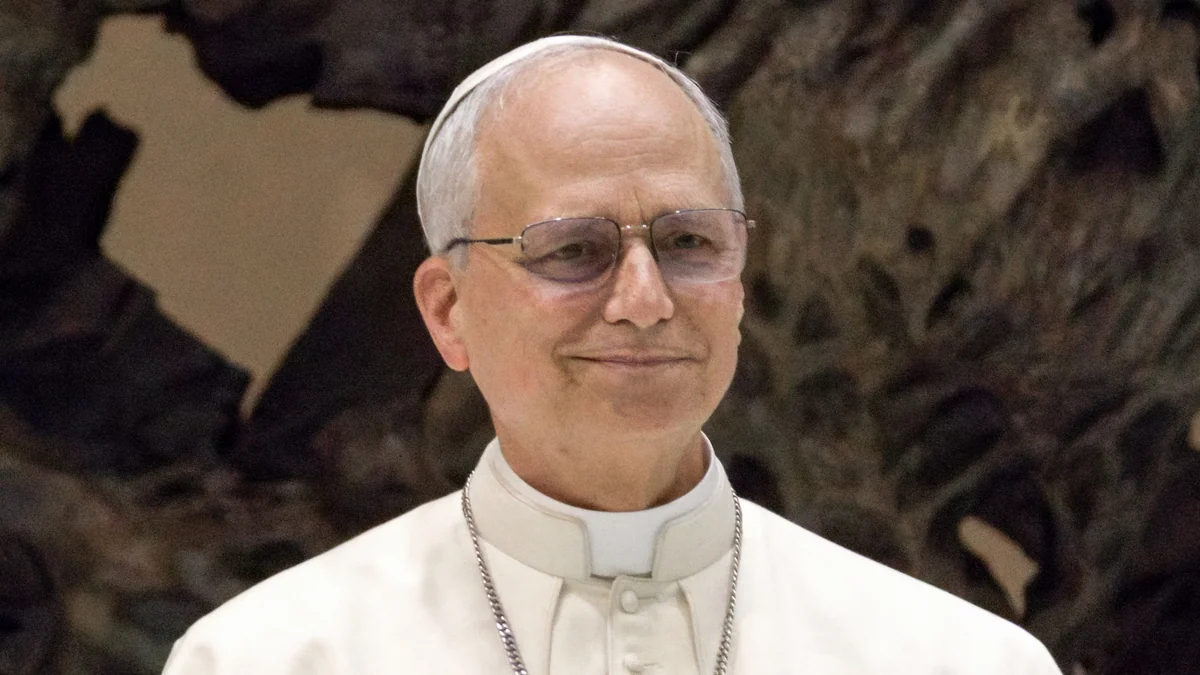
Eighteen Years, One American, and the Geometry of a Gap
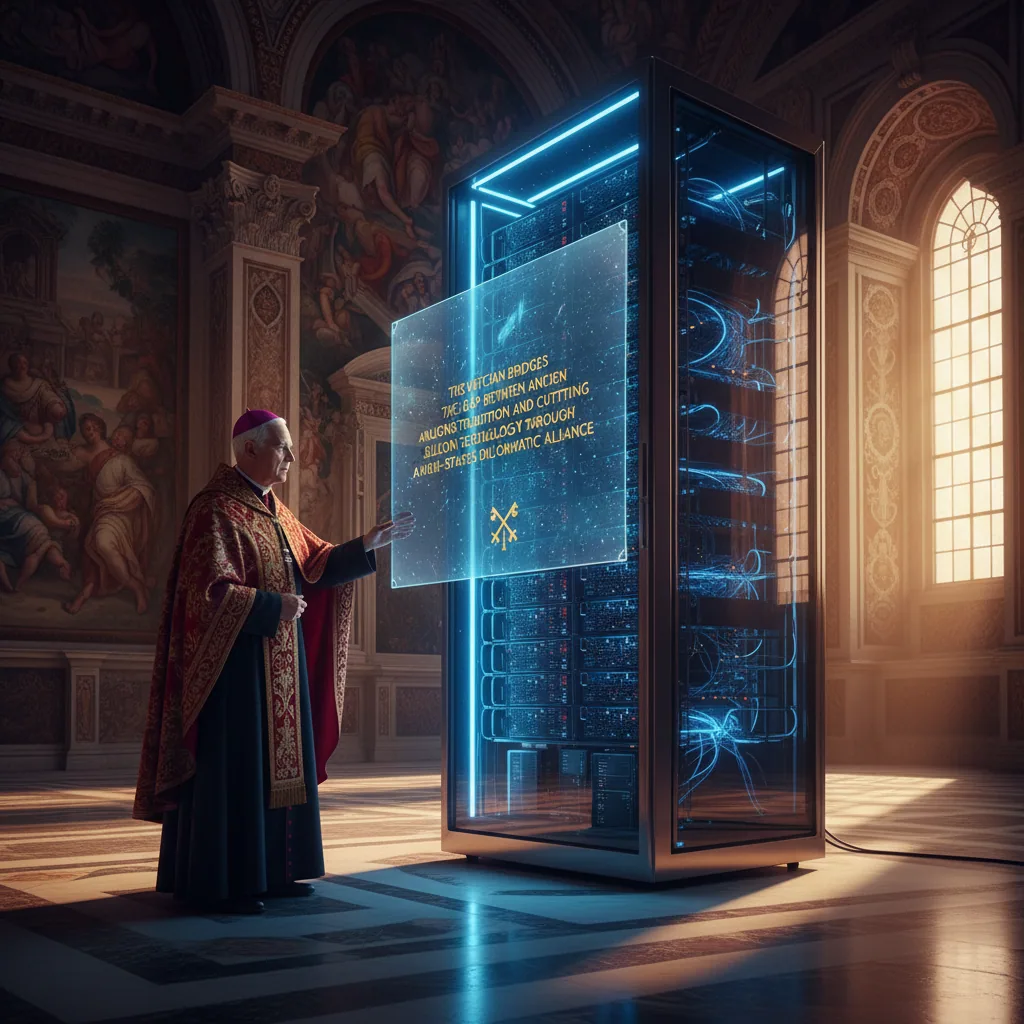
Pope Leo's visit to France is the first papal apostolic journey to Paris in eighteen years. Benedict XVI landed at Orly on September 12, 2008, and the French state received him with the full ceremonial weight it reserves for heads of state whose territory fits inside the Vatican walls. The gap is not an accident — it is a record, a ledger of distance between two institutions that have cohabited France uneasily since 1905.
The 267th pope is Robert Francis Prevost of Chicago, elected May 8, 2025, and the anomaly of his origin is worth sitting with before the itinerary begins. No American had held the office before him. The papacy's long centre of gravity — Italian, then cautiously European — shifted across the Atlantic in a single conclave, and what that shift means for tone, for diplomatic register, for the way Washington and Rome now share a nationality at the top, is not yet legible. Give it time.
The four days beginning September 25 are routed through three cities that are not interchangeable. Paris is the state — the Élysée, UNESCO, the Republic's secular machinery. Lourdes is the wound — a pilgrimage site that carries the Church's oldest devotional weight and, on this visit, seven private meetings with survivors of clerical abuse. Metz, in the east, signals something else entirely, a European register, interreligious, facing Germany rather than the Atlantic. The routing is the argument. Three cities, three registers, one visit that refuses to be only a diplomatic courtesy call.
Eighteen years is the gap. The geometry of it — who filled the distance, what accumulated inside it — is what the next four days will begin to answer.
The Élysée Calculation: What Macron Cannot Say Out Loud
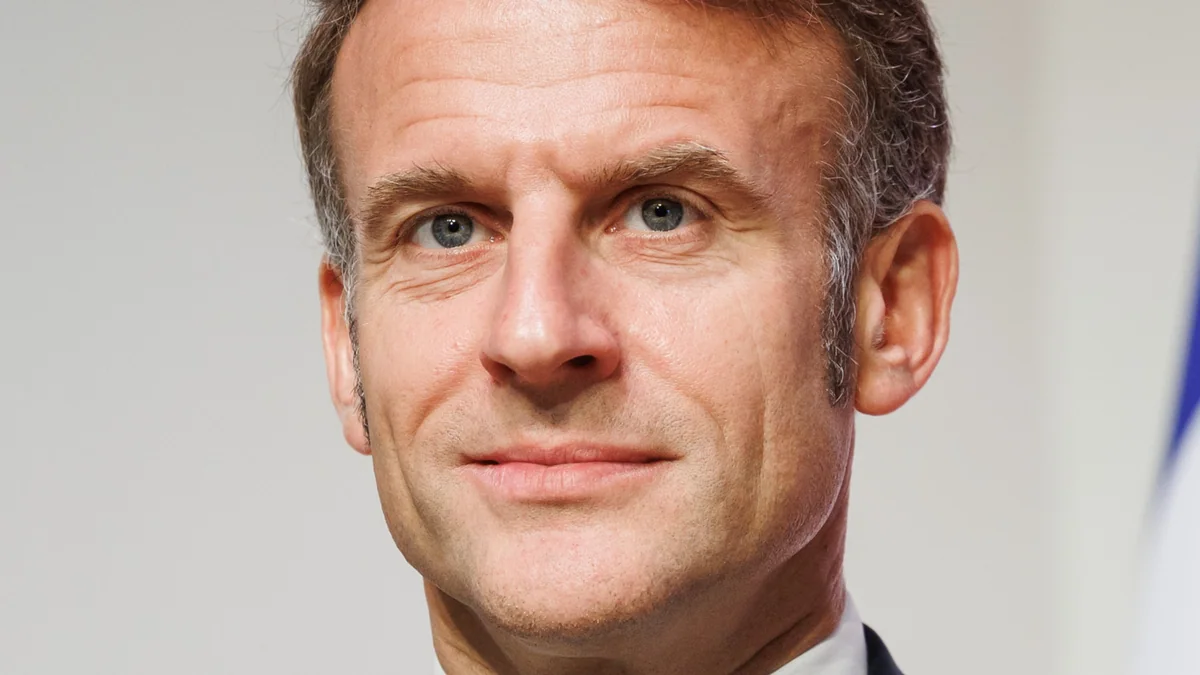
France's constitution does not negotiate. Laïcité is not a preference or a tradition to be weighed against circumstance; it is the republic's load-bearing wall, written into the 1905 law that severed church from state, and every president since has been obliged to perform fidelity to it while finding reasons to set it aside. On September 25, Emmanuel Macron received Leo XIV at the Élysée with the full protocol of a head-of-state reception. The ceremony was impeccable. The contradiction was older than the Fifth Republic.
What neither man could say plainly was the specific file between them. France's legislature passed an assisted suicide law in the summer of 2026, and Leo XIV had registered his opposition before the motorcade crossed the périphérique. That is not a doctrinal abstraction filed away in the Vatican Gazette; it is a named disagreement between a sovereign government and a visiting head of state, tabled on the day of arrival. The protocol frame of laïcité is meant to keep such arguments at arm's length. It did not succeed here — it simply provided both sides with a vocabulary for not naming the argument directly.
France Télévisions served as the official broadcaster for the duration of the visit. The state's logistical investment in coverage is its own form of diplomatic signal: the republic declines to treat the journey as private, ecclesiastical business while simultaneously insisting that church and state remain separate. That is not hypocrisy so much as structure. Ask the small question first: who needs the other's legitimacy more this week, and what is the asking price neither side has disclosed?
At UNESCO, a Warning About the Paradise of Machines
UNESCO's headquarters on the Place de Fontenoy is a useful room for this kind of speech. It carries institutional weight without carrying sovereignty, which is precisely the distance a pope needs when addressing a topic that no single government wishes to be told it is mishandling. Leo XIV used it on September 25 to deliver what the wires summarised as a call for AI ethics and educational safeguard. The paraphrase is accurate as far as it goes.
What the speech actually argues is harder. The "paradise of machines" formulation is not decorative: it names the substitution error, the point where technological capability begins to displace rather than serve human dignity. The argument is structural. Progress that optimises away the human capacity for moral judgment is not progress in any category the Church recognises. The wire caught the phrase; it did not linger on the mechanism.
Leo then folded nuclear deterrence into the same category, describing it as offering a false sense of security. That is not a digression. It is a single moral taxonomy: systems, whether digital or thermonuclear, that are trusted to think and decide for humanity represent a transfer of judgment the Church refuses to endorse. An American pope, from the country that both leads AI investment and holds the world's largest nuclear arsenal, delivering this argument at a UN platform in Paris — that is not an accidental line on a schedule. Someone chose the room carefully.
A Million on the Concorde, One Cathedral Reopened
Friday evening came first. The vesper service at Notre-Dame was not a concert, not a ceremony of reopening — that had already been done, in December 2024, with presidents and cameras. This was quieter: the liturgy moving through a nave that still smelled, reportedly, of new stone and cured timber. The cathedral as backdrop understates the thing. Notre-Dame was the venue because nothing else in Paris carries the same weight of interrupted time, and Leo XIV is a pope who reads architecture.
Saturday is the spectacle. Mass at the Place de la Concorde at 15:00, six hundred thousand ticketed spots, up to one million expected across the surrounding streets and quays. Central Paris will be largely closed to itself: traffic cordons through the 5th and 6th arrondissements, metro stations shuttered along the relevant lines, temporary sanitation facilities installed where the chestnut trees usually stand. France Télévisions carries the whole thing live, which means the French state is, in a carefully secular way, producing the broadcast of a papal Mass. Somewhere a budget line was updated without comment.
The crowd photograph, when it comes, will be large and photogenic. What it will not show is 13,000 adults baptized in France at Easter 2026 — the quiet counter-statistic to two decades of falling attendance and a church still working through the weight of its abuse record. A million on the Concorde is one kind of number. Thirteen thousand adults choosing, in middle life or later, to enter the church is a different kind: slower, less telegenic, harder to explain away as nostalgia or spectacle. The organisers know which number matters more. They have not said so publicly, which is sensible of them.
The Harder Stops: Lourdes and the Maison Bakhita
Seven people. The Vatican confirmed the number and nothing else. What the seven discussed with the Pope in their private meeting at Lourdes remains off the record, by design, and that design is itself a statement. John Paul II met no one. Benedict XVI authorised inquiries. Leo XIV scheduled the encounter. Each represents a different institutional posture, and only one of them requires the institution to sit in the same room as the damage it caused.
The meeting cannot resolve what the French abuse reports documented: a systemic failure that ran for decades across dioceses. Seven individuals meeting a pope for a private hour does not constitute justice. What it constitutes, at minimum, is acknowledgement on the record, and in this context the minimum has not always been offered.
The Maison Bakhita visit operates on the same logic. The centre's name is itself a historical argument: Josephine Bakhita was a Sudanese woman sold into slavery, later canonised. A pope arriving there to meet migrants is not a neutral pastoral call. The institution is naming, through its itinerary, the category of person it claims to stand with. Bakhita's story is one of a small nation's person caught between larger forces and disposed of accordingly. That framing is either load-bearing or decorative. The visit alone cannot tell us which.
The Church is not dying in France. It is something stranger: shrinking in its institutional core and growing at its converting edge.
Metz, and What Pope Leo's Apostolic Journey to France Leaves Open
Metz sits at a Franco-German border that has changed hands four times since 1870. That is not decoration. When a pope ends an apostolic journey there rather than in Paris, the geography is the argument: European unity, the official frame says, and interreligious dialogue. Both are defensible reasons. Neither fully explains the choice of a city whose entire modern history is an argument that borders are negotiable and civilisations survive the renegotiation.
The data from this visit point in two directions at once. Thirteen thousand adults received baptism in France at Easter 2026, a number that sits oddly against declining Mass attendance and an abuse crisis whose ledger is not closed. The Paris events drew logistical preparations for one million, with 600,000 reserved seats. The Church is not dying in France. It is something stranger: shrinking in its institutional core and growing at its converting edge.
The eighteen years since Benedict XVI's last state visit close here, in a border city, with the question still open.
Read the joint communiqué when it comes. If the Élysée text uses the word "dialogue" on bioethics, the assisted suicide law is a managed friction; both institutions have agreed to disagree at a safe altitude. If it uses "disagreement," someone pushed harder than the protocol allowed. That single word will tell you more about what Pope Leo's visit to France means for the next eighteen years of French secular-Vatican relations than anything said from any stage this week.