Every Morning, the Cattle Walk Further
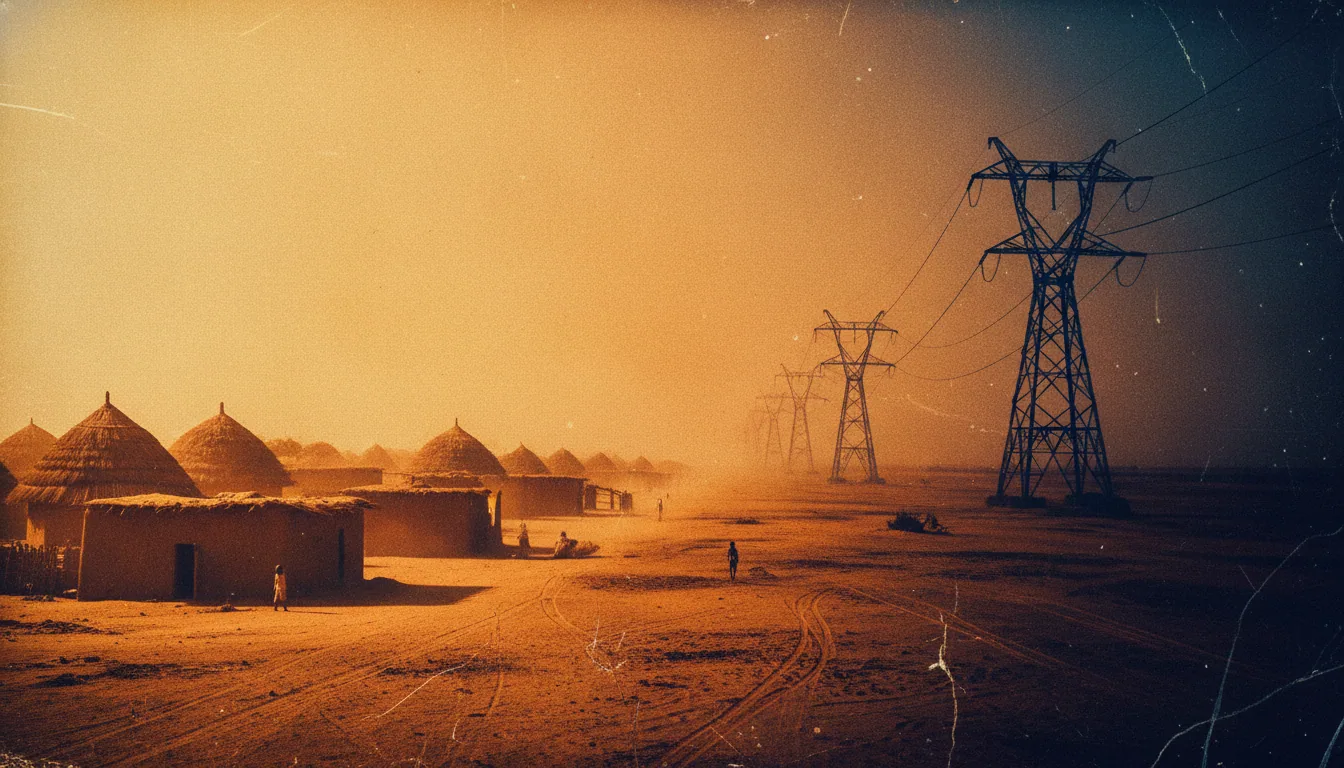
In the dry plains of Chikwawa and Nsanje, Malawi's cattle farmers begin their northward migrations before sunrise. This is not the old rhythm of seasonal transhumance, where cattle moved with the rains and came back when the grass returned. This is something else: a year-round, open-ended trek northward, driven not by calendar but by survival.
Southern Malawi's pastoralists are walking their animals out of a landscape that can no longer feed them. The movement runs north and central, toward districts where rainfall is marginally more reliable. Some herds cross national borders entirely - into Mozambique, Tanzania, and Zambia - in an uncoordinated, largely unrecorded flow of animals and risk. The exact count of cattle now moving across those borders is unknown. What is known is the pressure behind them.
By late 2024, the International Organization for Migration had recorded over 89,000 displaced people inside Malawi, with 53 percent citing drought as the primary cause. Cattle and people are moving together, or they are splitting apart. The more common pattern is the split: men travel with the herds for months at a time, because the cattle are the household's primary asset and someone has to follow the water. Women, children, and older relatives stay in villages that now have fewer animals, less food, and one less adult.
The livestock that remain in the south are dying. More than 6,500 animals - cattle, goats, pigs - were lost in Chikwawa, Karonga, and Nkhotakota during the previous El Niño cycle alone. The ones still walking north are the ones that got out in time.
Why This El Niño Hits Malawi Twice
The current episode is not simply another bad year. Forecasters put the probability of the 2026 El Niño being rated "very strong" at above 90 percent, a threshold that signals severe, sustained disruption rather than a wet-dry blip that recovers by March. The problem for Malawi is the timing: this episode arrives before the country has rebuilt from the 2023-24 drought. Herds that should have had two or three recovery years have had none.
That compression is the core injury. When cattle numbers fall below a critical threshold, a farmer cannot breed back quickly, cannot generate milk income, and has no asset to sell in an emergency. The 2026 El Niño does not just damage the present; it closes off the escape routes from the last disaster.
The Malawi Department of Climate Change and Meteorological Services is now issuing what are called impact-based early warnings: forecasts designed to say not only what the weather will be but what the weather will do to crops, herds, and food prices. That shift matters, because a farmer who hears "below-normal rainfall" cannot do much with it. A farmer who hears "your planting window in Karonga may close three weeks early" can act. DCCMS has warned specifically that early-season drought in northern Malawi threatens to disrupt the planting windows that migrating pastoralists are moving toward, which means the destination is shrinking even as the exodus from the south grows.
The projected result: 4 million Malawians requiring humanitarian assistance through the 2026-27 lean season. That is roughly one in four people in the country.
Sell the Herd, Lose the Future
During the previous El Niño cycle, 6,542 cattle, goats, and pigs died across just three districts - Chikwawa, Karonga, and Nkhotakota. That number is a floor, not a ceiling; it counts only verified losses, not animals sold in panic before they starved. Both paths lead to the same destination: southern herds stripped below the threshold at which natural recovery is possible.
Destocking sounds like a management decision. In practice, it is an emergency sale held at the worst possible moment. When every family in a district needs cash at once, buyers know it. Prices collapse. A cow that would ordinarily anchor a household's savings sells for a fraction of its value, and the cash is gone within weeks on food and water. When rains eventually return and pasture recovers, there is nothing left to restock with.
The second blow arrived through the market. Maize prices climbed 16 percent in August 2026, driven by climate-related supply failures. A household that had already lost its livestock income now faced higher staple costs with a thinner cushion to absorb them. Two pressures, one household, no buffer.
This is the poverty trap in its plainest form. Livestock in rural Malawi are not a hobby or a cultural attachment - they are the savings account, the insurance policy, and the productive asset rolled into one animal. Sell under duress and you exit the drought alive but landless in the economic sense: no breeding stock, no milk yield, no collateral for a loan. The rains that end one crisis simply open a longer one. Surviving the drought does not mean recovering from it.
Sell under duress and you exit the drought alive but landless in the economic sense: no breeding stock, no milk yield, no collateral for a loan.
When Pastoral Migration Reaches the Neighbors
A herd of sixty cattle does not arrive quietly. It arrives hungry. Along the central and northern grazing corridors, sedentary farmers are waking to find maize stalks stripped at the root, their months of careful planting undone overnight by animals that have already walked a hundred kilometers from the south. The pastoralist did not come to steal. He came because the pasture behind him is dust.
That distinction matters less at dawn, standing in a ruined field.
Land-use conflicts are rising across central and northern districts precisely because the places still holding water and grass are also the places where crop farming has expanded. Traditional grazing corridors that once gave herds a clear path northward are now fragmented by cultivated plots. There is no formal system for who yields to whom. The negotiation happens at the field edge, and it does not always stay civil.
The problem does not stop at Malawi's borders. Herds are crossing into Mozambique, Tanzania, and Zambia through routes that carry no veterinary checkpoints worth naming. Foot-and-mouth disease travels with unregulated cattle as reliably as the cattle themselves. The biosecurity question is unresolved at the regional level, which means one country's drought response is, quietly, a neighboring country's animal-health risk.
The social contract between farming communities was built for a different rainfall pattern. This one is testing it hard.
The Plan Exists. Two-Thirds of the Money Does Not.
Malawi has a preparedness plan. It is costed, printed, and submitted. The 2026-2027 National El Niño Preparedness Plan carries a price tag of 488.5 billion MK, roughly 281.7 million USD, to cover food assistance, veterinary services, water-point rehabilitation, and cash transfers for the 4 million people the lean season will hit hardest. That number is not a wish list. It is the minimum required.
As of November 2026, more than 324 billion MK of it remains unfunded. That is 66 percent of the total requirement sitting as a gap, not a commitment. Compare that to the 2015-2016 El Niño response, when international donors moved slowly and Malawi's maize shortfall went unaddressed until famine was already measurable. The pattern is familiar. The calendar is not sympathetic.
The fiscal room inside Malawi is already exhausted. President Mutharika postponed a parliamentary sitting this year specifically to redirect available budget toward fuel costs and El Niño response, a signal that the government has nothing left to move. You cannot raid a treasury that is already being rationed.
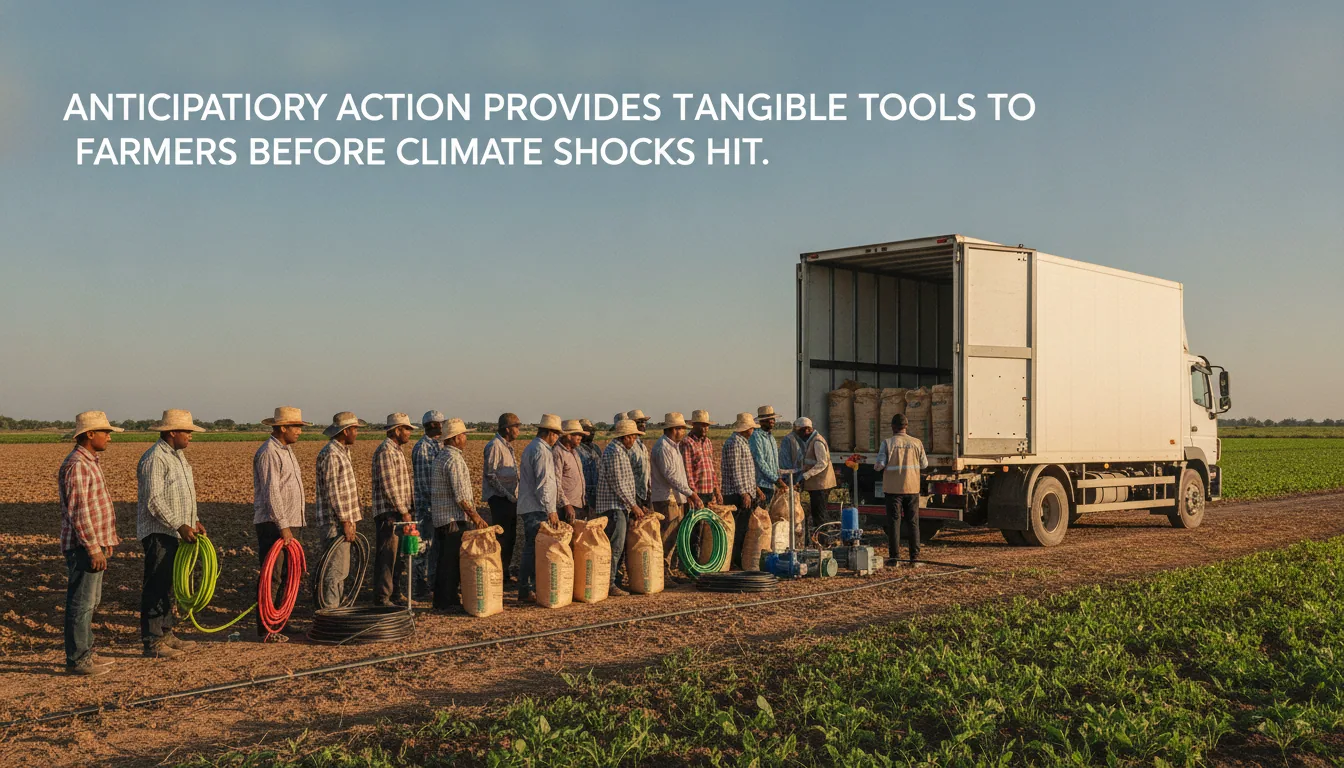
FAO and WFP are working: veterinary teams are operating in high-risk districts, water points are being restored, and cash aid is reaching some households to prevent forced livestock sales. That's not a gesture. That's a lever. But the January-to-March peak of the lean season arrives on a fixed schedule, and donor disbursement does not. The plan exists. The question is whether the money arrives before the damage does.
The Honest Scorecard: What Is Working and What Would Need to Change
Three tools are doing measurable work. Impact-based forecasting from DCCMS gives pastoralists weeks of lead time rather than hours, at a fraction of the cost of emergency airlifts. WFP cash transfers, when they arrive early enough, prevent the distress sales that trap families below the asset floor from which recovery is impossible. And the national preparedness plan exists, is costed, and is operational. That is more than most countries at this income level had in place ten years ago.
The numbers still tell an uncomfortable story. Of the 488.5 billion MK required for the 2026-2027 response, 324 billion remains unfunded as of November 2026. The lean season peaks in March. That gap is not an abstraction: it is the difference between cash transfers arriving before families sell the last cow and arriving after. The maize price increase of 16 percent recorded in August 2026 will not wait for donor conferences.
The structural fix runs deeper. Restoring traditional grazing corridors and negotiating formal cross-border livestock movement agreements with Mozambique, Tanzania, and Zambia would convert the cattle farmers' forced migration from a crisis response into a managed system. That is neither quick nor cheap. But without it, Malawi will run the same emergency in 2029 and 2032. The governments with the pen are the ones who decide whether this is a solvable problem or a permanent line item.