Five Miles, a Thousand Miles: The Geography of Oleshky's Blockade
The Oleshky-Belarus corridor of October 2026 belongs to the same genus as the 1995 Sarajevo maps: a city whose nearest free territory was close enough to see, impossible to reach. Five miles of river water separate Oleshky from Ukrainian-controlled Kherson — and those five miles are laced with mines and patrolled by drones that have made the crossing, in practical terms, non-existent.
Before the war, Oleshky held 24,000 people on the left bank of the Dnipro. By October 2026, roughly 1,700 remained. Supply routes had been severed in May 2026, cut by drone attacks and mined roads that stopped food deliveries outright. The corridor's geometry is not an accident of logistics. It is the load-bearing fact.
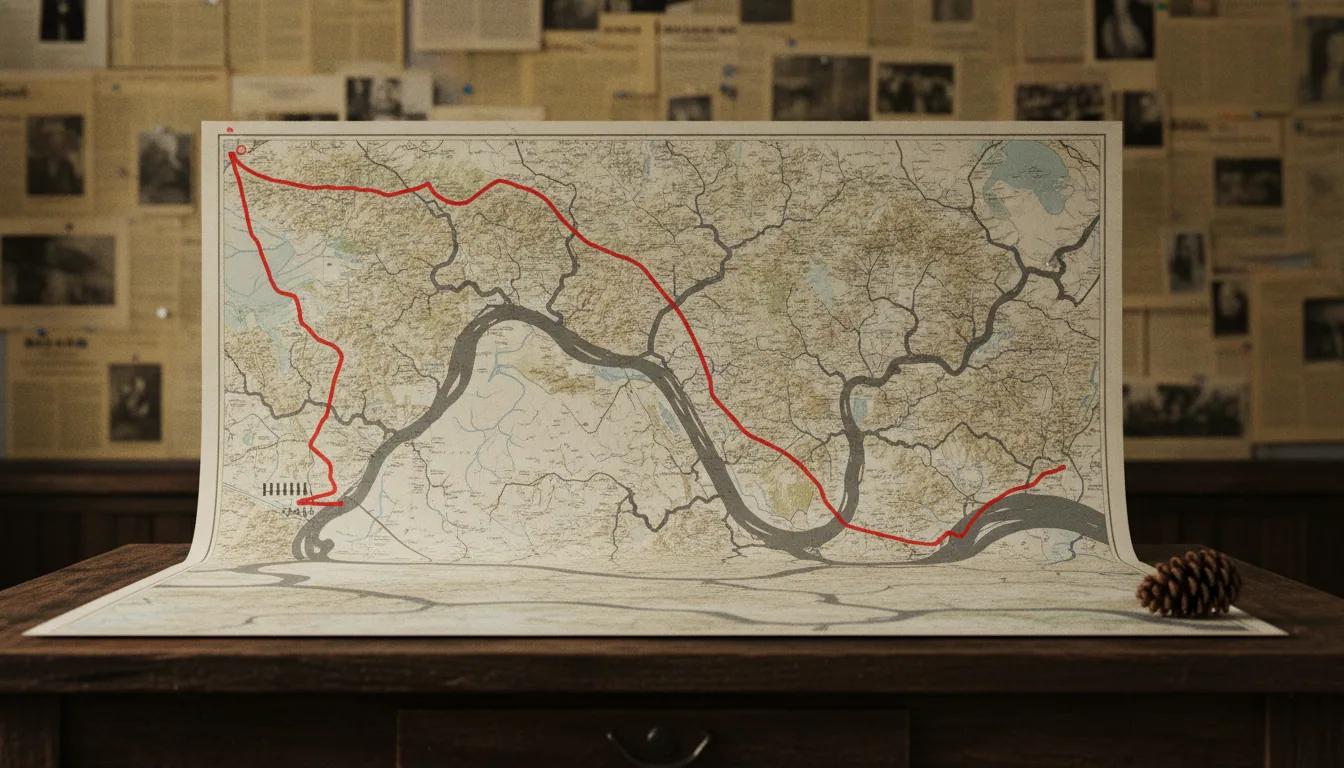
To move those 1,700 people five miles, the route ran approximately a thousand: bus from Oleshky west through Armiansk in Russian-occupied Crimea, then onward to the Russian port city of Anapa in the Krasnodar region. From Anapa, four planes lifted evacuees north to Gomel Airport in Belarus on October 31. The final leg — bus from Gomel to the Novaya Guta border crossing into Ukraine's Chernihiv region — closed the arc. The absurdity of that geometry is not incidental to the story. It explains every diplomatic maneuver, every institutional actor, and every unresolved question that follows.
The Ceasefire and Its Brokers: A First Lady, a Pope, and the Limits of Institutional Diplomacy
The localized ceasefire entered into force at 3:00 a.m. on October 27, 2026, and is scheduled to expire on the evening of November 1. Six days. The superlative is easy to earn in a war that has produced almost none: this is the most significant humanitarian pause since the full-scale invasion began in February 2022, and that tells you more about the preceding four years than it does about this week.
The brokers were U.S. First Lady Melania Trump, who led the mediation, and Pope Leo XIV, whose office applied supporting diplomatic pressure. Neither is a conventional arms-of-state negotiator. That is not a criticism of the result; it is a description of the structure. When a sitting government deploys its first lady and defers to a pontiff, it is signalling a channel that carries deniability in both directions — useful when neither side wants the word "negotiation" in the official record.
The displacement of the UN and the ICRC from the mediation seat to the observer bench is the detail worth holding. Both organisations possess the institutional machinery for exactly this kind of operation: legal frameworks, neutral-party protocols, established relationships with occupying forces. They were bystanders here. That reflects the degree to which both Moscow and Kyiv have preferred to route humanitarian access through political channels they can close, rather than institutional ones they cannot fully control.
Ask the small question first: who benefits from keeping the precedent informal, and who loses if it hardens into a replicable framework with independent oversight.
The Mechanics of the Humanitarian Evacuation: Buses, Planes, and the Question of Vetting
Twenty-five buses and nine ambulances carried the first wave out of Oleshky. Four planes then lifted evacuees from Anapa, the Russian port city in Krasnodar, onward to Gomel Airport in Belarus. The ground convoy, the airlift, the Belarusian transit leg to the Novaya Guta crossing: each handoff required a separate set of permissions from a separate authority, which is one way of measuring how many parties had to agree for any of this to move at all.
The numbers are approximate. Somewhere between 527 and 750 people departed in the first wave, from a remaining population of roughly 1,700. Residents were offered three options: evacuate to Ukraine, evacuate to Russia, or stay in Oleshky. The count of those who chose Russia has not been published.
That gap in the record matters. Transit through Crimea under Russian military logistics routinely involves screening procedures analogous to what independent monitors have called filter camps — points where evacuees are questioned, documented, and assessed before being permitted to continue. Dmytro Lubinets traveled the corridor himself and reported safe passage. His account is the only Ukrainian-supervised account of what happened inside Russian-controlled territory, which is a structural limitation rather than a criticism of the man.
The logistics, in short, worked. What the logistics required from the people passing through them is a different question, and the answer is not yet in the public record.
The Officials in the Frame: Lubinets, Lantratova, and the Joint Press Briefing at Armiansk
Dmytro Lubinets, Ukraine's Human Rights Commissioner, traveled personally to Oleshky. Not to Kyiv, not to a Brussels conference room with a satellite feed — to the town itself, which his government does not control and cannot protect. The signal value of that presence is not nothing.
In Armiansk, the transit checkpoint in occupied Crimea, Lubinets stood beside Yana Lantratova, his Russian counterpart, for a joint press briefing. A photograph with structural implications: two officials from states at war, sharing a frame, in territory whose legal status one of them contests. During the ceasefire window, humanitarian aid and technical support were also delivered into Oleshky itself — a detail the wire reported briefly and moved past.
"We will be home soon," Lubinets posted from Belarus. "For now, we are on the territory of the Republic of Belarus — together with our people and even their beloved pets." The photographs released by the Ukrainian Ombudsman's Office told a quieter story: they were predominantly sourced from Russian media outlets, which is a fact about who held the cameras, and where. In a corridor built on trust between parties that distrust each other, the question of whose imagery documents the event is not a minor editorial matter. It is the record.
Belarus as Transit State: What Gomel's Role Reveals About the Architecture of the Deal
Four planes landed at Gomel Airport on October 31. Belarus — formally Minsk's most reliable instrument in Moscow's architecture since 2020 — had become the hinge on which the entire operation turned.
A genuinely neutral transit country would have no strategic debt to either principal. Belarus is not that. What it supplied was something narrower and more useful: technical deniability. Neither Kyiv nor Moscow could plausibly hand the other a piece of sovereign territory to manage civilians through. Gomel Airport was the one point on the map where the logistics could be handled without either side formally conceding ground.
From Gomel, buses carried the evacuees to the Novaya Guta crossing into Chernihiv region — the final compression point where a thousand-mile arc collapsed back to the width of a border gate. The Belarusian Red Cross provided the medical support layer across the transit, giving the operation a recognisable humanitarian signature at the moment the principals most needed cover. The infrastructure was local. The decisions were not.
If a second corridor opens before year-end, Oleshky was a template. If none does, it was an obituary notice for people who happened to attract the right mediators at the right moment.
The Oleshky Model: Precedent, Template, or One-Time Exception?
Dmytro Lubinets was careful about how he framed the operation on its way out of Armiansk. The paraphrase that circulated from the Kyiv Independent was deliberate: the Oleshky mission demonstrates that such agreements could help civilians if humanitarian missions are made a regular initiative. That is not a description. It is a political ask encoded in an operational success.
The ceasefire had held eighty hours as of October 30. After nearly five years of full-scale war, that is the bar. The blockade that made Oleshky a crisis had been in place since 2022, supply routes severed by drone attacks and mined roads since May 2026. Eighty hours of quiet was the ceiling of what the parties were prepared to offer.
Replicability is the harder question. The corridor required four variables to align simultaneously: a Russian military command willing to permit transit, a transit state with a functioning airport and a reason to cooperate, a non-state mediator with access to both sides, and a ceasefire window that neither party had an immediate incentive to break. None of those variables are reproducible on demand. There are roughly eighty occupied towns on the left bank of the Dnipro that are not Oleshky. The operational question — what distinguishes this one — has not been answered in any document released to date.
Watch the List: What the November 1 Expiry Will and Will Not Tell Us
The ceasefire expires the evening of November 1. The first question is simple: does it hold, lapse without incident, or end in resumed shelling across the Dnipro? That is the checkable marker, and it will be on the wire within hours.
The second question is harder, and the answer may never surface publicly. Residents were given a choice — evacuate to Ukraine, evacuate to Russia, or remain. The exact count of those who chose Russia is unknown. Lubinets told the cameras that "everyone who wishes to leave Oleshky will be given the opportunity to leave safely," which is a statement about process, not destination. If that figure ever emerges from either side's official ledger, it will say more about the corridor's political meaning than any communiqué.
The long-term status of Oleshky is entirely open. The five miles of river have not moved. Roughly 1,700 people lived there before the operation began; the number still there by November 2 is unconfirmed.
Watch for a second corridor before year-end, for a different occupied town. If one opens, the Oleshky-Belarus corridor was a template. If none does, it was an obituary notice for people who happened to attract the right mediators at the right moment — and the model dies with the ceasefire that made it possible.