Atlanta, October 31: The Ritual That Was Not Performed
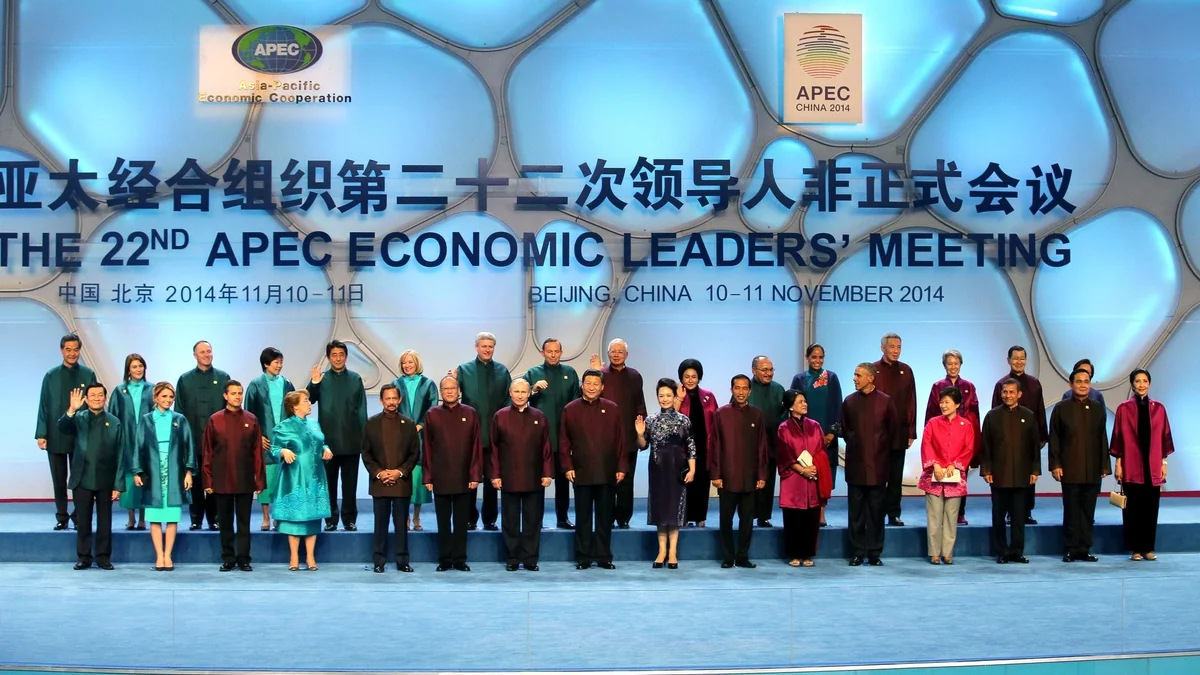
The G20 diplomacy breakdown of October 2026 has a useful predecessor. At the 1999 OSCE summit in Istanbul, the family photograph was taken on schedule. The leaders stood in a row, and the resulting image papered over disagreements that would fester for years.
The photograph did not resolve anything. It signalled, at minimum, that the parties could still stand in the same room.
On October 31, 2026, in Atlanta, Georgia, that minimum was not reached. The G20 Foreign Ministers had met across two days, October 30 and 31. The meetings themselves proceeded. The photograph did not.
US Secretary of State Marco Rubio cancelled the traditional "family photo" session after approximately one-third of the member nations refused to appear in frame alongside Russian Foreign Minister Sergey Lavrov. Australia, the United Kingdom, and Germany were among those who declined.
The practical consequence was a chair's summary in place of a joint communiqué. The diplomatic consequence was harder to paper over. A ritual designed to project collective legitimacy was judged, by the host, to project the opposite.
Lithuanian media described the cancellation as a humiliation for Russia. That is the small-nation read: for countries that have watched Moscow treat diplomatic inclusion as a form of impunity, a cancelled photograph is a verdict.
The larger-nation read, from Washington, framed Rubio's decision as a management call, tidying an awkward protocol moment. Both readings are true. Neither is complete.
What the Atlanta photograph would have shown, had it been taken, was the G20 as it now functions: a room of parties with incompatible commitments, assembled under a common letterhead. The cancellation did not cause that condition. It simply made it visible.
Ask the small question first: who is the borderland here, and who is the empire? Atlanta supplied the image. Or rather, it refused to.
The Communiqué and Its Disappearance
Atlanta ended not with a joint communiqué but with a chair's summary. The distinction is not procedural fine print. A chair's summary is what a host issues when consensus has ceased to exist — when the group cannot agree on a shared sentence, the host writes down what was said and calls it a record. The document is a receipt, not a resolution.
The language of G20 declarations has been migrating for four years. The 2022 Bali communiqué named Russia's war directly, with enough discomfort in the room that its passage was treated as a minor diplomatic achievement. Since then, the text has moved toward general invocations of UN Charter compliance — a formulation broad enough to let every delegation sign without agreeing on anything.
That migration is not nuance. The shift from direct condemnation to charter-invocation is the load-bearing wall giving way, dressed as a change in tone.
The 2025 Johannesburg summit had already marked the line. Trump's complete absence from that meeting was the first US presidential boycott of a G20 summit — a fact the Western wire reported as an anomaly. Atlanta has since converted the anomaly into a pattern.
Rubio attended, Lavrov attended, and a third of the membership declined to stand in the same photograph as both of them.
What the chair's summary cannot disguise is the arithmetic: if one-third of the membership will not share a frame, consensus on text is a courtesy fiction. The drift from "shall" to "should" in collective statements is the visible symptom. The underlying condition is that the forum now manages disagreement rather than resolves it — and has quietly decided that managing is enough.
The Host's Terms: Doral, Tariffs, and the Transactional Ledger
The official G20.org framing from Washington is brisk and unambiguous: under Trump's leadership, the United States is returning the G20 to its core mission of driving economic growth and strengthening partnerships that benefit American workers and businesses. That sentence is worth reading twice, not for what it says about the G20 but for what it says about the host's accounting. The forum exists, on these terms, to serve a named domestic constituency.
The venue makes the same argument in concrete and steel. Trump National Doral Miami, a privately owned presidential property, will host the December 14–15 summit. It is a ledger entry — the host's commercial interests and the summit's institutional interests now share the same address, and the ambiguity is the point.
The economic backdrop is harder to finesse. Proposed US trade policy runs to 10–20% universal import tariffs and 60% duties on Chinese goods. The forum that was built to coordinate responses to global economic shocks is now scheduled to meet inside a property belonging to the man proposing the shocks.
Practical consequence: any joint statement on trade will need to navigate both the policy and the venue. The Global South members, who joined or expanded the G21 to press for debt relief and development financing, now find the agenda pre-loaded with American commercial priorities before the first session opens.
The ledger is set. The question is who is listed on which side.
The G21 and the Agenda the North Did Not Commission
On September 9, 2023, in New Delhi, the African Union took its seat at the G20 table as a permanent member. Fifty-five nations arrived in a single chair. The forum quietly became the G21 without anyone convening a constitutional convention to name it that.
The optics were generous to everyone. The Global South got representation it had demanded for a decade. The host, Narendra Modi, collected the credit.
The North got to call it reform without conceding any agenda items. What the expansion actually carried into the room was a different set of priorities: debt relief, food security, development finance. Problems that do not resolve into a security communiqué.
Lula da Silva made the weight of that shift visible at the 2024 summit, launching the Global Alliance Against Hunger and Poverty as Brazil's contribution to a forum increasingly paralysed by Ukraine. It was the Global South's counter-programme, written for the members who had come to talk about grain prices and sovereign debt, not artillery shipments. The alliance named what the security deadlock was costing in a different register.
The structural question the expansion leaves open is the oldest one on this beat. The African Union's 55 member states are now formally inside the room when the great powers eventually cut their deal on Ukraine — or on whatever crisis follows it. Being in the room and shaping the outcome are not the same thing. The borderland does not disappear because it now holds a chair.
The Economic Body Beneath the Diplomatic Noise
Strip away the G20 diplomatic fracture on display in Atlanta — the cancelled photograph, the chair's summary — and the structure underneath remains stubbornly functional. During crisis periods, network density among G20 equity markets runs between 14 and 32 percent — a range that describes genuine financial interdependence, not ceremonial solidarity. The forum was built to manage exactly this: contagion that crosses borders faster than any communiqué can be drafted.
The architecture has fault lines the G21 has not addressed. Bhandari and Parida's analysis of cross-market shock absorption identifies India and China as the slowest adapters in the system. Two of the three largest economies outside the transatlantic core carry the greatest lag when stress moves through global markets — an asymmetry that sits quietly beneath every debate about debt relief and every boycotted photo, unresolved.
The technical agenda accumulates regardless. Since 2018 the G20 has produced 13 supranational AI governance instruments — frameworks, principles, working-group outputs that outlast any single summit's collapse into a chair's summary. Compare this with the security agenda, which has moved in the opposite direction: from direct condemnation to the vague passive construction of UN Charter compliance.
One body keeps producing; the other keeps retreating.
What remains is a functioning engine bolted to a steering wheel that nobody agrees to touch.
This is the forum's central contradiction. The economic and technological interdependence that originally justified its existence has not diminished. The diplomatic consensus that was supposed to govern it has.
Miami, December 14: The G20 Breakdown's Hard Test
The 21st G20 Summit opens at Trump National Doral Miami on December 14, 2026. It is the first hard test of whether Atlanta was a situational breakdown or a confirmation of something more permanent. The venue itself is a data point: no previous G20 host has placed the summit on private presidential property, and that choice is not furniture.
The question is not whether Lavrov attends. Attendance is the decorative part. The load-bearing question is whether the Miami gathering produces a document containing the word "shall" anywhere in its operative paragraphs on trade or Ukraine.
A "shall" means a commitment someone can be held to. A "should" means a preference no one is obliged to honour. The Atlanta chair's summary used neither, which is a category of its own.
If Miami produces only another chair's summary, the G20 has completed its transition from a body that issues instructions to one that issues observations. That transition would be nearly irreversible. Twenty-one governments will have learned that the mechanism for avoiding a communiqué always exists.
Read the final text on December 15. One verb carries the entire verdict on the G20 diplomatic breakdown.
If it says "shall," something survived Atlanta. If it says "should," the evidence is in, and this story will be back on your screen long before the next summit convenes.